How to Choose a Portable TV for Camping (2026 Guide)
Not sure which portable TV to bring camping? This guide covers screen size, battery life, 12V compatibility, antenna options, and smart features.
A cold drink, a campfire, and a game on TV — camping does not mean going off the entertainment grid. But most campers waste money on portable TVs that die after one trip, cannot pick up a single channel, or go dark in direct sunlight.
The problem is not that the best portable TV for camping is inherently bad. It is that most buyers pick one based on screen size and price alone, ignoring the factors that actually matter at a campsite: battery reliability, 12V power compatibility, antenna reception, and weatherproofing.
This guide covers the seven factors that separate a portable TV that works at your campsite from one that only works in your living room. Already know what you want? See our full best camping TVs roundup for top picks.
Key Terms to Know Before You Shop
Shopping for a portable tv for camping is easier when you understand the specs that matter outdoors. Here are the core terms you will encounter:
ATSC (Advanced Television Systems Committee) — The digital broadcast standard used in the United States since 2009. Every portable TV sold in the US includes a built-in ATSC tuner, which receives free over-the-air channels from local broadcast towers. No subscription or internet required. ATSC 1.0 supports up to 1080i; the newer ATSC 3.0 (Next Gen TV) adds 4K and better mobile reception, but coverage is still limited to select metro areas as of 2026.
Nits (cd/m²) — A unit of screen brightness. One nit equals one candela per square meter. Typical indoor TVs produce 250–350 nits, which looks fine in a living room but washes out in sunlight. For outdoor viewing, 400+ nits is the minimum usable threshold, and 500+ nits is ideal. Most budget portable TVs do not publish nit ratings — a sign that brightness is low.
IP66 (Ingress Protection) — An international rating for dust and water resistance. The “6” means dust-tight (no dust ingress), and the second “6” means protection against powerful jets of water from any direction. An IP66-rated portable TV can survive rain and splashes but is not rated for full submersion. This is the highest waterproof rating currently available in the portable TV for camping category.
mAh (Milliamp-Hour) — A measure of battery capacity. A higher mAh number means more stored energy, but mAh alone does not determine runtime — screen brightness, volume, and signal processing all affect actual battery life. A 10000mAh battery sounds impressive, but real-world viewing time is typically 2–4 hours depending on these factors.
12V DC Power — Direct current at 12 volts, which is the standard output of car cigarette lighter sockets, RV house batteries, and most portable solar panels. A TV with 12V input can run directly from these sources without needing an AC inverter, saving 10–15% of power that inverters waste as heat.
Screen Size — How Big Should Your Camping TV Be?
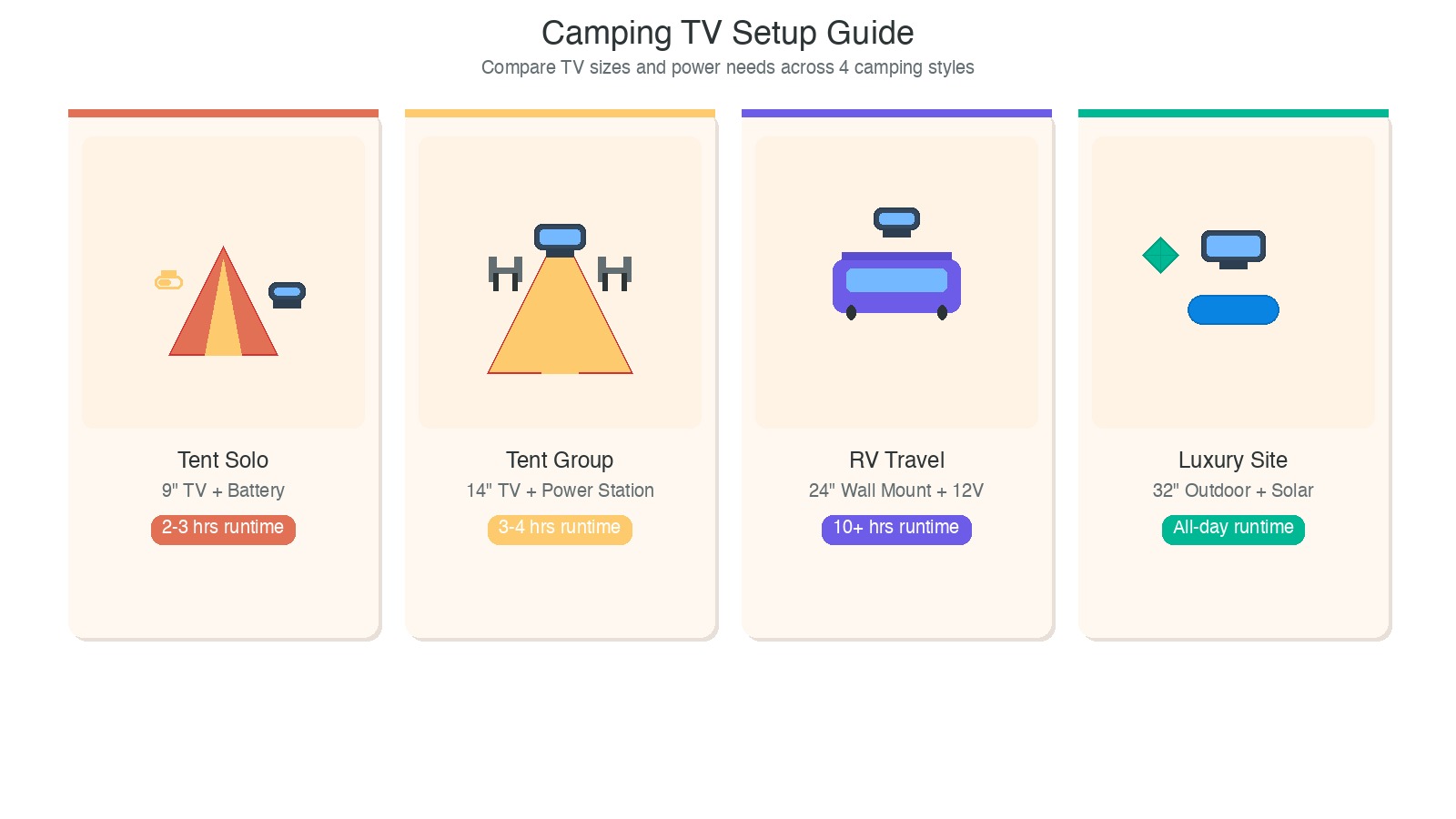
Screen size is the most obvious factor, but the right choice depends entirely on your camping style. A 7-inch screen makes sense for personal viewing in a tent. A 24-inch screen belongs in an RV. Somewhere in between is the sweet spot for most campers.
When choosing a portable tv for camping, tent campers should target 12–15 inches. This range gives enough screen real estate for two people to watch comfortably from 4–5 feet away. The Tyler 14-inch 1080P is the most proven option here with thousands of reviews, and the budget-friendly othoig 14-inch offers 12V car power at a lower price point. For tighter spaces where a small tv for camping fits, the Jexiop 12-inch fits where larger TVs will not.
RV campers can go bigger. The Westinghouse 24-inch HD LED delivers a real living-room experience at a campsite. At 24 inches, you get comfortable viewing from 6–8 feet — perfect for an RV sofa. The SYLVOX 15.6-inch is the premium middle ground with waterproofing and smart TV features, though it comes at a significantly higher cost.
1080P resolution matters at 14 inches and above. Below that, the pixels are too small to notice. But resolution is less important than brightness outdoors. Most budget portable TVs struggle in direct sunlight regardless of resolution — nits (brightness) matter more than pixels when you are sitting by a lake at noon.
| Camping Type | Recommended Screen Size | Key Consideration |
|---|---|---|
| Backpacking | None — skip the TV | Weight penalty is not worth it |
| Tent camping (solo) | 7–9 inches | Jexiop 9-inch or Tyler 7-inch for personal use |
| Tent camping (couples/groups) | 12–15 inches | Tyler 14” or othoig 14” — big enough to share |
| RV camping | 15–24 inches | Westinghouse 24” for a real TV feel, or SYLVOX 15.6” for outdoor use |
One honest warning: multiple owners of the othoig 14-inch report that “the screen becomes a mirror in direct sunlight — unusable outdoors.” This is a common issue across budget portable TVs. If you plan to watch outside during the day, prioritize brightness ratings over resolution.
Battery Life — Can It Actually Last a Movie?
Battery life is where portable TVs overpromise and underdeliver. Manufacturers advertise impressive mAh numbers, but real-world runtime tells a different story.
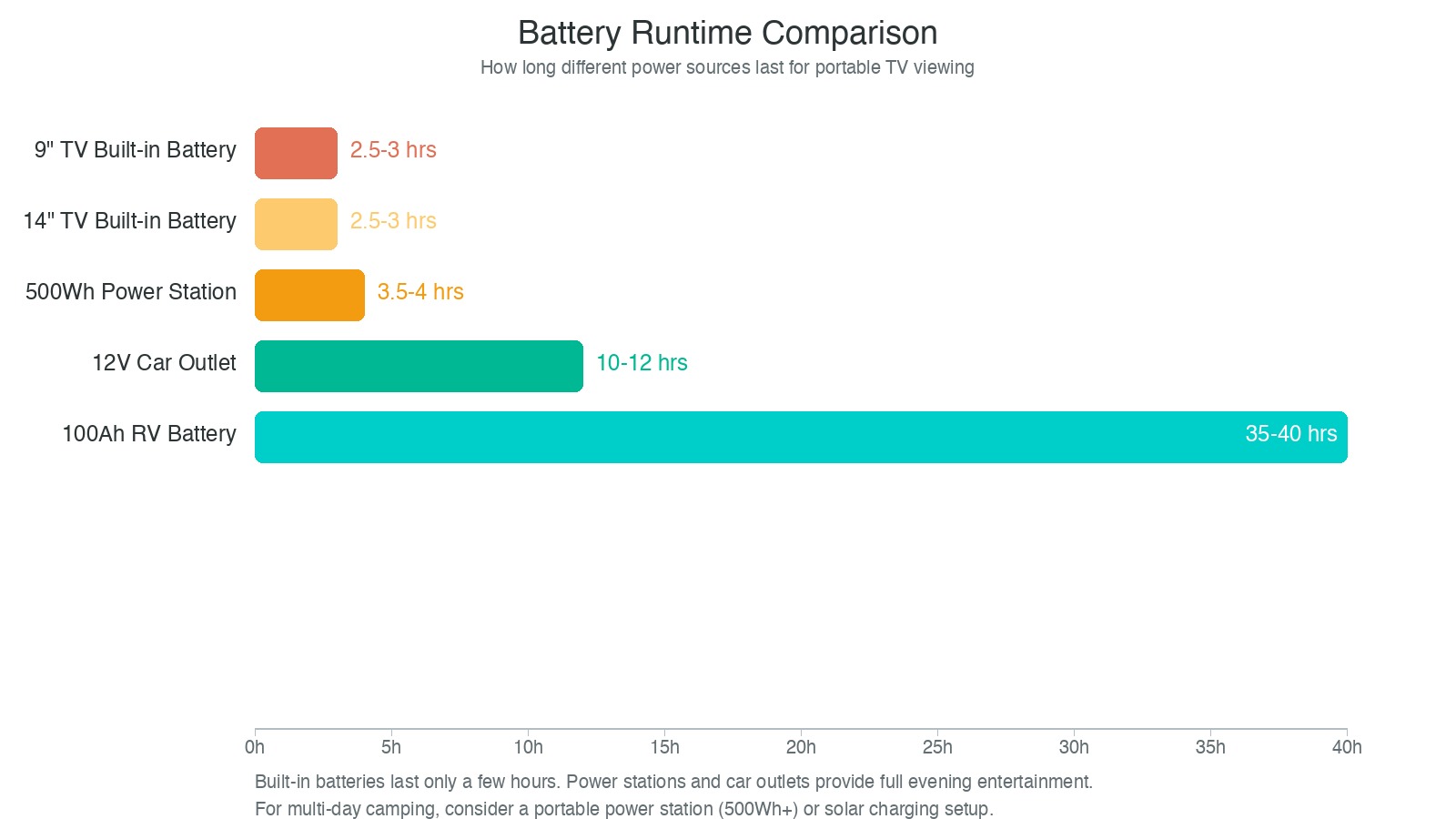
Most rechargeable portable TVs get 2–3 hours maximum. The BOIFUN 15.6-inch packs a 5000mAh battery, which is mid-range for this category. The SYLVOX 15.6-inch claims 10000mAh — the largest in this group — but treat big battery claims in this price tier with skepticism: budget TV batteries commonly self-drain in storage and may not hold up under battery-only operation. Verify the battery works on arrival while the return window is open.
Battery degradation is a real problem. Across brands, user reviews consistently mention batteries dying within 3–6 months. For the Tyler 14-inch, battery durability degrades to the point of replacement in 2–3 years, and the Tyler 7-inch can degrade to 1.5 hours of runtime after 6 months — not enough to watch a full movie.
This is the single biggest reliability issue in the portable TV category. Do not count on the internal battery for multi-day trips.
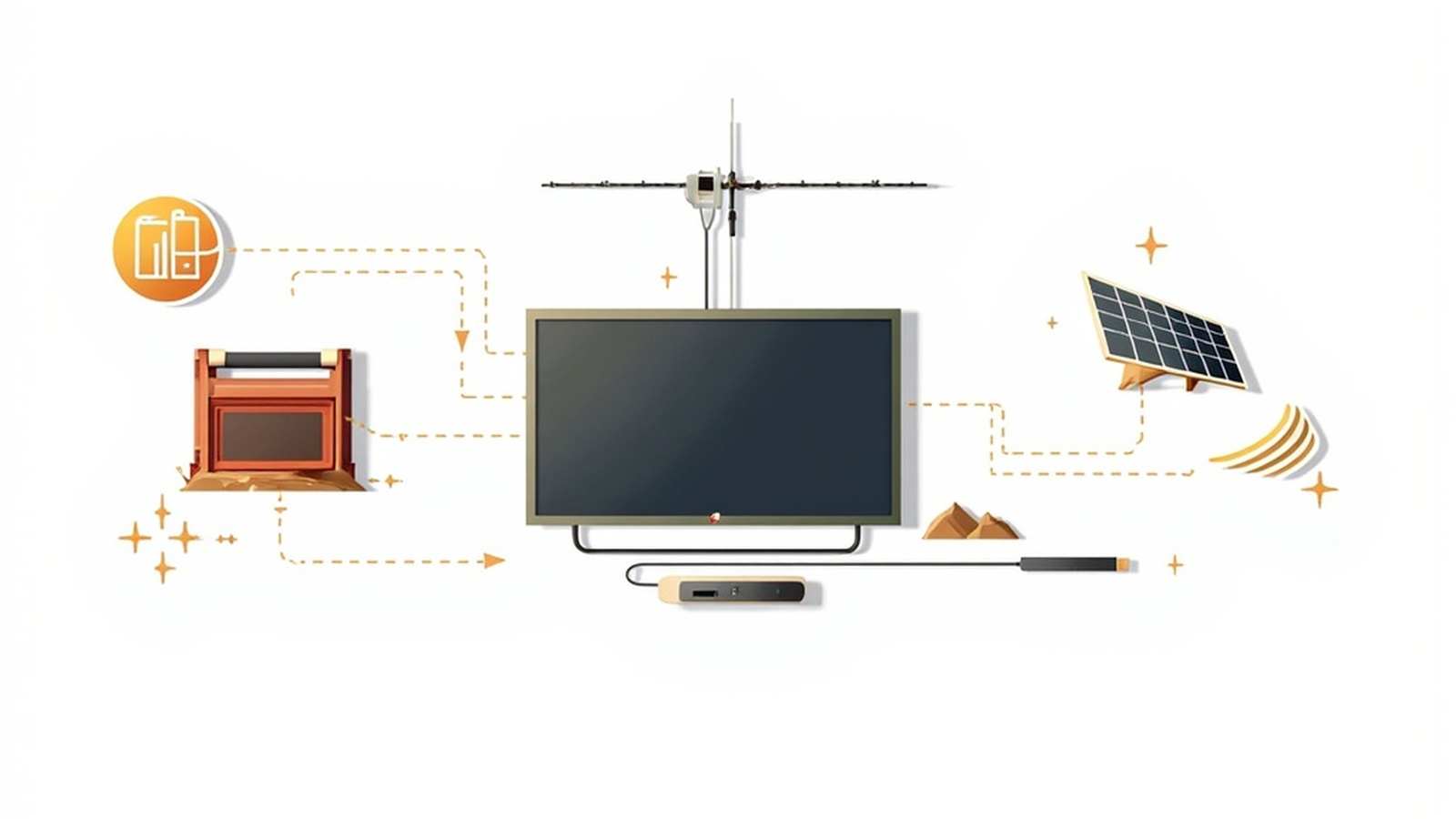
The real solution is external power. A 12V car outlet or RV house battery runs a portable TV indefinitely — or at least until your vehicle battery needs attention. For tent camping, a portable power station with a 12V output can keep a 14-inch TV running for 3–4 hours on a 500Wh unit. Pair that with solar charging during the day, and you have a sustainable off-grid TV setup.
Practical rule of thumb: Treat the built-in battery as a backup for short viewing sessions. Plan your primary power strategy around 12V sources. See our solar camping guide for off-grid charging setups that work.
12V Compatibility — The RV and Car Camper’s Best Friend
If you camp in a vehicle or RV, 12V compatibility is non-negotiable. Your car’s cigarette lighter socket, your RV’s house battery, and most portable solar systems all output 12V DC power. A TV that accepts 12V input runs directly from these sources without needing an inverter.
Look for AC/DC dual-power TVs. The Tyler 14-inch offers both AC wall power and DC 12V input — one of the main reasons it has the most reviews in this category. Owners consistently praise the 12V option: “AC/DC power options are very handy for car and home use.” The othoig 14-inch, Jexiop 12-inch, SYLVOX 15.6-inch, and Westinghouse 24-inch all accept 12V input as well.
Power draw is modest. A 14-inch portable TV pulls 20–30W. On a standard 100Ah RV house battery, that translates to roughly 30–40 hours of runtime — more than enough for a weekend trip. Even a single car battery can power a portable TV for 10+ hours, though you should start the engine periodically to avoid draining it.
How to connect: Most portable tv 12 volt models include a cigarette lighter adapter in the box. For permanent RV installation, you can hardwire directly to the RV’s 12V bus with a simple inline fuse holder. Our RV camping guide covers 12V wiring basics for beginners.
Avoid AC-only TVs. Some budget portable TVs only accept wall power, which means you need an inverter to run them from a battery. Inverters waste 10–15% of your power as heat. A 12V TV for RV use is always the better choice for off-grid camping. For car camping trips, the cigarette lighter adapter is the simplest plug-and-play solution.
Antenna and Reception — Will You Get Any Channels at Your Campsite?
Every outdoor tv for camping includes a built-in ATSC digital tuner, which means they can pick up free over-the-air broadcast channels. Whether you actually receive those channels depends on where you camp.
Reception depends on three things: distance to broadcast towers, terrain between you and the towers, and tree cover. Camp near a city and you will likely pull in 20–50 channels with the included antenna. Camp in a remote valley surrounded by ridges, and you might get zero.
The included antennas are basic. Most portable TVs come with a small magnetic or rabbit-ear antenna. These work fine within 15–20 miles of broadcast towers. Beyond that, you need an upgrade.
For RVs, the Winegard Air 360 is the gold standard. It replaces the old batwing antenna on most RV roofs with an omnidirectional unit that pulls in channels from all directions without aiming. At this price point, it is the single most impactful antenna upgrade you can make. The honest caveat: reception still varies by market, and an omnidirectional antenna can pull in fewer channels than an aimed one in fringe areas.
For a portable tv for tent setups, the FGOTV amplified antenna is the budget pick. It is the most-reviewed indoor antenna at a budget price. In strong-signal markets, budget amplified antennas can pull in dozens of channels out of the box; in fringe markets, expect a mixed lineup and sometimes no major-network affiliates at all. Results are highly location-dependent.
Antenna placement tips: Mount the antenna as high as possible, away from metal surfaces (your car, the tent frame). Point directional antennas toward the nearest broadcast towers using the FCC’s DTV reception map before your trip. For omnidirectional antennas like the Winegard, placement matters less.
Streaming as an alternative. If you have a phone hotspot or campground WiFi, you do not need an antenna at all. Any portable TV with an HDMI port accepts a streaming stick. The Westinghouse 24-inch is explicitly marketed as compatible with Fire Stick and Roku — owners confirm it “works great with external streaming devices.” Even the budget models include HDMI input for this purpose.

Durability and Weatherproofing — Will It Survive the Outdoors?
Here is the uncomfortable truth: most portable TVs are not designed for outdoor use. They are indoor TVs with handles bolted on. The screens, connectors, and internal components are the same fragile parts found in a bedroom TV.
Common failure modes from real user reviews:
- Screens cracking in cold temperatures below freezing
- Connectors corroding from humidity and condensation
- Random shutdowns after a few months of use
- Panels delaminating or developing dead pixels
- Batteries dying and refusing to hold a charge
The othoig 14-inch and Jexiop 9-inch both draw reports of dead units within 3–4 months of occasional use, and the Westinghouse 24-inch has reports of a quarter of the screen failing after 6 months. Budget portables are disposable-tier — buy accordingly.
The one exception is the SYLVOX 15.6-inch. It carries an IP66 waterproof rating, meaning it can handle rain, splashes, and poolside use. This is genuinely rare in the portable TV category and the main justification for its premium price. If you camp near water or in rainy climates, the IP66 rating is worth considering.
Protective measures for non-waterproof TVs:
- Store in a padded carry case during transport
- Keep under a canopy, awning, or tarp at the campsite
- Use a dry bag for storage in wet conditions
- Avoid operating in temperatures below 32°F — most portable TVs specify 32–104°F operating range
- Let the TV warm up gradually if it has been in a cold car overnight
For more wet-weather strategies, our camping in the rain guide covers keeping all your gear dry.
Most reviewed does not mean most durable. The Tyler 14-inch has the most reviews in this category, and while many owners are happy, a significant number report reliability issues: “had a mind of its own — randomly changes channels and settings” and “started showing lines and split picture after 3 months.” Set realistic expectations — this is a budget electronics category, not premium gear.
Smart TV Features — Do You Need Netflix at the Campsite?
Smart features in portable TVs come in three tiers:
Tier 1: Built-in smart TV. The SYLVOX 15.6-inch runs Android with built-in WiFi and streaming apps. Owners report decent app selection though “very limited streaming app selection compared to mainstream smart TVs.” This works well if your campground has WiFi or you tether to a phone hotspot.
Tier 2: HDMI input for streaming sticks. The Westinghouse 24-inch, Tyler 14-inch, othoig 14-inch, and Jexiop 12-inch all have HDMI ports. Plug in a Fire Stick, Roku, or Chromecast, connect to your phone hotspot, and you have a smart TV. A 5G hotspot can stream 480p–720p reliably with a good cellular signal.
Tier 3: DVD player built-in. The BOIFUN 15.6-inch and Westinghouse 24-inch both include DVD players. This is the simplest streaming-free entertainment option — bring a stack of DVDs and you have movie night with zero internet required. The DVD feature is the whole point for offline entertainment. But budget built-in DVD mechanisms are a known weak point — test yours thoroughly on arrival while the return window is open.
WiFi at campgrounds is unreliable. Many KOAs and private campgrounds offer WiFi, but speeds vary from usable to non-existent. Peak evening hours when everyone is streaming are the worst. A phone hotspot is more consistent if you have a strong cellular signal.
The built-in speakers are universally bad. Every portable TV in this category has tinny, low-volume speakers that cannot compete with outdoor ambient noise. Pair your TV with a portable Bluetooth speaker for a much better experience. The Westinghouse 24-inch takes this further with HDMI output for external soundbars — though owners note the “volume sounds hollow” on the built-in speakers.
How to Set Up Your Camping TV at the Campsite
Setting up a portable tv for camping takes five minutes if you know the steps. Here is the proven process, whether you are in a tent or an RV:
-
Unpack and position the TV. Place it on a stable, flat surface at eye level. For tent camping, a small folding table or the hood of your car works. For RVs, mount it on a cabinet wall using the included stand or an aftermarket bracket. Avoid unstable surfaces — a gust of wind or bumped tent pole can end your movie night.
-
Connect your power source. Plug the TV into its power source before turning it on. Use the 12V cigarette lighter adapter for car and RV setups, or a portable power station for tent camping. If running on battery, charge the TV to 100% before leaving home — built-in batteries drain unpredictably and may arrive partially depleted from storage.
-
Attach and scan for channels. Connect the antenna (included or upgraded) to the TV’s coaxial input. For RVs with a Winegard Air 360, connect the antenna cable to the RV’s TV wall plate. Run a channel scan through the TV’s menu — this usually takes 2–5 minutes. If you get fewer than 5 channels, reposition the antenna higher and rescan. Use the FCC’s DTV reception map (dtv.gov/maps) to find broadcast tower locations before your trip.
-
Test your alternative signal source. If you plan to stream, connect your HDMI streaming stick and test it with your phone hotspot. Campground WiFi tends to bog down during peak evening hours — verify streaming quality before the whole group settles in for movie night. A 5G hotspot streaming at 480p uses roughly 1.5GB per hour.
-
Add external audio. Pair a Bluetooth speaker or plug in headphones. Built-in speakers on every portable tv for camping cannot overcome wind, campfire crackle, or campground noise. A small waterproof speaker placed near the viewing area makes a noticeable difference.
-
Secure and protect. When not in use, store the TV in a padded case or dry bag. If rain is possible, move it under the canopy or inside your tent. Cold temperatures below 32°F can crack the LCD panel — do not leave the TV outside overnight in freezing conditions.
Essential Accessories for Your Camping TV Setup
Stock antennas are weak and built-in batteries are unreliable. A few accessories transform a mediocre portable tv for camping experience into a solid one.
Antenna upgrade (essential): The included magnetic antennas work near cities. For anything else, upgrade to the Winegard Air 360 for RV roof mounting or the FGOTV amplified antenna for indoor use. The difference can be 0 channels to 30+ channels at the same campsite.
Portable power station (essential for tent camping): Built-in batteries in any camping TV degrade fast. A dedicated power station gives reliable runtime and can also charge phones, lights, and other devices. See our best portable power stations for tested recommendations.
External speakers (highly recommended): Built-in speakers on portable TVs cannot handle outdoor environments. A small Bluetooth speaker dramatically improves movie night audio. Our best camping speakers guide covers waterproof options for campsite use.
Mount or stand: Suction cup mounts work on RV windows. Magnetic mounts grip metal surfaces. A simple small table or tripod works for tent camping. Avoid propping the TV on unstable surfaces — one gust of wind or bumped tent pole is all it takes.
Carry case: A padded case protects the screen during transport. Portable TV screens are the same fragile panels used in budget monitors — they crack easily in a packed vehicle.
HDMI cable and adapters: If you plan to use a streaming stick or connect a laptop, pack the right cables. Most portable TVs use full-size HDMI, but some smaller models use mini or micro HDMI.
Quick Comparison — Best Portable TVs by Camping Style
| Camping Style | Recommended TV | Best For |
|---|---|---|
| Tent camping (budget) | othoig 14-inch | 12V power, compact, lowest price for a 14-inch |
| Tent camping (movie night) | BOIFUN 15.6-inch | Built-in DVD player for offline entertainment |
| RV camping (reliable) | Tyler 14-inch 1080P | Most reviews (2,644), proven AC/DC dual power |
| RV camping (big screen) | Westinghouse 24-inch HD LED | Largest screen, DVD built-in, streaming-compatible |
| Luxury / poolside | SYLVOX 15.6-inch | IP66 waterproof, Android smart TV |
| Best TV for car camping (ultralight) | Jexiop 9-inch / Tyler 7-inch | Smallest, cheapest, personal viewing |
Portable TV Buyer’s Checklist
Use this checklist before buying any portable tv for camping. Every item comes from real owner experiences and field testing:
Power Compatibility
- ✅ Accepts 12V DC input (for car, RV, or power station)
- ✅ AC/DC dual-power support
- ❌ AC wall power only (requires inverter — wastes 10–15% energy)
- ❌ No listed voltage range or power draw specs
Battery Reliability
- ✅ Built-in battery rated for 3+ hours at medium brightness
- ✅ Can run continuously on 12V power (battery acts as backup)
- ❌ Only battery-powered with no 12V input
- ❌ Multiple owner reports of battery failure within 6 months
Screen Visibility Outdoors
- ✅ Published nit rating of 400+ cd/m²
- ✅ Anti-glare or matte screen coating
- ❌ No published brightness spec (likely under 300 nits)
- ❌ Glossy screen (acts like a mirror in sunlight — confirmed by multiple othoig 14” owners)
Durability and Weather Resistance
- ✅ IP66 or higher waterproof rating (SYLVOX 15.6” only)
- ✅ Operating temperature range includes below-freezing
- ❌ No weather protection rating
- ❌ Operating range limited to 32–104°F (32–40°C) with no cold-weather guidance
Reception and Connectivity
- ✅ Built-in ATSC tuner for free OTA channels
- ✅ HDMI input for streaming stick
- ✅ Antenna upgrade path (coaxial input accessible)
- ❌ No HDMI port (cannot use streaming devices)
- ❌ Only proprietary antenna connector (limits upgrade options)
Smart Features
- ✅ Built-in WiFi and apps (for campground WiFi or hotspot streaming)
- ✅ HDMI port for Fire Stick, Roku, or Chromecast
- ✅ DVD player built-in (offline entertainment, no internet needed)
- ❌ No smart features and no HDMI (antenna-only viewing)
Frequently Asked Questions
Can you watch TV while tent camping without electricity?
Yes, with a battery-powered portable TV in the 12–15 inch range. Expect 2–3 hours on a full charge, or plug into your car’s 12V outlet for extended viewing.
Do portable camping TVs need WiFi?
No. All portable TVs have built-in ATSC tuners for free over-the-air channels. WiFi is only needed if you want to use streaming apps like Netflix or YouTube. Many campers use a phone hotspot instead of campground WiFi for more reliable connectivity.
What is the best antenna for a camping TV?
For RVs, the Winegard Air 360 is the top choice — it is omnidirectional so you never have to aim it. For a portable TV for tent setups, the FGOTV amplified antenna works well within 20 miles of broadcast towers.
Can I use a regular TV for camping?
It works in an RV with 12V power or a generator, but it is not practical for tent camping. Regular TVs are too bulky, fragile, and power-hungry. A portable TV weighs under 5 lbs and runs on battery or 12V — built for the camping environment.
How much power does a portable camping TV use?
A 14-inch portable tv for camping draws about 20–30W. On a 100Ah RV battery, that gives roughly 30–40 hours of viewing. A 500Wh portable power station provides about 3–4 hours.
Are portable camping TVs waterproof?
Almost none are. The SYLVOX 15.6-inch is the only model with an IP66 rating. All others should stay dry — keep them under an awning, canopy, or in a dry bag.