Backcountry Camping Guide: Complete Beginner's Guide (2026)
The complete backcountry camping guide for 2026 — permits, route planning, essential gear, food, Leave No Trace, and safety.
Backcountry camping means packing your shelter, food, and everything else you need into the wilderness on your own back. It’s the most immersive way to experience the outdoors, and backcountry camping continues to grow in popularity as more people seek solitude beyond crowded campgrounds. No parking lot. No pit toilets. No cell service. Just you, the trail, and however many miles of open country lie ahead. Over 2.2 million people obtain backcountry permits in National Parks each year for backcountry camping trips, and millions more backpack on National Forest and BLM land [source: National Park Service Visitor Statistics, 2024].
It’s not the same as car camping, where you drive to a developed site with fire rings and picnic tables. And it’s not quite the same as dispersed camping, where you can pull a vehicle right up to your spot. Backcountry camping is about self-reliance — carrying your world in a pack and walking until the road noise fades.
If you’re new to overnight hiking, start with our camping guide for beginners to build fundamentals before committing to a backcountry trip.
What Is Backcountry Camping?
Backcountry camping means sleeping in remote, roadless areas accessible only by foot, kayak, canoe, or sometimes horseback. The distance from your car to your campsite is typically measured in miles, not feet. Backcountry camping means trading convenience for experience — no toilets, no trash cans, no potable water spigots, and usually no cell service.
It sits on a spectrum with other camping styles. Car camping and RV camping offer maximum comfort with vehicle access. Dispersed camping lets you drive close to your spot but still camp on undeveloped land. Backcountry camping removes the vehicle entirely — everything you need, you carry.
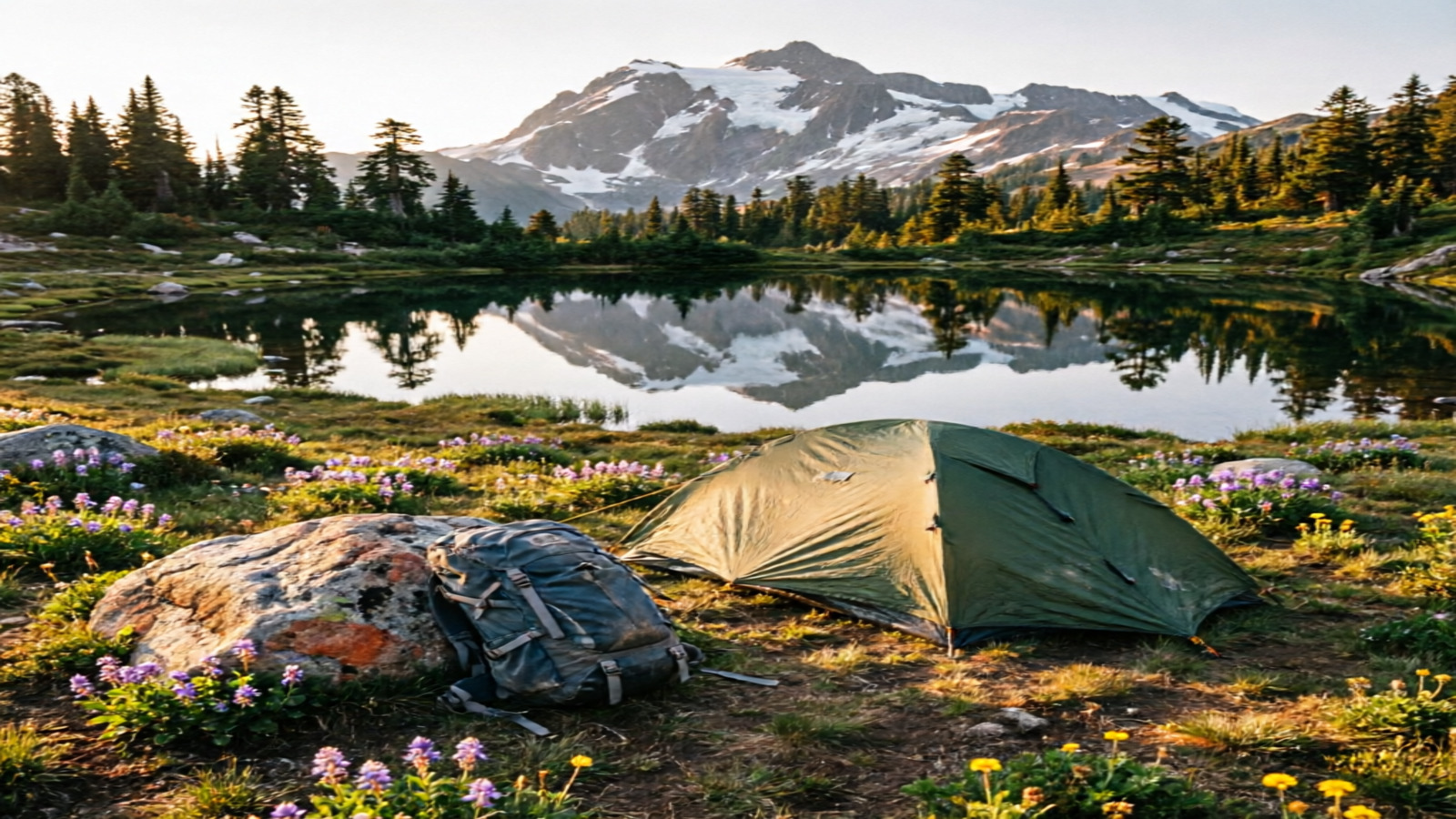
People choose backcountry camping for the solitude, the challenge, and the access to places that most visitors never see. A backcountry campsite on a high alpine lake or deep in a forest drainage feels fundamentally different from a developed campground, no matter how scenic.
Planning Your Backcountry Trip
Good planning separates a great backcountry camping trip from a miserable one. A few hours of prep at home prevents problems that are hard to solve miles from the trailhead.
Choose your destination carefully. Not all areas are suited for backcountry camping. National Parks like Olympic, Glacier, and Great Smoky offer established backcountry zones with clear regulations. National Forests and BLM land are more flexible but have fewer markers and trail maintenance. Research your route on AllTrails, the USFS website, or the NPS app. Know your daily mileage limit — most backcountry camping beginners should plan 5-8 miles per day with a full pack.
Permits and regulations. Check permit requirements early. Yosemite, Zion, and Enchantments permits are competitive and open on specific dates. Some National Forests require free self-issued permits at trailheads. Wilderness areas often have group size limits (typically 12 people max). If you’re crossing jurisdictional boundaries (NPS to USFS, for example), make sure you understand both sets of rules.
Season and weather. Weather is the single biggest variable in backcountry camping. High-elevation routes above 8,000 feet may not be snow-free until July. Desert canyons are brutal from June through August. The sweet spot for most US backcountry trips is late June through September in the mountains, and October through April in the desert. Always check the NOAA forecast for your specific area the morning of your trip, and know the signs of approaching weather — building cumulus clouds in the afternoon mean thunderstorms in the mountains.
Build your gear list from our camping packing list, then trim it ruthlessly. Every ounce matters when it’s on your back for multiple days.
Essential Backcountry Gear
Your gear makes or breaks a backcountry camping trip. The wrong choices add unnecessary weight; the right choices keep you warm, dry, and comfortable on multi-day backcountry camping adventures. The wrong choices add unnecessary weight; the right choices keep you warm, dry, and comfortable.
Backpack. Weekend trips (1-2 nights) work fine with a 40-55 liter pack. Multi-day trips (3-5 nights) need 60-75 liters. Get measured at an outfitter for proper torso length and hip belt size — a poorly fitting pack causes more suffering than any other piece of gear. Check our best camping backpacks for tested options across price ranges.
Shelter. Your three options are a tent, tarp, or hammock. A backpacking tent is the most versatile choice — it handles rain, wind, bugs, and cold. Tarps are lighter but offer no bug protection and less weather resistance. Hammocks work well in forests without extreme cold but require trees and add complexity with insulation underneath. Most people new to backcountry camping start with a lightweight tent.
Sleeping system. Your backpacking sleeping bag should be rated 10-15°F below the lowest temperature you expect. Pair it with an insulated pad — the ground steals heat fast, and even a 20°F bag won’t keep you warm on a frozen pad without sufficient R-value (aim for 4.0+ for three-season use). Read our sleeping bag selection guide for temperature rating details.
Footwear. Trail runners have replaced traditional hiking boots for many backpackers — they’re lighter, dry faster, and cause fewer blisters for most people on maintained trails. Heavy boots make sense off-trail, in rocky terrain, or with loads over 40 pounds. Break in whatever you choose well before your trip — blisters on day one of a multi-day hike can end your trip. See our best hiking boots and best hiking socks recommendations.
Navigation and essentials. Carry a paper map and compass as primary navigation — GPS devices and phone apps are useful supplements but batteries die and signals disappear. A headlamp with extra batteries, a compact first-aid kit, sun protection, bug repellent, and a water purification system round out the essentials. A lightweight camp stove weighs 6-10 ounces and makes hot meals possible, which matters on multi-day trips.
Food and Water Management
Food planning is where most backcountry camping beginners overcomplicate things. The goal is simple: enough calories to sustain your energy, light enough to carry, and easy enough to prepare on the trail.
Calorie density matters. Aim for 100-125 calories per ounce. Nuts, nut butter, cheese, salami, dried fruit, tortillas, and instant meals hit this range well. Fresh fruit and vegetables are heavy for their calorie content — fine for the first day, but avoid them for longer trips. A typical backpacker burns 3,000-5,000 calories per day depending on terrain and pack weight.
Meal ideas for a 3-day trip.
- Breakfast: Instant oatmeal with nut butter and dried fruit, or cold-soaked granola with powdered milk
- Lunch: Tortillas with nut butter and honey, or crackers with cheese and salami — no cooking required
- Dinner: Freeze-dried meals (Mountain House, Backpacker’s Pantry) are the easiest option at around 500-700 calories per pouch. Or cook instant rice or couscous with added protein
- Snacks: Trail mix, energy bars, jerky — eat frequently to maintain energy
Check our camping meal plan for structured multi-day menus and our easy camping meals for quick-cook options.
Water purification. Safe drinking water is non-negotiable for backcountry camping. Never drink untreated water in the backcountry — giardia, cryptosporidium, and bacteria are common in backcountry water sources. A squeeze filter (Sawyer Squeeze, Katadyn BeFree) handles most bacteria and protozoa and weighs under 3 ounces. Chemical treatment tablets (Aquatabs, Potable Aqua) kill everything but require a 30-minute wait and leave a chlorine taste. Boiling is always effective but uses fuel. Most experienced backpackers carry a filter as primary and tablets as backup.
Bear country food storage. Food storage is one of the most important backcountry camping skills to master. In grizzly habitat (Rockies, Alaska, North Cascades), bear-resistant canisters are often required by regulation. In black bear country (Appalachians, Sierra Nevada), proper food storage is strongly recommended even if not mandated. The basics: never keep food, toiletries, or scented items in your tent. Hang food in a bear bag or use a canister. Cook and eat at least 200 feet downwind from where you sleep.
Leave No Trace in the Backcountry
Leave No Trace isn’t optional ethics for backcountry camping — it’s the minimum standard for keeping wild places wild. The backcountry has no trash pickup, no rangers patrolling every campsite, and no one to clean up after you.
The seven principles applied to backcountry:
-
Plan ahead and prepare. Know the regulations. Carry the right gear. A prepared group doesn’t need to build fires for warmth, cut live trees, or create new campsites.
-
Travel on durable surfaces. Stay on established trails and camp in established sites when possible. In pristine areas, walk on rock, gravel, or dry grass rather than creating new paths through vegetation. Avoid trampling meadow plants and cryptobiotic soil crusts in desert environments.
-
Dispose of waste properly. Pack out all trash, including food scraps and toilet paper. Yes, toilet paper — bury it in a 6-8 inch cathole and pack out the used paper in a ziplock. Human waste should be buried 200 feet from water, trails, and camp. In some high-use alpine areas, pack out human waste using WAG bags.
-
Leave what you find. Don’t stack rocks into cairns (except for navigation markers on trailless routes), don’t pick wildflowers, don’t carve initials into trees, and don’t take rocks or artifacts. The next person deserves to see the same wild place you did.
-
Minimize campfire impact. Use a camp stove instead of fires wherever possible. Many backcountry areas have fire bans during dry season, and some wilderness areas prohibit fires year-round. If you do build a fire, use existing fire rings, keep fires small, and burn only dead and down wood smaller than your wrist. Drown your fire completely before leaving — if it’s too hot to touch, it’s not out.
-
Respect wildlife. Observe animals from a distance. Don’t feed them — habituated wildlife often has to be euthanized. Store food properly, make noise in bear country, and give snakes and other wildlife space on the trail. During mating season and when young are present, give extra distance.
-
Be considerate of other visitors. Keep noise levels reasonable, yield the trail to uphill hikers and horses, and camp out of sight of the trail when possible. Most people choose backcountry camping for solitude — respect that.
Safety and Navigation
Backcountry camping accidents are usually preventable. The most common causes are dehydration, hypothermia, falls, and getting lost — all manageable with basic preparation.
Navigation fundamentals. A topographic map and compass should always be in your pack, even if you also carry a GPS. Learn to read contour lines — tight contours mean steep terrain, and V-shaped contours pointing uphill indicate drainages where you’ll find water. Before your trip, trace your route on the map and note landmarks, water sources, bailout routes, and potential camp spots.
Weather awareness. Mountain weather changes fast. Afternoon thunderstorms are common above treeline from June through August — if you hear thunder, get off ridges and away from exposed areas immediately. Hypothermia can occur at temperatures well above freezing, especially when you’re wet and tired. Carry a lightweight rain shell and know the signs: shivering, confusion, slurred speech, and loss of coordination.
Wildlife encounters. Most wildlife wants to avoid you more than you want to avoid it. Give bears and moose at least 100 yards, rattlesnakes and other venomous snakes room to move away, and mountain lions distance (make yourself look big, don’t run). Keep food stored properly and your camp clean to avoid attracting animals at night. See our camping safety tips for detailed wildlife protocols.
River crossings. Never cross a fast-moving river that’s above your knees without assessing carefully. Look for the widest, slowest section — that’s usually the safest crossing point. Unbuckle your hip belt, cross facing upstream, and use trekking poles or a stick for stability. If the current sweeps you off your feet, float on your back with feet pointing downstream until you reach calm water.
Emergency communication. Cell service disappears on most backcountry camping trips. A satellite messenger (Garmin inReach, Zoleo) lets you text for help and trigger SOS from anywhere on Earth with a view of the sky. A personal locator beacon (PLB) is a simpler SOS-only option with no subscription fee. Both are worth carrying on multi-day trips.
Backcountry Camping Tips for Beginners
If this is your first backcountry camping trip, these practical tips will save you grief:
- Start with an overnight trip. One night out teaches you more about your gear and preferences than reading ten articles. Pick a trail within 5 miles of the trailhead for your first trip.
- Pack lighter than you think you need. Lay out all your gear, then remove 20%. The most common beginner mistake is overpacking “just in case” items. After two trips, you’ll know exactly what you use and what you don’t.
- Break in your boots before the trail. Blisters on the first mile can ruin a weekend. Wear your hiking footwear around town for a week before your trip.
- Test your gear at home. Set up your tent in the backyard. Cook a meal on your stove. Filter water using your filter. Discovering a broken stove or a missing tent pole at the trailhead is no fun.
- Travel with experienced partners. Your first few trips are much better with someone who knows camp setup, water treatment, and basic navigation. Most outdoor stores and hiking clubs organize beginner-friendly group trips.
- Expect things to go wrong and stay flexible. Weather changes, trails are harder than advertised, blisters happen, and water sources run dry. A good attitude matters more than perfect gear.
For more practical advice, browse our full camping tips collection, and if rain is in the forecast, our guide to camping in the rain covers staying dry and comfortable when conditions turn bad.
Sources: National Park Service Visitor Statistics 2024 (nps.gov), Leave No Trace Center for Outdoor Ethics (lnt.org), USDA Forest Service Recreation Data (fs.usda.gov), REI Co-op Expert Advice (rei.com/learn), Backpacker Magazine Gear Guides (backpacker.com).
Frequently Asked Questions
What is the difference between backcountry camping and car camping?
Car camping means you drive to a campsite with vehicle access and amenities like restrooms and fire rings. Backcountry camping requires hiking or paddling into remote areas with no facilities — you carry everything on your back. The gear, planning, and skill requirements are significantly different.
Do I need a permit for backcountry camping?
Most public lands require backcountry permits, especially National Parks, National Forests, and designated wilderness areas. Some are free and self-issued at trailheads; others require advance reservation up to 6 months ahead. National Parks like Yosemite and Zion have competitive permit systems that fill quickly.
How much water should I bring backcountry camping?
Plan 1 liter per person per 2 miles of hiking as a minimum, plus 1-2 liters for camp. The real answer: carry a water filter or purification tablets and plan to resupply from streams, lakes, or springs along your route. A Sawyer Squeeze or Katadyn BeFree filter weighs under 3 ounces and processes thousands of liters.
What is the best season for backcountry camping?
Summer (June–September) is most popular for high-elevation routes in the Rockies and Sierras. Spring and fall offer fewer crowds and milder temperatures at lower elevations. Winter backcountry camping requires specialized gear and experience — it's rewarding but adds avalanche risk and extreme cold to the equation.
How do I store food in bear country?
Use a bear-resistant canister where required (many National Parks mandate them). Where canisters aren't required, hang food in a bear bag at least 200 feet from camp, 10 feet off the ground, and 4 feet from the trunk. Never store food in your tent. Some areas in the Sierra Nevada and Adirondacks require canisters by law.
What is the Leave No Trace principle?
Seven principles that minimize human impact on wild areas: Plan ahead and prepare, travel on durable surfaces, dispose of waste properly, leave what you find, minimize campfire impact, respect wildlife, and be considerate of other visitors. These aren't just suggestions — many areas enforce them as regulations.