Car Camping Guide for Beginners: Everything You Need to Know
Learn what car camping is, plan your trip, set up your sleep system, find the best spots, and pack the right gear for a comfortable outdoor adventure.
What Is Car Camping?
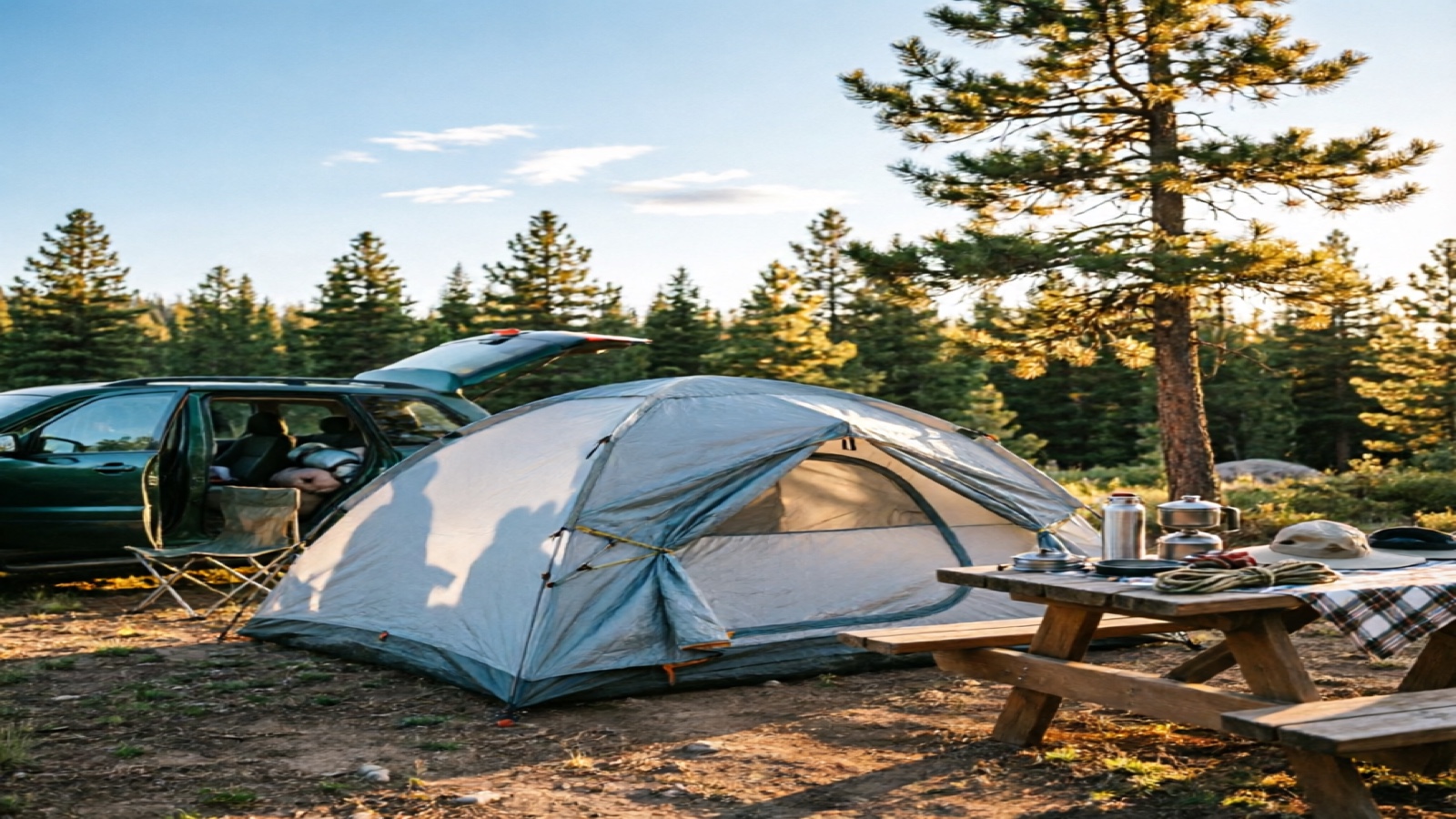
Car camping is driving your vehicle directly to a campsite and parking right next to your spot. Unlike backpacking, you don’t carry gear on your back — everything goes in the trunk. You can pitch a tent beside your car or sleep inside the vehicle itself.
This style is the most popular form of camping in the US, and for good reason. It’s accessible to complete beginners, works for families with small children, and lets you bring comforts that would be impossible on a hike. Whether you’re planning a weekend getaway or testing the waters before investing in serious gear, car camping is the easiest entry point into outdoor life.
Quick Answer: Car camping = drive to site, park next to your spot, set up camp. No hiking required. Bring whatever fits in your car. It’s the most beginner-friendly way to camp.
How Does It Compare to Other Styles?
Not sure if this style is right for you? Here’s how it compares to other popular approaches.
| Factor | This Guide | Backpacking | Glamping |
|---|---|---|---|
| Getting there | Drive to site | Hike in | Drive/arrange transport |
| Gear weight | No limit | Must carry all | Provided |
| Comfort | High | Low | Very high |
| Cost per night | $0–35 | $0–25 | $100–500 |
| Best for | Beginners, families | Experienced hikers | Non-campers |
| Planning effort | Low | High | None |
Choose this approach if you’re a first-timer, camping with kids (see our camping with kids guide), or want a low-stress weekend in nature. Backpacking is for those who want solitude and don’t mind physical effort. Glamping is for people who want nature without roughing it.
How to Plan Your First Trip
Learning how to car camp starts with solid planning. Follow these steps for a smooth first trip.
- Choose your dates. Late spring and early fall offer the best weather. Avoid peak mosquito season (June–July in most of the US) and check forecasts 3 days out.
- Pick a campsite. Developed campgrounds with bathrooms and running water are ideal for beginners. Book through recreation.gov for national parks and forests, or try Hipcamp for private land options.
- Plan your sleep setup. Tent or car? We’ll cover both in detail below. For a complete packing list by season, see our car camping checklist.
- Plan meals. Pre-make what you can at home. Sandwiches, foil packets, and one-pot meals work best. A cooler with block ice keeps food safe for 2–3 days.
- Set a budget. Campsite fees run $0–35/night. Gear is a one-time investment. Food costs the same as eating at home.
- Check regulations. Fire restrictions, pet policies, quiet hours, and bear canister rules vary by site. Check the campground website before you go.
How to Find Spots Near You
Searching “car camping near me” gives you three main categories of spots.
Developed campgrounds offer bathrooms, picnic tables, and fire rings. Find them on recreation.gov, state park websites, KOA, and Hipcamp. These cost $15–35/night and are best for first-timers.
Free dispersed camping on BLM land and national forests costs nothing but has no facilities. Use Campendium, iOverlander, or FreeCampsites.net. For everything about free camping, see our dispersed camping guide for beginners.
Private land camping through Hipcamp gives you unique spots — farms, vineyards, waterfront — for $20–80/night. Search Google Maps for “campground near [your city]” or use The Dyrt app to filter by amenities and price.
Sleep Setups: Tent vs. Sleeping in Your Car
Your sleep setup makes or breaks a camping trip. Here are your main options.
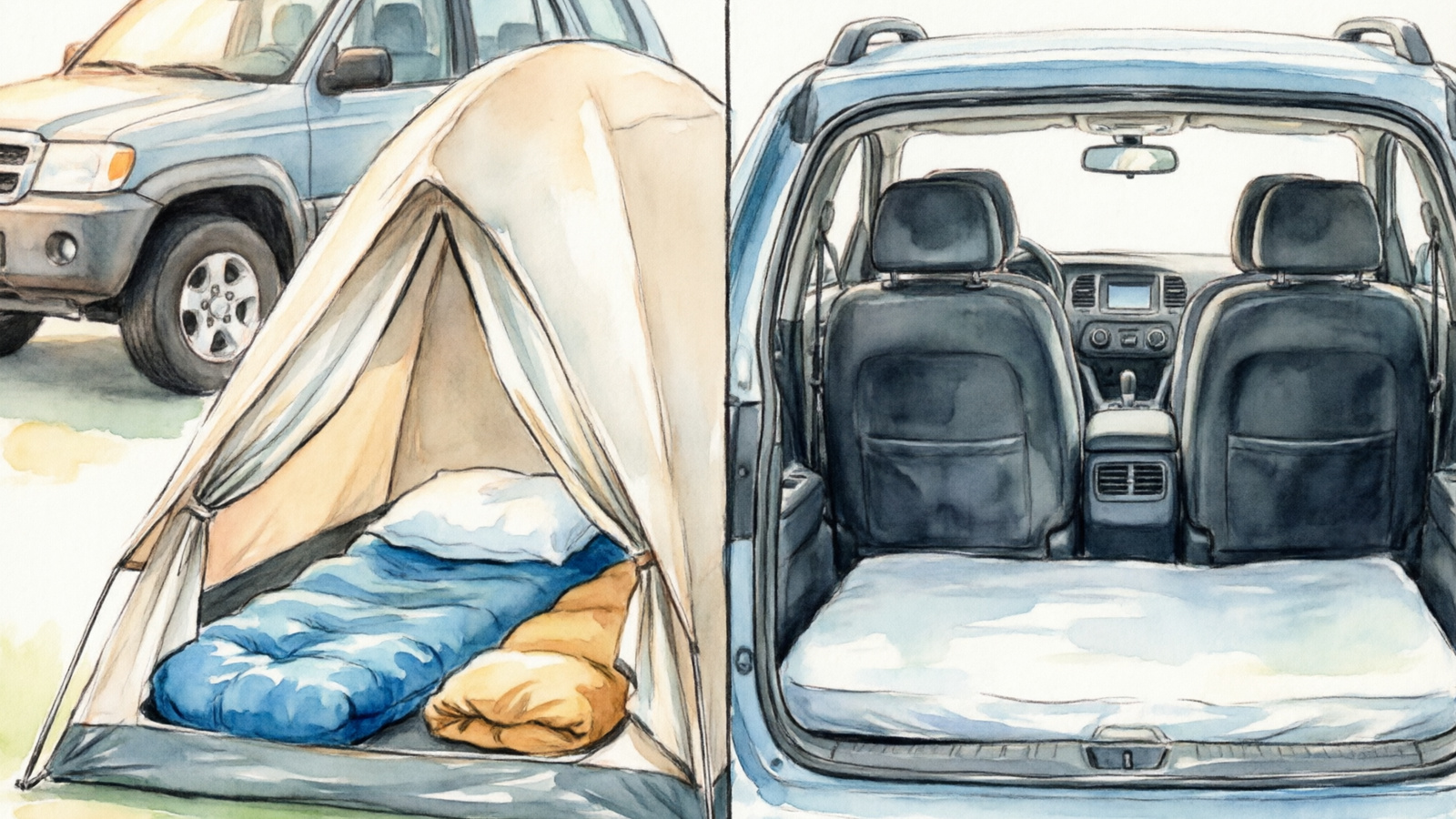
| Setup | Best For | Comfort | Setup Time | Weather Protection |
|---|---|---|---|---|
| Tent next to car | Families, groups | ★★★★ | 10–15 min | Moderate |
| SUV (fold-flat seats) | Solo/couple | ★★★ | 2 min | High |
| Truck bed + cap | Truck owners | ★★★★ | 5 min | High |
| Roof top tent | Frequent campers | ★★★★★ | 3 min | High |
Tent Camping
Most car campers use a tent. You get more space, better ventilation, and a separate area from your gear. Need help choosing? Read our tent buying guide and our best camping tent roundup.
UNP 6-Person Waterproof Camping Tent — This budget tent fits a family with room to spare at 10’×9’×78”H. What we like: double-layer waterproof design, five mesh windows for airflow, and setup under 10 minutes. What could be better: the carry bag is tight — rolling takes practice. Honest downside: the rainfly zippers snag easily on the fabric edge, which is frustrating in rain.
Sleeping in Your Car
SUV and truck owners can skip the tent entirely. A good car camping bed starts with fold-flat seats plus a quality sleeping pad. The right car camping pad makes the difference between tossing all night and sleeping soundly.
Yuzonc Double Sleeping Pad 4” Thick — A 4-inch-thick self-inflating pad built for two. What we like: built-in foot pump (no lung power needed), built-in pillow bump, and it rolls compact for car storage. What could be better: full inflation takes 5–8 minutes of pumping. Honest downside: the material squeaks when you shift weight, which light sleepers notice.
For more pad options, check our best camping sleeping pad review.
SUV and Vehicle-Specific Camping
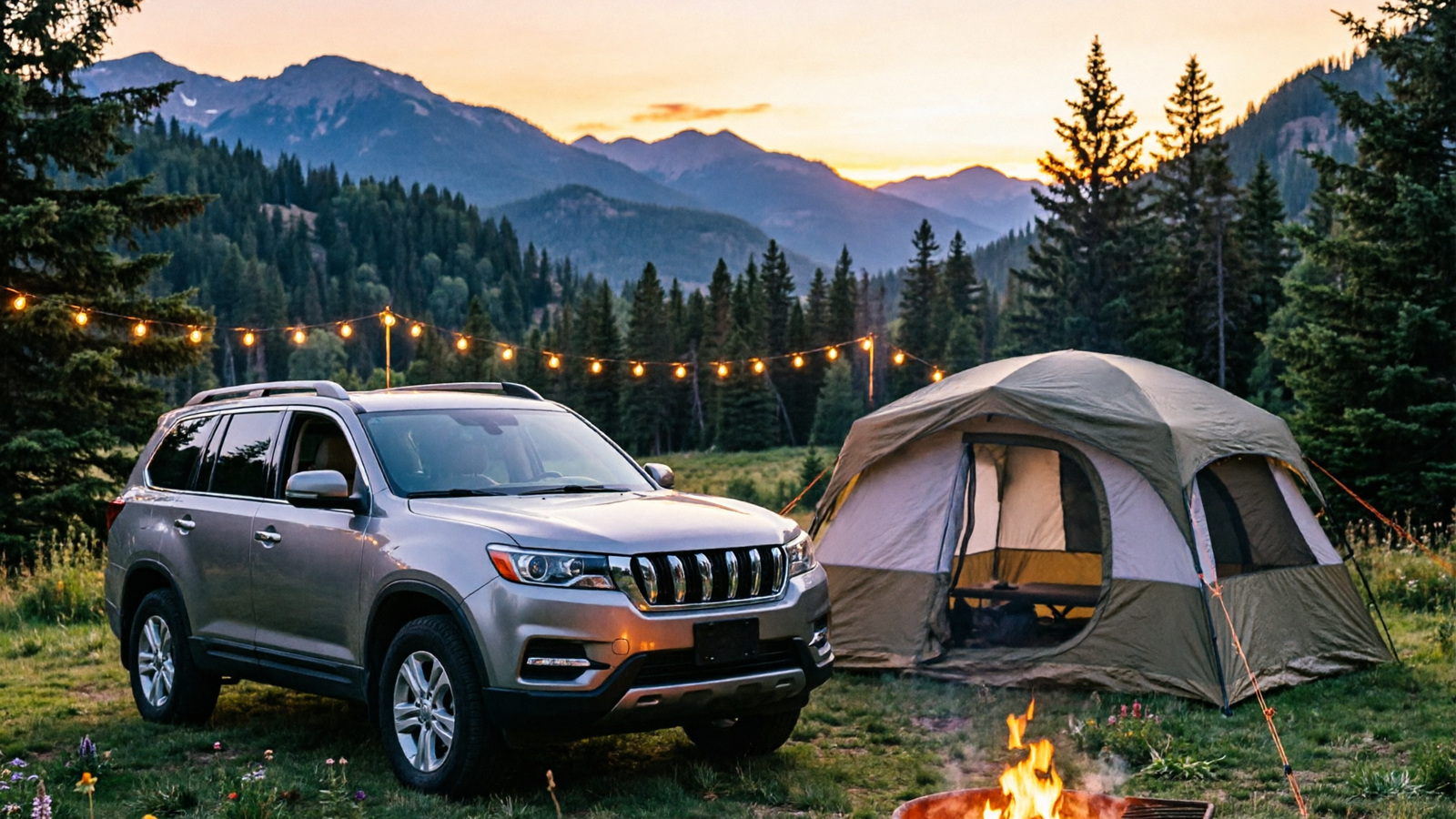
SUV car camping has exploded in popularity. SUVs with fold-flat seats — Subaru Outback, Toyota RAV4, Honda CR-V — are the most common platforms. Add a sleeping platform (DIY plywood or a commercial drawer system), window screens for ventilation, and privacy curtains.
Trucks offer the best platform. A bed cap or tonneau cover plus a mattress gives you a dedicated sleeping area. A tailgate seal keeps dust and water out.
Minivans are underrated camping machines. Remove the rear seats for a flat floor with more headroom than most SUVs. The Sienna and Odyssey are van-life favorites.
Chinese outdoor platform 8264.com notes that the ideal vehicle for 车载露营 prioritizes cargo length and flat-fold seating over ground clearance.
Essential Gear Checklist
Here’s a comparison of the core car camping gear you need, from shelter to safety. Every item below earns its place in a beginner’s kit — these are the car camping essentials that matter most.
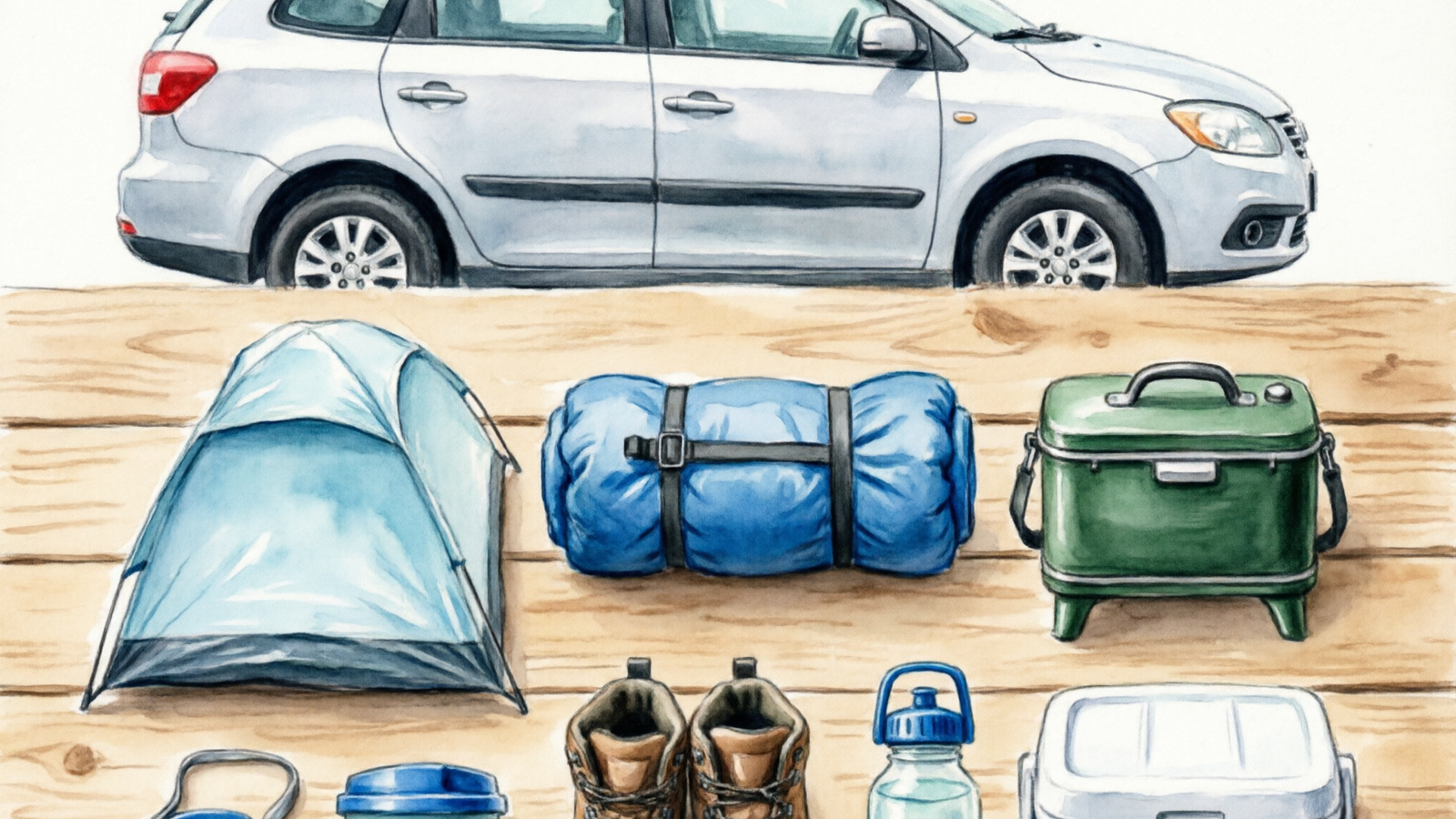
| Product | Category | Price | Best For |
|---|---|---|---|
| UNP 6-Person Tent | Tent | $72.67 | Families, groups |
| Yuzonc Double Pad | Sleeping Pad | $49.99 | Couples |
| Gas One GS-3400P Stove | Camp Stove | $38.42 | All-purpose cooking |
| Coleman 60-Qt Cooler | Cooler | $54.99 | Multi-day trips |
| Coleman Chair w/Cooler | Camp Chair | $71.98 | Comfort + drinks |
| Glocusent 135-LED Lantern | Lighting | $19.98 | Long-lasting illumination |
| LifeStraw Filter | Water Filter | $17.47 | Emergency backup |
| LHKNL Headlamp 2-Pack | Headlamp | $17.99 | Hands-free lighting |
| ThrileZ First Aid Kit | First Aid | $9.99 | Safety essential |
| Amazon Basics Tarp | Tarp | $18.99 | Ground cloth, rain shelter |
For detailed product comparisons in each category, see our best camping gear roundup.
Cooking at Camp
Gas One GS-3400P Dual Fuel Portable Stove — This stove runs on propane or butane, so you’re never stuck without fuel. What we like: piezo ignition (no matches needed), adjustable heat dial, and it comes with a carrying case. What could be better: no windscreen included, so flame control suffers in gusty weather. Honest downside: the fuel canister connection can loosen during transport — always check before lighting.
Coleman 60-Quart Rolling Cooler with Wheels — Wheeled design means you roll it from car to campsite instead of carrying 40+ pounds. What we like: holds 95 cans, insulated walls keep ice for days, and the drain plug makes cleanup easy. What could be better: it’s bulky — takes up significant trunk space. Honest downside: the lid seal isn’t perfectly tight on uneven ground, so keep it level for best ice retention. For more options, see our best camping coolers guide.
Campsite Comfort
Coleman Portable Camping Chair with 4-Can Cooler — A padded camp chair with a built-in cooler in the armrest. What we like: the cushioned seat and back are genuinely comfortable, and having four cold drinks within arm reach is a luxury at camp. What could be better: the carry bag is thin and rips after a season of use. Honest downside: the 250-lb weight limit excludes larger campers.
Glocusent 135 LED Camping Lantern — 1,500 lumens with up to 200 hours of runtime on low. What we like: doubles as a power bank, three color modes protect night vision, and the SOS mode is a smart safety feature. What could be better: it’s a newer product with a shorter track record. Honest downside: the USB-C port cover is flimsy and doesn’t seal well against dust.
Amazon Basics Waterproof Camping Tarp — A 9.5×11.3-foot multi-purpose tarp for ground cloths, rain flies, and shade. What we like: reinforced corners hold up to real use, and the price is hard to beat for the coverage area. What could be better: only available in one size, which may not cover larger tents. Honest downside: the metal grommets can pull out under heavy tension — use bungee cords instead of rigid tie-downs.
Food and Meal Planning
Camp food is one of the biggest advantages over backpacking. You can bring a cooler, fresh ingredients, and a real stove.
Meal structure: Instant oatmeal or breakfast burritos for morning. Sandwiches for lunch (no cooking). One-pot pasta, chili, or foil-packet meals for dinner.
Cooler management: Pre-freeze meals at home. Use block ice (not cubes). Drain melt water daily. A two-cooler system works best: drinks in one, food in the other.
According to Chinese outdoor site doyouhike.net (磨房), the most common beginner meal-planning mistake is over-packing perishable food — pre-portion meals into labeled zip-lock bags to reduce waste.
For detailed meal ideas, see our camping meal plan guide.
Safety and Etiquette
Safety Essentials
- Check weather before and during your trip. Have a bail-out plan.
- Wildlife awareness: In bear country, use bear canisters or store food in your locked vehicle. Never keep food in your tent.
- First aid: Carry a basic kit and know how to use it.
ThrileZ Mini First Aid Kit (150 Piece) — A waterproof hard-shell case with 150 supplies that fits in a glovebox. What we like: compact enough to forget about until you need it, covers cuts, burns, and splinters. What could be better: small quantities of each item — restock after one serious use. Honest downside: no tourniquet or SAM splint for backcountry injuries.
LifeStraw Personal Water Filter — Filters 1,000 gallons and removes 99.999999% of bacteria at just 2 ounces. What we like: zero maintenance, no batteries, pocket-sized emergency insurance. What could be better: doesn’t filter viruses or heavy metals. Honest downside: the flow rate slows significantly with murky water — pre-filter through a bandana.
LHKNL Rechargeable LED Headlamp (2-Pack) — Motion-sensor headlamps with 8 modes including red light. What we like: the 2-pack covers you and your partner, motion sensor lets you wave to turn on/off, and USB charging is convenient. What could be better: battery life varies widely between modes. Honest downside: the headband runs tight on larger heads — adjustable but not generous.
For comprehensive safety advice, see our camping safety tips guide.
Leave No Trace
Pack out all trash. Stay on established trails. Don’t transport firewood (buy local). Keep noise down during quiet hours. Leave your campsite cleaner than you found it.
Best Tips for Beginners
These tips separate a great first trip from a miserable one — the best car camping advice we can give after years of trial and error.
- Arrive before dark. Setting up in daylight is ten times easier.
- Bring more water than you think. One gallon per person per day minimum.
- Test gear at home. Pitch your tent and test your stove in the backyard first.
- Layer your clothing. Mornings and evenings drop 20–30°F even in summer.
- Use a tarp under your tent. Ground moisture seeps through tent floors fast.
- Plan for rain. Pack a rain jacket and know your backup plan.
- Start at developed campgrounds. Bathrooms and running water remove half the stress.
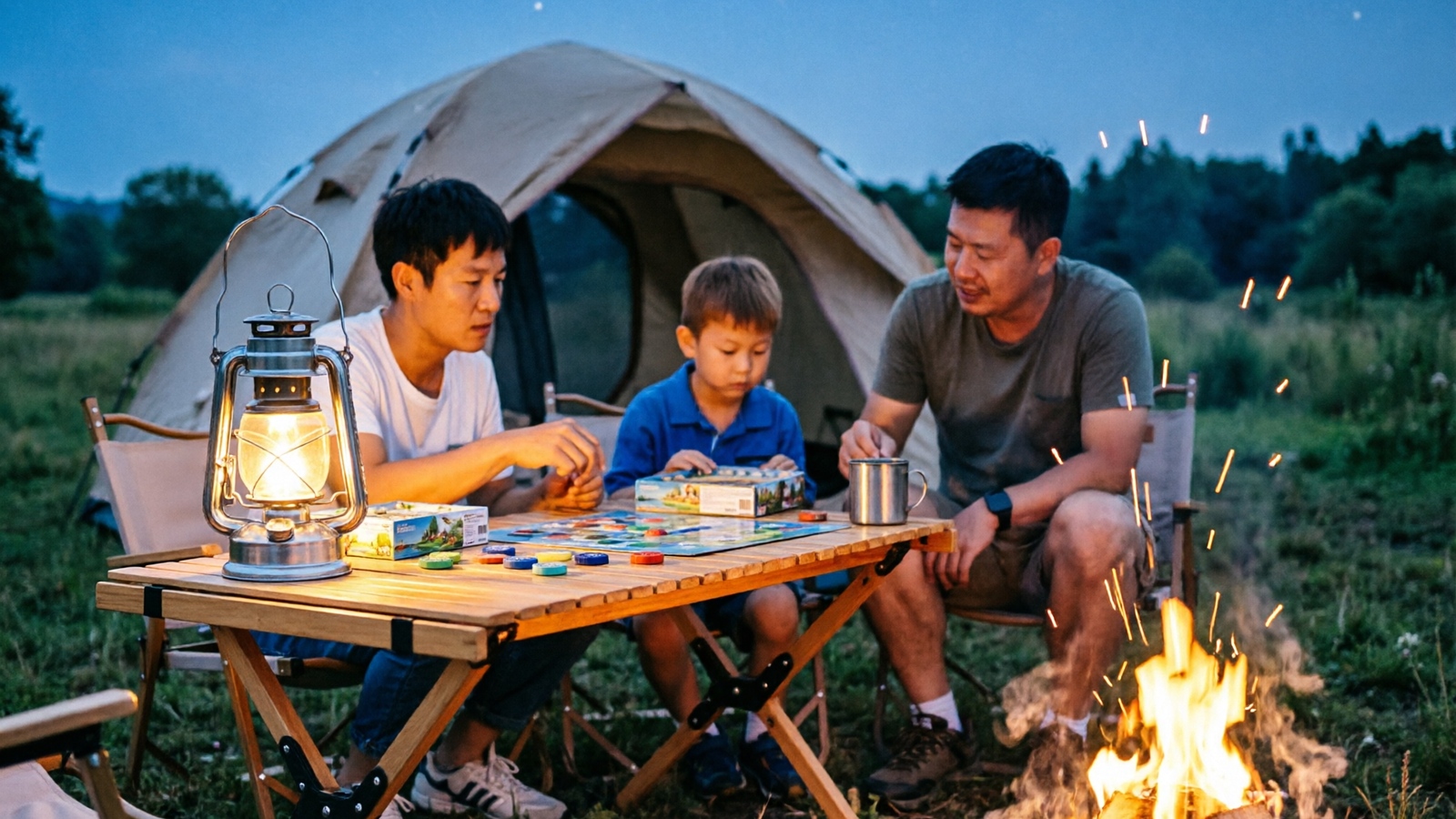
- Bring entertainment. Cards, books, camp chairs. See our camping games for ideas.
- Keep trips short at first. One to two nights, close to home.
“We brought way too much food our first trip and not enough water. Rookie mistake. Now I pre-portion meals into bags and always pack an extra gallon.” — Sarah T., first-time car camper
“The biggest game-changer was a good sleeping pad. We cheaped out on our first one and barely slept. Spent $50 on a thick pad and now I sleep better camping than at home.” — Marcus J., weekend car camper
Chinese outdoor community 2bulu.com (两步路) surveyed 2,000+ campers and found the #1 factor in trip satisfaction was sleep quality — investing in a good pad and bag matters more than any other gear decision.
For more clever tricks, see our camping hacks guide.
Sleeping in Your Vehicle
Car camping sleep setups vary from simple to elaborate. Sleeping in your car makes sense for road trips, quick overnights, and bad weather. Whether you call it car sleeping camping or just crashing in the back, you need three things: a sleeping pad, a sleeping bag, and ventilation.
Ventilation: Crack windows half an inch and add mesh screens. Without airflow, condensation builds fast.
Privacy: Reflectix window covers (DIY from Home Depot) block light and add insulation.
Legality: You can sleep at Walmart lots (with permission), BLM land, and most rest stops. Always check local ordinances — some cities prohibit overnight vehicle sleeping. 户外探险 magazine recommends calling ahead to confirm policies.
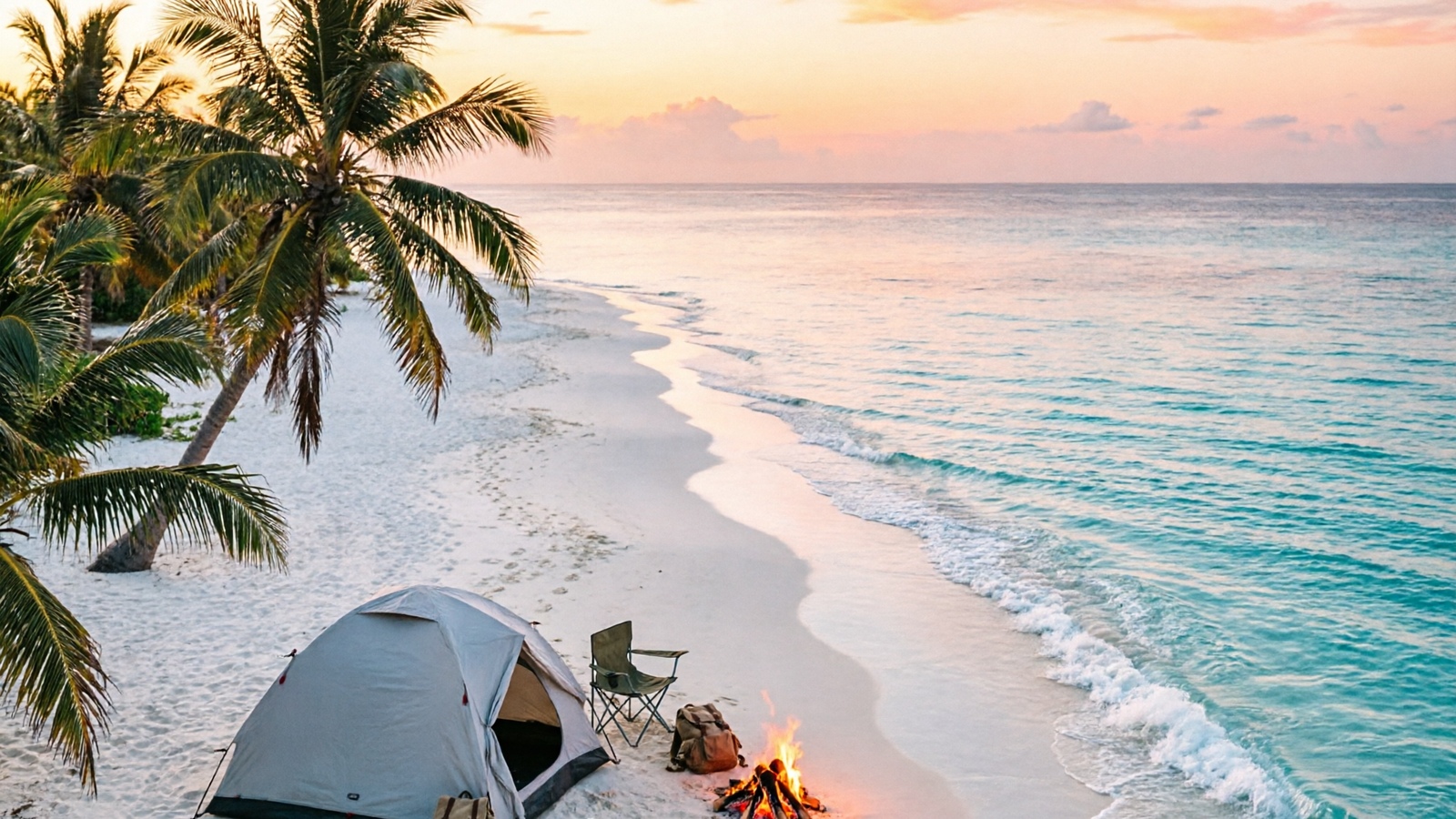
Beach Camping from Your Car
Car camping beach trips are a completely different experience. Sand gets into everything, salt air corrodes zippers, and wind can shred a poorly staked tent.
Beach-specific gear: Sand stakes (standard stakes don’t hold), a shade canopy, and a rinse kit. A tarp under your tent is non-negotiable.
Top spots: Padre Island National Seashore (TX), Assateague Island (MD/VA), Cape Hatteras National Seashore (NC), Oregon coast state parks.
Tide awareness: Always check tide charts and camp above the high-tide line.
“Camped at Assateague last summer and forgot sand stakes. Our tent literally blew away at 2 AM. The wild horses walking through camp at dawn made up for it though.” — Derek M., beach car camper
{ “@context”: “https://schema.org”, “@type”: “FAQPage”, “mainEntity”: [ { “@type”: “Question”, “name”: “What is car camping?”, “acceptedAnswer”: { “@type”: “Answer”, “text”: “Car camping means driving your vehicle to a campsite and setting up your tent or sleeping in your car right next to where you park. You don’t have to hike in carrying gear, so you can bring heavier, more comfortable equipment.” } }, { “@type”: “Question”, “name”: “Can you sleep in your car while camping?”, “acceptedAnswer”: { “@type”: “Answer”, “text”: “Yes. Many campers fold down seats and use a sleeping pad or mattress in their SUV, hatchback, or truck bed. It’s warmer than a tent in cold weather and faster to set up, though space is limited compared to tent camping.” } }, { “@type”: “Question”, “name”: “What do I need for my first car camping trip?”, “acceptedAnswer”: { “@type”: “Answer”, “text”: “Shelter (tent or car sleep setup), a sleeping bag rated for the season, a sleeping pad, water, food, a headlamp, and a first aid kit.” } }, { “@type”: “Question”, “name”: “How do I find car camping spots near me?”, “acceptedAnswer”: { “@type”: “Answer”, “text”: “Use recreation.gov for national park and forest campgrounds, Campendium for free dispersed sites, and iOverlander for crowdsourced spots. State parks and private campgrounds like KOA and Hipcamp are also easy to find with a map search.” } }, { “@type”: “Question”, “name”: “Is car camping safe?”, “acceptedAnswer”: { “@type”: “Answer”, “text”: “Yes, especially at established campgrounds with other campers nearby. Lock your vehicle at night, store food in bear canisters or your car in bear country, and follow basic camping safety tips.” } }, { “@type”: “Question”, “name”: “What is the best vehicle for car camping?”, “acceptedAnswer”: { “@type”: “Answer”, “text”: “SUVs and trucks with fold-flat seats are most popular — Toyota RAV4, Subaru Outback, Honda CR-V, and pickup trucks work well. Minivans like the Sienna and Odyssey are surprisingly capable too. Any car works for tent-based car camping.” } } ] }
Frequently Asked Questions
What is car camping?
Car camping means driving your vehicle to a campsite and setting up your tent — or sleeping in your car — right next to where you park. You don't have to hike in carrying gear, so you can bring heavier, more comfortable equipment.
Can you sleep in your car while camping?
Yes. Many campers fold down seats and use a sleeping pad or mattress in their SUV, hatchback, or truck bed. It's warmer than a tent in cold weather and faster to set up, though space is limited compared to tent camping.
What do I need for my first car camping trip?
Shelter (tent or car sleep setup), a sleeping bag rated for the season, a sleeping pad, water, food, a headlamp, and a first aid kit. For a full packing list, see our car camping checklist.
How do I find car camping spots near me?
Use recreation.gov for national park and forest campgrounds, Campendium for free dispersed sites, and iOverlander for crowdsourced spots. State parks and private campgrounds (KOA, Hipcamp) are also easy to find with a map search.
Is car camping safe?
Yes, especially at established campgrounds with other campers nearby. Lock your vehicle at night, store food in bear canisters or your car in bear country, and follow basic camping safety tips. Dispersed sites require more awareness but are generally safe.
What is the best vehicle for car camping?
SUVs and trucks with fold-flat seats are most popular — Toyota RAV4, Subaru Outback, Honda CR-V, and pickup trucks work well. Minivans like the Sienna and Odyssey are surprisingly capable too. Any car works for tent-based car camping.