Best Camping Breakfast: 20 Easy Recipes for Your Next Trip
20 camping breakfast ideas from campfire classics to no-cook. Make-ahead recipes, vegetarian choices, and essential gear for camp mornings.
A good camping breakfast sets the tone for the entire day. Whether you are hiking a ridge at dawn or sitting by the lake with a hot cup of coffee, what you eat first thing matters more at camp than it does at home.
Cold nights, early starts, and physical activity mean your body burns through calories fast. A proper morning meal replaces what you lost overnight and fuels whatever comes next — a summit push, a long paddle, or simply keeping up with the kids.
This guide covers 20 camping breakfast ideas organized by cooking method: campfire recipes, make-ahead options you prep at home, one-pot meals for minimal cleanup, and no-cook choices for mornings when even lighting a stove feels like too much.
Essential Gear for Camping Breakfasts
Before jumping into recipes, make sure you have the right setup. You do not need a fully stocked kitchen, but a few key pieces of gear make morning cooking significantly easier.
A reliable camp stove is the foundation. The Coleman Triton 2-Burner Propane Stove gives you two independent burners, so you can scramble eggs on one side and brew coffee on the other. Its 22,000 BTUs handle wind and cold mornings without struggling. If you prefer a more compact option that runs on both propane and butane, the Gas One GS-3400P Dual Fuel Stove fits in a backpack and comes with its own carrying case.
For cookware, a Lodge 10.25-Inch Cast Iron Skillet is hard to beat. It holds heat evenly over a campfire or stove, works for everything from eggs to pancakes to hash, and actually gets better with use. Pair it with a Reynolds Heavy Duty Aluminum Foil roll for foil-packet meals.
To keep perishables like eggs, cheese, and bacon cold, a Coleman 60qt Rolling Cooler with wheels saves your back on the walk from car to campsite.
And for coffee — because no camping breakfast is complete without it — the COLETTI Bozeman Percolator brews up to 9 cups on a camp stove or directly over fire. If French press is more your style, the STANLEY Stay-Hot French Press keeps coffee hot for 4 hours and is virtually indestructible.
For more cooking gear recommendations, see our guides on camping cookware and camping coolers.
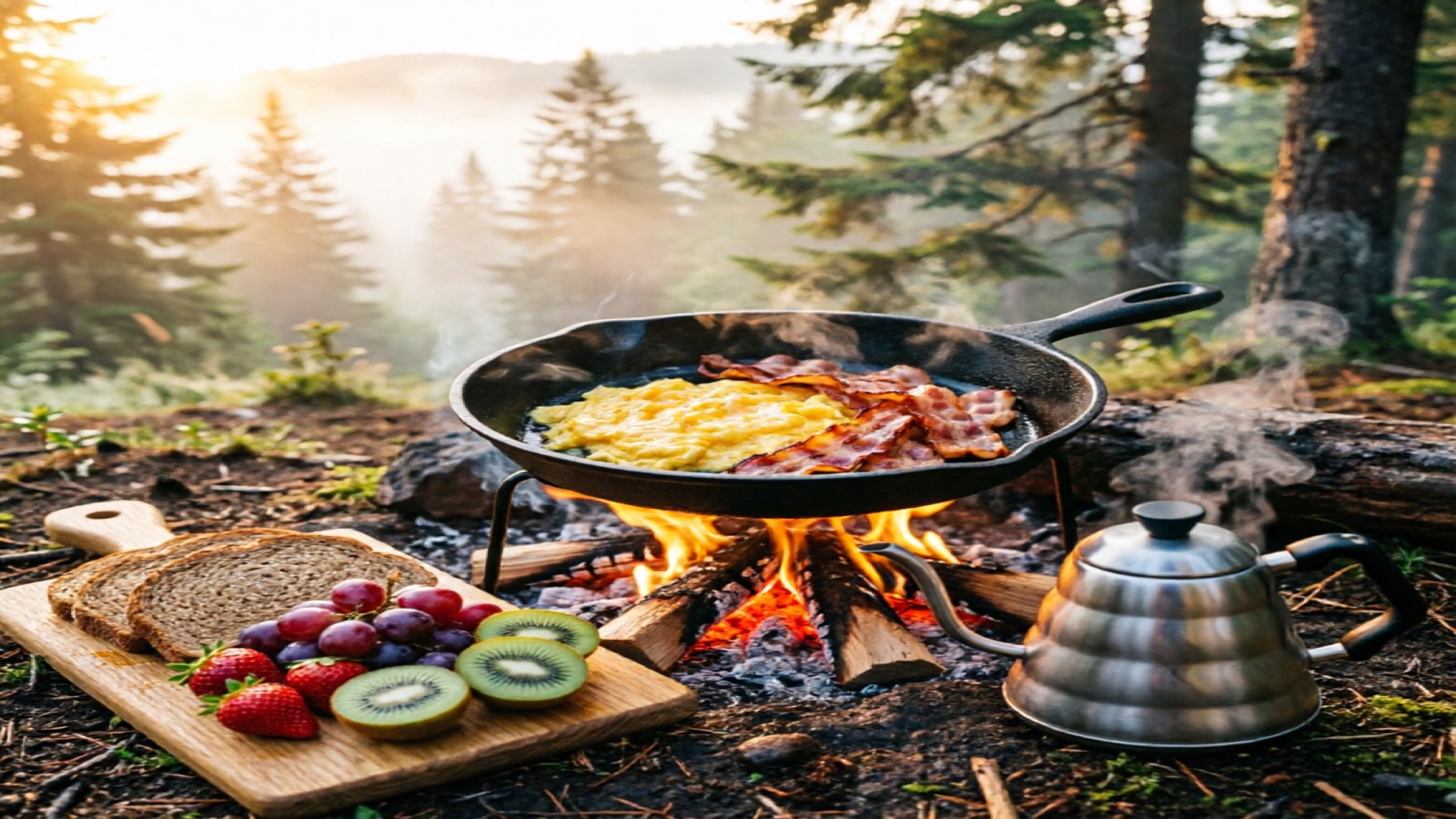
Campfire Egg Scramble with Veggies
This is the classic camping breakfast for good reason. It is simple, filling, and works with almost any combination of vegetables and cheese you have on hand.
Prep your vegetables at home — dice bell peppers, onions, and tomatoes into a container. At camp, heat oil in your cast iron skillet over the campfire or stove. Add the vegetables first and cook for 3-4 minutes until softened. Crack eggs directly into the pan (or pour from your pre-cracked container) and stir gently. Season with salt, pepper, and a pinch of paprika.
Top with shredded cheese and serve with warm tortillas. Serves 2-3 people and takes about 10 minutes from start to finish.
Foil-Packet Breakfast Hash
Foil-packet cooking is one of the best techniques for camp meals because it requires almost no cleanup. This breakfast hash combines potatoes, eggs, and bacon into a single packet per person.
At home, cube potatoes into half-inch pieces and pre-cook them halfway in the microwave (about 3 minutes). This step is important — raw potatoes take too long to cook in foil over coals. Pack the par-cooked potatoes with diced onions and pre-cut bacon strips.
At camp, tear a sheet of heavy-duty foil about 18 inches long. Layer potatoes, onions, and bacon in the center. Crack an egg on top, season well, and fold the foil into a sealed packet. Place directly on hot coals for 10-12 minutes, flipping once halfway through.
Open carefully — the steam is hot. The egg should be set and the potatoes golden.
Make-Ahead Breakfast Burritos
These are the ultimate grab-and-go camping breakfast. Make them at home, freeze them, and reheat at camp. They double as a cooler ice pack on the first day.
For each burrito: scramble one egg with cheese, cooked sausage or bacon, and diced peppers. Wrap tightly in a flour tortilla, then wrap the whole thing in foil. Freeze overnight before your trip.
At camp, place the foil-wrapped burrito on a camp stove or grill over medium heat for about 8 minutes, turning occasionally. If you are cooking over a campfire, place it on a rock near (not in) the coals.
Make 6-8 burritos at once and eat them over the first two mornings. They thaw slowly in the cooler and reheat perfectly.
Campfire Pancakes
Pancakes at camp are easier than most people think. The trick is pre-mixing your dry ingredients at home.
Combine flour, sugar, baking powder, and salt in a ziplock bag. Label it with the amount of water to add. At camp, pour the dry mix into a bowl, add water, and stir until just combined — a few lumps are fine.
Heat oil or butter in your cast iron skillet over medium heat. Pour about 1/4 cup of batter per pancake. Watch for bubbles forming on the surface and edges setting, then flip. Each side takes about 2 minutes.
Serve with maple syrup packets (available at any grocery store) or a drizzle of honey. Add blueberries or chocolate chips to the batter for variety.
Overnight Oats for Camping
Overnight oats are the best no-cook camping breakfast for hot mornings when you do not want to turn on a stove. Prepare them the night before and they are ready when you wake up.
In a jar or container, combine 1/2 cup rolled oats, 1/2 cup shelf-stable milk (or powdered milk mixed with water), 1 tablespoon chia seeds, and a drizzle of honey. Add dried fruit — raisins, cranberries, or chopped apricots work well. Stir, seal, and leave in the cooler overnight.
By morning the oats will have absorbed the liquid and softened into a creamy, pudding-like consistency. Eat cold right from the jar. Add a handful of nuts or granola for crunch.
This recipe scales easily — make 4-5 jars at once for a group.
One-Pot Breakfast Skillet
When you are cooking for a group, a one-pot breakfast skillet feeds everyone with minimal cleanup. This is the camping version of a diner-style breakfast hash.
In your cast iron skillet over medium-high heat, brown 1/2 pound of breakfast sausage, breaking it into pieces. Remove the sausage and set aside. In the same pan, cook diced potatoes in the rendered fat until crispy — about 8 minutes. Add diced onions and bell peppers, cooking another 3 minutes.
Return the sausage to the pan and crack 4-6 eggs over the top. Cover with foil or a lid and cook until the eggs are set, about 5 minutes. Top with shredded cheese and serve directly from the skillet.
This recipe serves 4-6 people. The entire meal cooks in one pan, which means one pan to wash.
For a complete outdoor cooking setup, check out our easy camping meals guide for more one-pot recipes.
No-Cook Camping Breakfasts
Not every morning at camp calls for cooking. On hiking days when you need to pack up fast, or on lazy mornings when the stove stays cold, these no-cook options still deliver solid nutrition.
Peanut butter and banana tortilla wrap: Spread peanut butter on a flour tortilla, place a peeled banana inside, and roll it up. Quick, calorie-dense, and no refrigeration needed.
Granola with shelf-stable milk: Pour granola into a bowl and add shelf-stable milk or powdered milk mixed with water. Add dried fruit for extra calories.
Trail mix and beef jerky: Not fancy, but effective. A handful of trail mix plus a stick of jerky provides protein, fat, and carbs to start the day.
Pre-made muffins or banana bread: Bake at home before the trip. Wrap individually and store in the cooler. They keep for 3-4 days and pair well with morning coffee.
Healthy and Vegetarian Camping Breakfasts
Camping does not mean you are limited to bacon and eggs. These options work for vegetarians and anyone looking for lighter morning meals.
Avocado toast on tortillas: Mash half an avocado on a warm tortilla. Sprinkle with salt, pepper, and red pepper flakes. Add a squeeze of hot sauce if you packed it. This works as a side or a light breakfast on its own.
Tofu scramble: Crumble firm tofu into a skillet with turmeric, nutritional yeast, garlic powder, and salt. Sauté with diced peppers and onions. The turmeric gives it a yellow color similar to eggs, and the nutritional yeast adds a savory, cheesy flavor.
Yogurt parfait: Pack shelf-stable yogurt cups or a container of Greek yogurt in the cooler. Layer with granola and berries in a cup. Simple and refreshing on warm mornings.
Oatmeal with nut butter and fruit: Cook instant oats with hot water from your camp stove. Stir in a spoonful of peanut or almond butter and top with dried fruit. The nut butter adds protein and healthy fats.
Breakfast Meal Prep Tips for Camping
A little planning before the trip makes camping breakfasts smoother and less stressful.
Pre-chop everything at home. Dice onions, peppers, and potatoes before you leave. Store them in labeled containers. This saves time and keeps your campsite cleaner.
Pre-crack eggs into a bottle. Crack a dozen eggs into a water bottle or sealed container. They keep for 2-3 days in a cooler and pour directly into the pan. No eggshells at camp.
Pre-measure dry ingredients. Pancake mix, oatmeal portions, and seasoning blends can all be measured into ziplock bags at home. Label each one.
Plan your meals in order. Eat perishable items (fresh eggs, cheese, meat) in the first 2 days. Transition to shelf-stable options (powdered eggs, dried fruit, granola) for the rest of the trip.
For a complete meal planning system, see our camping meal plan guide with templates and grocery lists.
Common Mistakes to Avoid
Even experienced campers make these breakfast mistakes. Learning from them saves time and food.
Forgetting cooking oil or butter. Eggs stick to cast iron without fat. Pack a small bottle of oil or a few tablespoons of butter in a container.
Over-packing perishables. A massive cooler of fresh ingredients sounds great until Day 3 when half of it has gone bad. Be realistic about how much perishable food you will actually eat.
Skipping the salt. Food tastes less salty at altitude and in cold weather. Season more aggressively than you would at home.
Not having a coffee plan. Mornings without coffee at camp are rough. Even if you skip all other cooking, have a way to make coffee. A percolator or French press is worth the space.
Underestimating cook times. Everything takes longer at camp — water boils slower at altitude, campfires heat unevenly, and wind cools pans fast. Add 50% more time than you think you need.
For more camping tips, check out our camping tips for beginners and how to build a campfire guides.
What to Pack for a Camping Breakfast
A well-stocked breakfast kit makes morning cooking fast and painless. Here is a basic packing list that covers most camping breakfast recipes.
Dry goods: rolled oats, pancake mix, flour, sugar, salt, pepper, coffee, powdered milk, granola, dried fruit, tortillas.
Perishables (first 2 days): fresh eggs (or pre-cracked in a bottle), bacon or sausage, shredded cheese, butter, fresh fruit.
Condiments: maple syrup packets, honey, hot sauce, cooking oil, peanut butter.
Gear: cast iron skillet, spatula, foil, sealed containers for prepped ingredients, a camping utensils set with tongs and a knife.
Keep your breakfast ingredients in a separate bag or container inside the cooler. This prevents digging through dinner leftovers at 6 AM when you are half-awake and hungry. Pre-organizing by meal also helps you see at a glance whether you have enough food for the remaining days.
If you are camping with kids, assign each person their own breakfast container with their preferred items. It eliminates arguments and speeds up the morning routine — especially helpful when camping with children. See our camping with kids guide for more family camping strategies.
Frequently Asked Questions
What is the best breakfast for camping?
The best camping breakfasts are quick, filling, and use minimal gear. Foil-packet egg scrambles, oatmeal with dried fruit, and breakfast burritos pre-made at home are all excellent choices.
How do you make eggs while camping?
Crack eggs into a sealed container before your trip. At camp, cook them in a cast iron skillet over a campfire or camp stove. Foil-packet eggs are even easier — just seal eggs with veggies in foil and place on coals.
What can I eat for breakfast while camping without cooking?
No-cook camping breakfasts include overnight oats, peanut butter wraps, granola with shelf-stable milk, fresh fruit, beef jerky, and pre-made breakfast burritos eaten cold.
Can you make pancakes while camping?
Yes. Bring pre-mixed dry pancake batter in a ziplock bag. Add water at camp and cook on a greased cast iron skillet or griddle over medium heat. Flip when bubbles form on top.
What breakfast foods do not need refrigeration?
Oatmeal, instant grits, peanut butter, honey, dried fruit, nuts, granola bars, tortillas, shelf-stable milk, and powdered eggs all keep well without a cooler.
How do I plan breakfasts for a week-long camping trip?
Prep 2-3 make-ahead meals (burritos, muffins, egg bites) for the first days. Pack dry goods (oatmeal, pancake mix) for mid-trip. Use fresh ingredients early and rely on shelf-stable items later.