27 Camping Tips to Save Time, Money & Frustration
Practical camping tips from experienced campers: gear hacks, campsite selection, weather prep, food storage, and beginner mistakes to avoid.
Camping trips should be fun, not frustrating. But too many beginners learn that lesson the hard way — arriving at a flooded campsite at dusk, realizing they forgot tent stakes, or waking up at 3 AM because their sleeping bag couldn’t handle the cold.
These tips come from years of trial, error, and plenty of miserable nights. Each one saves time, money, or both. They’re organized from packing and campsite selection to weather prep, food storage, sleep quality, and common mistakes.
If you’re planning your first trip, start with our camping guide for beginners for the basics. These tips complement that guide with practical shortcuts that experienced campers use without thinking.
Pack Smart, Not Heavy
These camping tips start with packing — the foundation of every good trip. Packing light isn’t about deprivation — it’s about packing the right things.
Tip 1 — Multi-purpose items save weight and money. A waterproof tarp works as a tent footprint, rain shelter, sun shade, and gear cover. The Amazon Basics Waterproof Camping Tarp 8x10 ft ($10.39) is the most versatile piece of camping gear you can buy for under $15.
Tip 2 — Pack a checklist and check things off as you load the car. Your car camping checklist should cover shelter, sleep, food, and safety categories. Checking items off at the campsite means nothing important stays in your garage.
Tip 3 — Bring a multitool for camp tasks. A single tool that combines an axe, knife, saw, and hammer replaces half a drawer’s worth of individual tools. The RoverTac 14-in-1 Multitool Camping Axe ($22.99) covers chopping kindling, opening cans, cutting paracord, and hammering tent stakes.
Tip 4 — Bring more water than you think you need. The general rule is one gallon per person per day for drinking and cooking. Add a gallon more if you’re car camping and have the space.
Tip 5 — Pack a first aid kit even for weekend trips. Minor cuts, bug bites, and headaches happen more often than you’d expect. For full safety preparation, see our camping safety tips guide.
Campsite Selection Hacks
The best camping tips often come down to where you pitch your tent.
Where you camp matters more than what gear you bring. These site selection tips make the biggest difference.
Tip 6 — Arrive early, especially on weekends. Good sites fill by noon on Friday. Arriving by 10 AM gives you first pick of flat, shaded spots with good drainage.
Tip 7 — Look for high ground with natural drainage. Avoid low spots and dry creek beds — they become rivers in rain. A slight rise keeps water flowing away from your tent. More details in our camping in the rain guide.
Tip 8 — Check the sun angle before setting up. A west-facing tent gets hot afternoon sun. A south-facing site gets morning sun, which dries dew quickly. In winter, south-facing keeps you warmer.
Tip 9 — Stay near amenities for your first few trips. Beginners do better close to restrooms and water. You can graduate to remote spots once you’ve dialed in your gear and routine. For choosing the right shelter setup, see how to choose a tent for car camping.
Tip 10 — Walk the full site before unpacking. Check for ant hills, dead branches overhead (widowmakers), and the slope of the ground. Five minutes of inspection prevents hours of misery.
Weather-Proof Your Trip
These camping tips keep you comfortable when the forecast changes — because it always does.
Tip 11 — Check the forecast 48 hours out, then again 12 hours before leaving. NOAA and Weather.gov give the most reliable data. If severe weather is predicted, reschedule — no trip is worth a thunderstorm.
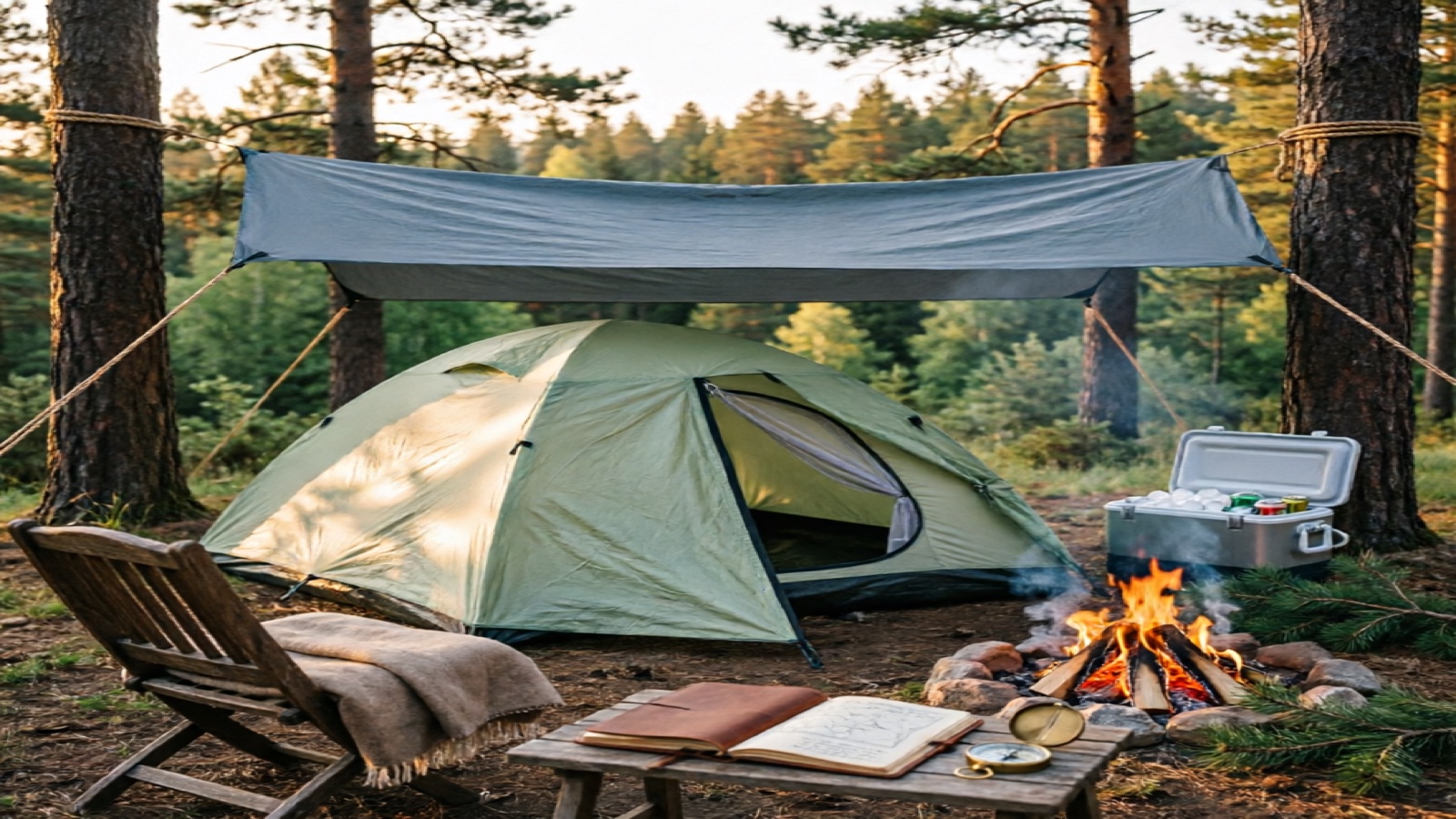
Tip 12 — Pack a tarp and paracord regardless of the forecast. Weather shifts fast in the mountains and desert. A tarp overhead catches unexpected rain and provides shade in unexpected sun.
Tip 13 — Bring layers, not one heavy jacket. A base layer, insulating fleece, and rain shell adapt to changing conditions better than a single bulky coat. For cold-weather specifics, see our camping in winter guide.
Tip 14 — Stake everything down, even on calm days. Wind picks up fast, and a loose rain fly or tarp can blow away while you’re hiking. Use all guy-lines your tent came with.
Tip 15 — Seal tent seams before every trip. Factory tape peels over time, and the first heavy rain exposes every gap. GEAR AID Seam Grip works on nylon, polyester, and canvas — apply 12 hours before departure for full cure time.
Food Storage That Works
Food management separates comfortable camping trips from miserable ones. These camping tips cover safety, freshness, and convenience.
Tip 16 — Store all food and scented items away from your tent. Bears and raccoons can smell food from a mile away. Use bear-resistant containers or hang bags 10 feet up and 4 feet from tree trunks.
Tip 17 — Pre-chop vegetables and pre-mix dry ingredients at home. Less prep at camp means less time handling food outdoors, fewer spills, and faster meals. See our camping meal plan for make-ahead recipes.
Tip 18 — Keep drinks cold with a quality cooler bag. A soft-sided cooler that holds 48 cans keeps food fresh and drinks cold all weekend. The TOURIT Soft Sided Cooler Bag ($32.99) collapses flat when empty and stores easily between trips. For full cooler comparisons, see our best camping coolers reviews.
Tip 19 — Pack a separate trash bag and close it every night. Open trash attracts wildlife to your campsite overnight. Seal it, store it with your food, and dispose of it properly when you leave.
Tip 20 — Bring a wash basin and biodegradable soap. Cleaning dishes in a lake or stream pollutes the water source. Wash 200 feet from water, use minimal soap, and scatter strained gray water.
Campfire Tips That Actually Help
A good campfire transforms a cold evening into a memorable night. These tips make fire-building reliable and safe.
Tip 21 — Bring a ferro rod fire starter as backup. Ferrocerium rods throw 3,000-degree sparks and work when wet — unlike matches and lighters that fail in rain. The bayite 4 Inch Ferrocerium Fire Starter ($31.49) includes a paracord lanyard and built-in striker groove.
Tip 22 — Gather three times more firewood than you think you need. Wood burns faster than expected, and leaving camp to search for more in the dark is never fun. Collect dry standing dead wood — it burns cleaner than wood from the ground.
Tip 23 — Build your fire before full dark. Setting up a fire ring and gathering wood in daylight is far easier than stumbling around with a headlamp when the temperature drops. For a full walkthrough, see our guide on how to build a campfire.
Tip 24 — Keep a bucket of water and a shovel next to the fire. Never leave a fire unattended, even for a minute. Drown, stir, drown again, then feel for heat — a fire isn’t out until it’s cold to the touch.
Sleep Better Outdoors
Cold nights and hard ground are the biggest complaints from new campers. These camping tips fix both problems.
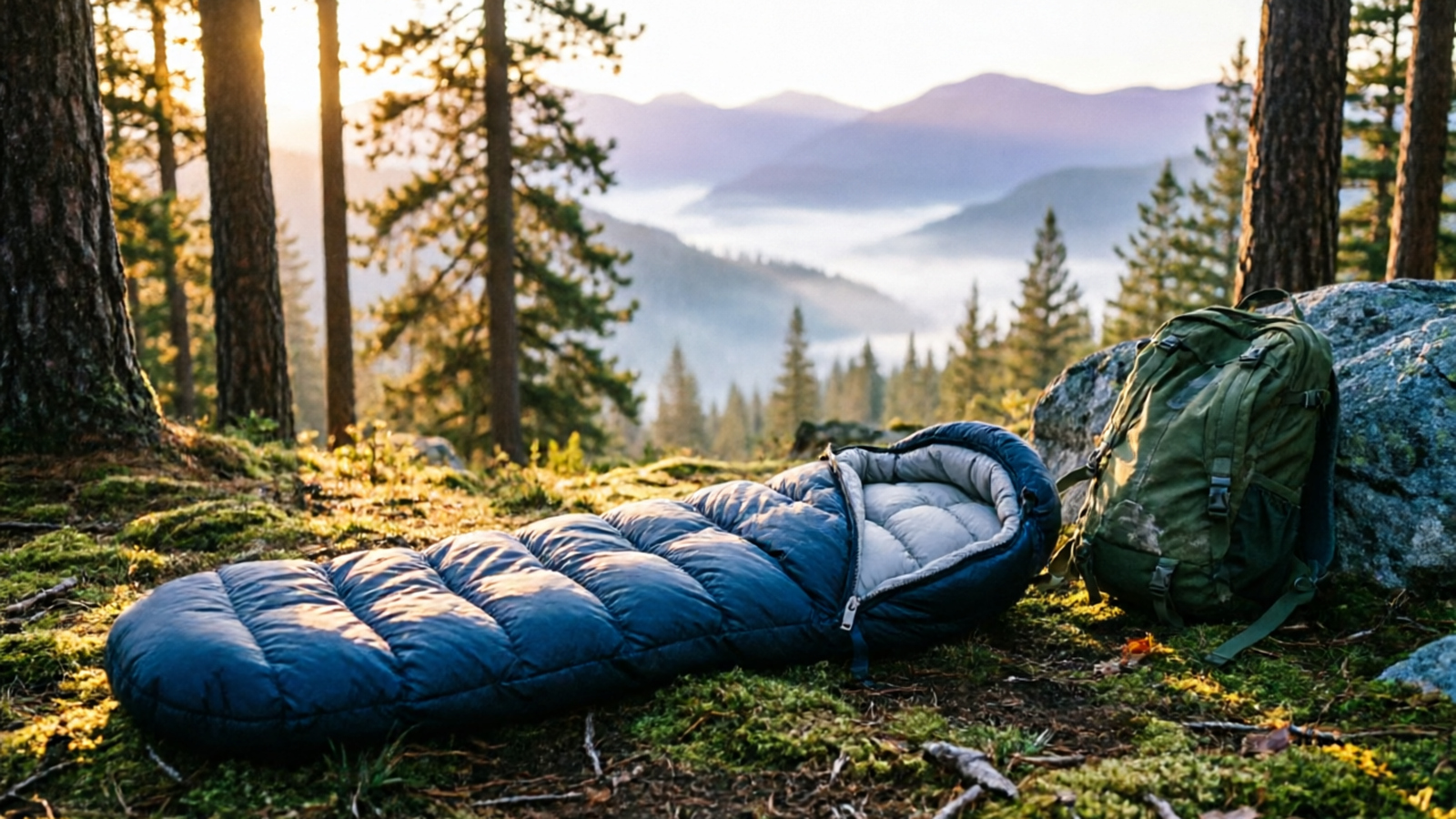
Tip 25 — A sleeping pad matters more than your sleeping bag. The ground pulls heat from your body faster than cold air. Use a pad with an R-value of 3.0 or higher for three-season camping and 5.0+ for cold nights.
Tip 26 — Don’t skip the camp pillow. A stuff sack filled with clothes is uncomfortable and shifts all night. An inflatable pillow stays in place and adds almost no weight. The TREKOLOGY ALUFT 2.0 Camping Pillow ($16.99) compresses to fist-size and weighs 3 ounces — better sleep with zero bulk.
Tip 27 — Change into dry clothes before bed. Even if your clothes feel dry, they hold moisture from the day’s activities. A dedicated sleep layer — just base layer and socks — keeps you warm and your sleeping bag clean.
For choosing the right sleeping bag for your conditions, see our guide on how to choose a sleeping bag.
Leave No Trace Done Right
Good camping tips include protecting the places you love. Leave No Trace principles keep campsites beautiful for the next visitor.
Tip 28 — Pack out everything you pack in — including trash. That means food scraps, cigarette butts, and broken gear. Biodegradable doesn’t mean leave-it — orange peels take two years to decompose.
Tip 29 — Camp on durable surfaces. Stick to established campsites, rock, gravel, or dry grass. Avoid meadows and fragile vegetation that take years to recover.
Tip 30 — Keep noise down after 10 PM. Not everyone came to the woods to hear your Bluetooth speaker. Use headphones for music and keep conversations quiet after dark.
Tip 31 — Leave natural objects where you find them. Rocks, plants, and antlers are part of the ecosystem for the animals that live there. Take photos, not souvenirs. For eco-friendly camping with pets, see our guide on camping with dogs.
Money-Saving Camping Tips
Camping is already cheaper than hotels — these tips make it even more affordable.
Tip 32 — Camp midweek for lower rates. Many state and private campgrounds charge 20–30% less Sunday through Thursday. You also get first pick of sites with fewer crowds.
Tip 33 — Buy gear during end-of-season sales. August through October is clearance season for tents, sleeping bags, and coolers. Quality gear at half price beats cheap gear at full price every time.
Tip 34 — Use free dispersed camping on public land. National Forests and BLM land offer free camping with no reservations. Check with the local ranger station for access roads and restrictions.
Tip 35 — Cook your own meals instead of eating at restaurants. A weekend of restaurant meals near a popular campground costs more than the campsite itself. See our camping hacks guide for budget meal tricks.
Tip 36 — Borrow or rent gear before buying expensive equipment. Try camping with borrowed gear for two or three trips before investing. You’ll learn what you actually need versus what looks good in a store.
Common Mistakes to Avoid
Some camping tips are really about what NOT to do.
These camping tips are the ones you learn the hard way — unless you read them first.
Mistake 1 — Setting up a new tent for the first time at the campsite. Practice at home. You’ll find missing stakes, learn the assembly, and discover whether the tent actually fits your group.
Mistake 2 — Bringing cotton clothing and sleeping bag liners. Cotton absorbs moisture and stays cold. Synthetic and wool materials wick sweat and dry faster.
Mistake 3 — Forgetting headlamps or relying on phone flashlights. Phone batteries die fast in cold weather. A dedicated headlamp like the XTAUTO Solar LED Lantern 4-Pack ($29.99) gives you hands-free lighting with solar and USB charging. One for each tent area and a spare.
Mistake 4 — Ignoring campsite rules about quiet hours and fire restrictions. Rangers issue fines for violations, and breaking fire bans during drought conditions can start wildfires.
Mistake 5 — Packing your car like a game of Tetris with no system. Load gear by category — shelter, sleep, food, kitchen — and keep the first-night essentials on top. Nothing kills morale like unpacking the entire car to find a flashlight.
For families managing these challenges, our camping with kids guide covers age-specific tips. And if you want more hacks that experienced campers use daily, see our family camping essentials list.
Quick Reference Checklist
Print this list and check items before every trip:
Shelter: Tent, footprint, tarp, stakes, paracord, repair kit Sleep: Sleeping bag, pad, pillow, extra blanket for cold nights Clothing: Rain gear, warm layers, dry sleep clothes, extra socks Food: Cooler, food containers, bear canister, cooking stove, fuel, utensils Water: Water containers, filter or purification tablets Light: Headlamp, lantern, extra batteries Safety: First aid kit, fire extinguisher, map, compass, whistle Comfort: Camp chair, hammock, table, doormat Cleanup: Trash bags, biodegradable soap, wash basin, hand sanitizer
A comfortable camp chair makes downtime worth it. The Coleman Portable Camping Chair with 4-Can Cooler ($79.99) has a built-in cooler, cup holder, and padded seat. For full comparisons, see our best camping chairs reviews.
For relaxing between activities, the Wise Owl Outfitters Camping Hammock ($29.99) packs to grapefruit size and supports 500 lbs with tree straps included. See our best camping hammock reviews for more options.
The Bottom Line
The best camping tips are the ones you learn from experience. These 27 shortcuts compress years of trial and error into actionable advice that saves time, money, and frustration.
Pack smart, pick your site carefully, prepare for weather changes, store food properly, build safe fires, sleep well, and respect the land. Master those basics and every trip gets better than the last.
References
- 什么值得买 — 露营省钱装备推荐与购买经验: smzdm.com
- 知乎 — 新手露营常见错误及避免方法: zhihu.com
Frequently Asked Questions
What are the top 5 camping tips for beginners?
Pack a tarp for rain protection, set up camp before dark, bring more water than you think you need, seal tent seams before your trip, and practice using all gear at home first.
How do experienced campers pack so light?
Multi-purpose items are key — a tarp works as a footprint, rain fly, and sun shade. Cut full-size products into small portions. Bring only what you actually use, not what you think you might need.
What camping tips save the most money?
Camp midweek for lower rates, buy gear off-season, cook meals instead of eating out, use free dispersed camping spots on public land, and invest in durable gear once instead of replacing cheap stuff every year.
How do I keep food safe from animals while camping?
Store all food and scented items in a bear-resistant container or hung 10 feet up and 4 feet from a tree trunk. Never keep food in your tent. Use airtight containers to minimize odors.
What's the best camping tip you ever learned?
Practice setting up your tent at home before the trip. You'll discover missing parts and learn the process in comfort, not in the dark with rain falling.
How do I stay warm while camping?
Use a sleeping pad with a high R-value for ground insulation, wear a dry base layer to bed, and place a filled hot water bottle in your sleeping bag. A warm hat makes the biggest difference.
What camping tips do families with kids need?
Pick a campsite close to restrooms, bring more snacks than you think, plan activities for downtime, and set ground rules for campfire and water safety before arriving.
How do I find good campsites near me?
Check Recreation.gov for federal land, state park websites for local options, and apps like iOverlander for free dispersed spots. Call the ranger station for firsthand recommendations.