How to Choose a Sleeping Bag for Camping (2026)
Learn how to choose a sleeping bag for camping with this guide covering temperature ratings, insulation types, shapes, fill power, and budget picks.
A sleeping bag makes or breaks your camping trip. Pick the right one and you wake up refreshed. Pick wrong and you spend the night shivering, watching the sky lighten through tent mesh while counting down to sunrise. The problem is that most beginners shop by price alone — then wonder why their $25 “cold weather” bag left them freezing at 45°F. Learning how to choose a sleeping bag for camping prevents exactly this kind of costly mistake.
If you are wondering how to choose a sleeping bag for camping, this guide walks you through every factor that actually determines warmth and comfort: temperature ratings, insulation type, bag shape, fill power, and features worth paying for. By the end you will know exactly what to buy for your camping style, climate, and budget. If you want specific product picks right now, check our best camping sleeping bags roundup.
What You’ll Need
| Factor | Why It Matters | Where We Cover It |
|---|---|---|
| Expected nighttime temps | Determines comfort rating you need | Temperature Ratings |
| Your camping style | Car camping vs. backpacking changes everything | Camping vs. Backpacking |
| Budget range | Realistic expectations for price tiers | Budget Tiers |
| A sleeping pad | Bags only insulate from above | Sleeping Pad R-value |
Temperature Ratings Explained
Temperature ratings are the single most important spec when you learn how to choose a sleeping bag for camping. Get this wrong and nothing else matters — insulation type, shape, and fill power cannot compensate for a bag rated 20 degrees too warm.
The Three EN/ISO 23537 Ratings
Quality sleeping bags use the EN/ISO 23537 testing standard, which assigns three temperature values:
-
Comfort rating — the lowest temperature at which a “cold sleeper” (the standard test model simulates a typical woman’s metabolism) can sleep comfortably. This is the number you should use when buying. If a bag says “Comfort: 30°F,” that means most people sleep comfortably down to about 30°F under ideal conditions.
-
Lower Limit — the lowest temperature at which a “warm sleeper” (simulating a typical man’s metabolism) can sleep comfortably. This number is optimistic if you tend to run cold at night. Many manufacturers put this number on the bag’s hangtag because it looks more impressive.
-
Extreme rating — the minimum survival temperature. You will not sleep comfortably at this temperature. You may not even sleep at all. Ignore this number for buying decisions — it exists for emergency reference only.
Practical Buying Rules
Always shop by the comfort rating, not the lower limit. A bag marketed as a “20°F sleeping bag” might have a comfort rating of 30°F and a lower limit of 20°F. That 10-degree gap matters on a cold night at 25°F — you will be cold.
Subtract 10–15°F from the comfort rating when choosing. Manufacturers test under controlled lab conditions with a standard sleeping pad. Real-world factors like wind, humidity, variable pad quality, and individual metabolism all reduce effective warmth. If you expect nighttime lows of 30°F, buy a bag with a comfort rating around 15–20°F.
Ratings assume a sleeping pad underneath. The EN/ISO test uses a pad with a specific R-value. If you sleep directly on the ground or on a thin foam mat, your bag cannot maintain its rated temperature because the ground pulls heat from your body faster than the bag can retain it. See our guide to best camping sleeping pads for proper pairing.
Temperature Guide by Season
| Season | Typical Nighttime Lows | Bag Comfort Rating to Buy |
|---|---|---|
| Summer | 50–70°F | 40–50°F |
| Three-season (spring/fall) | 30–50°F | 20–30°F |
| Winter | Below 30°F | 0–15°F |
| Extreme cold | Below 0°F | -20 to -10°F |
For three-season camping in most of the continental US, a bag rated to 20–30°F comfort covers you from April through October. The Coleman Brazos 20°F Sleeping Bag at $54 is a solid synthetic pick for this range — it uses the commonly referenced lower limit rating around 20°F with a comfort rating that handles most summer and shoulder-season nights at established campgrounds.
Down vs. Synthetic Insulation
When figuring out how to choose a sleeping bag for camping, insulation type is one of the biggest decisions. Insulation type determines warmth-to-weight ratio, pack size, wet-weather performance, and price. This is the decision that most affects your bag’s real-world usability.
Down Insulation
Down — the soft plumage from geese or ducks — has been the gold standard for outdoor insulation for decades. Its advantage comes down to physics: down clusters trap more air per ounce than any synthetic fiber, which means more warmth with less weight.
Why pick down:
- Superior warmth-to-weight. A 20°F down bag typically weighs 1.5–2.5 lbs, while a comparable synthetic bag weighs 3–4 lbs. That 1–2 lb difference matters when it is on your back for 10 miles.
- More compressible. Down bags pack to roughly one-third the volume of synthetic equivalents. A down 20°F bag compresses to roughly the size of a water bottle, while a synthetic 20°F bag fills half your pack.
- Longer lifespan. With proper care, a quality down bag lasts 10–20 years. Synthetic fibers break down after 5–8 years of regular use as the fibers flatten and lose loft.
The catch:
- Down loses most of its insulation value when wet. A soaked down bag clumps together and provides almost no warmth. Water-resistant down treatments (like DriDown or hydrophobic down) buy you 15–20 minutes of wet performance, but they do not solve the fundamental problem.
- Higher cost. Entry-level down bags start around $120–$150, with quality options at $200+ and premium ultralight bags reaching $400–$500+.
The Kelty Galactic Down 30 Degree Sleeping Bag uses 550 fill power responsibly-sourced down at $142 — one of the better values in entry-level down. It compresses well for backpacking trips and Kelty’s zip-together design lets you pair two bags for couples camping.
Synthetic Insulation
Synthetic insulation uses polyester fibers (common brands include Climashield, Thinsulate, and generic fills) to mimic down’s air-trapping ability.
Why pick synthetic:
- Retains 80–90% of warmth when wet. This is the decisive advantage. If you are camping in rainy conditions, near a river, or in high-humidity environments, synthetic keeps you warm even if it gets damp from condensation, spilled water, or sweat.
- More affordable. Quality synthetic bags run $50–$120. You can get a functional three-season synthetic bag for under $60.
- Easier to care for. Most synthetic bags are machine washable. No special detergents, no professional cleaning required.
The catch:
- Heavier and bulkier. A synthetic 20°F bag typically weighs 3–4 lbs and packs to twice the volume of a comparable down bag. This makes it a poor choice for multi-day backpacking where every ounce counts.
- Shorter lifespan. Synthetic fibers gradually lose loft over 5–8 years. The bag that kept you warm at 20°F when new might only perform at 30°F after five seasons of regular use.
The Marmot Trestles 30°F Sleeping Bag is one of the most consistently recommended synthetic bags on the market — it uses Marmot’s Spirafil insulation with a water-resistant shell, weighs around 3 lbs, and handles three-season camping reliably at $90. Multiple long-term owners report it still performs well after 4–5 years of regular use.
Down vs. Synthetic at a Glance
| Factor | Down | Synthetic |
|---|---|---|
| Warmth-to-weight | Excellent | Good |
| Packability | Very compressible | Bulky |
| Wet performance | Poor — loses insulation | Good — retains 80–90% warmth |
| Price range | $120–$500+ | $50–$150 |
| Lifespan | 10–20 years | 5–8 years |
| Care | Hand wash or professional cleaning | Machine washable |
| Best for | Backpacking, dry conditions | Car camping, wet conditions, budget |
Decision rule: If you hike to your campsite and weather tends to be dry, get down. If you drive to camp, camp in rainy conditions, or want to keep costs under $100, get synthetic. For more options by category, see our best backpacking sleeping bags guide.
Sleeping Bag Shapes: Mummy vs. Rectangular vs. Semi-Rectangular
Shape affects warmth, weight, pack size, and how much you can move inside the bag. There is no universally best shape — it depends on your camping style.
Mummy Bags
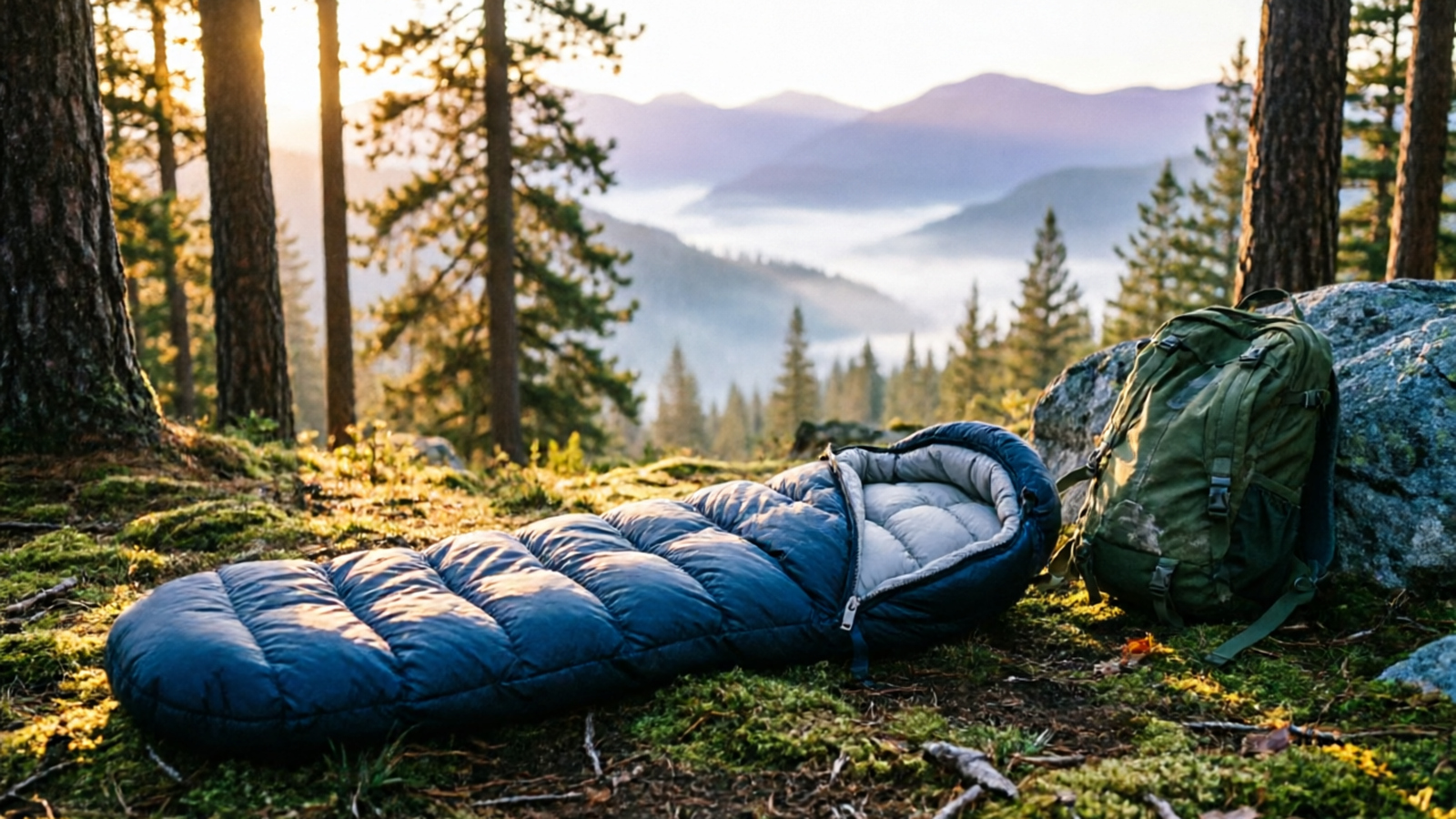
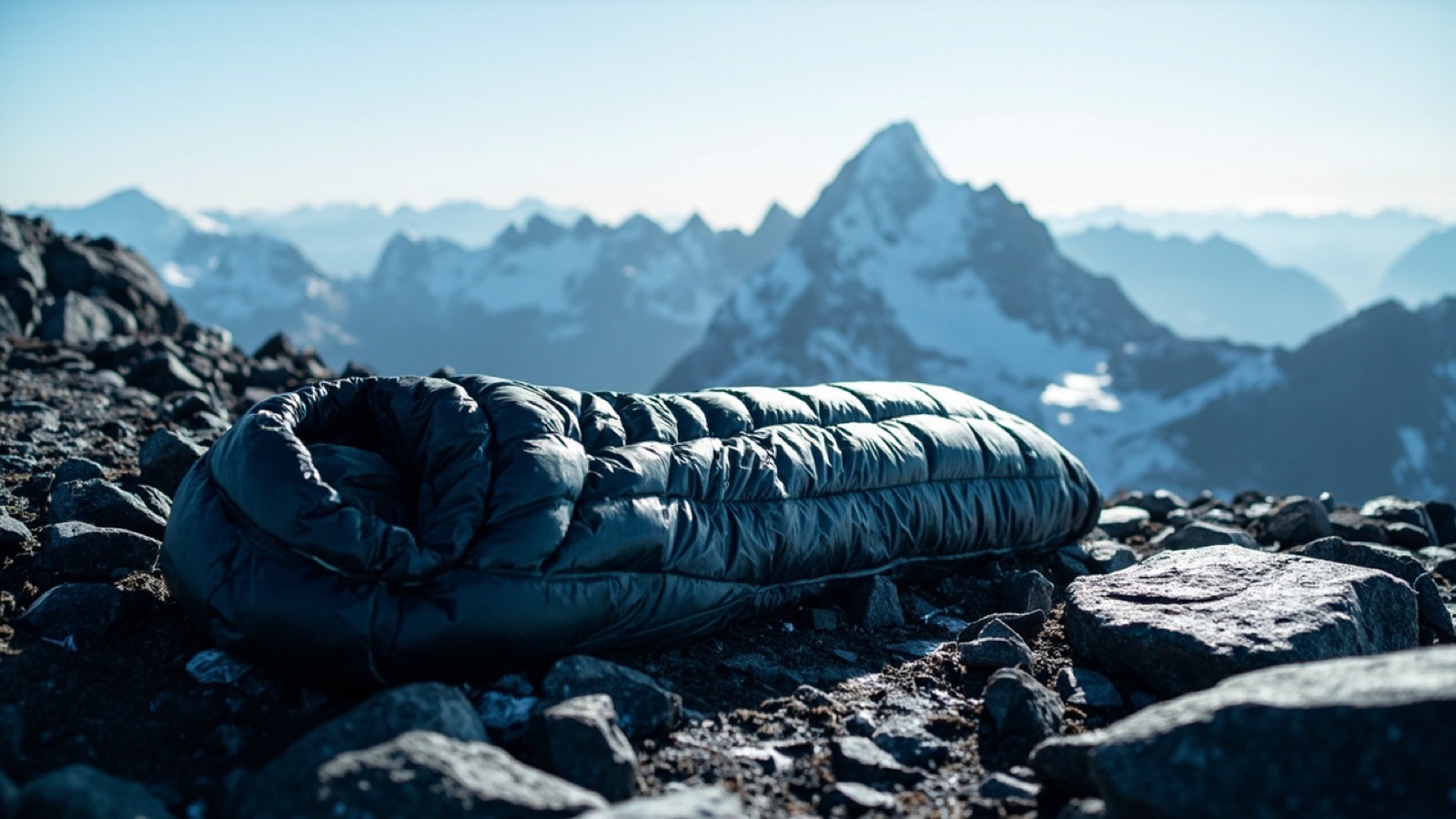
Mummy bags taper from the shoulders to the feet and include a sculpted hood that cinches around your head. The design minimizes dead air space — less internal volume means your body heats the space faster and retains warmth more efficiently.
Best for: Backpacking, cold-weather camping, and anyone who prioritizes warmth over wiggle room.
Advantages: Mummy bags are the warmest shape available because the close fit eliminates cold spots. They are also the lightest and most compressible shape — a 20°F mummy weighs 1–3 lbs less than a rectangular bag at the same temperature rating.
Trade-offs: The tapered cut restricts movement. If you are a side sleeper who rotates frequently or someone who feels claustrophobic, a mummy bag can feel confining. Shoulder and hip widths vary between brands — wide-cut mummy bags (like those from Big Agnes and Nemo) offer more room without sacrificing much warmth.
Rectangular Bags
Rectangular bags provide consistent width from shoulders to feet. Most unzip fully to lay flat as a blanket, and two compatible bags can zip together to form a double bag.
Best for: Car camping, cabin camping, summer nights, and couples who want to share a sleeping bag.
Advantages: Comfort and versatility. You get full freedom to move, sprawl, and sleep in any position. On warm nights, unzip the bag entirely and use it as a comforter. If you are camping with a partner, two rectangular bags with compatible zippers combine into a queen-sized sleeping setup.
Trade-offs: Rectangular bags are heavier (typically 3–5 lbs) and bulkier to pack. They are also less warm than mummy bags at the same temperature rating because the extra internal volume creates cold spots that your body cannot heat efficiently. Most rectangular bags lack a hood, which means additional heat loss from your head on cold nights.
Semi-Rectangular (Barrel) Bags
Semi-rectangular bags taper slightly toward the feet but maintain more shoulder room than a mummy bag. This shape sits between the two extremes — more warmth than rectangular, more freedom than mummy.
Best for: Three-season car campers and side sleepers who want warmth without confinement.
Advantages: A reasonable compromise on all metrics. Semi-rectangular bags offer decent warmth with enough room to shift positions during the night. Weight and pack size fall between mummy and rectangular — typically 2.5–4 lbs.
Trade-offs: They do not excel at any single metric. If you prioritize warmth above all else, a mummy bag is still better. If comfort is your only concern, a rectangular bag gives more room.
Shape Decision Guide
| Your Situation | Best Shape | Why |
|---|---|---|
| Backpacking trips | Mummy | Weight savings, warmth, packability |
| Cold weather camping | Mummy | Hood + close fit = maximum warmth |
| Car camping in summer | Rectangular | Comfort, can use as blanket |
| Couples camping | Rectangular | Zip two together |
| Side sleepers / 3-season | Semi-rectangular | Room to move with decent warmth |
What Temperature Rating Do You Need?
Your expected nighttime low temperature drives the bag rating you need. But “expected” depends on where, when, and how high you camp.
By US Region
Different regions have different nighttime temperature ranges, even in the same season:
| Region | Summer Night Lows | Fall/Spring Lows | Winter Lows |
|---|---|---|---|
| Southeast / Gulf Coast | 65–75°F | 45–55°F | 30–45°F |
| Southwest desert | 55–70°F | 35–50°F | 25–40°F |
| Midwest | 55–65°F | 35–50°F | 10–25°F |
| Northeast / Mid-Atlantic | 55–65°F | 30–45°F | 10–25°F |
| Mountain West (Rockies, Sierras) | 40–55°F | 20–35°F | -10 to 15°F |
| Pacific Northwest | 45–55°F | 30–45°F | 25–35°F |
Altitude matters. Temperature drops roughly 3.5°F per 1,000 feet of elevation gain. A campsite at 8,000 feet in Colorado in July can see nighttime lows in the upper 30s — even though the nearest town at 5,000 feet might be at 55°F. Always check the specific campground elevation and forecast, not just the regional average.
Cold Sleepers vs. Warm Sleepers
Metabolism varies significantly between individuals. If you sleep in socks and a sweater at home while your partner kicks off the covers, you are a cold sleeper. Cold sleepers should aim 10–15°F below the comfort rating of their expected conditions. Warm sleepers can use the comfort rating more directly.
The Coleman North Rim 0°F Sleeping Bag is designed for cold-weather car camping at $94. It uses a mummy shape with an adjustable hood and synthetic fill rated to 0°F extreme, making it suitable for late-fall and winter camping in most regions. The Big & Tall sizing fits adults up to 6’6” and the no-snag zipper is a small but important detail that saves frustration at 2 AM when nature calls.
Fill Power Explained
Fill power is a spec you see on down sleeping bags — it measures how many cubic inches one ounce of down lofts to under controlled conditions. Higher fill power means more trapped air per ounce, which translates to more warmth with less weight.
What the Numbers Mean
| Fill Power Range | Category | What It Means for You |
|---|---|---|
| 400–550 FP | Budget | Heavier for same warmth, less compressible. Adequate for car camping and casual use. |
| 550–650 FP | Midrange | Good warmth-to-weight balance. Solid choice for most backpacking trips. The Kelty Galactic Down at 550 FP is a midrange example. |
| 650–800 FP | Premium | Excellent warmth-to-weight. Bags compress to very small pack sizes. Premium ultralight bags. |
| 800+ FP | Ultralight/Expedition | Maximum warmth per ounce. Used by thru-hikers and alpine climbers. Expensive ($400–$600+). |
Fill power is not the same as temperature rating. A 550-fill bag and an 800-fill bag can both be rated to 20°F — the difference is that the 800-fill bag achieves that warmth with less total insulation, making it lighter and more compressible. Think of fill power as efficiency, not total warmth.
For most campers, 550–650 FP is the sweet spot. You get meaningful weight savings over budget fills without paying the premium that 800+ FP commands. The Sea to Summit Spark 30°F Ultralight Down Sleeping Bag uses high-fill-power down in an ultralight package around $349 — designed for serious backpackers who count every ounce.
Budget Tiers: What to Expect at Each Price Point
Budget matters when learning how to choose a sleeping bag for camping. Sleeping bag prices range from under $25 to over $500. Here is what you actually get at each level.
Under $50: Basic Function
Bags in this range use basic synthetic fill, simple construction, and minimal features. Expect temperatures rated around 40–50°F comfort, weights of 3–5 lbs, and no hood on most rectangular models. These work for summer car camping and kids’ sleepovers but lack the warmth and durability for three-season adult use.
What to expect: basic shell fabric (no water resistance), simple zipper, no stuff sack included on the cheapest options, temperature ratings that may run 5–10 degrees optimistic.
$50–$100: Solid Three-Season
This is where most campers should start. The $50–$100 range includes reputable brands like Coleman, TETON Sports, and Marmot’s entry-level synthetic line. You get proper temperature ratings, reasonable construction quality, and features like anti-snag zippers, included stuff sacks, and water-resistant shell fabrics.
The Coleman Brazos at $54 and Marmot Trestles at $90 both sit in this range. For budget-conscious car campers, either provides reliable three-season warmth without overspending.
$100–$200: Entry-Level Down and Premium Synthetic
The $100–$200 range opens up entry-level down bags and premium synthetic options. The Kelty Galactic Down at $142, the Coleman North Rim at $94, and bags from brands like Sierra Designs and Nemo’s lower-priced lines fall here. You get better materials, lighter weight, and more thoughtful design — draft collars, differentiated hood construction, and better zippers.
This range also covers quality double sleeping bags for couples camping and bags rated for sub-zero winter conditions.
$200+: Premium and Ultralight
Above $200, you enter premium down territory. Brands like Sea to Summit, Western Mountaineering, Feathered Friends, and Nemo’s premium line use high-fill-power down (700–900 FP), ultralight shell fabrics (often 10D or 15D ripstop nylon), and sophisticated construction techniques like differential cut and continuous baffles.
These bags are designed for serious backpackers and thru-hikers where every ounce matters. The Sea to Summit Spark at $349 is a prime example — it delivers warmth at minimal weight for multi-day trips.
Key Features to Look For
Beyond insulation, shape, and temperature rating, anyone learning how to choose a sleeping bag for camping should also check several construction details that separate a good sleeping bag from a frustrating one.
Hoods and Draft Collars
Up to 50% of body heat loss occurs through your head. A well-designed hood with a drawcord closure makes a measurable difference below 40°F. The hood should cinch comfortably around your face without gaps, leaving just enough room for breathing.
A draft collar is an insulated tube that sits around your neck and shoulders, preventing warm air from escaping when you shift position in your sleep. This feature is standard on quality mummy bags and some semi-rectangular bags but rare on rectangular models.
Zipper Quality
Zippers are a common failure point. Look for these specifics:
- Two-way zippers let you vent from the foot end on warm nights while keeping the top sealed — much more versatile than a one-direction zipper.
- Anti-snag tape along the zipper track prevents the fabric from catching in the zipper teeth, which is one of the most annoying sleeping bag problems and surprisingly common on budget bags.
- Full-length zippers are standard on rectangular bags. Mummy bags often use 3/4-length zippers to save weight and reduce cold spots along the zipper line.
Stash Pockets
A small interior pocket near the top of the bag keeps your phone, headlamp, or earplugs accessible without unzipping. Not essential, but convenient — reaching for a headlamp at 3 AM without exposing yourself to cold air is a small quality-of-life improvement.
Water Resistance
- DWR (Durable Water Repellent) coating on the shell fabric is standard on quality bags. It causes light rain and condensation to bead up rather than soak through.
- Water-resistant down (hydrophobic treatment applied to individual down clusters) helps maintain loft in humid conditions. Worth the upcharge if you are buying a down bag.
- For camping in consistently wet conditions, synthetic insulation still outperforms down — see our camping in the rain guide for wet-weather gear strategies.
Pad Attachment Loops
Some bags include loops or straps at the bottom that connect to your sleeping pad, preventing you from rolling off during the night. More common on backpacking bags than car camping models. Nice to have but not essential — most campers manage without them.
How to Match Your Sleeping Bag to Your Sleeping Pad
Your sleeping bag and pad form a system. Neither works properly without the other. This is one of the most overlooked factors by beginners — a $200 sleeping bag on a $15 foam mat will not keep you warm because the ground pulls heat from your body faster than the bag can replace it.
The EN/ISO temperature rating on your bag assumes a sleeping pad with a specific R-value underneath. R-value measures a pad’s thermal resistance — higher numbers mean more insulation from the cold ground. Without adequate pad insulation, the ground pulls heat from your body faster than the bag can retain it, and the bag’s rated temperature becomes meaningless.
A practical rule: allocate roughly 30–40% of your sleep system budget to the pad. A $150 bag paired with a $15 pad underperforms compared to a $100 bag with a $60 pad. See our best camping sleeping pads for tested options at every price point.
| Season | Pad R-Value Needed | Bag Comfort Rating |
|---|---|---|
| Summer | R1–R2 | 40–50°F |
| Three-season | R2.5–R4 | 20–30°F |
| Winter | R4.5–R6+ | 0–15°F |
A common beginner mistake is pairing a $200 20°F sleeping bag with a $15 foam pad that provides R1 insulation. The bag cannot overcome that thermal bridge to the ground. Match your pad investment to your bag investment — see our best camping sleeping pads for tested recommendations.
Common Mistakes When Buying a Sleeping Bag
These are the errors that show up in camping forums and gear communities year after year. If you are researching how to choose a sleeping bag for camping, avoiding these mistakes saves money and helps you sleep better.
Buying by price alone. The cheapest bag is not the best value if it leaves you cold. A $90 bag that keeps you comfortable is worth more than a $30 bag that has you buying a replacement after one miserable trip. Focus on comfort rating and insulation quality first, then find the best price within those constraints.
Using the lower limit instead of comfort rating. The lower limit assumes you are a warm sleeper under ideal conditions. Most people should subtract 10–15°F from the comfort rating for a realistic buying temperature. If you run cold at home, subtract even more.
Ignoring your sleeping pad. No sleeping pad means no rated temperature. Budget accordingly — allocate 30–40% of your sleep system budget to the pad. A sleeping bag without a proper pad is like a jacket without pants — half the insulation is missing.
Storing the bag compressed. Stuff sacks are for transport. Long-term compression destroys insulation loft permanently — this damage is irreversible. Store your bag loose in a closet or the included storage sack.
Not accounting for elevation. Mountain campsites can be 15–20°F colder than the base temperature you checked. Always look up the specific campground elevation and forecast, not just the nearest town’s weather.
Sleeping Bag Care and Storage
Knowing how to choose a sleeping bag for camping is only half the battle. Proper care extends your bag’s lifespan significantly, especially for down insulation.
Washing: Most synthetic bags are machine washable on a gentle cycle with mild detergent. Down bags require specialized down soap (like Nikwax Down Wash) and either a front-loading machine or hand washing. Never use fabric softener — it coats fibers and reduces loft.
Drying: Tumble dry on low heat with clean tennis balls to break up clumps in down insulation. This process can take 2–3 cycles for down bags. Synthetic bags dry faster.
Storage: Store uncompressed in a large cotton or mesh storage sack, or hang in a closet. Most quality bags include a separate storage sack — use it. Never store in the compression stuff sack long-term.
When to replace: Synthetic bags lose noticeable loft after 5–8 years. Down bags last 10–20 years with proper care. Replace when the bag no longer keeps you warm at temperatures it previously handled — the insulation has lost its ability to trap air effectively.
Frequently Asked Questions
How do I know what temperature rating sleeping bag I need?
Match the EN/ISO comfort rating to your expected nighttime low, then subtract 10–15°F for a safety margin. Summer camping (nights above 50°F): a 40–50°F bag. Three-season camping (nights 30–50°F): a 20–30°F bag. Winter camping (nights below 30°F): a 0–15°F bag. These ratings assume you are using a sleeping pad with adequate R-value.
Is down or synthetic insulation better for camping?
Down offers better warmth-to-weight ratio and compressibility — ideal for backpacking in dry conditions. Synthetic retains 80–90% of insulation when wet, costs less, and is easier to maintain — ideal for car camping and wet conditions. If weight matters, pick down. If budget and moisture are your main concerns, pick synthetic.
Should I get a mummy or rectangular sleeping bag?
Mummy bags are warmer, lighter, and more compact — best for backpacking and cold-weather camping. Rectangular bags are roomier, unzip into blankets, and pairs can zip together — best for car camping and couples. If you drive to camp and value comfort, rectangular is the way to go.
What does fill power mean on a sleeping bag?
Fill power measures how many cubic inches one ounce of down lofts to under standard conditions. Higher fill power means more warmth per ounce, so a 650-fill 20°F bag is lighter and more compressible than a 550-fill 20°F bag. Budget bags use 400–550 FP, midrange bags use 550–650 FP, and premium ultralight bags use 650–800+ FP.
Do I need a sleeping pad with my sleeping bag?
Yes. The ground conducts body heat away roughly five times faster than still air. Without a sleeping pad, your bag’s temperature rating is meaningless regardless of price. Match your pad R-value to conditions: R1 for summer, R2–R3 for three-season use, and R4–R5 for winter camping.
How should I store my sleeping bag between trips?
Never store compressed in a stuff sack — this permanently damages insulation loft. Store loose in a breathable cotton or mesh storage sack, or hang in a closet. Compression sacks are for transport only. Down insulation is particularly sensitive to long-term compression damage.
Can one sleeping bag work for both summer and winter camping?
Not comfortably. A winter bag rated to 0°F will have you sweating in summer, while a 40°F summer bag leaves you freezing at 20°F. Most campers do best with a 20–30°F three-season bag plus a liner for cold nights, or two separate bags for different seasons.
How much should I spend on a camping sleeping bag?
Decent synthetic bags for car camping start around $50–$60. Quality three-season synthetic bags run $80–$120. Entry-level down bags for backpacking start around $120–$150. Premium ultralight down bags range from $300–$500+. Plan to spend $60–$100 for casual car camping and $150–$300 for serious backpacking.
Now that you know how to choose a sleeping bag for camping, choosing the right one comes down to four decisions: temperature rating matched to your coldest expected conditions, insulation type that fits your camping style and budget, a shape that balances warmth and comfort for how you sleep, and a sleeping pad with adequate R-value to back it up. For specific product recommendations across all budgets, see our best camping sleeping bags review. For staying warm in cold conditions, our how to stay warm in a tent guide covers the full sleep system.