45+ Fun Camping Activities for Adults, Kids & Families
Over 45 camping activities for every group — hiking, fishing, stargazing, nature crafts, campfire cooking, photography and outdoor adventures.
A great camping trip is more than pitching a tent and roasting marshmallows. The right camping activities turn an ordinary weekend into something your group will talk about for years. Whether you’re camping with energetic kids, planning a romantic getaway, or heading out solo, having a lineup of things to do keeps everyone engaged and makes the most of your time outdoors.
This guide covers over 45 camping activities organized by category, so you can quickly find ideas that match your group, your location, and your mood. From high-energy adventures to quiet moments under the stars, there’s something here for every camper.
Adventure Activities: Hiking, Climbing, and Exploration
Day Hiking
Hiking is the classic camping activity, and for good reason. Nearly every campground has trail access within walking distance or a short drive. Start with a trail that matches your group’s fitness level — most park websites list trail difficulty, distance, and elevation gain. For families with kids, look for nature trails under two miles with minimal elevation change. More experienced hikers can tackle ridgeline trails or summit approaches.
Pack water, a basic first-aid kit, and a trail map even for short hikes. Tell someone at camp which trail you’re taking and when you expect to return. Morning hikes often offer cooler temperatures and better wildlife viewing opportunities.
Geocaching
Geocaching turns any campsite into a treasure hunt. Download a free geocaching app before you lose cell service, and you’ll find hidden caches within walking distance of most campgrounds. Each cache is a small container with a logbook — sign your name, rehide it, and move on to the next one.
Kids especially love geocaching because every find feels like a discovery. Some caches contain small trinkets for trading, which adds an element of surprise. It’s a solid way to explore areas around your campsite that you’d otherwise walk right past.
Rock Scrambling and Bouldering
If your campsite is near rocky terrain, scrambling over boulders adds an unplanned adventure. No special gear needed — just sturdy shoes and common sense about what you can safely climb. Many state and national parks have designated bouldering areas if you want something more structured.
Keep three points of contact on the rock at all times and test each hold before committing your weight. Bouldering works best with a spotter, so pair up and take turns.
Mountain Biking
Campgrounds near trail networks offer some of the best mountain biking you’ll find anywhere. Even beginners can enjoy flat gravel trails and fire roads. If you don’t own a bike, many outdoor towns have rental shops within a short drive of popular camping areas.
Always wear a helmet, carry a basic repair kit, and yield to hikers on shared trails. Early morning rides beat the heat and the crowds.
Water Activities: Swimming, Fishing, and Kayaking
Swimming Holes and Lake Swimming
Nothing beats jumping into a cool lake after a morning of setting up camp. Most campgrounds near water have designated swimming areas with easier entry points. Check water depth before diving, and always swim with a buddy.
If you’re camping near a river, look for slow-moving sections with sandy bottoms — these make natural swimming holes. Avoid swimming near dams, rapids, or after heavy rain when water levels rise quickly.
Fishing
Fishing is one of the most relaxing camping activities, and it doubles as dinner prep if you catch anything. A basic spinning rod, a handful of lures, and a fishing license are all you need to get started. Lakes and slow rivers near campgrounds typically hold bass, trout, or panfish.
Early morning and evening are the best fishing times. If you’re new to fishing, ask at the campground office or a local bait shop what’s biting and what bait to use.
Kayaking and Canoeing
Many lakeside campgrounds rent kayaks and canoes by the hour or the day. Paddling lets you explore shorelines, coves, and inlets that are invisible from land. Even a short paddle around the lake at sunset is worth the effort.
Wear a life jacket at all times on the water. Start near shore if you’re a beginner, and check wind conditions before heading out — a calm lake can get choppy fast.
Creek Walking and Stone Skipping
For something simpler, grab some old shoes and walk up the nearest creek bed. Creek walking turns up crayfish, interesting rocks, and small waterfalls you’d never see from the trail. It’s free, requires zero planning, and kids can spend hours doing it.
Stone skipping is a creek-walking bonus. Find a flat stone, sidearm throw, and count the skips. The current record is 88 skips — your group probably won’t beat it, but trying is half the fun.
Nature Discovery Activities
Bird Watching
You don’t need binoculars to enjoy bird watching at camp, though they help. Early morning is prime birding time, when songbirds are most active and visible. Sit quietly near the edge of your campsite with a cup of coffee and see how many species you can spot in 30 minutes.
Download a free bird identification app before your trip. Many work offline and use size, color, and habitat to help you identify what you’re looking at.
Plant and Wildflower Identification
Campgrounds are living botany classrooms. Bring a field guide or download a plant identification app and start cataloging what grows around your site. Spring and early summer offer the best wildflower displays, but interesting plants appear year-round.
Teach kids to identify common poisonous plants like poison ivy, oak, and sumac early in the trip. Knowing what to avoid is as valuable as knowing what to look for.
Bug and Insect Observation
Kids are natural entomologists. Hand them a magnifying glass and point them toward any log, rock, or leaf, and they’ll find something fascinating. Document findings with phone photos and try to identify each insect using a field guide or app.
Focus on observation rather than collection. Watching how ants build trails or how bees collect pollen teaches more than any textbook.
Foraging Basics
Foraging adds a wild-food element to your camping meals, but it requires caution. Stick to easily identified plants like wild berries, dandelion greens, and wild onions if you’re a beginner. Never eat anything you can’t identify with 100% certainty.
Consider taking a guided foraging walk before your camping trip if you want to build skills. Many nature centers offer short workshops that cover local edible plants.
Campfire Activities
Campfire Cooking Challenges
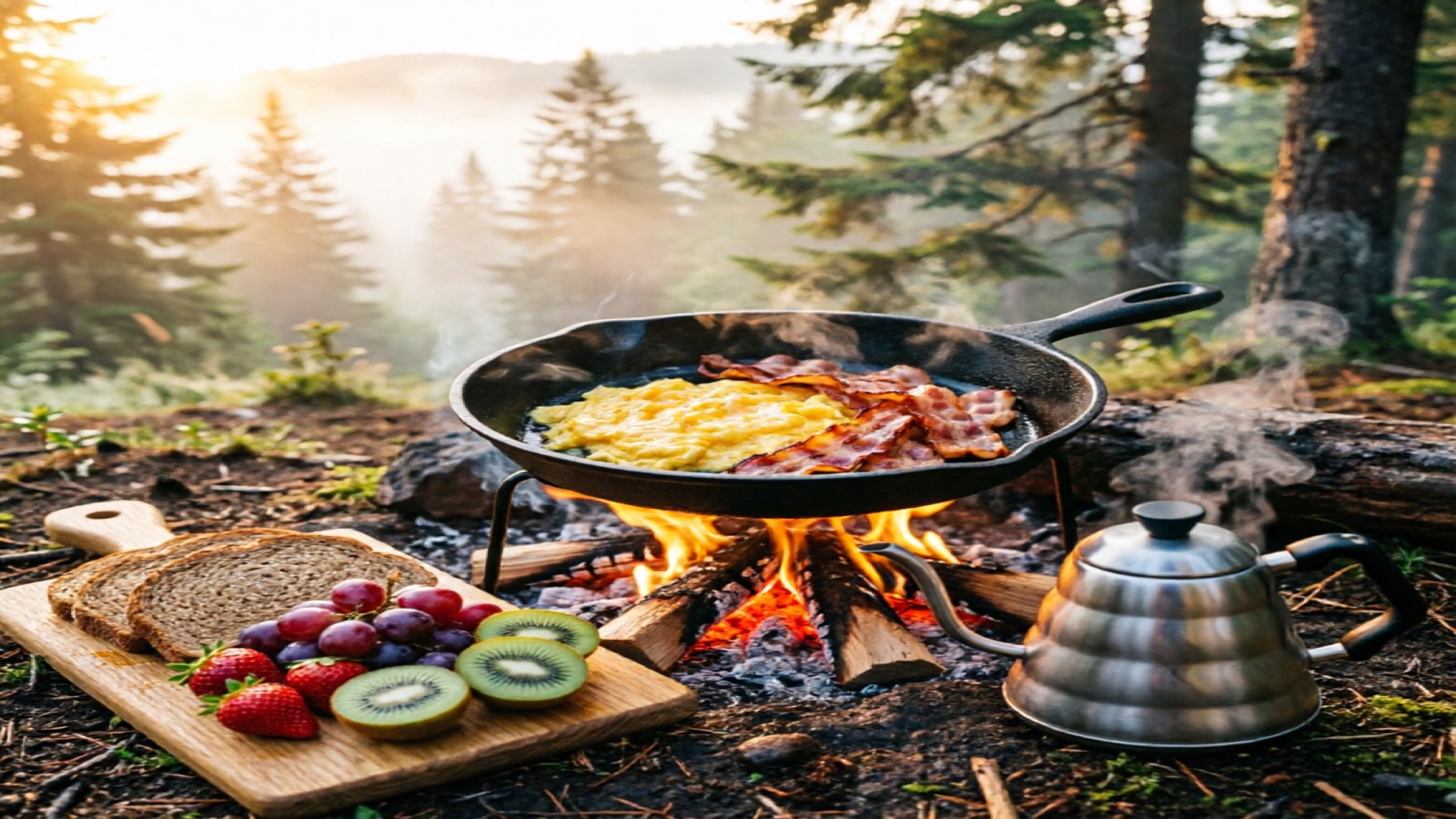
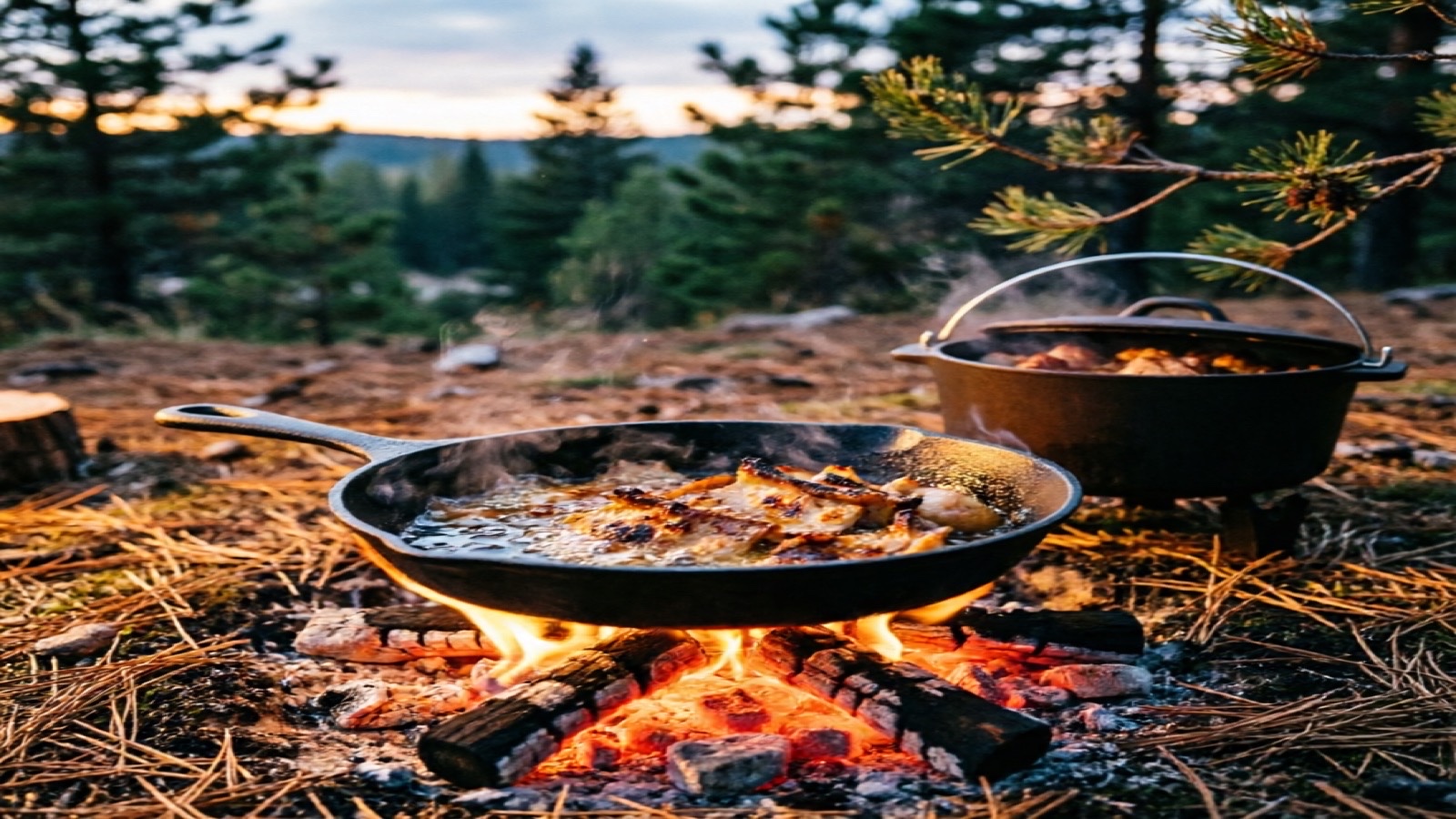
Move beyond hot dogs and s’mores. Challenge your group to cook a full meal over the campfire — foil-packet dinners, Dutch oven bread, or cast-iron pizza. Give each person or team a set of ingredients and see who creates the best dish.
Campfire cooking works best with preparation. Pre-chop vegetables and portion ingredients at home so you spend more time cooking and less time prepping at the campsite.
Storytelling and Ghost Stories
The campfire was the original entertainment. Take turns telling stories — funny ones from real life, spooky ghost stories, or collaborative tales where each person adds one sentence at a time. The rule is simple: no phones, no books, just voices and firelight.
Storytelling builds connection in a way that screen-based entertainment never will. Even teenagers who roll their eyes at the idea usually end up participating.
Campfire Songs and Music
If anyone in your group plays guitar, ukulele, or harmonica, the campfire is their stage. No instruments? Clapping games, rounds, and call-and-response songs work just as well. Search for “camp songs” before your trip and learn two or three — Johnny Cash, folk songs, and camp classics are always crowd-pleasers.
Keep volume reasonable after quiet hours. Sound carries farther than you think in the woods.
S’mores Variations
The classic s’more is just the starting point. Try peanut butter cups instead of plain chocolate, add sliced strawberries, swap graham crackers for chocolate chip cookies, or use toasted coconut marshmallows. Set up a s’mores bar with four or five topping options and let everyone build their own.
For a savory twist, skip the chocolate entirely and make s’mores with brie, fig jam, and graham crackers. It sounds strange until you try it.
Creative and Artistic Activities
Nature Photography
Your phone camera is all you need. Challenge your group to a photo scavenger hunt: capture something red, something textured, a reflection, an insect, a shadow, and a close-up. Review the photos together around the campfire and vote on favorites.
Golden hour — the first and last hour of sunlight — produces the best outdoor photos. Shoot during these windows for dramatic lighting without any filters.
Sketching and Nature Journaling
A small notebook and a pencil are enough to start nature journaling. Sketch the view from your campsite, draw the wildflowers you found, or document the day’s weather and wildlife sightings. You don’t need artistic talent — the act of drawing forces you to look more carefully at your surroundings.
Nature journals become personal souvenirs that photos can’t replicate. Years later, you’ll remember more from a five-minute sketch than from twenty photos.
Leaf and Rock Painting
Collect fallen leaves and smooth rocks, then paint them with acrylics or markers. Leaf prints — painting a leaf and pressing it onto paper — create instant nature art. Painted rocks can be left at the campsite as surprises for future campers or taken home as keepsakes.
Pack out all painting supplies and clean up thoroughly. Use biodegradable paints when possible.
Crafting with Natural Materials
Pinecone animals, twig picture frames, woven grass bracelets — natural materials become craft supplies at camp. Gather materials from the ground rather than pulling from living plants. These projects work especially well for kids who need a calm activity after an energetic morning.
Relaxation and Wellness Activities
Stargazing
Most campgrounds are far enough from city lights to offer spectacular night skies. Download a star map app that works offline, spread a blanket, and spend 20 minutes identifying constellations. The Milky Way is visible from most campsites on clear nights — something many people never see from home.
The best stargazing happens after your eyes adjust to the dark, which takes about 20 minutes. Minimize flashlight and phone use during this time.
Sunrise and Sunset Viewing
Set an alarm for sunrise at least once during your trip. The early wake-up is worth it — sunrise over a lake or mountain ridge is one of camping’s simplest and most powerful experiences. Sunset viewing requires no alarm, just the discipline to stop what you’re doing and watch.
Identify the best viewing spot near your campsite on day one. East-facing spots for sunrise, west-facing for sunset.
Outdoor Yoga and Meditation
Your campsite is a natural yoga studio. A flat patch of ground, a towel or mat, and a basic yoga flow are all you need. Morning yoga warms up your body for the day’s activities, and evening stretches help recover from hiking or swimming.
Meditation works especially well outdoors. Five minutes of focused breathing with natural sounds in the background is more grounding than any app.
Hammock Lounging
String a hammock between two trees and do absolutely nothing. This is an underrated camping activity that people often skip because it feels unproductive. But hammock time — reading, napping, or watching clouds — is often what people remember most fondly about a trip.
Check campground rules before hanging hammocks. Some parks require straps that won’t damage tree bark.
Group and Social Activities
Scavenger Hunts
Create a list of 15-20 items to find around the campground: a pinecone, something blue, animal tracks, a Y-shaped twig, a feather. Divide into teams and set a 30-minute timer. The first team back with the most items wins.
Nature scavenger hunts work for every age group. Adjust the difficulty — toddlers can find “something green” while adults hunt for specific leaf shapes or bird species.
Camp Talent Shows
Everyone has a hidden talent, and the campfire is the place to reveal it. Singing, joke-telling, juggling, impressions, whistling, handstands — the bar is low and the laughs are guaranteed. Let kids emcee the show for extra entertainment.
Keep it light and supportive. The goal is laughter, not competition.
Group Challenges
Arm-wrestling tournaments, log-carrying contests, skipping-stone competitions, fire-building races — group challenges create friendly rivalry and funny stories. Keep challenges safe and age-appropriate, and always have a non-physical option for anyone who wants to participate without competing.
Outdoor Movie Night
A portable projector, a white sheet stretched between trees, and a laptop turn your campsite into a movie theater. Pick a movie that fits the setting — a camping comedy, a nature documentary, or a classic adventure film. Pop popcorn over the campfire for the full experience.
Check noise rules before setting up. Some campgrounds prohibit amplified sound after certain hours.
Camping Activities for Kids
Choosing the right camping activities for kids depends on their age and energy level. Here’s a breakdown by group.
Toddlers (ages 2-4): Stick to sensory activities. Mud painting, collecting rocks and leaves, splashing in shallow water, and simple campfire songs. Keep outings short — 20 to 30 minutes is the attention span limit.
Ages 5-8: Scavenger hunts, bug catching, nature art, short hikes (under one mile), and campfire storytelling. This age group loves collecting things — give them a bag and a list of items to find.
Ages 9-12: Geocaching, fishing, longer hikes, campfire cooking, and nature journaling. Kids this age can handle more independence and enjoy activities with a goal or outcome.
Always have a backup plan for tired or cranky kids. Quiet time in the tent with books or coloring supplies saves many camping trips from meltdowns.
See our camping with kids guide for more detailed advice on family camping.
Camping Activities for Couples
Camping as a couple creates space for connection that daily life rarely allows. Focus on shared experiences rather than individual activities.
Cook a meal together over the campfire, choosing recipes that require teamwork. Hike to a scenic overlook and share the silence. Swim at a secluded lake. Watch the stars from a blanket with a bottle of wine. These small, intentional moments build stronger connections than any expensive dinner out.
For more romantic camping ideas, check out our camping for couples guide.
Rainy Day Camping Activities
Rain doesn’t ruin a camping trip — it changes the plan. Here’s what to do when the weather turns.
Inside the tent: Card games, journaling, reading aloud, and storytelling. A deck of cards alone provides hours of entertainment.
Under the tarp or awning: Campfire cooking in light rain is actually enjoyable — the fire keeps you warm while the rain creates atmosphere. Rain also brings out amphibians and changes bird behavior, making it an interesting time for nature observation.
In the car: Drive to a nearby town for a hot meal, visit a local museum or visitor center, or take a scenic drive. Some of the best camping memories come from unplanned rainy-day detours.
Always pack rain-friendly activities even when the forecast looks clear. Weather changes fast in the outdoors.
Tips for Planning Your Camping Activity Schedule
A good camping trip balances structure and flexibility. Here are practical tips for planning your activities.
Start with one anchor activity per day. Plan one main event — a hike, a paddling trip, a fishing session — and let the rest of the day unfold naturally. Over-scheduling kills the relaxation that camping is supposed to provide.
Match activities to energy levels. Save high-energy adventures for mornings when everyone is fresh. Reserve afternoons for swimming, hammock time, and creative projects. Evenings belong to the campfire.
Build in weather flexibility. Have a rain plan for every outdoor activity. If your main hike gets rained out, swap it for a nature journaling session or a town visit.
Pack a simple activity kit. A small bag with a deck of cards, a notebook, colored pencils, a magnifying glass, and a field guide covers most situations and weighs almost nothing.
For more camping planning advice, check out our camping tips and camping safety tips guides.
Related gear reviews: 10 Best Camping Chairs of · 7 Best Camping Hammocks (
Frequently Asked Questions
What are the best camping activities for kids?
Nature scavenger hunts, campfire storytelling, bug catching, leaf rubbing, and simple hiking are all excellent kid-friendly camping activities. Choose activities that match your child’s age and energy level.
What can you do while camping when it rains?
Rainy day camping activities include campfire cooking, card games, reading in your tent, nature journaling, and cloud watching from a sheltered spot. Always pack rain-friendly entertainment options.
How do I plan camping activities for a large group?
Mix high-energy activities like hiking and swimming with relaxed options like stargazing and storytelling. Create a flexible schedule with morning, afternoon, and evening blocks so everyone can participate at their comfort level.
Are there camping activities that don’t require any equipment?
Many camping activities need zero gear: stargazing, bird watching, storytelling, cloud spotting, nature photography with your phone, hiking, and foraging with proper knowledge. Focus on experiences over equipment.
What camping activities are best for couples?
Couples can enjoy stargazing, sunset watching, cooking together over a campfire, hiking scenic trails, swimming, and sharing campfire conversations. These activities create intimate moments in nature.
How can I make camping activities educational for children?
Turn activities into learning opportunities: identify plants and animals, teach map reading, practice knot tying, count constellations, and keep nature journals. Kids learn best when they’re having fun outdoors.
Frequently Asked Questions
What are the best camping activities for kids?
Nature scavenger hunts, campfire storytelling, bug catching, leaf rubbing, and simple hiking are all excellent kid-friendly camping activities. Choose activities that match your child's age and energy level.
What can you do while camping when it rains?
Rainy day camping activities include campfire cooking, card games, reading in your tent, nature journaling, and cloud watching from a sheltered spot. Always pack rain-friendly entertainment options.
How do I plan camping activities for a large group?
Mix high-energy activities like hiking and swimming with relaxed options like stargazing and storytelling. Create a flexible schedule with morning, afternoon, and evening blocks so everyone can participate at their comfort level.
Are there camping activities that don't require any equipment?
Many camping activities need zero gear: stargazing, bird watching, storytelling, cloud spotting, nature photography with your phone, hiking, and foraging with proper knowledge. Focus on experiences over equipment.
What camping activities are best for couples?
Couples can enjoy stargazing, sunset watching, cooking together over a campfire, hiking scenic trails, swimming, and sharing campfire conversations. These activities create intimate moments in nature.
How can I make camping activities educational for children?
Turn activities into learning opportunities: identify plants and animals, teach map reading, practice knot tying, count constellations, and keep nature journals. Kids learn best when they're having fun outdoors.