Campfire Cooking Guide: Recipes, Techniques & Gear (2026)
Master campfire cooking with proven techniques, easy recipes, and the right gear. From foil packets to Dutch ovens — your complete guide.
Why Campfire Cooking Matters
There’s nothing quite like the flavor of food cooked over an open fire. Campfire cooking transforms simple ingredients into memorable meals, and it’s a skill anyone can learn with the right guidance.
This guide covers everything you need: essential gear, core techniques, recipes for every meal of the day, and safety tips to keep your cooking experience enjoyable and accident-free.
Essential Campfire Cooking Gear
The right equipment makes outdoor cooking dramatically easier. You don’t need a fully stocked outdoor kitchen — just a few versatile pieces that handle multiple tasks.
Cast Iron Skillet
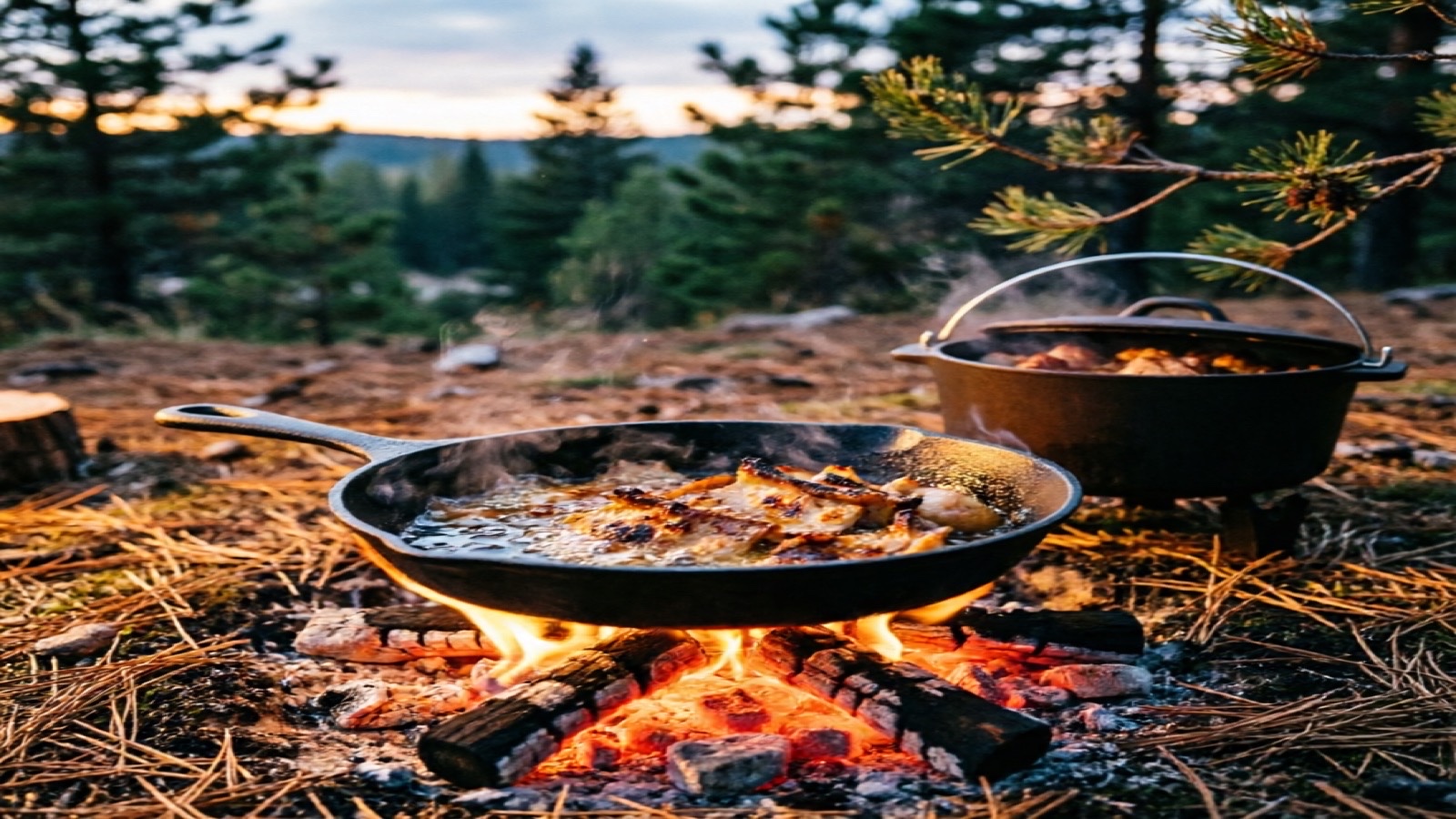
A 10-inch cast iron skillet{target=“_blank” rel=“noopener noreferrer”} is the single most useful piece of campfire cookware. Lodge’s 10.25-inch model comes pre-seasoned and handles everything from bacon and eggs to seared steaks. Buy it on Amazon.
Cast iron retains heat evenly and can withstand direct flames without warping. The heavier the skillet, the better it distributes heat over uneven fire surfaces.
Dutch Oven
For stews, soups, and even bread baking, a Dutch oven{target=“_blank” rel=“noopener noreferrer”} is indispensable. The 8-quart Blingco model features a tight-fitting lid that traps moisture and heat. Buy it on Amazon.
Place hot coals on the lid to create an oven-like environment. This technique works for cornbread, cinnamon rolls, and even pizza while camping.
Grill Grate
A swivel campfire grill grate{target=“_blank” rel=“noopener noreferrer”} gives you a stable cooking surface over the fire. The VEVOR model swivels away from flames when you need to adjust heat or add wood. Buy it on Amazon.
Position the grate so it sits above the coal bed, not directly in flames. This gives you the most consistent cooking temperature.
Fireproof Gloves
Fireproof gloves{target=“_blank” rel=“noopener noreferrer”} rated to 932°F protect your hands when moving hot cookware or adjusting logs. The RAPICCA 16-inch model gives you extra reach and dexterity. Buy it on Amazon.
Never handle cast iron over a fire without gloves. The handles get hot enough to cause instant burns.
Long-Handled Tongs
Extra-long BBQ tongs{target=“_blank” rel=“noopener noreferrer”} keep your hands at a safe distance from flames while flipping food or moving coals. The 17-inch DAILY KISN model is lightweight and sturdy. Buy it on Amazon.
Tongs are safer than forks for campfire cooking because they don’t puncture meat and release juices.
Campfire Tripod
For height-adjustable grilling, a tripod campfire grill{target=“_blank” rel=“noopener noreferrer”} lets you raise or lower the cooking surface. Coleman’s model also doubles as a lantern hanger. Buy it on Amazon.
Raising the grill 6-12 inches above coals drops the temperature significantly — perfect for slow cooking delicate foods.
Pie Iron
A pie iron{target=“_blank” rel=“noopener noreferrer”} seals sandwiches, pies, and dessert pockets between two cast iron plates. Coghlan’s pre-seasoned model is compact enough to pack in any camping kitchen. Buy it on Amazon.
Fill with bread, cheese, and fillings, then hold over coals for 3-5 minutes per side until golden.
Campfire Cooking Techniques
Understanding how heat works over a fire is the foundation of good campfire cooking. Different techniques suit different foods, and mastering them lets you cook virtually anything outdoors.
Direct Heat Grilling
Direct heat cooking places food directly over flames or hot coals. This method works best for thin cuts of meat, vegetables, and bread.
Build a medium fire and let it burn down to glowing coals. Place a grill grate over the coal bed and cook food directly on the grate. Turn frequently to avoid burning.
The key to direct heat is coal management. Spread coals evenly for consistent cooking, or pile them on one side for a hot zone and a cool zone.
Indirect Heat Cooking
Indirect heat means cooking next to the fire, not over it. This technique is essential for larger cuts of meat and anything that needs longer cooking times.
Push coals to one side of your fire pit. Place cookware on the opposite side and cover with a lid or foil. The reflected heat cooks food gently without charring the exterior.
Dutch ovens excel at indirect cooking. Surround the pot with coals and place additional coals on the lid for even baking.
Foil Packet Cooking
Foil packets — also called hobo packs — are the easiest campfire cooking method for beginners. Wrap seasoned ingredients in heavy-duty aluminum foil and place directly on coals.
Layer protein on the bottom, vegetables on top, and add a pat of butter or oil. Seal the packet tightly with double-folded edges. Cook for 20-30 minutes, flipping once halfway through.
Heavy-duty foil prevents tearing and leaking. Regular foil works in a pinch but tears more easily when handling.
Dutch Oven Cooking
The Dutch oven is the Swiss Army knife of campfire cookware. You can fry, bake, braise, and stew all in one pot.
For baking, preheat the Dutch oven with a few coals underneath for 5 minutes. Add your batter or dough, then place more coals on the lid. Rotate the lid every 10 minutes to prevent hot spots.
For stewing, brown meat first over direct heat, then add liquid and vegetables. Cover and move to indirect heat for slow simmering.
Skewer and Stick Cooking
Skewer cooking requires minimal equipment — just a sturdy metal skewer or a green wood stick. Thread food onto the skewer and hold it over coals.
Hot dogs, marshmallows, cubed vegetables, and kebab-style meat all work well on skewers. Rotate slowly and cook from all sides.
Green wood sticks (freshly cut, not dried) won’t burn through during cooking. Soak them in water for 30 minutes before use for extra fire resistance.
Ember Roasting
Ember roasting places food directly into hot coals. This ancient technique works brilliantly for root vegetables, corn on the cob, and whole potatoes.
Wrap potatoes in foil or place them directly in coals. Turn every 15 minutes. A medium potato takes 45-60 minutes to cook through.
Corn on the cob can be roasted in its husk. Soak the corn in water for 15 minutes, then place directly in coals for 20-25 minutes. The husk steams the kernels inside.
Campfire Breakfast Recipes
Start your camping day with a hot breakfast cooked over the fire. These breakfast recipes are simple, filling, and require minimal cleanup.
Campfire Bacon and Eggs
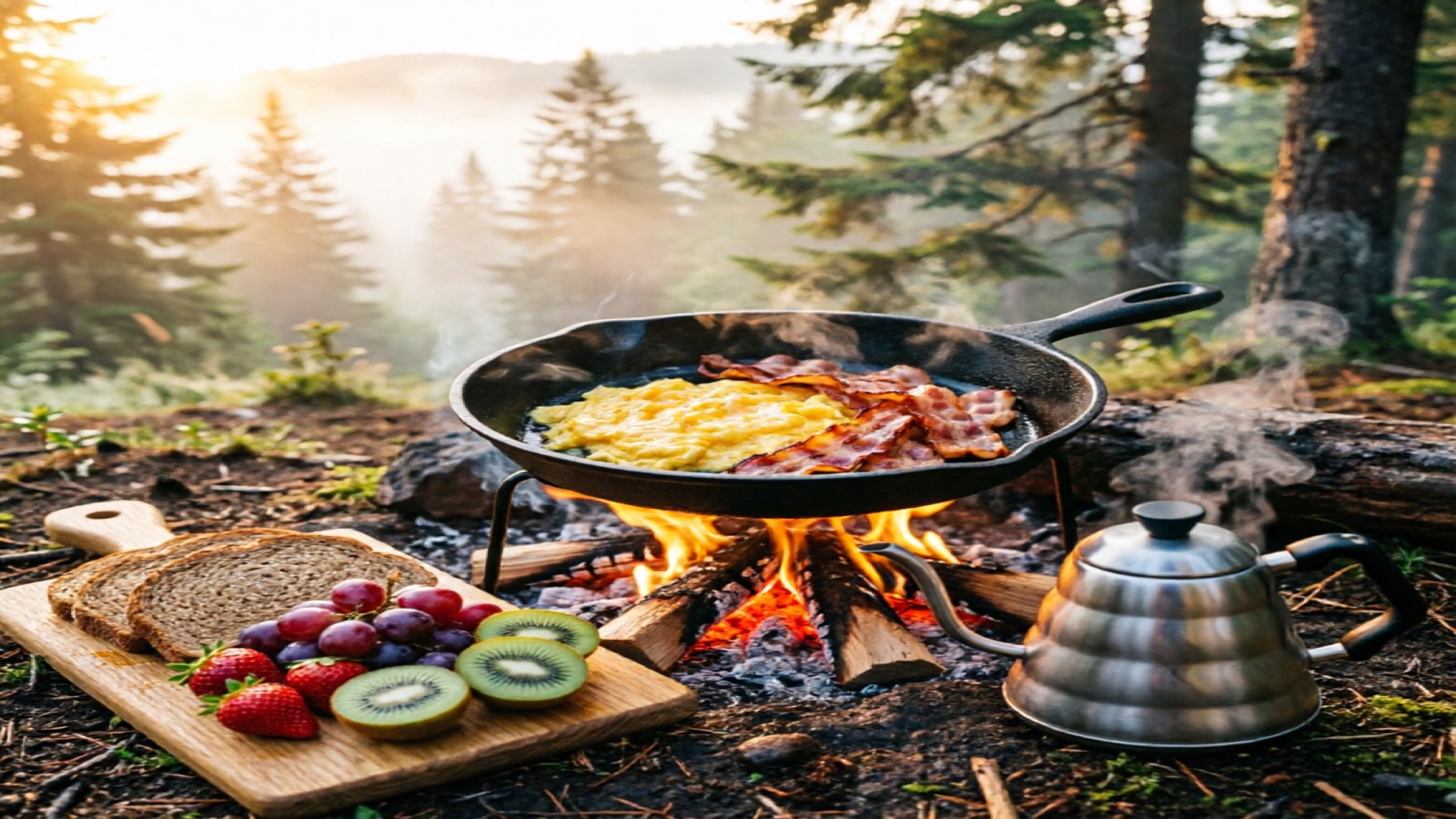
Cook bacon first in a cast iron skillet over medium coals. The rendered fat becomes your cooking oil for the eggs. Remove bacon when crispy, then crack eggs into the same skillet.
Cook eggs sunny-side up for 2-3 minutes, or scramble them with a spatula. The bacon fat adds rich flavor that butter can’t match.
Serve with toast cooked on the grill grate alongside the skillet.
Foil Packet Breakfast Burritos
Scramble eggs in a skillet, then divide them among four sheets of heavy-duty foil. Add cooked sausage, diced peppers, onions, shredded cheese, and salsa.
Fold each packet into a sealed pouch and place on warm coals for 5-10 minutes to melt the cheese and warm everything through.
These burritos are portable and can be prepped at home — just refrigerate and throw them on the fire in the morning.
Campfire Banana Boats
Slice a banana lengthwise (leave the peel intact) and stuff with chocolate chips, mini marshmallows, and a sprinkle of cinnamon. Wrap in foil and place near coals for 5 minutes.
The banana softens and the filling melts into a warm, gooey dessert that works just as well for breakfast. Top with granola for extra crunch.
Campfire Lunch Ideas
Lunch on the trail should be quick and satisfying. These lunch recipes take under 20 minutes from prep to plate.
Fire-Roasted Quesadillas
Place a tortilla on a warm grill grate. Add cheese, beans, and any leftover fillings from breakfast. Top with a second tortilla.
Cook for 2-3 minutes per side until the tortilla is crispy and the cheese is fully melted. A spatula or tongs makes flipping easy.
Quesadillas are endlessly customizable and clean up with just a quick wipe of the grill grate.
Campfire Nachos
Layer tortilla chips, black beans, shredded cheese, jalapeños, and diced tomatoes in a Dutch oven. Cover with the lid and place on indirect heat.
Cook for 10-15 minutes until the cheese melts and everything is warm. Serve with salsa and sour cream.
This feeds 4-6 people from a single pot and uses ingredients that travel well in a cooler.
Stick-Fire Hot Dogs
Thread hot dogs onto long metal skewers or green wood sticks. Hold over glowing coals and rotate slowly until browned on all sides.
For a gourmet twist, slit the hot dog lengthwise and stuff with cheese before cooking. The cheese melts into the slit as the dog cooks.
Serve on toasted buns with your favorite condiments. Classic campfire food done right.
Campfire Dinner Recipes
Dinner is the main campfire cooking event. These recipes deliver restaurant-quality meals with nothing but fire, coals, and basic cookware.
One-Pot Campfire Chili
Brown ground beef in a Dutch oven over direct heat. Drain excess fat, then add diced onions, garlic, canned tomatoes, kidney beans, chili powder, and cumin.
Stir well, cover with the lid, and move to indirect heat. Simmer for 30-40 minutes, stirring every 10 minutes to prevent sticking.
Chili tastes even better on day two, so make extra. Serve with cornbread baked in a separate Dutch oven.
Foil Packet Salmon and Veggies
Place a salmon fillet on a sheet of heavy-duty foil. Top with sliced lemon, dill, and a pat of butter. Surround with asparagus spears and cherry tomatoes.
Seal the packet tightly and place on medium coals for 15-20 minutes. The salmon flakes easily with a fork when done.
This is one of the healthiest campfire meals you can make — high in protein, omega-3s, and cooked with minimal added fat.
Dutch Oven Campfire Pizza
Press pizza dough into the bottom of a greased Dutch oven. Add sauce, cheese, and your favorite toppings. Cover with the lid and place on indirect heat.
Cook for 15-20 minutes, checking after 10 minutes. Add coals to the lid if the top isn’t browning fast enough.
The crust gets crispy on the bottom and the cheese bubbles perfectly. It rivals any delivery pizza.
Campfire Steak
Season a ribeye or strip steak generously with salt and pepper. Heat a cast iron skillet over hot coals until a drop of water sizzles on contact.
Sear the steak for 3-4 minutes per side for medium-rare. Add a pat of butter, garlic, and fresh herbs in the last minute for extra flavor.
Let the steak rest for 5 minutes before slicing. This keeps the juices inside instead of running onto the plate.
Campfire Cooking Safety Tips
Cooking over an open fire requires awareness and preparation. Follow these safety guidelines to prevent accidents and enjoy your campfire cooking experience.
Choosing a Safe Cooking Spot
Set up your cooking area at least 15 feet from tents, trees, and overhanging branches. Use an established fire ring whenever possible.
Clear the ground of leaves, grass, and debris within a 10-foot radius. Keep a bucket of water or shovel nearby for emergencies.
Never cook under a tree canopy or in an enclosed space. Smoke inhalation is a real risk in poorly ventilated areas.
Managing Fire Size for Cooking
A cooking fire should be manageable, not raging. Build a medium fire and let it burn down to a bed of hot coals before cooking.
Add small amounts of dry wood to maintain heat. Avoid green or wet wood, which produces excessive smoke and uneven heat.
Keep the fire smaller than you think you need. It’s easier to add heat than to reduce it mid-cooking.
Food Safety at the Campsite
Keep raw meat separate from cooked food and ready-to-eat items. Use different cutting boards or plates for raw and cooked foods.
Store perishable food in a cooler with ice at or below 40°F. Don’t let raw meat sit out for more than two hours in warm weather.
Cook meat to safe internal temperatures: 165°F for poultry, 145°F for beef and pork with a 3-minute rest time.
Properly Extinguishing the Fire
Pour water over the fire, not just the flames. Stir the ashes with a stick or shovel, then pour more water. Repeat until everything is cold to the touch.
Never leave a fire unattended, even briefly. A cooking fire is still a fire, and embers can travel in the wind.
If water is scarce, bury the fire with dirt — but water is always the safest option.
Campfire Cooking Mistakes to Avoid
Learning campfire cooking involves trial and error, but you can skip the worst mistakes by knowing what to watch for.
Cooking Over Flames Instead of Coals
Flames are too hot and inconsistent for most cooking. They char the outside while leaving the inside raw. Always wait for a coal bed before placing food over the fire.
Coals provide steady, even heat that cooks food thoroughly. This single change improves your campfire cooking results more than any other adjustment.
Using the Wrong Cookware
Non-stick pans, thin aluminum, and glass dishes have no place over a campfire. They warp, melt, or shatter under direct flame contact.
Stick to cast iron, stainless steel, and carbon steel. These materials are built for high heat and won’t fail you in the field.
Not Prepping Ingredients at Home
Chopping vegetables, mixing spices, and marinating meat at home saves time and reduces campsite stress. Pre-portion ingredients into sealed bags for each meal.
The less you need to do at camp, the more time you have to enjoy the experience. Prep is the secret weapon of experienced campfire cooks.
Ignoring Wind Direction
Wind blows smoke into your face and food into the dirt. Position your cooking station so the wind blows smoke away from you and your cookware.
Use natural windbreaks like rocks or logs. A simple foil windscreen behind your grill grate makes a huge difference on breezy evenings.
FAQ: Campfire Cooking
What is the best cookware for campfire cooking?
Cast iron is the gold standard. A 10-inch cast iron skillet and a 6-quart Dutch oven cover 90% of campfire cooking needs. Both retain heat well and can go from flames to coals without damage.
Can you use a regular pan over a campfire?
Most non-stick pans will warp or release toxic fumes over open flames. Stick to cast iron, stainless steel, or carbon steel cookware designed for direct heat.
How do you control campfire cooking temperature?
Cook over hot coals, not flames. Move cookware closer or farther from the heat source. Use a grill grate with adjustable height, or bank coals to create hot and cool zones.
What are easy campfire meals for beginners?
Foil packet meals are the easiest starting point. Wrap seasoned meat and vegetables in aluminum foil and place on coals for 20-30 minutes. No special skills or equipment needed.
Is campfire cooking healthy?
It can be. Grilling over fire adds minimal fat compared to frying. Focus on lean proteins, fresh vegetables, and avoid charring food to reduce harmful compounds.
How do you keep food warm while camping?
Wrap cooked food in foil and place it near (not in) the coals. A Dutch oven with the lid on retains heat for 30+ minutes. Avoid plastic wrap near heat sources.
Related gear reviews: 10 Best Camping Stoves · 10 Best Camping Cookware Sets
Conclusion
Campfire cooking is a learnable skill that rewards patience and practice. Start with simple foil packet meals, build your gear collection gradually, and experiment with different techniques as your confidence grows.
The recipes and techniques in this guide give you a solid foundation for every meal of the day. Pair them with a well-built fire and the right tools, and you’ll be turning campsite dinners into the highlight of every trip.
For more camping skills, check out our guide on how to build a campfire and our complete camping meal plan. When you want quicker options, our easy camping meals guide covers no-cook and minimal-effort recipes.
Frequently Asked Questions
What is the best cookware for campfire cooking?
Cast iron is the gold standard. A 10-inch cast iron skillet and a 6-quart Dutch oven cover 90% of campfire cooking needs. Both retain heat well and can go from flames to coals without damage.
Can you use a regular pan over a campfire?
Most non-stick pans will warp or release toxic fumes over open flames. Stick to cast iron, stainless steel, or carbon steel cookware designed for direct heat.
How do you control campfire cooking temperature?
Cook over hot coals, not flames. Move cookware closer or farther from the heat source. Use a grill grate with adjustable height, or bank coals to create hot and cool zones.
What are easy campfire meals for beginners?
Foil packet meals are the easiest starting point. Wrap seasoned meat and vegetables in aluminum foil and place on coals for 20-30 minutes. No special skills or equipment needed.
Is campfire cooking healthy?
It can be. Grilling over fire adds minimal fat compared to frying. Focus on lean proteins, fresh vegetables, and avoid charring food to reduce harmful compounds.
How do you keep food warm while camping?
Wrap cooked food in foil and place it near (not in) the coals. A Dutch oven with the lid on retains heat for 30+ minutes. Avoid plastic wrap near heat sources.