Prairie Camping Guide: 7 Best Spots, Gear & Tips (2026)
Prairie camping guide — best US grassland spots, essential gear for wind and sun, storm safety, and packing tips for open plains camping.
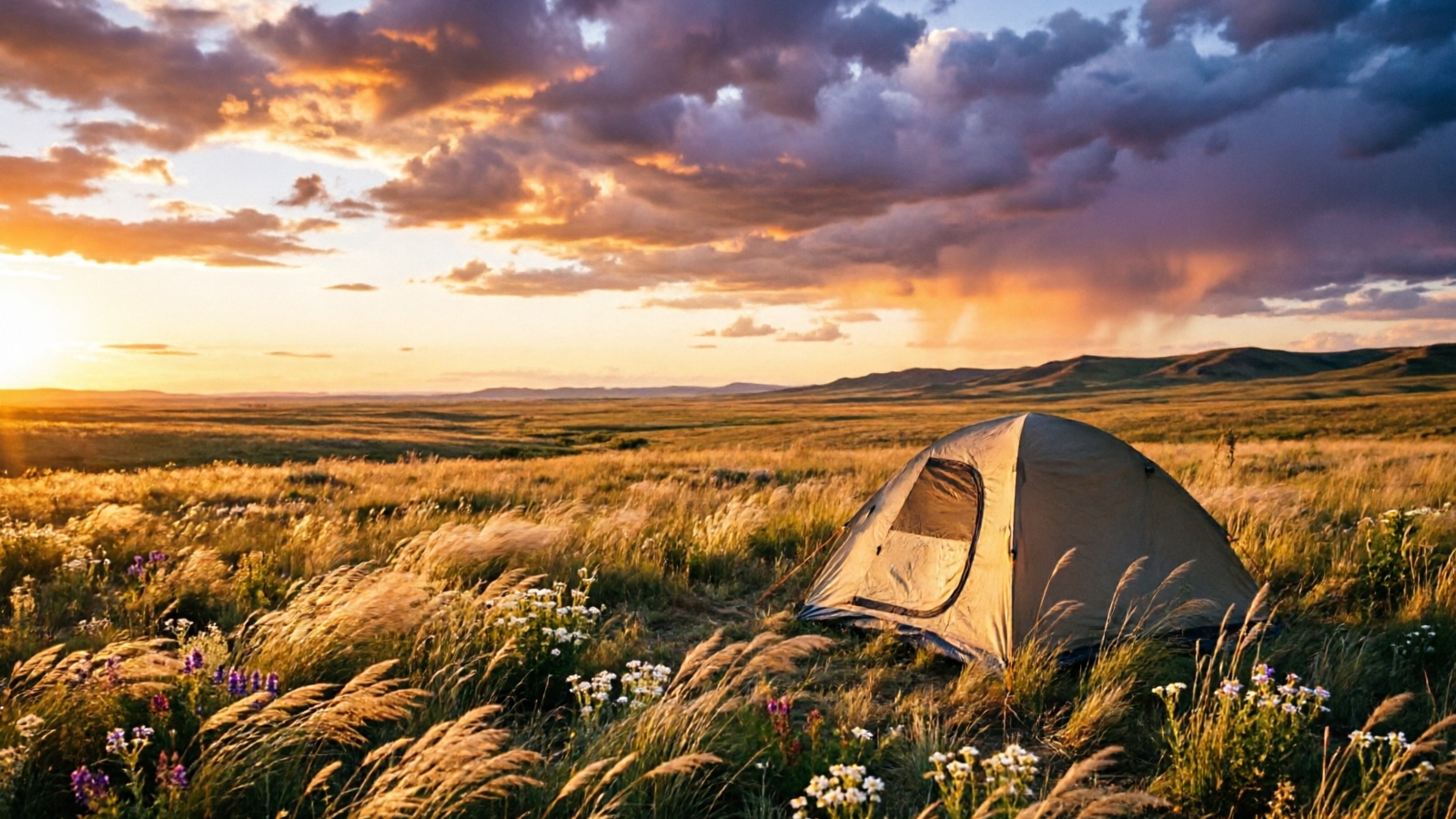
Prairie camping strips away every comfort trees provide — no shade, no windbreak, no privacy. What you get is horizon-wide sunsets, bison silhouetted against golden grass, and a silence so vast the wind itself becomes white noise. For a fundamentally different landscape, see our stargazing camping guide or desert camping guide.
What Is Prairie Camping?
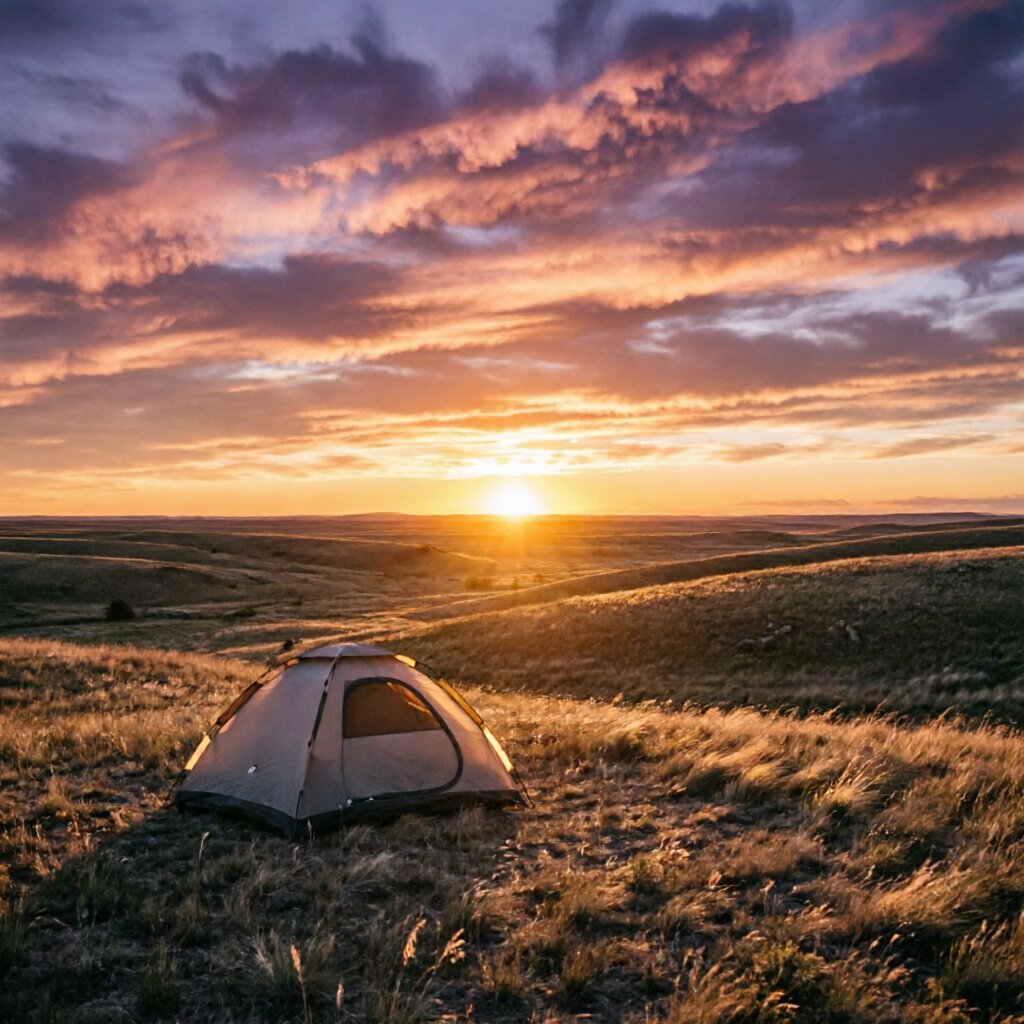
Prairie camping strips away the tree canopy and reveals the horizon in every direction.
What makes prairie camping different from every other format? sleeping in open grassland ecosystems where the horizon is your only landmark and wind is your constant companion. The North American prairie once covered 170 million acres; today less than 4% of native tallgrass prairie remains, protected in preserves and parks across the Great Plains.
No shade exists. Sun beats down from dawn to dusk with zero overhead cover. Sunscreen, hat, and long sleeves are survival gear, not optional accessories.
Wind is relentless. Without trees to block it, sustained 20-30 mph winds with 50 mph gusts are normal, especially in spring and fall.
Temperature swings are extreme. 90°F days can drop to 40°F within hours of sunset. Layering is the only strategy.
Thunderstorms arrive fast. Open prairie offers no shelter from storms that generate lightning, hail, and occasionally tornadoes with minimal warning.
Quick Answer: Prairie Camping Essentials
Three items solve the biggest problems every prairie camping trip faces: Cutter Skinsations (mosquito and tick defense in grassland habitat), Neutrogena Sport Sunscreen SPF 70+ (zero-shade UV protection all day), and the MAGCOMSEN Windproof Rain Jacket (blocking relentless prairie wind).
Add the Earth Pak Dry Bag for dew and storm protection, the LHKNL Headlamp 2-Pack for total darkness, the Coleman Classic Cooler for remote food storage, and the Coleman Camping Chair for hard prairie ground.
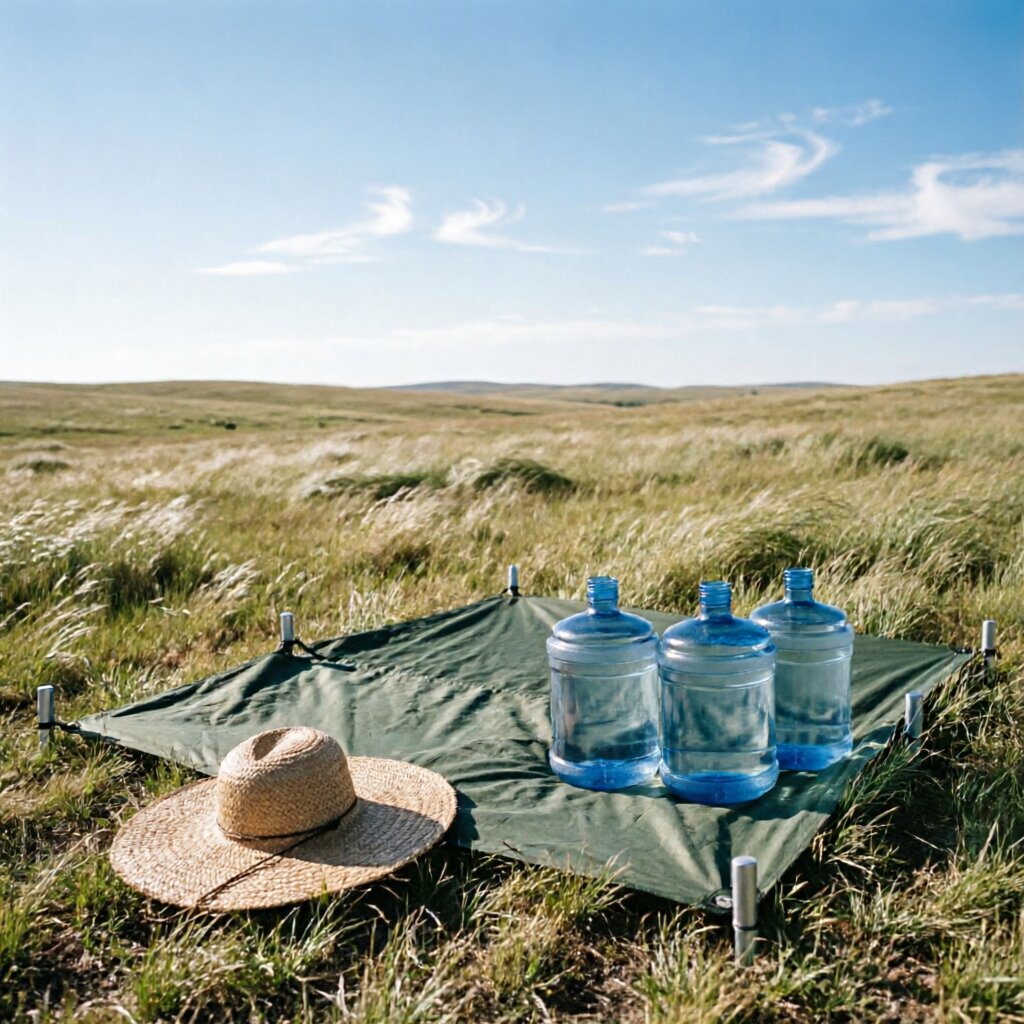
Comparison Table
| Product | Best For | Link |
|---|---|---|
| Cutter Skinsations Mosquito and Insect Repellent | Mosquito and tick defense in tall grass | Check Price → |
| Neutrogena Sport Sunscreen SPF 70+ | Zero-shade UV protection all day | Check Price → |
| MAGCOMSEN Hooded Windproof Rain Jacket | Blocking relentless prairie wind and sudden rain | Check Price → |
| Earth Pak Waterproof Dry Bag | Gear protection from dew and thunderstorms | Check Price → |
| LHKNL LED Headlamp 2-Pack | Night navigation with zero ambient light | Check Price → |
| Coleman Classic Insulated Cooler | Food storage with no nearby stores | Check Price → |
| Coleman Portable Camping Chair | Comfortable seating on hard flat ground | Check Price → |
Best for Insect Defense: Cutter Skinsations Mosquito and Insect Repellent
Insect defense is the top prairie camping priority — grasslands breed mosquitoes and ticks.
Prairie grasslands are mosquito and tick paradise from April through July. Tall grass provides cover for mosquitoes during the day, and ticks climb grass blades to latch onto passing hosts. The Cutter Skinsations uses 7% DEET with aloe and vitamin E in a non-greasy pump spray.
What we like: 7% DEET formula, aloe and vitamin E soothe skin, non-greasy pump spray, light fresh scent, affordable.
What could be better: 7% DEET may not suffice in heavy mosquito zones — carry a stronger DEET or permethrin treatment for peak-season trips. Shake-check the bottle on arrival, since partial-fill and leaking bottles are the packaging complaint to watch for.
For heavy insect areas, combine with a mosquito net.
Best for Sun Protection: Neutrogena Sport Sunscreen SPF 70+
Sun protection is survival in prairie camping — zero shade means full UV exposure all day. Neutrogena Sport Sunscreen SPF 70+
Prairie camping means zero shade from dawn to dusk. UV reflects off grass in every direction. The Neutrogena Sport provides SPF 70+ broad spectrum protection with water-resistant 80-minute coverage and Helioplex technology.
What we like: SPF 70+, water-resistant for 80 minutes, oil-free, non-comedogenic, Helioplex UV defense.
What could be better: white cast on darker skin tones is the consistent complaint with this formula — test it at home before relying on it trail-side.
For full-body coverage, see our best camping sunscreens.
Best for Wind Protection: Wise Owl Outfitters Camping Hammock with Rain Fly
Wind is the defining challenge of prairie camping — a windbreak hammock adds serious comfort. MAGCOMSEN Hooded Windproof Rain Jacket
Wind is the defining challenge of prairie camping. Sustained 20-30 mph winds collapse cheap tents and make campfire cooking impossible. The MAGCOMSEN provides a lightweight windproof shell with adjustable hood, zippered pockets, and a packable design.
What we like: Windproof shell, water-resistant coating, adjustable hood, lightweight and packable, zippered pockets, elastic cuffs.
What could be better: water-resistant is not waterproof — this is a wind layer, so pack a hardshell for real rain. The zipper is the first component to check on arrival. Size runs small — order up for layering.
This is a wind layer, not a rain jacket. For storms, add a camping tarp.
Best for Gear Protection: Earth Pak Waterproof Dry Bag
Dust and sudden rain make gear protection essential for prairie camping. Earth Pak Waterproof Dry Bag
Prairie mornings produce heavy dew that soaks everything outside your tent. Thunderstorms arrive with zero warning. The Earth Pak uses a roll-top closure with IPX6 rating, floating design, and shoulder strap.
What we like: IPX6 waterproof rating, roll-top closure, floats if dropped, multiple sizes from 5L to 55L, shoulder strap included.
What could be better: seam leakage after extended use is the main issue — roll the top the full three folds and keep the seam tape above the waterline. Check the small inner pouch seams before the trip.
For more options, see our best dry bags review.
Best for Night Navigation: LHKNL LED Headlamp 2-Pack
Prairie camping nights are pitch black — no trees block starlight, but you need artificial light to move safely. LHKNL LED Headlamp 2-Pack
Prairie darkness is absolute — zero light pollution means the Milky Way blazes overhead but camp tasks need artificial light. The LHKNL provides USB-C rechargeability, white and red modes for stargazing, IPX4 waterproofing, and adjustable beam.
What we like: 2-pack for two people, USB-C charging, white and red light modes, IPX4 waterproof, adjustable beam.
What could be better: battery degradation is the consistent complaint in budget headlamps — expect charge capacity to fade after a season or two of regular use.
For more options, see our best camping headlamps.
Best for Food Storage: Coleman Classic Cooler
Food storage on the prairie requires extra vigilance — no trees for bear hangs. Coleman Classic Insulated Cooler
Prairie campsites are remote — the nearest store may be 30+ miles on gravel roads. The Coleman Classic holds up to 28 cans with an insulated lid, leak-resistant drain, and recessed handles for easy transport.
What we like: 28-can capacity, insulated lid, leak-resistant drain, easy-clean interior, recessed handles.
What could be better: Ice retention is inconsistent — real-world performance in 70°F shade runs well short of the marketed figure, which contradicts the sticker on the actual cooler. The lid can warp when left in the sun, creating an air gap that breaks the seal, so keep it shaded at camp.
For longer trips, see our best camping coolers.
Best for Camp Comfort: Coleman Portable Camping Chair
Camp comfort on the prairie requires gear that handles wind and hard ground.
Flat prairie ground is hard and uncomfortable for extended sitting. The Coleman chair features a cushioned seat and back, built-in 4-can cooler, side pocket, cup holder, and 400lb capacity.
What we like: Built-in 4-can cooler, cushioned seat and back, 400lb capacity, side pocket, cup holder, fold-flat transport.
What could be better: seat height is low by design — the sit-in-the-ground feel bothers some knees and thighs, so test the posture before committing to a long afternoon. Check stitching on the cooler pocket, and note recent production runs have thinner fabric.
For more options, see our best camping chairs.
Best Prairie Camping Spots in the United States
Badlands National Park, South Dakota
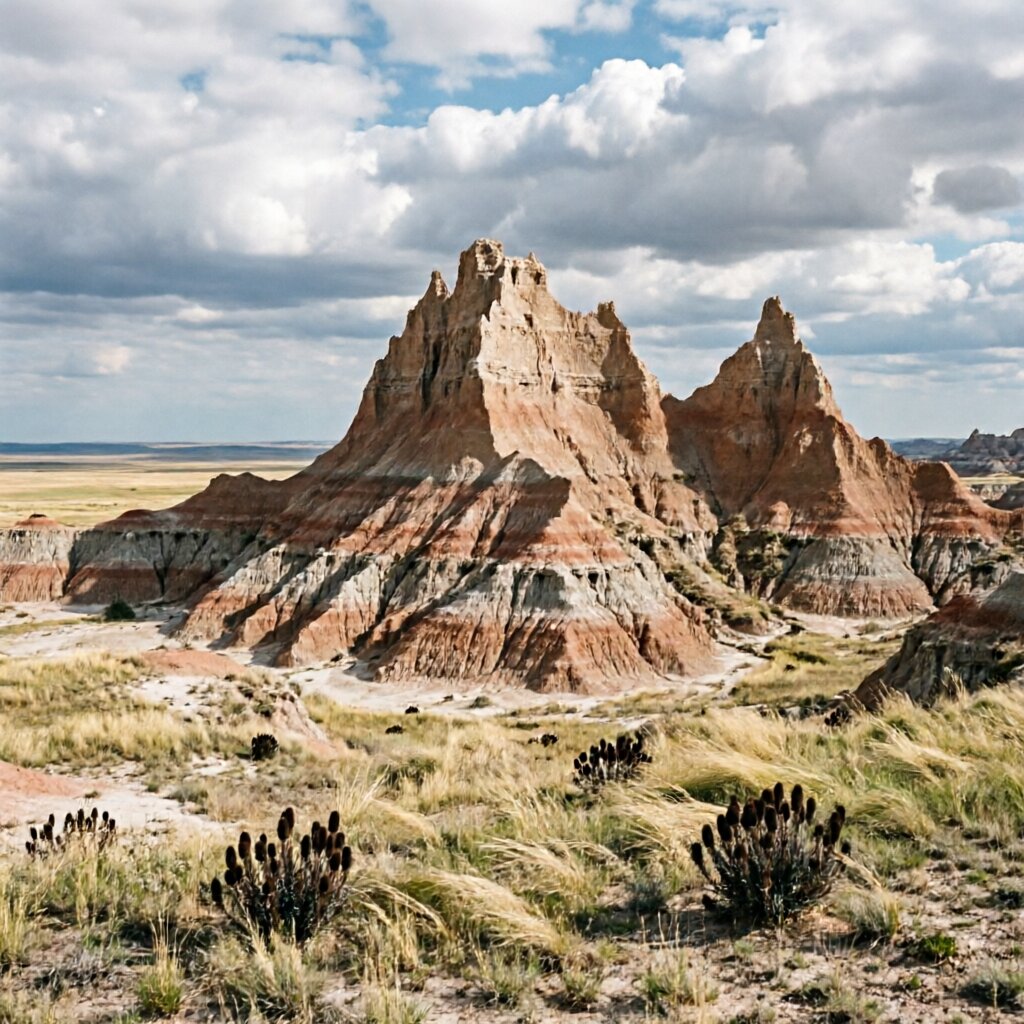
Eroded pinnacles and buttes rising from mixed-grass prairie. Sage Creek campground is primitive; Cedar Pass offers developed camping.
Bison roam freely through Sage Creek — maintain distance. Night skies are among the darkest in the US.
Theodore Roosevelt National Park, North Dakota
Three units of badlands and prairie in western North Dakota with three campgrounds. Bison, wild horses, elk, and prairie dogs are common campground visitors. Wind is extreme on the exposed badlands with no windbreak.
Custer State Park, South Dakota
71,000 acres of rolling prairie with one of the largest free-roaming bison herds in the US. Nine campgrounds from primitive to full hookup. The most developed and family-friendly prairie camping on this list. Nearby Mount Rushmore.
Flint Hills, Kansas
The largest remaining expanse of tallgrass prairie in the world — over 4 million acres. State parks like El Dorado Lake and Council Grove Lake offer camping with prairie access. Spring controlled burns paint the hills black and green simultaneously.
Wichita Mountains Wildlife Refuge, Oklahoma
Mixed-grass prairie with ancient granite mountains. Free camping at Charon’s Garden Wilderness Area and Doris Campground.
Free-range longhorn cattle and bison. The granite boulders provide windbreaks that pure prairie lacks.
Pawnee National Grassland, Colorado
193,000 acres of shortgrass prairie with dispersed camping — no fees, no reservations, no facilities. Very few visitors. Pronghorn antelope are common. No water available — bring everything you need.
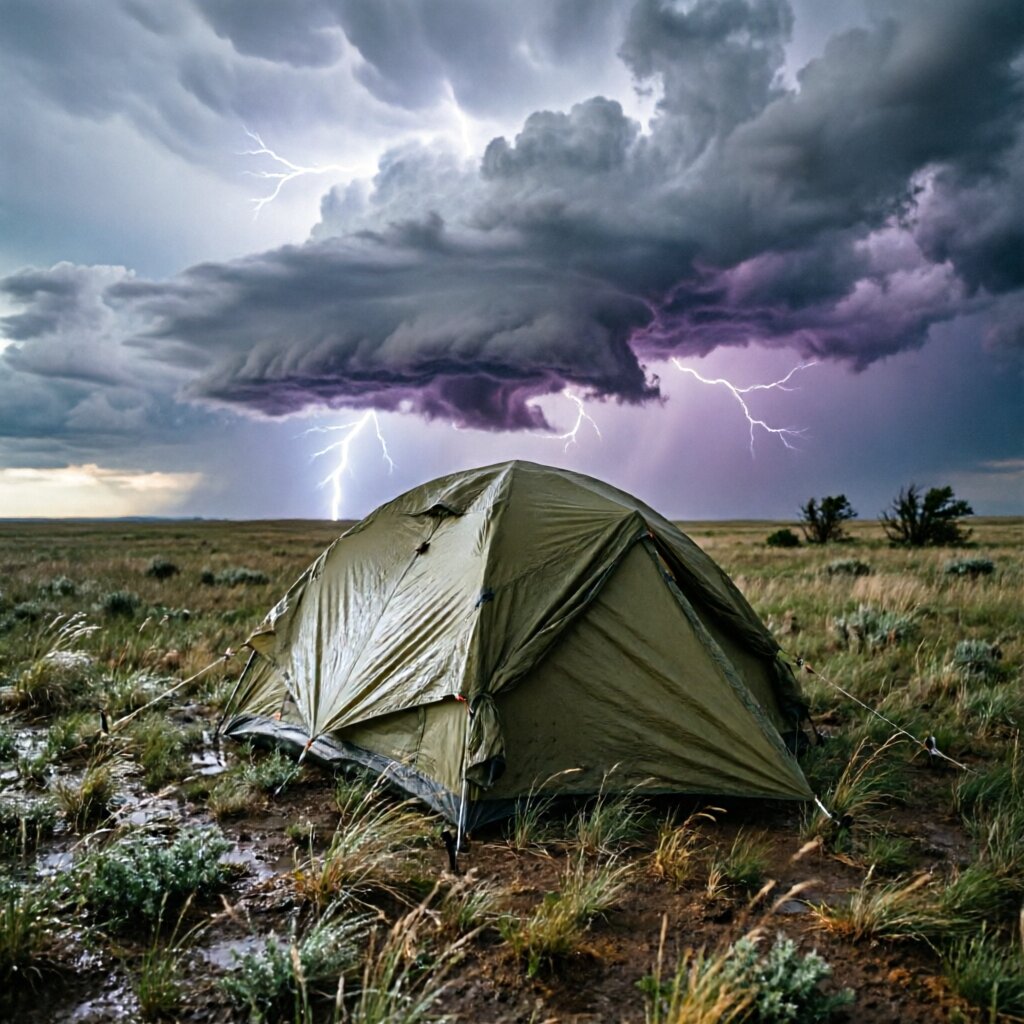
Prairie Camping Safety Tips
Safety in prairie camping is fundamentally different from forest camping — your threats are exposure, wind, and lightning, not bears or getting lost.
Thunderstorm and Tornado Safety
Prairie thunderstorms produce tornadoes, large hail, and severe lightning with minimal warning. Monitor weather alerts via NOAA or cell phone.
If a tornado warning is issued, abandon your tent and seek the nearest low spot. Never shelter under highway overpasses — they act as wind tunnels.
Lightning on Open Ground
On open prairie you are often the tallest object. Get out of your tent during storms — metal poles conduct lightning.
Crouch low with feet together and head tucked. Never lie flat, which increases ground current exposure.
Wildlife Encounters
Bison roam in Badlands, Theodore Roosevelt, and Custer State Park — maintain 25 yards minimum. They run 35 mph and charge without warning.
Prairie rattlesnakes are common in rocky badlands areas. Ticks are active April through July — full-body checks daily.
Fire Safety
Prairie grass is fuel. Build fires only in designated rings and never on windy days. Extinguish completely before sleeping.
Many areas have fire restrictions during summer drought. Check with the park office before your trip.
How to Choose the Best Prairie Camping Gear
Wind Resistance Over Weight
Your tent must handle sustained prairie winds. Choose dome-shaped tents with aluminum poles — fiberglass snaps in high wind.
Stake every guyline. A windbreak tarp improves comfort significantly.
Sun Protection Is Survival
SPF 70+ sunscreen on all exposed skin, wide-brimmed hat, and long-sleeve UPF shirt. Reapply every two hours. Set up your camp chair in whatever minimal shade your vehicle provides during peak sun hours.
Insect Defense With Layers
DEET spray on skin, permethrin-treated clothing for ticks, long pants tucked into socks, and a mosquito net for campsite resting. Full-body tick checks every evening are non-negotiable on the prairie.
Redundancy for Remote Locations
Prairie campsites are often hours from the nearest town. Bring backup light, extra food beyond your planned trip length, a water filter if your site lacks potable water, and a solar charger for device charging.
Cold-Weather Layering
Pack for two seasons. A 40°F temperature drop from afternoon to midnight is normal on the prairie.
The MAGCOMSEN wind jacket as outer shell, synthetic mid-layer, and moisture-wicking base layer cover the range.
Conclusion: Why Prairie Camping Is Worth It
Prairie camping is the most exposed camping format in North America — and also the most rewarding. Wind never stops, sun never stops, and storms arrive without permission.
Start your prairie camping journey with a developed campground like Custer State Park or Theodore Roosevelt National Park. Invest in wind protection, sunscreen, and insect repellent.
Frequently Asked Questions
What is prairie camping? Camping in open grassland ecosystems with zero shade, relentless wind, extreme temperature swings, and sudden thunderstorms. Fundamentally different from forest camping.
What gear do I need? Seven essentials: insect repellent, SPF 70+ sunscreen, windproof jacket, dry bag, headlamp, cooler, and camp chair. See our camping packing list for supplementary items.
Best prairie camping spots? Badlands NP SD, Theodore Roosevelt NP ND, Custer State Park SD, Flint Hills KS, Wichita Mountains OK, Pawnee National Grassland CO.
How do you deal with prairie wind? Dome tent with aluminum poles, all guylines staked, windproof shell jacket, tarp windbreak. Sustained 20-30 mph with 50 mph gusts is normal.
Is prairie camping dangerous? Thunderstorms with tornadoes and lightning are the primary risk. Bison charge without warning. Ticks carry Lyme disease. Monitor weather constantly.
Best time of year? September-October — mild temperatures, fewer insects, golden grass. Summer has extreme heat and storms. Spring has wildflowers but worst wind.
Do I need a windproof tent? Yes. Full-coverage rainfly, aluminum poles, multiple guyout points. See best camping tents for options.
How to protect against ticks? Long pants tucked into socks, DEET repellent, permethrin-treated clothing, full-body tick checks every evening.
References
- National Park Service — “Prairie Ecosystems and Camping Safety” — nps.gov
- NOAA — “Great Plains Severe Weather and Tornado Safety” — weather.gov
- Leave No Trace — “Grassland and Prairie Ethics” — lnt.org
- REI Co-op — “Wind-Resistant Tent Selection Guide” — rei.com/learn
- 知乎 — “草原露营必备装备清单” — zhihu.com
- 什么值得买 — “美国大平原露营经验分享” — smzdm.com