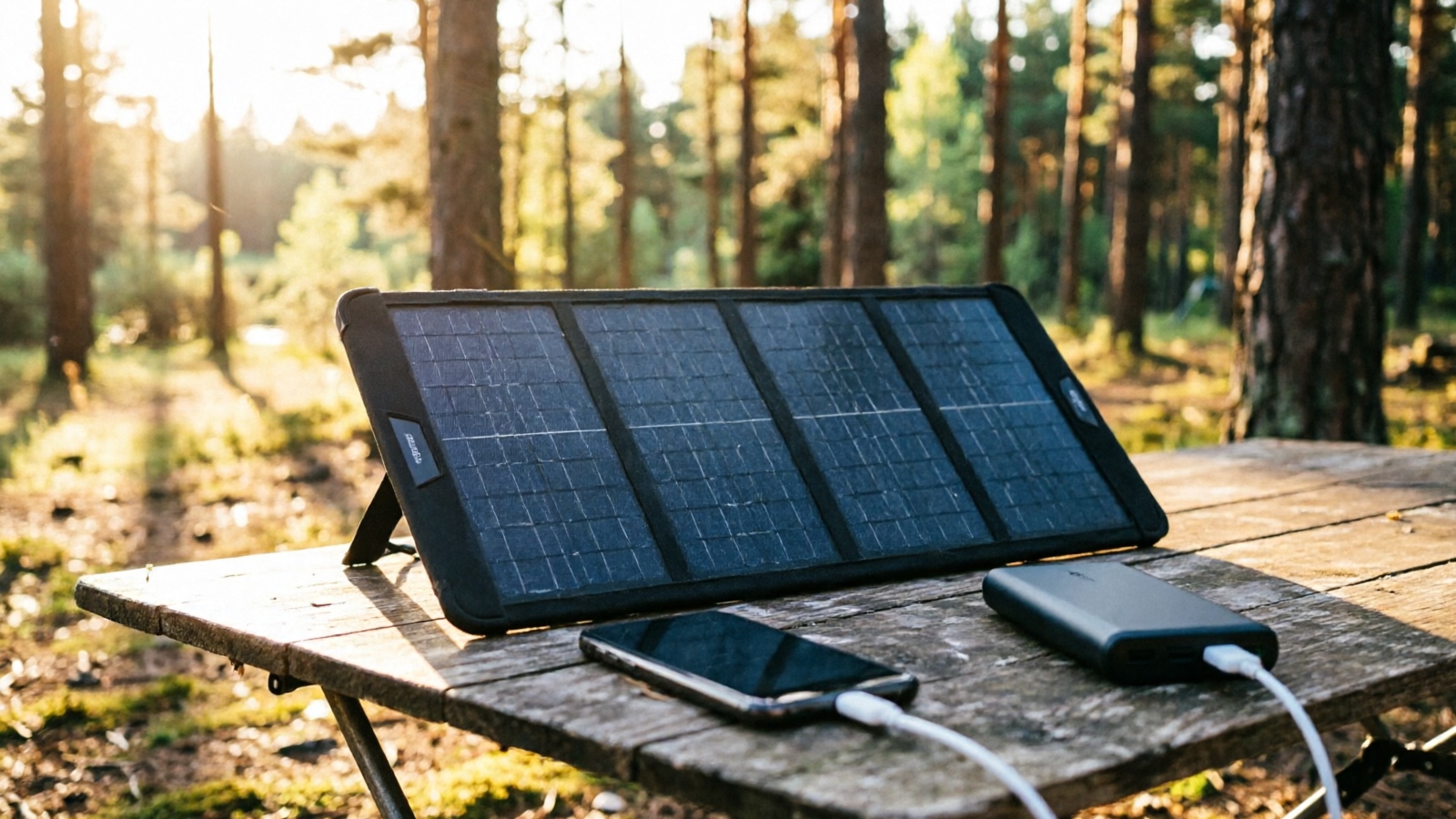
8 Best Portable Solar Chargers for Camping (25W–100W)
Compare 8 portable solar chargers & power banks (25W–100W) for camping and RV. Wattage, weight, and price ranges for budget to power buyers.
Products Reviewed
Solar charging for camping sounds simple — point a panel at the sun, plug in your phone, done. In practice, a $20 solar power bank barely trickles through clouds, a 200W panel is useless on a backpacking trip at 17.6 pounds, and wattage ratings are optimistic. The real question isn’t “which solar charger” — it’s “which one for my camping style.”
We evaluated 8 products across three categories: solar power banks, small foldable panels for backpacking (20-30W), and large foldable panels for car camping and RV (100-200W). BigBlue 28W earned our top pick for backpackers. For car camping, FlexSolar 100W delivers 100W at an affordable price.
Quick Answer: Our Top Picks
Best Overall — BigBlue 28W ($74.96) The most proven foldable solar panel for camping. SunPower monocrystalline cells, 3 ports (2× USB-C + USB-A), only 1.1 lbs. Folds into a jacket pocket. Charges a phone 0-50% in ~2 hours of direct sun. Not the cheapest, not the most powerful, but the best-balanced for 90% of trips.
Best Budget — BLAVOR Solar Power Bank 10K ($25.48) 3-way charging (solar + USB-C + wireless Qi), dual flashlight with SOS, under $22. The best budget solar charger for basic phone charging.
Best for Power Station Pairing — FlexSolar 100W ($89.99) 100W for under $80 — the best watts-per-dollar. IP67 waterproof, PD 65W USB-C for laptop charging, MC4/Anderson DC connectors work with Jackery, EcoFlow, and Bluetti.
Quick Comparison
| Product | Price | Type | Wattage | Weight | Waterproof | Rating | Best For |
|---|---|---|---|---|---|---|---|
| BLAVOR 10K Solar Bank | $25.48 | Power Bank | 10,000mAh | ~1 lb | None | 4.3★ | Best Budget |
| BLAVOR 20K Solar Bank | $46.99 | Power Bank | 20,000mAh | ~1.4 lb | None | 4.5★ | Best Power Bank |
| wagnation 30W Panel | $29.99 | Foldable | 30W | ~1.3 lb | IP65 | 4.3★ | Best Budget Panel |
| BigBlue 28W Panel | $74.96 | Foldable | 28W | ~1.1 lb | IPX4 | 4.4★ | Best Overall |
| Goal Zero Nomad 5 | $59.95 | Foldable | 5W | ~1.1 lb | — | 4.5★ | Goal Zero Owners |
| FlexSolar 100W | $89.99 | Foldable | 100W | ~8.8 lb | IP67 | 4.5★ | Best 100W Value |
| ZOUPW 100W | $105.99 | Foldable | 100W | ~9.5 lb | IP67 | 4.5★ | Premium 100W |
| Renogy 200W | $219.99 | Foldable | 200W | ~17.6 lb | IP65 | 4.6★ | Best High Power |
Prices sourced from Amazon as of September 2026. Actual prices may vary.
Goal Zero products pair with Goal Zero Yeti power stations — see our Best Portable Power Stations guide.
Comparison
The Quick Comparison table above gives you the headline spec sheet. The decision matrix below scores each solar charger on the criteria that actually matter at a campsite: charging time at typical real-world output, weight for the trip style, water resistance, and whether it pairs with a power station or stays USB-only.
| Product | Real-World Output | Weight Class | Water Rating | Power Station Pair |
|---|---|---|---|---|
| BLAVOR 10K Solar Bank | ~18W solar trickle (full recharge 2-3 days) | None | No | |
| BLAVOR 20K Solar Bank | ~20W solar trickle (full recharge 2-4 days) | None | No | |
| wagnation 30W Panel | ~20W (66% of rated) | Lid pocket | IP65 | Yes (DC) |
| BigBlue 28W Panel | ~22W (78% of rated) | Jacket pocket | IPX4 | No |
| Goal Zero Nomad 5 | ~4W (80% of rated) | — | Yes (Yeti) | |
| FlexSolar 100W | ~70W (70% of rated) | Backpack | IP67 | Yes (MC4/Anderson) |
| ZOUPW 100W | ~75W (75% of rated) | Backpack | IP67 | Yes (5-in-1 cable) |
| Renogy 200W | ~150W (75% of rated) | Car-only | IP65 | Yes (MC4) |
What the matrix highlights
- Real-world output is 60-80% of rated wattage. A 100W panel delivers 60-80W in practice; a 200W panel delivers 120-160W. This is why the BigBlue 28W outperforms some 30W competitors — its SunPower cells hold output better in partial shade.
- IP rating matters more than wattage for wet trips. IP67 panels (FlexSolar, ZOUPW) survive rain, river spray, and accidental drops in puddles. IPX4 (BigBlue) is morning-dew only. Solar power banks with no rating should never be left in wet grass.
- Power station pairing depends on connector type. MC4 (FlexSolar, Renogy) is universal across Jackery, EcoFlow, and Bluetti. ZOUPW’s 5-in-1 cable covers Yeti, Jackery, EcoFlow, and Bluetti in one. Goal Zero’s 8mm is Yeti-only. BLAVOR power banks charge devices via USB but not power stations.
- Weight and trip style must agree. A 100W+ panel is 8.8-17.6 lbs — car camping and RV only. Backpackers cap at 1.5 lbs (BigBlue, wagnation). For phone-only trips, a BLAVOR power bank is enough.
For matching these solar chargers to specific camping styles, the buying guide below walks through use cases.
Best Solar Power Banks for Camping
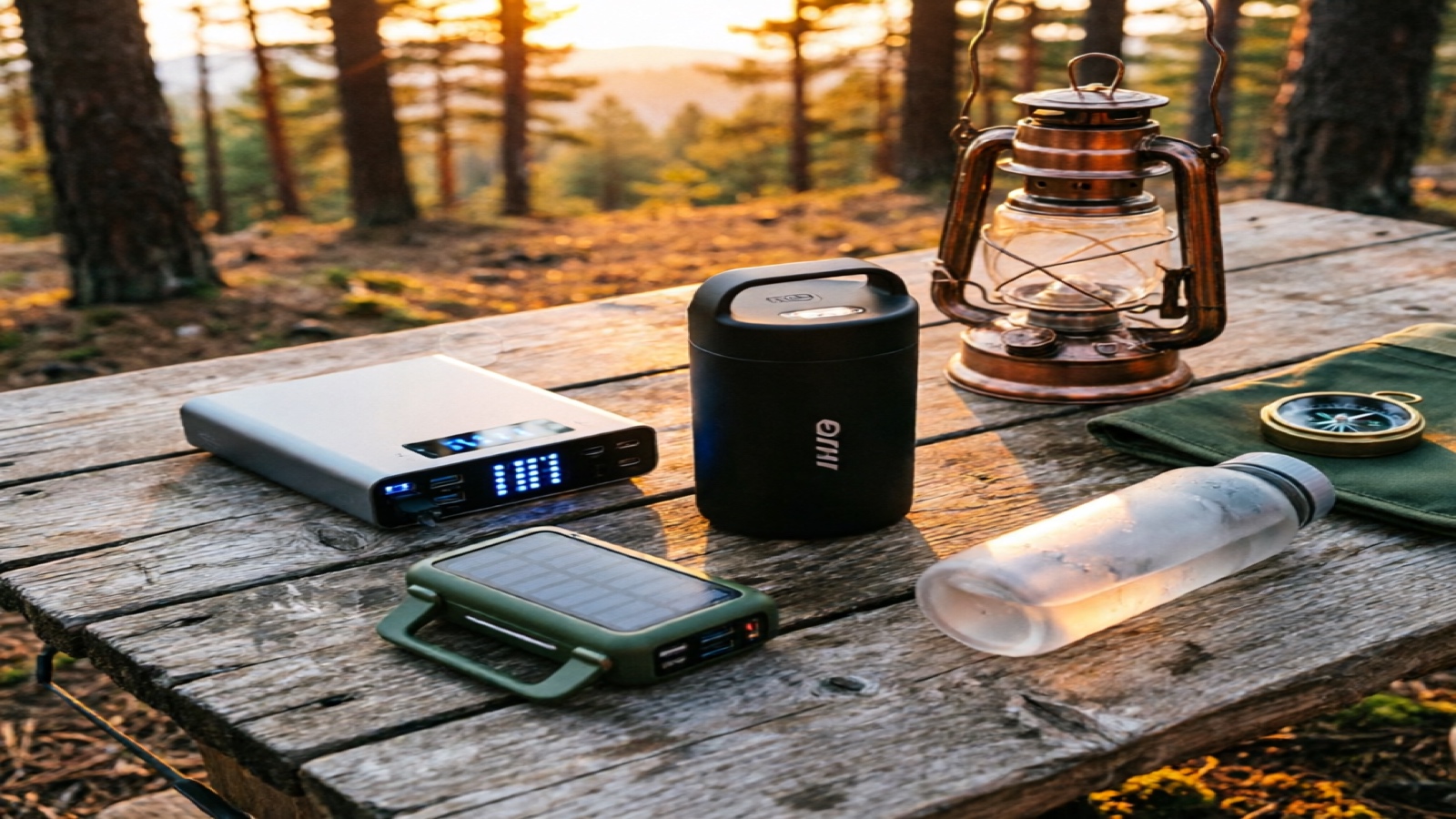
Solar power banks combine a battery and small solar panels in one unit. Charge from a wall before your trip, use the battery for devices, and let solar trickle-charge as emergency backup. The panels are tiny — emergency backup, not primary charging.
BLAVOR Solar Power Bank 10,000mAh ($25.48) — Best Budget
The cheapest option at $25.48. Charges via 3 methods: USB-C cable (fastest), built-in solar panels (emergency only), and Qi wireless charging — the only product here with wireless capability. The dual LED flashlight with SOS mode adds emergency utility. For the price, the 10K capacity is the headline spec — check the Amazon listing’s recent reviews for real-world recharge counts before buying.
The reality: those built-in solar panels are marketing as much as function. Expect 2-3 days of continuous direct sun to recharge via solar. Build quality is adequate — plastic scratches, some capacity fade over time.
What we like: $25.48 cheapest, 3-way charging (solar + USB-C + wireless Qi), dual flashlight with SOS, compact pocket size.
What could be better: Solar takes 2-3 days, 10K mAh modest for tablets, plastic scratches easily, capacity fade reported.
Who It’s For: Budget campers wanting a cheap solar charger with emergency backup for phone charging.
BLAVOR Solar Power Bank 20,000mAh ($46.99) — Best Power Bank
Double the capacity for only $8 more. The BLAVOR 20K adds built-in cables (USB-C, Lightning, Micro-USB) and an Apple Watch charging pad — a feature no other solar bank here offers. If you hate packing separate cables, that alone justifies the $8 premium over the 10K.
Trade-offs: heavier at ~1.4 lbs. The watch charger only works with certain Apple Watch models. Price fluctuates — sometimes $60+. Built-in cables can break if bent forcefully.
What we like: 20,000mAh double capacity, built-in cables (no separate cables needed), Apple Watch charging pad, highly rated, only $46.99.
What could be better: Heavier, watch charger compatibility limited, solar still slow, price fluctuates, cables can break.
Who It’s For: Campers with Apple Watches who hate carrying cables, or anyone needing a solar charger with 3+ days of phone charging.
Best Small Foldable Solar Panels for Backpacking
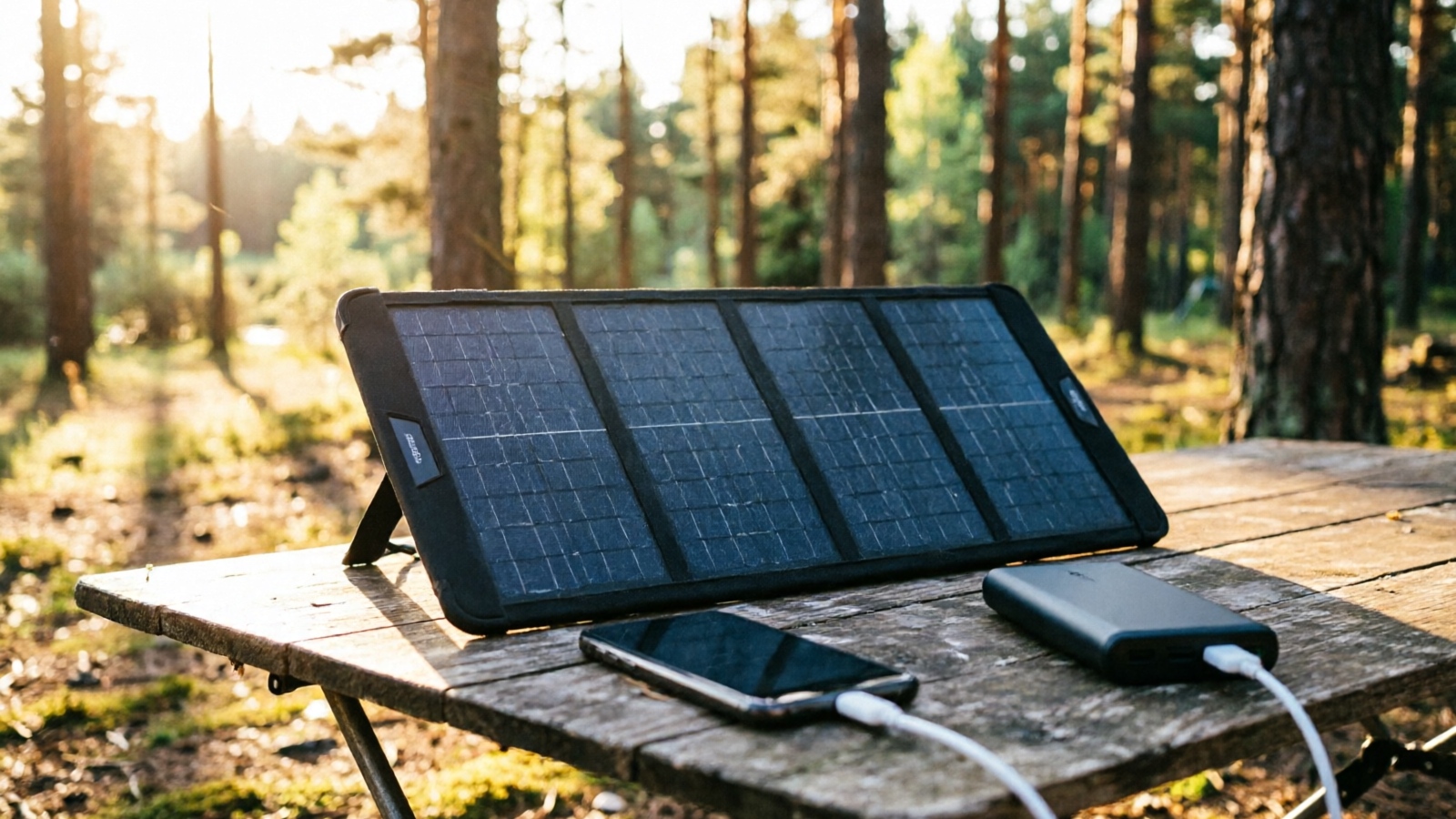
Small foldable panels (20-30W) weigh 1-1.5 lbs, fold into a jacket pocket, and charge phones directly from sunlight. No battery — power only in direct sun. Pair with a power bank: charge it by day, use it at night.
BigBlue 28W Foldable Panel ($74.96) — Best Overall
The most recommended foldable solar charger in outdoor media. GearLab top pick, Google AI Overview citation. SunPower monocrystalline cells, 3 ports (2× USB-C + USB-A), and only 1.1 lbs folded — it packs down to jacket-pocket size, which is why outdoor media keeps picking it.
Expect 0-50% phone charge in ~2 hours of direct sun. SunPower cells handle partial shade better than generic panels. IPX4 handles morning dew.
Limitations: 28W won’t charge laptops or power stations (no DC output). IPX4 is splash-proof only. The auto-restart can be annoying. At $67, it’s the priciest small panel.
What we like: Most proven, GearLab + AIO recommended, 3 ports, SunPower cells, 1.1 lbs ultralight, jacket-pocket fold.
What could be better: No DC output, IPX4 splash only, auto-restart annoying, $67 pricey for 28W, cells can crack.
Who It’s For: Backpackers and hikers needing the most proven lightweight solar charger for phone and GPS charging on multi-day trips. Pairs well with a reliable camping backpack. See our car camping guide for more trip planning tips.
wagnation 30W Foldable Panel ($29.99) — Best Budget Panel
30W output for under $40 — best watts-per-dollar among small foldables. A DC output port lets it charge power stations via included adapter. IP65 waterproof handles rain and water jets. Only ~1.3 lbs, and it folds small enough for a lid pocket — the best watts-per-dollar deal among small foldables.
Shortcomings: panel material feels thin — handle with care. No kickstand included. DC cable adapter quality is mediocre. 30W is still only enough for small devices.
What we like: $29.99 for 30W, DC output for power stations, IP65 waterproof, only ~1.3 lbs, 23% efficiency.
What could be better: Thin panel material, no kickstand, DC adapter mediocre, shade sensitivity, slow power station charging.
Who It’s For: Budget campers wanting a real foldable solar charger with DC output at nearly half the BigBlue’s price.
Goal Zero Nomad 5 ($59.95) — Best for Goal Zero Owners
Goal Zero is the most trusted name in portable solar. The Nomad 5 is the smallest panel in the Nomad line — a 5-watt pocketable charger built around the same 8mm Yeti port as the larger Nomad 20 and 50. Folds small enough to clip on a daypack and trickle-charge a phone or GPS — pair it with a Goal Zero power bank for a matched ecosystem.
The trade-off: 5W is enough for phones and headlamps, not laptops. wagnation and BigBlue give you 5-6× the wattage for the same money or less. The 8mm port only works with Goal Zero products. No USB-C PD. If you don’t already own a Yeti, this is a niche pick.
What we like: Goal Zero build quality and reliability, pocketable 5W design, 8mm Yeti compatibility, simple kickstand, ~1.1 lb folded.
What could be better: Only 5W output — phones only, no laptops. 8mm only Goal Zero, no USB-C. Premium price per watt vs wagnation and BigBlue.
Who It’s For: Goal Zero Yeti owners wanting a tiny add-on panel to extend off-grid runtime, or weight-conscious backpackers who already trust the Goal Zero ecosystem.
Best Large Foldable Solar Panels for Car Camping & RV
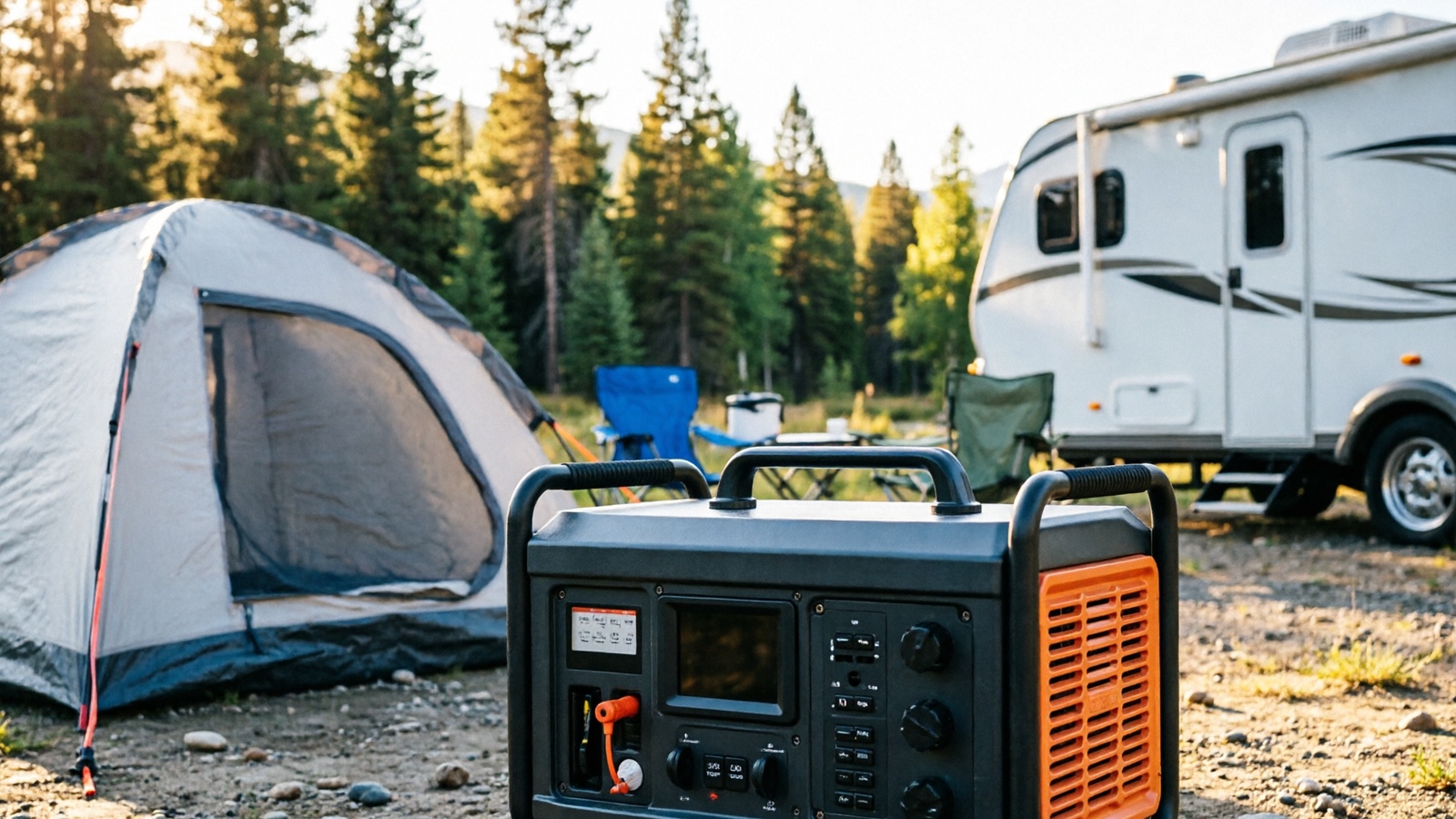
Large foldable panels (100-200W) pair with portable power stations for serious off-grid charging — phones, laptops, 12V fridges. They weigh 8.8-17.6 lbs — not practical for backpacking. Pair with a good camping cooler for a complete off-grid camp kitchen.
FlexSolar 100W Foldable Panel ($89.99) — Best 100W Value
100W output for under $80 is exceptional value. PD 65W USB-C charges laptops directly. MC4/Anderson DC connectors work with Jackery, EcoFlow, Bluetti. IP67 fully waterproof — highest rating here. If your trip involves sustained rain or boat spray, this is the panel to pick over splash-resistant rivals.
Real-world output: typically 60-80W in good conditions. Enough to charge a Jackery 300 in 4-5 hours of peak sun. Included kickstand simplifies setup.
Caveats: 8.8 lbs, car camping only. Limited track record as a newer product. MC4 cable quality is mediocre. Bulky when folded.
What we like: $89.99 for 100W unbeatable, IP67 fully waterproof, PD 65W USB-C for laptops, MC4 universal DC, included kickstand.
What could be better: 8.8 lbs car camping only, limited track record, MC4 cable mediocre, real-world 60-80W, bulky fold.
Who It’s For: Campers wanting maximum watts-per-dollar from a solar charger for power station pairing.
ZOUPW 100W ($105.99) — Premium 100W
The ZOUPW 100W matches FlexSolar on the specs that matter: 100W mono, 23.5% efficiency, IP67, USB-C + QC3.0 + DC output. Where it pulls ahead: two adjustable kickstands hold the panel at 45° (up to 25% more sun than lying flat), and the built-in controller charges phones directly through USB-C PD plus two USB-A ports.
The 5-in-1 solar cable is the widest native fit in this roundup — DC8020 for newer Jackery models, XT60 for EcoFlow and Anker, plus Anderson, DC7909/8mm, and DC5521. One panel plugs into Jackery, EcoFlow, Bluetti, and Anker power stations without extra adapters.
At $16 over FlexSolar you’re paying for the kickstands and the universal cable. ZOUPW is a younger brand with a 12-month warranty, so long-term durability is an open question.
What we like: 23.5% efficiency, IP67 ETFE, built-in kickstands, 5-in-1 cable fits Jackery/EcoFlow/Bluetti/Anker natively, direct USB-C and USB-A charging.
What could be better: USB-C PD tops out at 45W (FlexSolar does 65W), 12-month warranty is short, 9.5 lbs is car-camping weight.
Who It’s For: Campers mixing power station brands who want one panel that plugs into everything — with a stand that’s already attached.
Renogy 200W Foldable Panel ($219.99) — Best High Power
The highest wattage at 200W and the highest rated in our lineup. Renogy is the #1 brand in off-grid solar — trusted by RV owners and van lifers. Charges power stations roughly 2× faster than 100W panels. MC4 universal connectors work with all brands. USB-C PD 60W charges devices while charging a station simultaneously. For a Jackery-class station, expect a full recharge in an afternoon of good sun — roughly half the time a 100W panel needs.
Reality: 17.6 lbs — exclusively car camping and RV. $221 only justifiable with a large power station (500Wh+). Some units arrive with minor frame damage.
What we like: 200W highest output, highest rated, Renogy #1 off-grid brand, MC4 universal, USB-C PD 60W, charges 2× faster.
What could be better: 17.6 lbs car camping only, $221 expensive, requires precise alignment, large footprint, shipping damage reports.
Who It’s For: RV and van campers with large power stations who need a high-power solar charger for serious off-grid living.
How to Choose the Right Solar Charger for Camping
Trip Style: Backpacking vs. Car Camping vs. RV
The single biggest factor. Backpackers need weight under 1.5 lbs — BigBlue 28W (1.1 lbs) or wagnation 30W (1.3 lbs). A BLAVOR solar charger bank works for phone-only charging. Car campers can handle 8-20+ lb panels — FlexSolar 100W or ZOUPW 100W pair with Jackery 300-500. RV campers benefit from Renogy 200W for maximum recharge speed. A 200W solar charger on a backpacking trip weighs you down; a 28W panel at an RV won’t keep up.
Wattage vs. Capacity: Panels vs. Power Banks
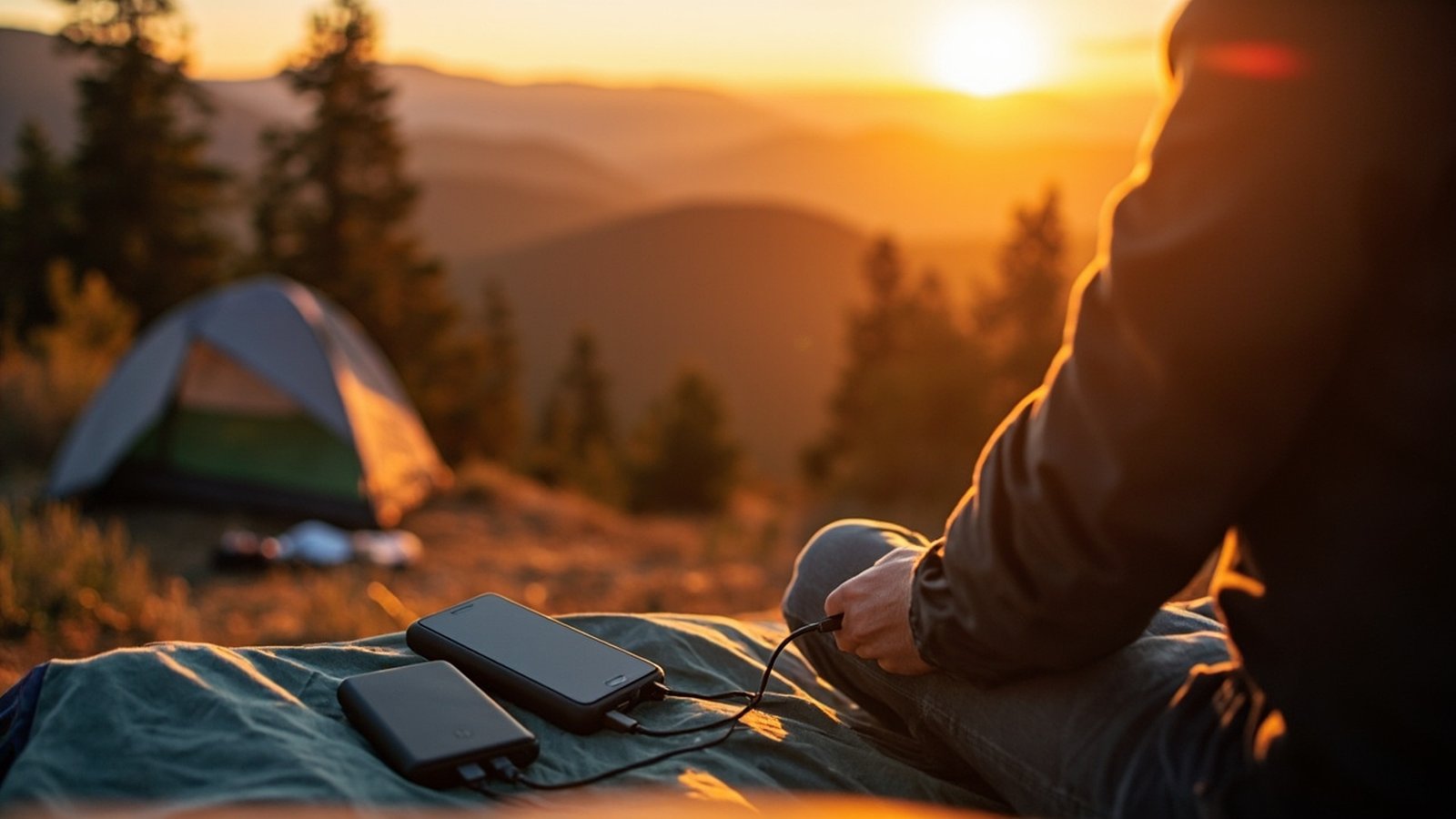
Panels produce power (watts); power banks store it (mAh). A 28W panel charges in direct sun but nothing at night. A 20,000mAh bank charges anytime but needs wall or solar recharge. Best setup: foldable panel charges a power bank by day, bank charges devices at night. BLAVOR banks are all-in-one convenience but their tiny panels aren’t primary power.
Waterproof Rating
IP67 (FlexSolar, ZOUPW): fully waterproof, submersible — ideal for rain and riverside camping. IP65 (wagnation, Renogy): water jet resistant. IPX4 (BigBlue): splash resistant only. BLAVOR banks have no rating — keep dry.
Power Station Compatibility
Small panels charge devices via USB. Large panels add DC connectors for power stations. MC4 (Renogy, FlexSolar) is universal — works with Jackery, EcoFlow, Bluetti. ZOUPW ships a 5-in-1 cable (DC8020, XT60, Anderson, DC7909/8mm, DC5521) that covers all the major brands. 8mm (Goal Zero) is Goal Zero-specific. Match the connector to your power station.
Real-World vs. Rated Wattage
Expect 60-80% of rated output. A 100W panel delivers 60-80W in practice; 200W delivers 120-160W. A 100W panel takes 4-5 hours of peak sun to recharge a Jackery 300. Even partial shade on one cell drops output by 50%+.
Buying Guide
Use-case picks: which solar charger fits each camping style and trip type.
Phone-only weekend trips (car camping, no off-grid ambitions)
BLAVOR 10K Solar Bank or BLAVOR 20K Solar Bank depending on capacity needs. The 10K covers 2-3 phone charges; the 20K doubles that and adds built-in cables. Either one charges overnight at home before the trip and you do not need sun for the whole weekend. Skip the foldable panel if you are not trying to extend runtime past the battery capacity.
Backpacking (weight under 1.5 lbs, every oz counts)
BigBlue 28W for the proven ultralight pick, or wagnation 30W for the budget alternative. BigBlue weighs 1.1 lbs and packs into a jacket pocket; wagnation at 1.3 lbs trades some build quality for DC output. Pair either with a 10K power bank to keep charging through nighttime — panels only work in direct sun, banks work anytime.
Car camping with a portable power station (Jackery / EcoFlow / Bluetti)
FlexSolar 100W at 100W for under $90 is the watts-per-dollar winner. IP67 waterproof handles wet campsite mornings. MC4 connector pairs with Jackery, EcoFlow, and Bluetti. For a faster charge on multi-day trips, ZOUPW 100W ships a 5-in-1 cable that covers every major brand in one adapter.
RV and basecamp with high power demand (laptop, 12V fridge, multiple devices)
Renogy 200W at ~150W real-world output recharges a Jackery 500 in 3-4 hours of peak sun. At 17.6 lbs it stays in the car or RV storage until deployed — too heavy for hiking but worth the weight for full-time off-grid RV setups. Pair with a 2000W+ power station if running a 12V fridge continuously.
Goal Zero Yeti owners (matched ecosystem, lower per-watt value)
Goal Zero Nomad 5 only makes sense if you already own a Goal Zero Yeti power station and want the matched 8mm Yeti port. The 5W output is enough for phones and headlamps but not laptops or power stations under 100W. If you do not own a Yeti, the wagnation 30W or BigBlue 28W gives you 5-6× the wattage for the same money or less.
Festival and event use (multi-day, no grid access)
BLAVOR 20K Solar Bank for the cabin-camping / festival scenario. The built-in cables, Apple Watch charging, and 20K mAh capacity cover 3-4 days of phone and watch charging without sun. The tiny solar panel trickle-charges during the day but is not primary — top up the bank at a coffee shop if the venue has outlets.
For wattage, capacity, and connector choices, the how to choose section above covers the underlying trade-offs.
Maintenance
Care and storage habits that keep solar panels and power banks working for years:
- Wipe panels before storage. Dust, pollen, and sap reduce output 5-15% on a dirty panel. A dry microfiber cloth wipe before folding up at the end of a trip keeps cells at rated efficiency for next time. Avoid wet wipes on anti-reflective coatings.
- Don’t leave panels in hot cars. Above 140°F (60°C) in a closed trunk, the ETFE laminate and junction box degrade faster than the cells themselves. Output drops permanently after repeated heat exposure. Store panels indoors between trips.
- Charge power banks before storage, not after. Lithium batteries stored at 0% lose capacity permanently within 2-3 months. Charge to 50-70% before putting a solar power bank away for the off-season. Top up every 3 months during long storage.
- Inspect connectors and ports. MC4 connectors corrode after a wet season if stored damp. A quick visual check and a wipe of the contacts with a dry cloth before each trip takes 30 seconds. USB-C ports collect lint that blocks charging — blow out with compressed air.
- Check O-rings and seals on waterproof panels. IP67 panels (FlexSolar, ZOUPW) survive submersion only if the seals are intact. A visual check before trips — look for cracks, dried rubber, or grit on the seal — prevents water damage to the cells.
- Fold panels the way the manufacturer designed. BigBlue and wagnation fold in thirds, not halves. Folding against the designed creases cracks cells over time. Most manufacturers print a folding diagram on the back of the panel.
- Avoid abrasive surfaces under panels. Setting a 100W panel on gravel scratches the ETFE surface and reduces light transmission. Use a tarp or tent footprint under the panel for rocky or rough ground.
- Update firmware on smart panels. FlexSolar and ZOUPW have USB firmware updates that fix voltage curve bugs. Check the manufacturer’s site once a year.
- Replace power bank after 500 cycles. Most lithium power banks retain 80% capacity for 500 full charge cycles, then drop fast. A BLAVOR 10K used weekly for 2-3 years is at end-of-life. Plan for replacement rather than expecting full original capacity.
For sizing and connector calls, the how to choose section covers wattage, waterproof rating, and power station compatibility.
Frequently Asked Questions
Do solar chargers actually work for camping? Yes with realistic expectations. The best solar chargers deliver reliable power in direct sun. BigBlue 28W charges a phone 0-50% in ~2 hours. Solar power banks are emergency backups, not primary charging.
What size solar panel for camping? Phone/GPS only: 20-30W panel or solar bank. Phone + power station: 100W+. RV/laptop/multiple devices: 200W. Match wattage to power needs and trip style.
Can a solar charger charge a phone directly? Yes — foldable solar chargers with USB ports charge phones in direct sunlight. Solar power banks also charge via USB or wireless Qi.
Solar charger vs portable power station? Power stations store energy (charge at home, use in field). Solar chargers generate energy from sunlight. Weekend trips: power station alone works. 3+ days off-grid: add a solar charger to recharge the station.
How long to charge a power station with solar? 30W: ~10 hours for Jackery 300. 100W: ~3-4 hours. 200W: ~2 hours. Real-world output is 60-80% of rated wattage.
Are solar chargers waterproof? IP67 (FlexSolar, ZOUPW): fully waterproof. IP65 (wagnation, Renogy): water jet resistant. IPX4 (BigBlue): splash resistant. BLAVOR: no rating, keep dry.
Can I use a solar charger while backpacking? BigBlue (1.1 lbs) and wagnation (1.3 lbs) are light enough. Best practice: charge at camp during rest breaks. 100W+ panels are car camping only.
Why is the BigBlue 28W so recommended? GearLab top pick, Google AI Overview citation. SunPower cells, 3 ports, 1.1 lbs, jacket-pocket fold. The right balance for 90% of camping trips.
References
- Wirecutter (NYT) — Best Portable Solar Battery Charger — Tested portable solar chargers
- PCMag — Best Solar Chargers — Tech review covering solar chargers and power banks
- Popular Mechanics — Best Solar Chargers for Camping — Solar charging for outdoor use
- 知乎 — 户外太阳能板推荐 — 户外露营太阳能板选购指南
- 什么值得买 — 露营太阳能板实测 — 太阳能板露营实测对比