7 Best Portable Power Stations in 2026: Tested and Reviewed
We researched 7 portable power stations from $69 to $500. Find the best portable power station for camping, emergencies, and off-grid adventures.
Products Reviewed
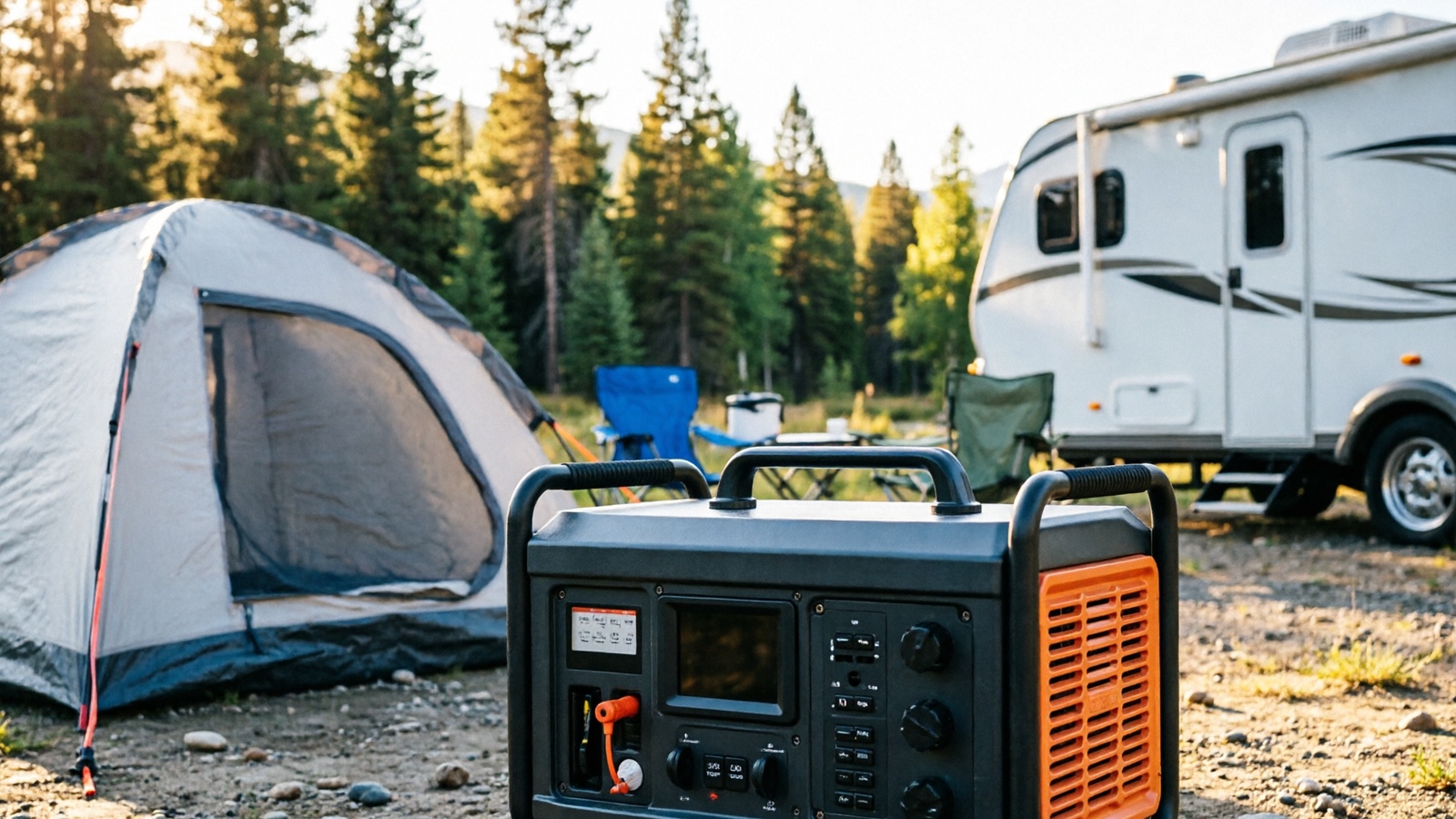
Whether you’re heading off-grid for a weekend camping trip or preparing for unexpected power outages, a portable power station is one of the most versatile tools you can own. Unlike noisy gas generators, these battery-powered units are silent, emission-free, and safe to use indoors — making them equally useful at a campsite and at home.
But with dozens of models spanning a wide range of capacities, outputs, and prices, choosing the right one can feel overwhelming. We researched seven battery generators across every major price tier to find the best options for camping, emergency backup, and everyday off-grid power needs.
Quick Answer
Best Overall: Anker SOLIX C1000 Gen 2 — delivers 2000W of output with a 1024Wh LiFePO4 battery, charges from 0 to 100% in just 49 minutes, and comes with a 5-year warranty.
Best Value: GRECELL 288Wh — at under $100, this 330W station offers more capacity per dollar than anything else we researched.
Best Budget: HOWEASY 88Wh — weighing just 2.3 lbs, it’s the lightest option for hikers and minimalists who need basic phone and tablet charging.
Quick Comparison
| Product | Capacity | Output | Weight | Price | Best For |
|---|---|---|---|---|---|
| HOWEASY 88Wh | 88Wh | 120W | 2.3 lbs | $70 | Ultralight |
| GRECELL 288Wh | 288Wh | 330W | 7.3 lbs | $100 | Best Value |
| MARBERO M823 | 237Wh | 300W | 4.6 lbs | $129.99 | Compact |
| Jackery Explorer 300 | 292Wh | 300W | 7.1 lbs | $199 | Reliability |
| LIBRIDS C600 | 640Wh | 600W | — | $220 | Home Backup |
| Jackery Explorer 1000 v2 | 1070Wh | 1500W | 23.8 lbs | $449 | Heavy Duty |
| Anker SOLIX C1000 Gen 2 | 1024Wh | 2000W | 24.9 lbs | $500 | Overall |
Top 7 Portable Power Stations
HOWEASY 88Wh — Best Budget Pick
At just 2.3 pounds, the HOWEASY is the lightest unit we researched — small enough to toss in a daypack without a second thought. Its 88Wh capacity won’t run appliances, but it handles the essentials: smartphones, tablets, headlamps, and small cameras. The built-in LED flashlight offers three brightness levels plus an SOS mode, which adds genuine value for emergency preparedness.
Eight output ports (including two AC outlets, USB-C, and quick-charge USB-A) give you flexibility despite the small battery. Recharging takes about six hours via AC or eight hours via car adapter. Solar charging is supported with an optional panel.
What we like: Ultra-light at 2.3 lbs, built-in LED flashlight with SOS mode, eight output ports in a compact frame, affordable.
What could be better: 120W output can’t handle laptops or CPAP machines. The 88Wh capacity runs dry quickly when charging multiple devices — expect 3-4 phone charges maximum, enough to keep a phone and headlamp alive on a weekend trip. The 12-month warranty is short compared to LiFePO4 alternatives.
GRECELL 288Wh — Best Value Pick
The GRECELL packs 288Wh of capacity and 330W of output into a unit that regularly sells for under $100 — that’s the best capacity-per-dollar ratio in our entire lineup. The USB-C PD port delivers 60W of fast charging, enough to power most laptops at full speed. Eight output ports let you charge multiple devices simultaneously.
A built-in MPPT solar charge controller helps extract maximum power from solar panels, making this a genuinely useful solar generator for off-grid camping. The battery management system provides overload, overcharge, and short-circuit protection with dual cooling fans to keep temperatures safe.
What we like: Best capacity-per-dollar in our lineup at under $100. USB-C PD 60W, MPPT solar controller, 8 output ports, dual cooling fans.
What could be better: At 7.3 lbs, it’s too heavy for hiking. The standard lithium battery tops out around 1500 cycles, significantly shorter than LiFePO4 alternatives. No included solar panel or car charger cable.
Pair the GRECELL with one of our recommended camping solar panels for true off-grid power — and check our camping guide for beginners for more tips on building your camp setup.
MARBERO M823 237Wh — Best Compact Mid-Range
The MARBERO M823 strikes a balance that many competitors miss: 237Wh of capacity with 300W output at just 4.6 pounds. That’s light enough for extended hiking trips yet powerful enough for laptops, cameras, and small electronics. The compact 8.15 × 5.83 × 3.90-inch form factor slides easily into a backpack or car trunk.
Dual LED flashlights — one on top and one on the side — offer multiple brightness levels and SOS modes, a surprisingly useful feature during unexpected campsite situations. Eight output ports include both two-prong and three-prong AC outlets, giving you compatibility with a wider range of devices.
What we like: Only 4.6 lbs — rare for a 300W unit. Dual LED flashlights, both 2-prong and 3-prong AC outlets, 8 total ports in a compact 8.15-inch frame.
What could be better: The 12-month warranty is the shortest in our lineup. AC recharging takes about 6 hours — slower than LiFePO4 models with fast charging. Standard lithium chemistry means 1500-cycle lifespan, not the 4000+ of premium units.
Jackery Explorer 300 — Best for Reliability
Jackery is one of the most recognized names in portable power, and the Explorer 300 shows why. The standout feature is its LiFePO4 battery chemistry, which delivers over 4,000 charge cycles before degrading to 70% capacity — that’s more than 11 years of regular use. Most competitors in this price range still use standard lithium cells that max out around 1,500 cycles.
The 292Wh capacity and 300W output cover the typical camping essentials: laptops, drones, cameras, and phones. The 100W USB-C PD port handles fast laptop charging, and the integrated handle makes it easy to carry. Solar charging reaches 80% capacity in roughly 2.8 hours with a compatible 100W panel.
What we like: LiFePO4 battery with 4000+ cycles and 11+ year lifespan — the best longevity in the 300W class. 100W USB-C PD, solar-ready with 2.8-hour charge to 80% via 100W panel, trusted Jackery brand.
What could be better: At $199, it costs nearly twice as much as the GRECELL with similar capacity. The 7.1 lb weight is heavier than the MARBERO despite identical output. Solar panels are sold separately and must be Jackery-branded for compatibility — a locked ecosystem, but the 4000+ cycle LiFePO4 cells are built for a decade of outage duty.
If you’re planning a longer trip, see our solo camping guide for how to pack light while staying powered up.
Buy Jackery Explorer 300 on Amazon
LIBRIDS C600 — Best for Home Backup
The LIBRIDS C600 bridges the gap between camping power station and home emergency backup. Its 640Wh LiFePO4 battery delivers 600W of continuous output with 1200W surge capability — enough to keep a WiFi router, laptop, and phone running during an outage. The built-in 10ms UPS automatically switches to battery power when grid power fails, keeping sensitive devices like CPAP machines running without interruption.
Four AC outlets let you power multiple appliances simultaneously, and the 1.5-hour fast AC charging means you can top up quickly between uses. The metal enclosure provides better heat dissipation than plastic housings, and the smart LCD screen displays real-time battery percentage and power flow.
What we like: 10ms UPS switchover for seamless backup during outages. 4 AC outlets, 640Wh LiFePO4 battery, 1.5-hour fast AC charging, 5-year warranty — the longest in our mid-range tier.
What could be better: No listed weight specification suggests it’s on the heavier side. The metal enclosure, while better for heat dissipation, adds bulk compared to plastic-bodied alternatives. No dedicated solar input specs provided.
Jackery Explorer 1000 v2 — Best for Heavy Duty
When you need serious power at a campsite, the Jackery Explorer 1000 v2 delivers. Its 1070Wh LiFePO4 battery provides 1500W of continuous output with 3000W surge — enough to run mini-fridges, electric grills, projectors, and even small air conditioning units. Three pure sine wave AC outlets deliver clean power that’s safe for sensitive electronics.
The headline feature is 1-hour fast charging via the Jackery app, which activates an emergency charging mode to go from 0 to 100% in just 60 minutes. Default mode charges in 1.7 hours to optimize battery health. A quiet overnight mode runs at just 30dB — quieter than a whisper.
What we like: 1070Wh LiFePO4 battery with 1500W output and 3000W surge. 1-hour emergency charging via app. Three pure sine wave AC outlets. 44% discount from list price. Quiet overnight mode at 30dB.
What could be better: At 23.8 lbs, this is firmly a car-camping or RV unit — not backpackable. Solar charging only works with Jackery-branded panels, which adds to the total cost. The 1-year warranty is surprisingly short for a $449 product.
Buy Jackery Explorer 1000 v2 on Amazon
Anker SOLIX C1000 Gen 2 — Best Overall
The Anker SOLIX C1000 Gen 2 earns our top recommendation by combining the highest output in our lineup with the fastest charging and the best warranty. Its 2000W output (3000W peak) handles virtually any camping or home backup scenario, while HyperFlash technology achieves a full charge in just 49 minutes via AC — the fastest we’ve seen in any battery generator.
The 1024Wh LiFePO4 battery maintains at least 80% capacity after 4,000 cycles, translating to over a decade of regular use. Ten output ports — including multiple USB-C and AC outlets — let you power an entire campsite simultaneously. The 10ms UPS switchover makes it equally effective as a home backup system, and the Anker app offers smart features like time-of-use mode for energy cost optimization.
What we like: Fastest charging in our lineup at 49 minutes. 2000W output with 3000W peak — the most powerful here. 10 output ports, 1024Wh LiFePO4, 10ms UPS, smart app with TOU mode, 5-year warranty. 14% smaller than comparable units.
What could be better: At $499.99, it’s the most expensive option we researched. The 24.9 lb weight requires car transport. Solar panels are sold separately, and the 600W maximum solar input requires a substantial panel investment for off-grid use.
For powering larger campsites, pair this with gear from our best camping tents guide to build a complete off-grid setup.
Buy Anker SOLIX C1000 Gen 2 on Amazon
How to Choose a Portable Power Station
Battery Capacity (Wh)
Capacity determines how many devices you can charge and how long the station will run. For reference, charging a smartphone takes about 10-15Wh, a laptop needs 50-80Wh, and running a mini-fridge for an hour consumes roughly 50-100Wh.
- 88-150Wh: Phone and tablet charging for day trips and emergencies
- 200-500Wh: Weekend camping with laptops, cameras, and lights
- 500-1000Wh+: Extended trips, CPAP machines, mini-fridges, and power tools
Output Power (Watts)
Output wattage determines what devices you can actually run. A 120W station can charge phones and tablets but not a laptop. A 600W+ station handles small appliances, while 1500W+ units can power electric grills and portable air conditioners.
Always check both continuous and surge (peak) ratings. Devices with motors or compressors — like refrigerators — need 2-3x their running wattage at startup.
Battery Chemistry
LiFePO4 batteries offer 3,000-4,000+ charge cycles and 10+ year lifespans, making them the better long-term investment. They also run cooler and are less prone to thermal issues. Models with LiFePO4 in our lineup include the Jackery Explorer 300, Jackery 1000 v2, LIBRIDS C600, and Anker SOLIX C1000.
Standard lithium-ion batteries are lighter and cheaper but typically last 500-1,500 cycles. They’re fine for occasional use but will degrade faster with regular charging.
Charging Speed
Charging time varies dramatically between models. Budget units may take 6-8 hours to fully recharge via AC, while premium models like the Anker SOLIX C1000 can reach 100% in under an hour. If you need to top up quickly between uses, fast charging is worth the premium.
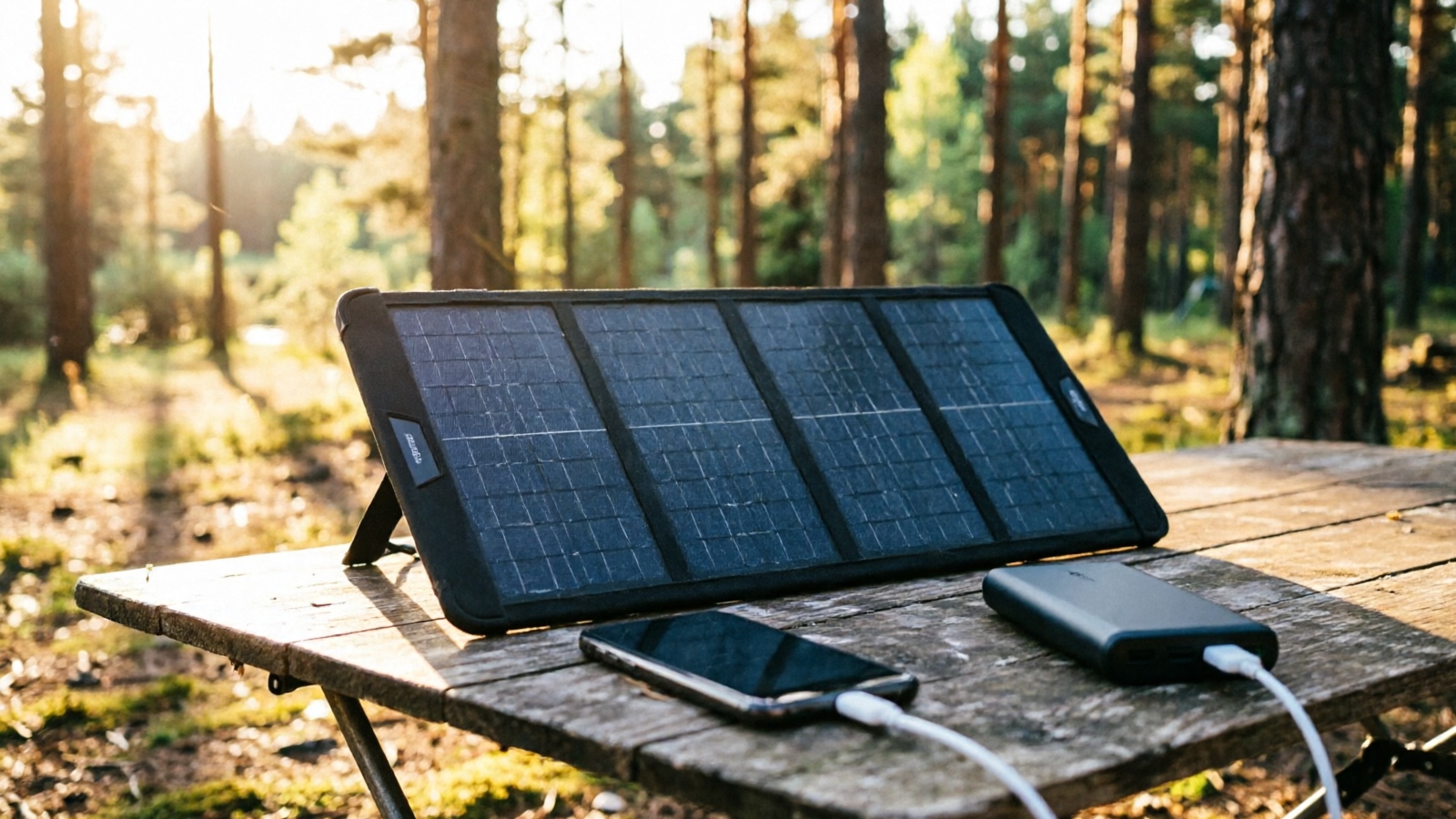
Solar charging speed depends on panel wattage and sunlight conditions. As a rough guide, a 100W solar panel can recharge a 300Wh station in 3-5 hours of direct sun.
Port Selection
Look for USB-C PD ports rated at 60W or higher for fast laptop charging. Multiple AC outlets are essential if you plan to run several appliances. A car port adds versatility for vehicle-based setups. The Anker SOLIX C1000 leads with 10 total output ports.
Weight and Portability
Consider how you’ll transport the station. Under 5 pounds works for backpacking, 5-10 pounds suits car camping, and 20+ pounds is best for base camps or home use. The HOWEASY at 2.3 lbs is the only true backpacking option in our lineup, while the Jackery 1000 v2 and Anker C1000 are car-camp or home units.
References
- Consumer Reports, “How to Choose a Portable Power Station” — Expert buying guide for portable power
- OutdoorGearLab, “Best Portable Power Station Review” — Independent testing methodology
知乎用户@户外电源达人, “便携式储能电源选购指南” — 中文对比评测,涵盖Jackery/EcoFlow/Bluetti等品牌 5. 什么值得买, “2026年户外电源横评” — 价格趋势和性价比分析 6. 小红书用户@露营小队长, “露营电源怎么选?” — 实际使用场景和续航测试分享
Frequently Asked Questions
What size portable power station do I need for camping?
For weekend camping, a 200-300Wh station charges phones and laptops for 2-3 days. For powering appliances like mini-fridges or CPAP machines, look for 500Wh+. For extended off-grid trips with multiple devices, 1000Wh+ is recommended.
Can a portable power station run a CPAP machine?
Yes. Most CPAP machines draw 40-60W. A 288Wh station can run a CPAP for about 5-7 hours. For full-night use, choose a 500Wh+ model with pure sine wave output, like the LIBRIDS C600 or Anker SOLIX C1000.
How long do portable power stations last?
LiFePO4 battery stations last 4000+ cycles or 10+ years. Standard lithium stations last 1500+ cycles or 3-5 years with regular use.
Can I charge a portable power station with solar panels?
Most portable power stations support solar charging via MC4 or DC inputs. A 100W solar panel can charge a 300Wh station in about 3-5 hours of direct sunlight.
What is the difference between a portable power station and a generator?
Power stations use battery packs — silent, no fuel, indoor-safe. Generators use gas engines — louder, require ventilation, higher continuous output. Power stations are better for camping and short-term backup.
Are portable power stations safe for indoor use?
Yes. Unlike gas generators, portable power stations produce no emissions and are safe indoors. They include battery management systems for overcharge, short-circuit, and temperature protection.
How long does it take to charge a portable power station?
AC wall charging ranges from 1 hour with ultra-fast models to 8 hours for budget units. Solar charging typically takes 3-9 hours depending on panel wattage and sunlight.