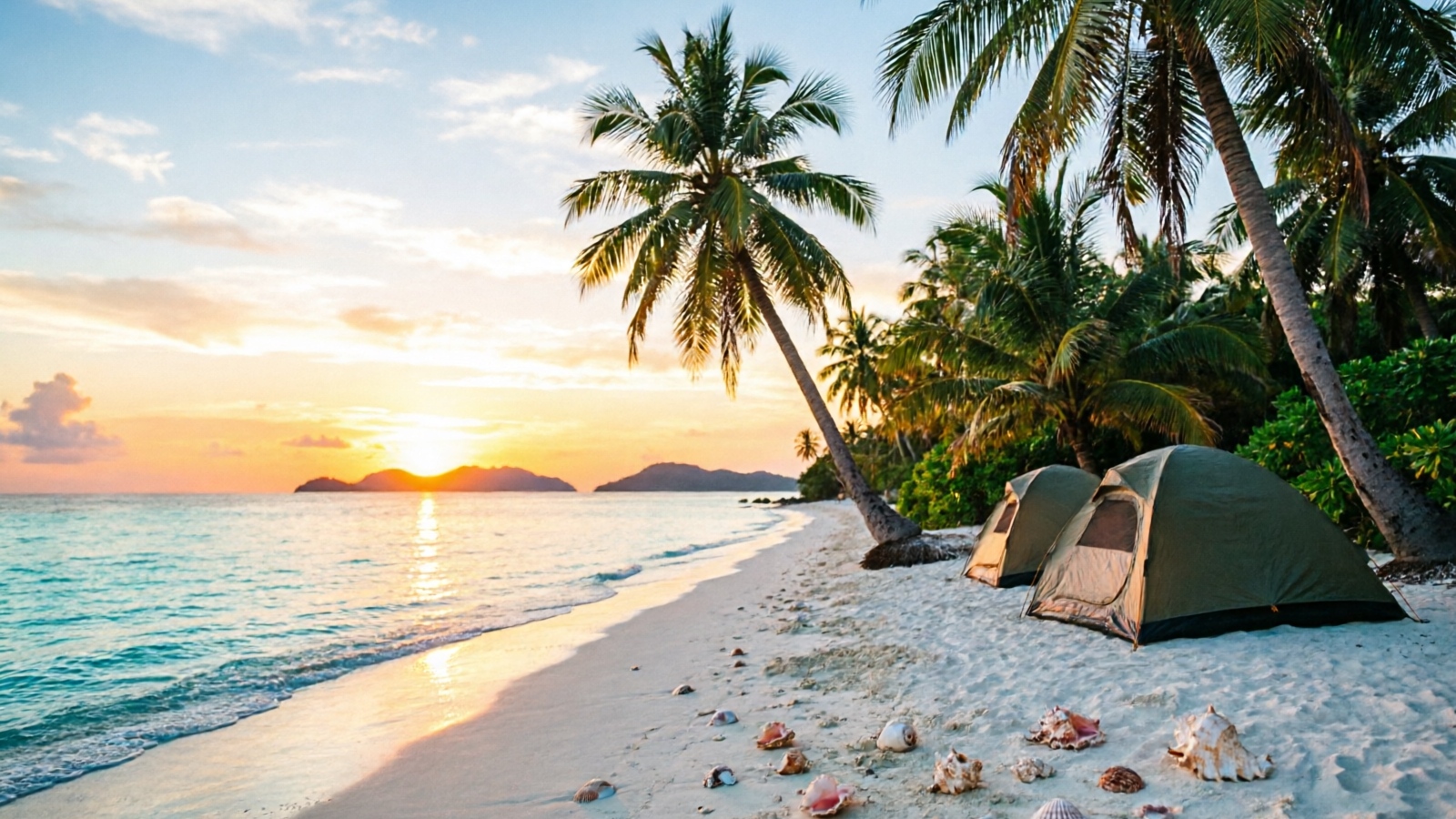
Island Camping Guide: 7 Best Spots, Gear & Tips (2026)
Island camping guide — best US island spots, essential gear for saltwater and sand, packing tips for boat access, and off-grid safety.
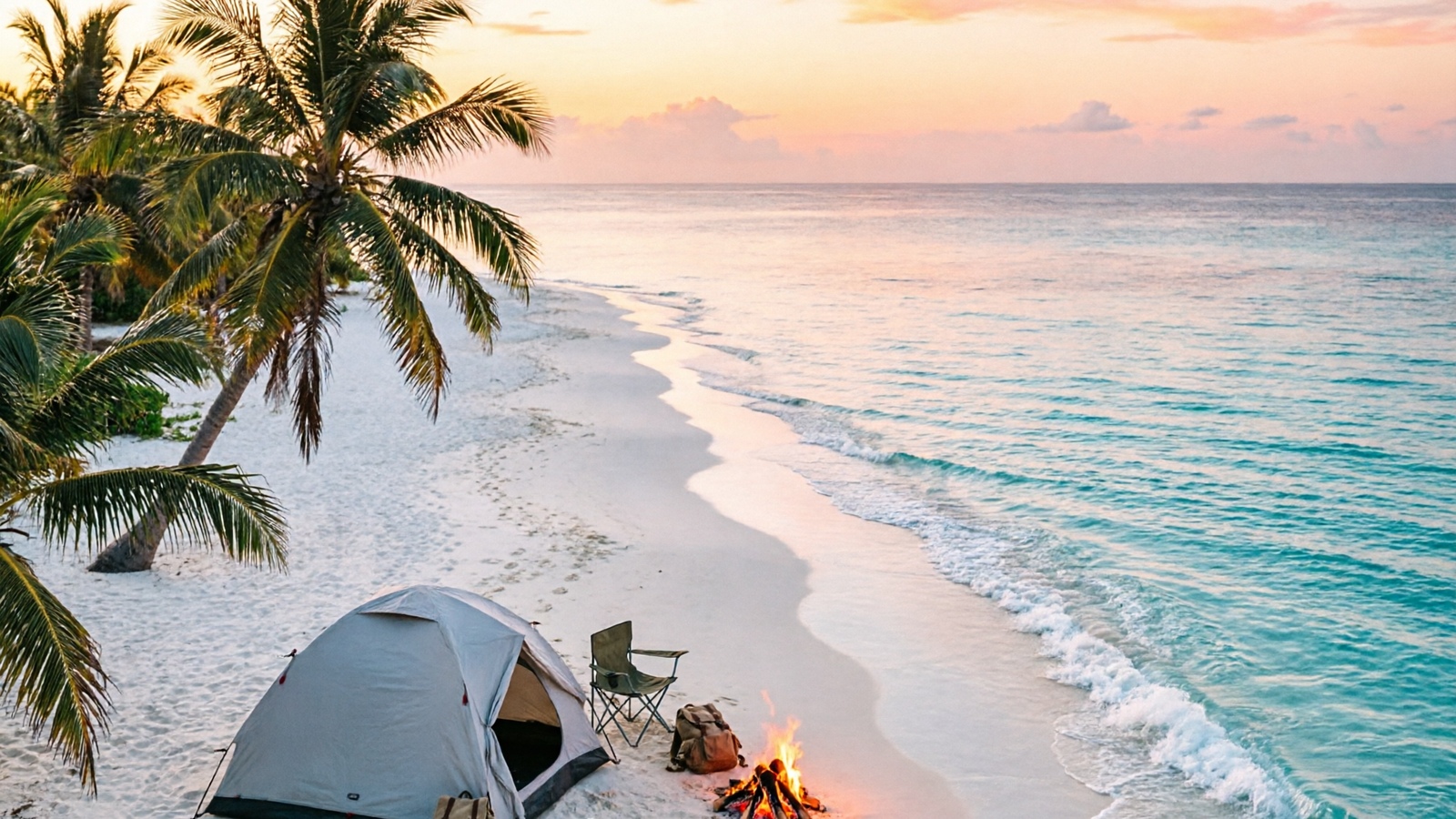
Island camping separates you from the mainland by water — and that water crossing changes everything. You pack your gear into a kayak, load it onto a ferry, or charter a boat — and when you land, everything you have is everything you will have until you leave. No convenience stores, no power outlets, no running water.
For camping on mainland coastlines, see our beach camping guide.
What Is Island Camping?
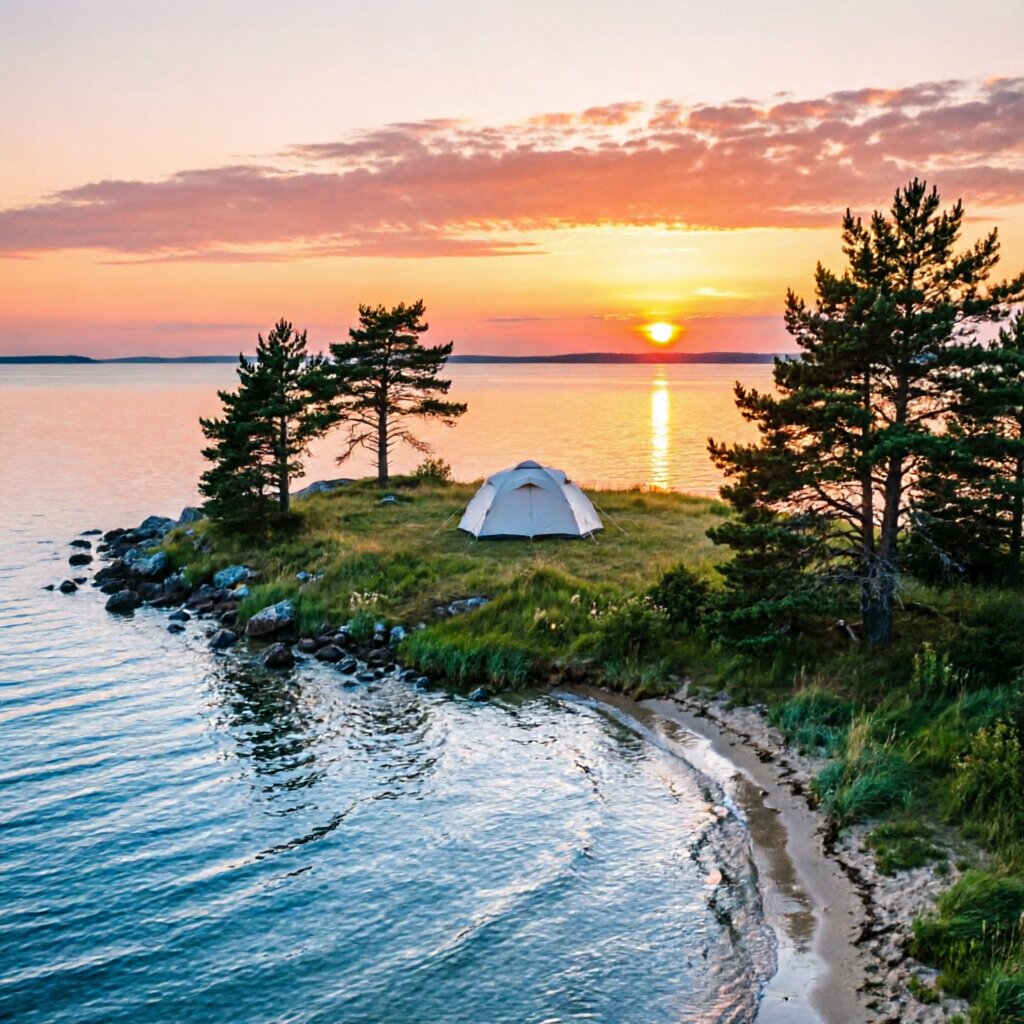
Island camping is one of the most rewarding ways to experience the outdoors, but it demands serious preparation.
Island camping means spending the night on an island, with the key distinction being a water crossing to reach your campsite. This island camping crossing — by ferry, kayak, private boat, or seaplane — changes the experience in four ways.
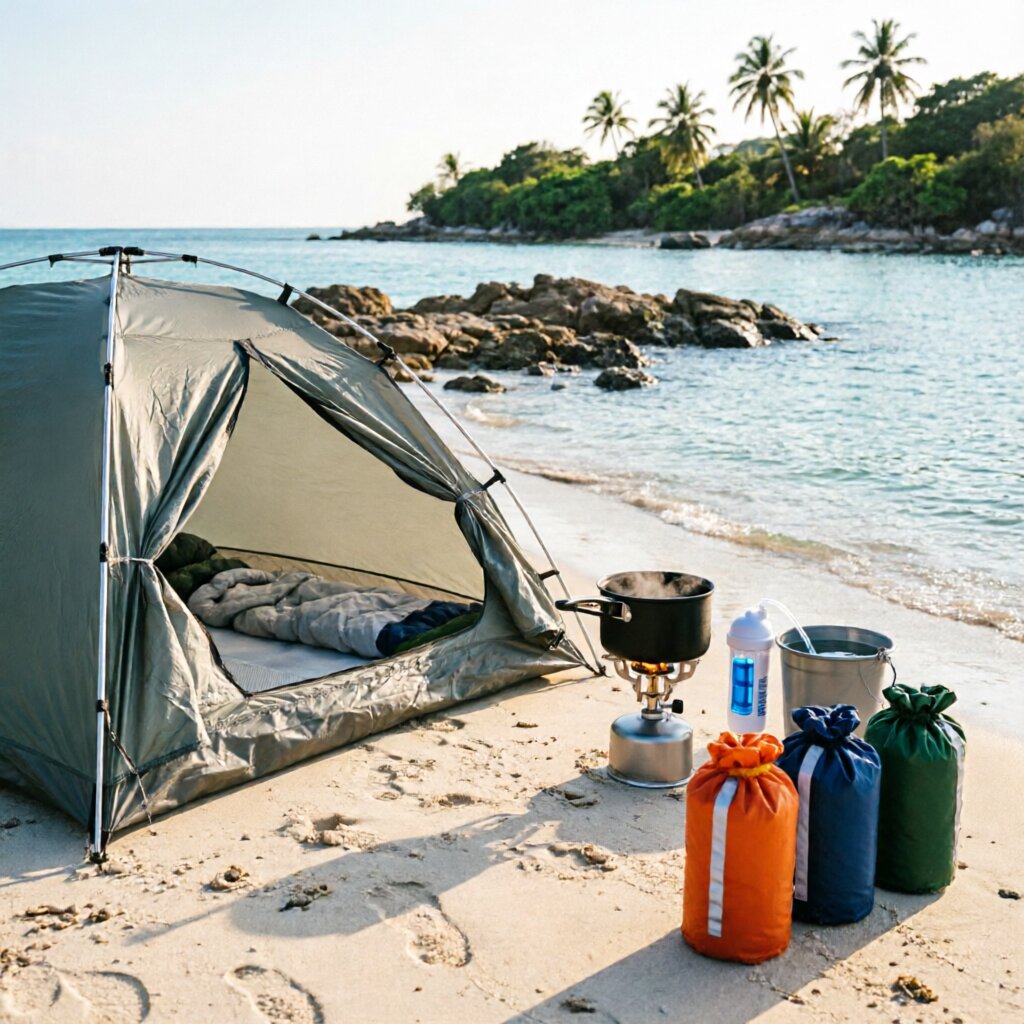
Waterproof transport is mandatory. Everything must survive saltwater spray during crossing and wet landings on rocky shores. A single wave can destroy electronics, soaked sleeping bags, and ruined food.
Total self-sufficiency. Forgot something? On a remote island, you live without it. Island camping demands more thorough planning than any format except perhaps backcountry camping.
Tide and weather dependence. Some campsites are only reachable at low tide. Marine weather changes faster than inland weather — winds shift, seas pick up, and fog rolls in with little warning.
Saltwater exposure. Everything degrades faster in salt air. Zippers corrode, metal rusts, and fabrics stiffen. Rinse gear with fresh water after every trip.
Types of Island Camping
Ferry-Access Developed Islands are the most accessible, with campgrounds and restrooms.
Kayak Camping Islands are reached by sea kayak. Every ounce matters — the most rewarding for experienced paddlers.
Private Boat Islands offer maximum gear capacity but require boat access.
Walk-In Barrier Islands are connected by bridge but feel genuinely wild.
Quick Answer: Island Camping Essentials
If you buy nothing else, get three items: the Earth Pak Dry Bag (saltwater protection — non-negotiable), the Neutrogena Sport Sunscreen SPF 70+ (intense island UV with no shade), and the LHKNL Headlamp 2-Pack (unlit islands with no streetlights). These three items solve the biggest problems every island camping trip faces: water damage, sun exposure, and darkness.
Add the Coleman Classic Cooler for food storage, ziitop Water Shoes for shore landings, the Wise Owl Hammock for relaxation, and the BigBlue Solar Panel for off-grid power.
Comparison Table
| Product | Best For | Link |
|---|---|---|
| Earth Pak Waterproof Dry Bag | Protecting ALL gear from saltwater | Check Price → |
| Neutrogena Sport Sunscreen SPF 70+ | Island sun protection with no shade | Check Price → |
| LHKNL LED Headlamp 2-Pack | Night navigation on unlit islands | Check Price → |
| ziitop Water Shoes | Rocky shores and surf wading | Check Price → |
| Wise Owl Camping Hammock | Ocean-view relaxation between trees | Check Price → |
| Coleman Classic Cooler | Food storage with no electricity | Check Price → |
| BigBlue 28W Solar Panel | Off-grid charging for phones and GPS | Check Price → |
Best for Saltwater Protection: Earth Pak Waterproof Dry Bag
The non-negotiable island camping purchase. Earth Pak Waterproof Dry Bag
The non-negotiable island camping item. Every piece of gear you bring must survive the water crossing — deck spray, rain, surf landings, and wet beach sand will destroy anything unprotected. The Earth Pak uses a roll-top closure with no zippers to fail and an IPX6 rating that survives heavy spray and temporary submersion.
What we like: IPX6 waterproof rating, reliable roll-top closure, floats if dropped overboard, multiple sizes from 5L to 55L, shoulder strap included.
What could be better: seam leakage after extended use is the main complaint — roll the top the full three folds and keep the seam tape above the waterline. Smaller sizes use thinner material that may not hold up to repeated submersion.
For more dry storage options, see our best dry bags review.
Best for Island Sun Protection: Neutrogena Sport Sunscreen SPF 70+
Sun protection is mandatory for island camping — UV reflects off water and sand. Neutrogena Sport Sunscreen SPF 70+
Islands offer zero natural shade on open beaches. UV radiation reflects off sand and water from every direction, making sun protection critical. The Neutrogena Sport provides water-resistant 80-minute protection with Helioplex technology and SPF 70+ coverage.
What we like: SPF 70+ broad spectrum, water-resistant for 80 minutes, oil-free formula, non-comedogenic, Helioplex UV defense technology.
What could be better: Leaves a visible white cast on darker skin tones, and the texture contradicts the oil-free claim for many users — faces feel coated rather than matte. Eye contact stings, and the formula can degrade rubber like sunglasses nose pieces.
For full-body coverage options, see our best camping sunscreens.
Best for Night Navigation: LHKNL LED Headlamp 2-Pack
Darkness falls fast on islands with zero light pollution. LHKNL LED Headlamp 2-Pack
Islands have no streetlights and no ambient light pollution. When the sun sets, it gets dark fast and completely. The LHKNL provides USB-C rechargeability, white and red light modes (red preserves night vision), IPX4 waterproofing, and an adjustable beam angle.
What we like: 2-pack covers two people, USB-C charging, white and red light modes, IPX4 waterproof, adjustable beam.
What could be better: battery degradation after extended use is the consistent complaint in budget rechargeables — expect capacity to fade within a season or two. The headband stretches out over time.
For more lighting options, see our best camping headlamps.
Best for Shore Landings: ziitop Water Shoes
Shore landings are the most dangerous moment of any island camping trip. ziitop Water Shoes
Island shore landings involve wading through surf, walking on rocky coastlines, and crossing tidal flats. Bare feet will get cut on coral, shells, and hidden debris. The ziitop water shoes feature quick-dry breathable mesh, anti-slip rubber soles, and a barefoot feel design.
What we like: Quick-dry mesh, anti-slip rubber sole for wet rocks, lightweight, slip-on convenience, affordable price.
What could be better: sizing runs extremely narrow — order a size and a half up for wide feet, and cinch the heel cord hard before wading. Durability typically lasts only a few months. Odor buildup is a problem if shoes are not dried thoroughly.
For hiking-heavy islands, consider hiking boots for the approach trails.
Best for Ocean-View Relaxation: Wise Owl Camping Hammock
The signature island camping image — a hammock between two trees above the waves. Wise Owl Camping Hammock
A hammock between two trees overlooking the ocean is the iconic island camping image. The Wise Owl uses 210T parachute nylon, supports up to 500 pounds, weighs only 16 ounces, and includes carabiners for quick setup.
What we like: 500lb capacity, ultralight at 16oz, triple-stitch seams, carabiners included, compact pack size.
What could be better: fabric quality is inconsistent across units — inspect the seams and suspension straps before relying on it at height. The 9-foot length is too short for users over 6 feet tall. No tree straps are included — you must buy those separately.
For more options, see our best camping hammocks.
Best for Food Storage: Coleman Classic Cooler
Food storage is a core challenge of island camping with no electricity. Coleman Classic Cooler
No refrigerator on an island. A reliable cooler is the difference between decent meals and warm canned food. The Coleman Classic holds up to 28 cans with an insulated lid, leak-resistant drain, and recessed handles for boat transport.
What we like: 28-can capacity, insulated lid, leak-resistant drain, recessed handles for easy boat carry, easy-clean interior.
What could be better: Ice retention is inconsistent — real-world performance in 70°F shade runs well short of the marketed figure, which conflicts with the sticker on the actual cooler. The lid can warp when left in the sun, creating an air gap that breaks the seal, so keep it shaded at camp.
For high-performance options, see our best camping coolers.
Best for Off-Grid Power: BigBlue 28W Solar Panel Charger
Off-grid power is essential for island camping — a dead phone means no GPS or emergency calls. BigBlue 28W Solar Panel Charger
Remote islands have no power outlets. A dead phone means no GPS, no weather updates, and no emergency calls.
The BigBlue 28W folds compact with two USB ports. Islands with open sky and long daylight hours are ideal for solar charging.
What we like: 28W triple-panel output, foldable compact design, two USB ports, water-resistant PET laminate, built-in ammeter, carabiner clips.
What could be better: actual output is often lower than the rated 28W — expect roughly a third to half of the rating in real-world sun, and budget charging time accordingly. Quality inconsistency across units is the main concern.
Pair with a portable power station for energy storage on cloudy days. See our best solar chargers for alternatives.
Best Island Camping Spots in the United States
Apostle Islands, Wisconsin
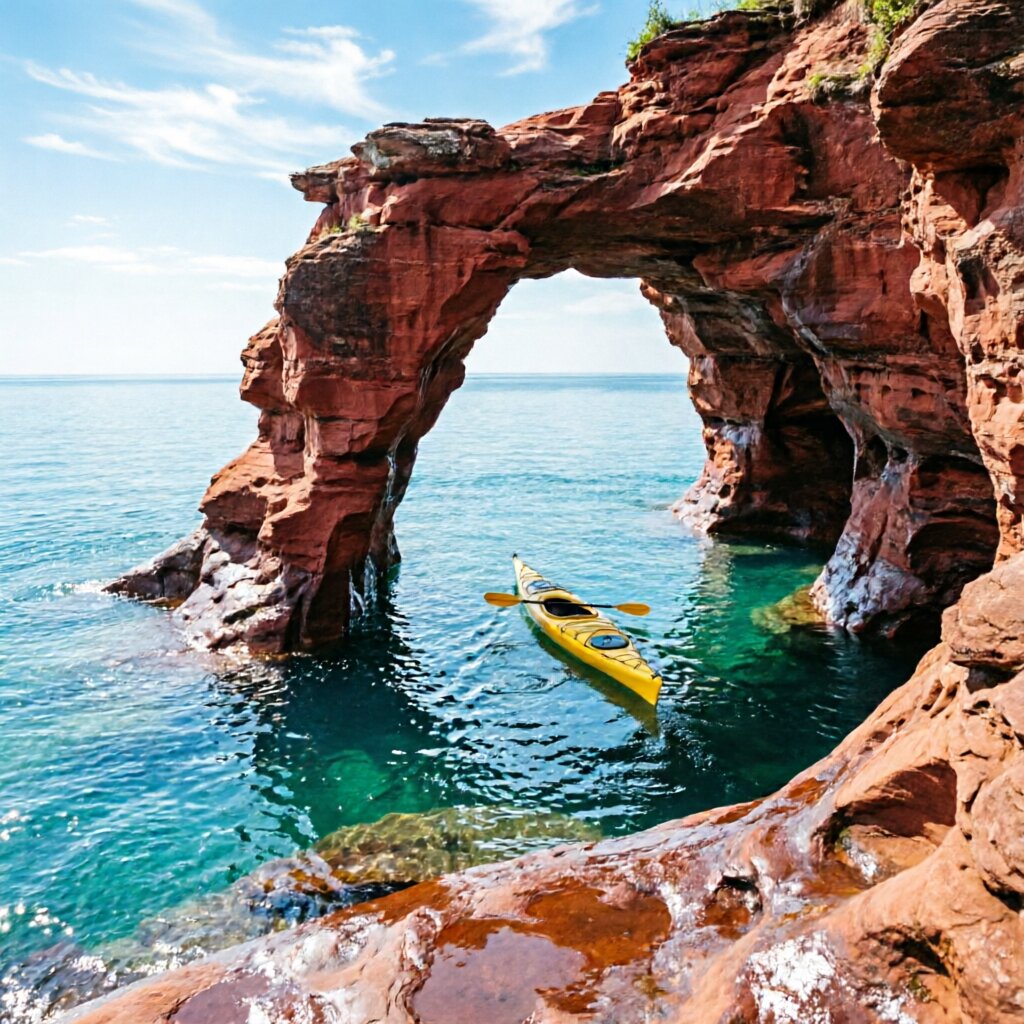
The top island camping destination in the Great Lakes.
Twenty-one islands in Lake Superior with dramatic red sandstone sea caves and pristine beaches. Most camping is primitive with no electricity or potable water.
Accessible by kayak, private boat, or ferry. The sea caves on Devils Island are among the most photographed features in the Great Lakes.
Channel Islands, California
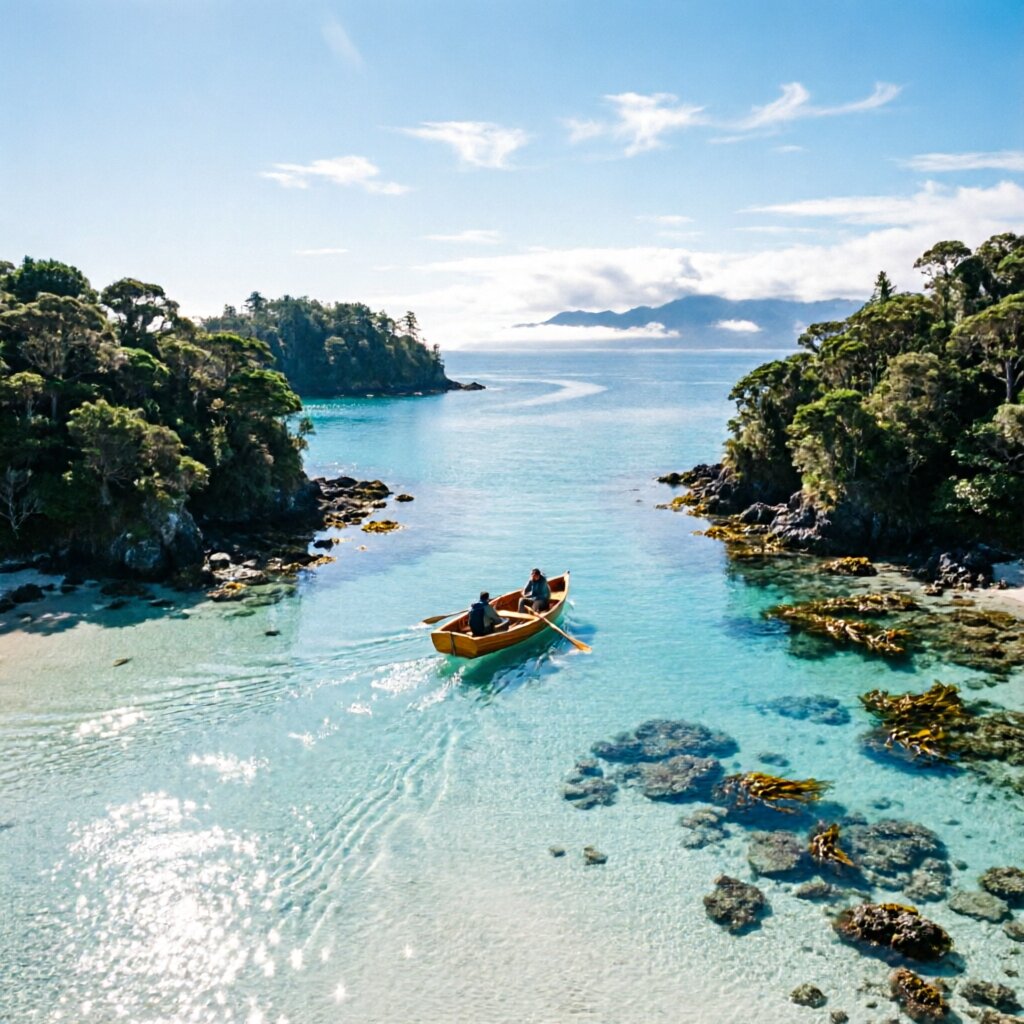
A true island camping wilderness — no services, bring everything.
Five islands off the Santa Barbara coast managed by the National Park Service. Santa Cruz has backcountry campsites accessible only by kayak or private boat.
No services on the islands — bring everything including water. Permits required with advance booking essential during summer.
San Juan Islands, Washington
Orcas, San Juan, and Lopez islands with Washington State Ferries service from Anacortes. Developed campgrounds at Moran State Park and San Juan County Park.
The most family-friendly island camping on this list. Dogs allowed on-leash at most campgrounds.
Isle Royale, Michigan
Accessible only by ferry or seaplane from Michigan. No vehicles, no electricity, no cell service. Wolf and moose populations are the defining feature.
Backpacking trails connect ridge campsites with Lake Superior views. Short season — mid-May through September only.
Florida Keys, Florida
Bahia Honda State Park is the crown jewel — beachfront campsites on a bridge-connected island with sand spits and crystal water. Dry Tortugas National Park is accessible only by ferry or seaplane from Key West for primitive camping on a remote island 70 miles from mainland. See our car camping guide for road trip planning to Florida.
Outer Banks, North Carolina
Barrier island chain with beach camping at Cape Hatteras National Seashore. Wild ponies roam Ocracoke and Shackleford Banks.
Bridge and ferry access to most islands. Hurricane season requires weather monitoring — campgrounds close for tropical storms.
How to Choose the Best Island Camping Gear
Waterproof Everything That Matters
Not water-resistant — waterproof. The Earth Pak dry bag uses roll-top closure with IPX6 rating.
A flooded phone on a remote island is a trip-ending event. Use dry bags inside your backpack for double protection.
Minimize Weight for Boat Access
Every pound matters when loading boats. Choose lightweight versions — the Wise Owl hammock at 16oz instead of a heavy canvas model.
Salt Resistance Over Aesthetics
Saltwater corrodes metal zippers, rusts buckles, and stiffens fabrics. Choose gear with coated zippers and stainless steel hardware. Rinse everything with fresh water after your trip — this single habit extends gear lifespan dramatically.
Redundancy for Critical Systems
You cannot replace failed gear on an island. The LHKNL 2-Pack covers two people — add a flashlight as third light.
Bring backup sunscreen and carry backup water purification tablets even on islands with water.
Sun and Wind Protection
Islands are exposed on all sides. UV radiation reflects off water and sand from every angle. The Neutrogena sunscreen and a camping tarp for wind shelter are as important as your tent.
Island Camping Safety Tips
Safety is non-negotiable for island camping — help is a boat ride away.
Tide Awareness
Tides control island camping more than any other factor. Some campsites are only reachable at low tide.
Pitch your tent above the high-tide line and check tide charts before departure.
Marine Weather
Marine weather changes faster than any inland forecast — always check before departure.
Island weather changes faster than inland weather. Fog can reduce visibility to zero on the water.
Check the marine forecast — not the general weather forecast — before any water crossing.
Fresh Water Supply
Many islands have no natural fresh water. Bring enough for your entire trip plus one emergency day.
A water filter can purify island springs if available. Saltwater accelerates dehydration.
Marine Hazards
Shuffle your feet when wading to avoid stingrays. Check for jellyfish warnings before swimming.
Store food securely to protect from island wildlife. See our camping safety tips for comprehensive hazard planning.
Conclusion: Why Island Camping Is Worth It
Island camping delivers an experience no mainland camping trip can match — waves replacing highway noise and salt air instead of forest pine.
Start your island camping journey with a ferry-access island like the San Juans, then progress to kayak camping. Pack everything in dry bags and bring more fresh water than you think you need.
Frequently Asked Questions
What is island camping? Camping on an island accessible only by water crossing. Unlike mainland coastal camping on the coast, island camping requires waterproof gear transport and tide awareness.
What gear do I need? Seven essentials: dry bag, headlamp, solar charger, cooler, hammock, water shoes, and sunscreen. Everything must function in saltwater exposure and off-grid conditions.
Best island camping spots? Apostle Islands WI, Channel Islands CA, San Juan Islands WA, Isle Royale MI, Florida Keys, and Outer Banks NC.
How do I get gear to an island? Ferry for developed islands, kayak for wilderness islands where weight matters, or private boat for maximum capacity. Everything goes in waterproof bags regardless.
How do you keep food cold? A cooler with block ice. Pre-chill before departure, open minimally, keep in shade. Supplement with non-perishable meals for extended trips.
Island camping vs beach camping? Beach camping is mainland coast — you drive there. Island camping requires a water crossing, creating mandatory waterproof transport and complete off-grid self-sufficiency.
Can I bring my dog? Depends on the island. National Park islands ban pets. State park islands vary — check before booking. See our camping with dogs guide.
Do I need a solar charger? Yes for remote islands without electricity. A dead phone means no GPS and no emergency communication.
References
- National Park Service — “Island Camping and Maritime Safety” — nps.gov
- REI Co-op — “Kayak Camping: Complete Guide” — rei.com/learn
- Leave No Trace — “Coastal and Island Ethics” — lnt.org
- NOAA Marine Weather — “Small Craft Advisories and Safety” — weather.gov/marine
- 知乎 — “海岛露营装备清单与经验” — zhihu.com
- 什么值得买 — “皮划艇海岛露营攻略” — smzdm.com