Canyon Camping Guide: What to Know Before You Go (2026)
Canyon camping guide: canyon types, best US spots, essential gear, safety tips, and packing list for slot canyons and desert gorges.
For outdoor enthusiasts, canyon camping places you inside some of the most dramatic landscapes on Earth. Sheer sandstone walls rise hundreds of feet overhead.
Sunlight reaches the floor for only a narrow window each day. The acoustics amplify every footstep and splash of water.
This canyon camping guide covers the types of canyons you will encounter, the best camping spots in the US, the essential gear that canyon environments demand, specific safety hazards like flash floods and heat, and how to prepare for a canyon camping trip regardless of experience level.
What Is Canyon Camping?
Canyon camping means setting up camp inside or near canyon formations — deep valleys carved over millions of years by flowing water, wind, or tectonic activity. The canyon environment is distinct from forest, mountain, or desert camping in several critical ways.
Canyons concentrate weather differently than open terrain. A dry wash can become a raging torrent within minutes after rain falls miles upstream.
Temperature swings are extreme — canyon floors in summer can be 20-30°F hotter than the rim, dropping to near-freezing after sunset. Shade is determined by canyon depth and wall angle, not cloud cover.
The terrain demands specific skills. Loose scree, narrow passages, and steep ascents are standard.
Navigation differs too — GPS signals bounce off walls. For campers new to outdoor trips, our camping guide for beginners covers the fundamentals.
Types of Canyons for Camping
Understanding canyon types is essential for planning a canyon camping trip and choosing the right destination and pack the correct gear.
Slot Canyons
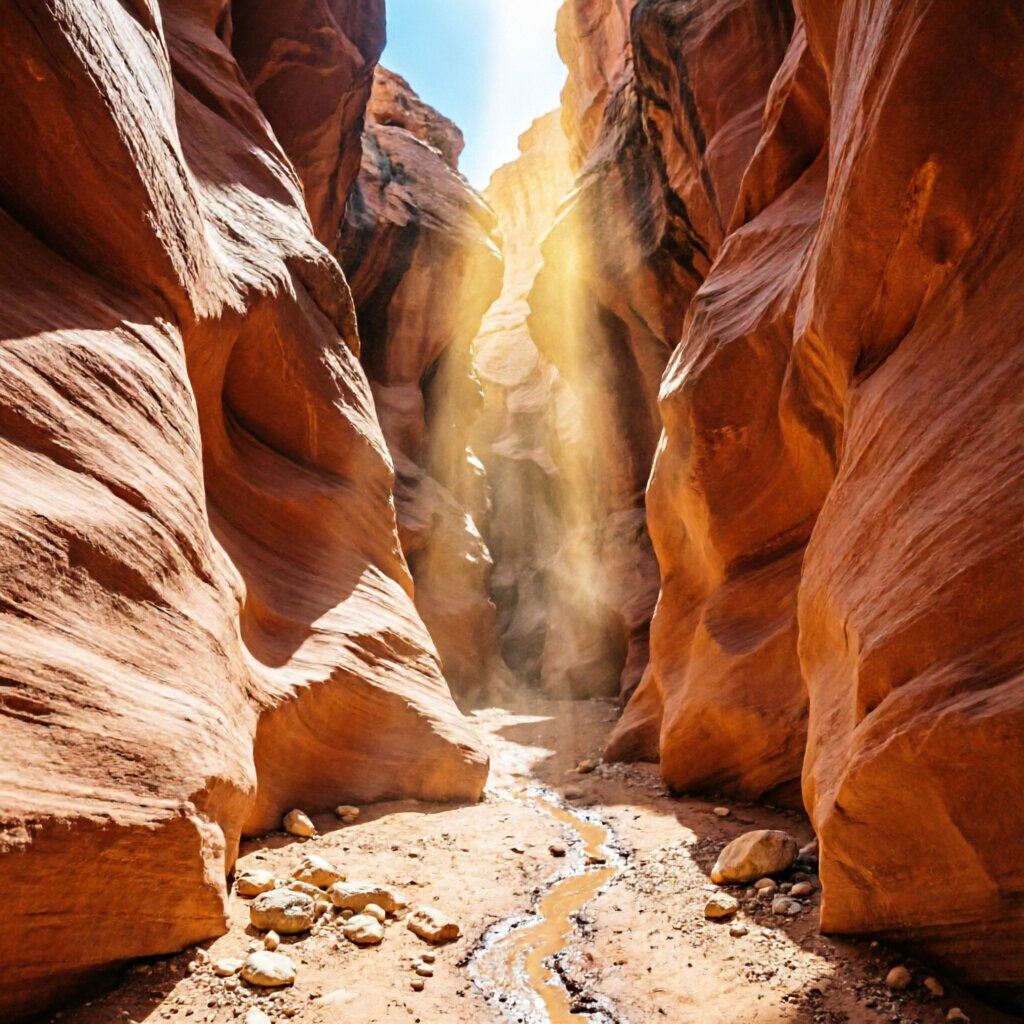
The most iconic and dangerous type. Slot canyons are narrow passages — sometimes shoulder-width — carved into sandstone by flash floods over centuries.
On any canyon camping trip, light filtering through slot canyons creates dramatic beams. The walls are smooth, water-polished, and often require scrambling, wading, or swimming to navigate.
Slot canyons carry the highest flash flood risk because water concentrates into a tiny channel. They also offer some of the most spectacular camping photography opportunities in existence. Antelope Canyon in Arizona is the most photographed example, though camping access is restricted to guided areas.
Box Canyons
Box canyons have three closed walls and one open end, formed when a stream erodes a U-shaped valley with steep headwalls.
Easier to enter and exit than slot canyons, box canyons often contain streams, pools, and established trails.
Gorge Canyons
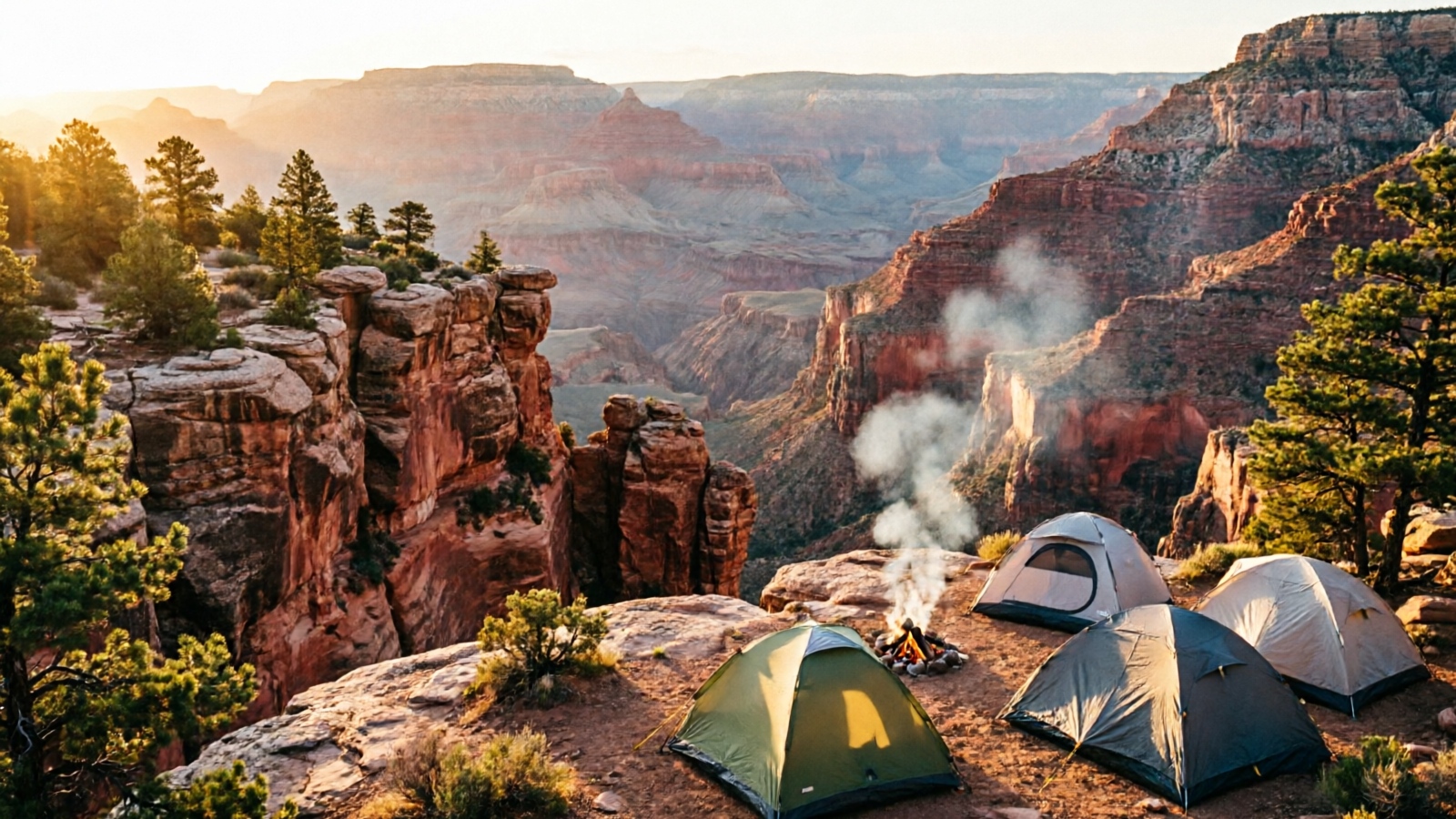
Wide, V-shaped valleys with moderate walls and a river running through the center. Gorges like the Grand Canyon are the largest type — miles wide with distinct rim and floor ecosystems. Gorge camping is a highlight of canyon camping, ranging from developed rim campgrounds with full amenities to backcountry river corridor trips requiring permits.
Plateau Canyons
Erosion-carved valleys on mesa tops and plateaus. Bryce Canyon with its hoodoo formations is a plateau canyon — a favorite for families new to canyon camping.
These are the most accessible type for canyon camping — well-maintained trails, rim campgrounds, and moderate terrain.
Best Canyon Camping Spots in the United States
Zion National Park, Utah
Zion is a top destination for canyon camping in the US, offering the most diverse canyon experiences. The Narrows is an iconic slot canyon hike through the Virgin River.
Watchman and South campgrounds sit on the valley floor with full amenities — restrooms, drinking water, and picnic tables.
Best season: spring and fall. Summer temperatures on the canyon floor regularly exceed 100°F. For packing guidance tailored to national park trips, see our national park camping guide.
Grand Canyon National Park, Arizona
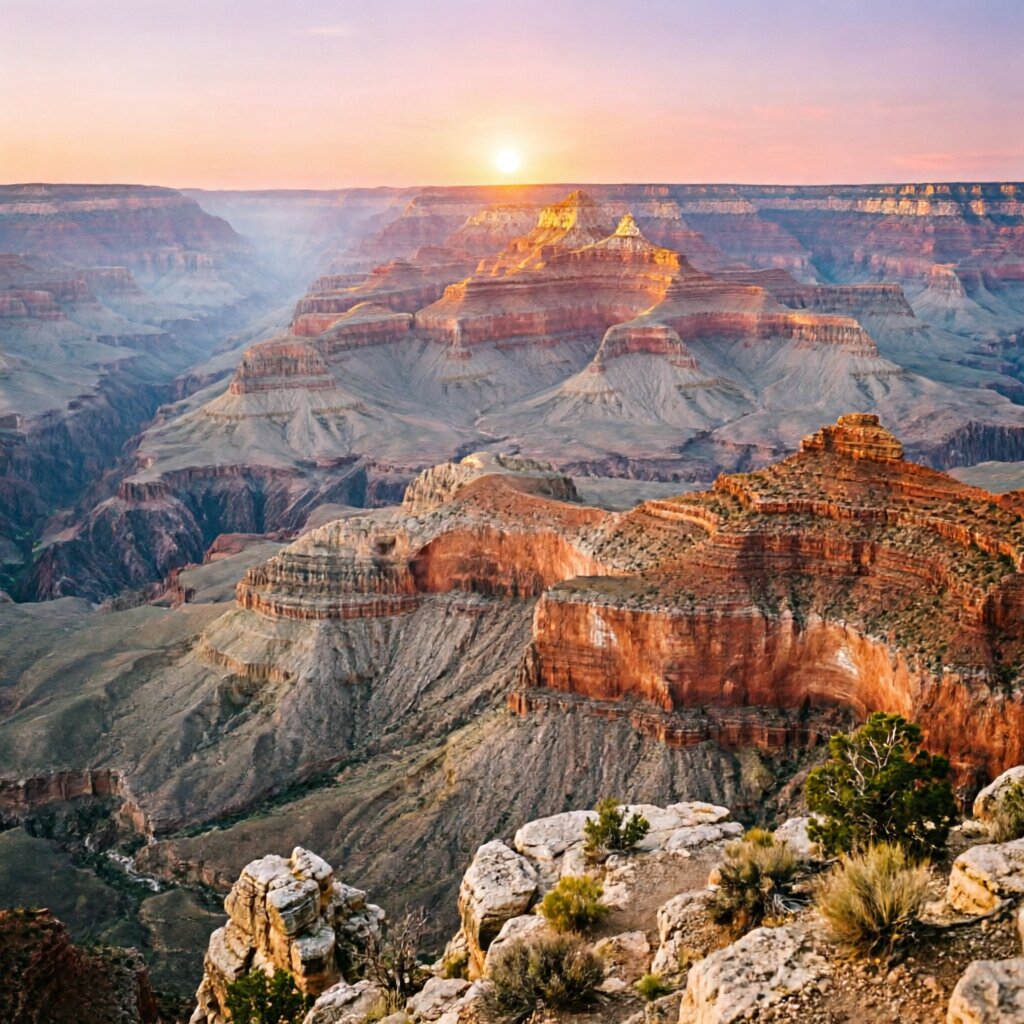
For serious canyon camping, the Grand Canyon is the largest gorge in North America — 277 miles long, over a mile deep. Rim camping at Mather and Desert View campgrounds provides canyon views with full amenities. Backcountry camping on the canyon floor along the Colorado River requires permits issued through a lottery system.
The rim-to-river elevation change means temperature swings of 30-40°F between top and bottom. For a broader desert perspective, our desert camping guide covers arid environment strategies.
Bryce Canyon National Park, Utah
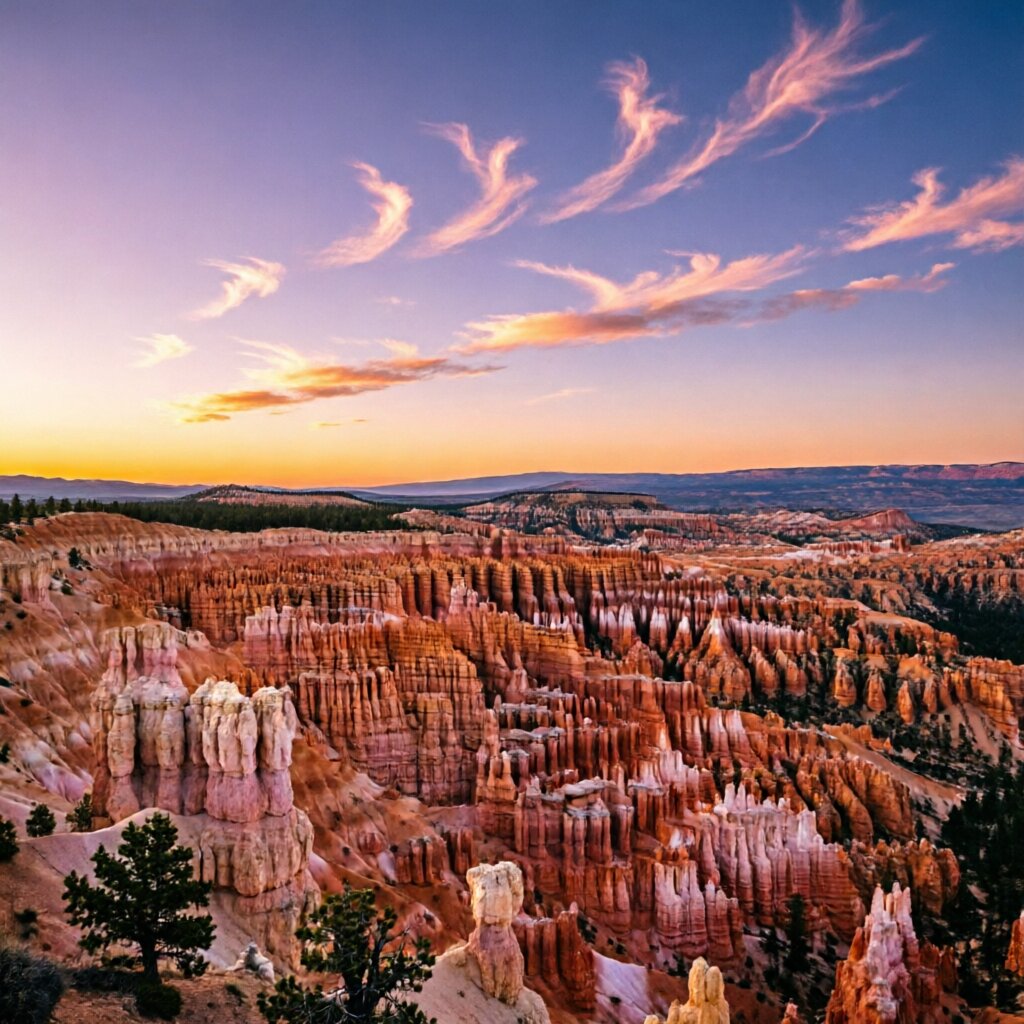
Technically a series of amphitheaters rather than a single canyon, Bryce is famous for its hoodoo rock formations. Sunrise and Sunset campgrounds sit on the rim at 8,000-9,000 feet elevation. Summer temperatures are mild compared to lower canyons, making it one of the more comfortable canyon camping destinations.
Palo Duro Canyon State Park, Texas
The second-largest canyon in the US, located in the Texas Panhandle. Established campgrounds with water and electricity, hiking trails along the canyon floor, and significantly fewer crowds than national park canyons. A solid choice for first-time canyon campers who want the experience without the logistics of permit systems.
Canyon de Chelly National Monument, Arizona
A unique canyon on Navajo Nation land where guided tours are required for canyon floor access. Backcountry camping inside the canyon is permitted with a Navajo guide. The experience combines camping with living Navajo culture — ancient cliff dwellings, active farms, and seasonal livestock.
Essential Canyon Camping Gear
Canyon environments are unforgiving — canyon camping demands specific gear than most camping settings. The right equipment is not optional.
| Gear Item | Why It Matters in Canyons | Link |
|---|---|---|
| Headlamp | Slot canyons block all natural light | LHKNL Headlamp |
| Water filter | Streams may be the only water source | LifeStraw Filter |
| Hiking boots | Loose rock, stream crossings, steep terrain | Columbia Boots |
| Trekking poles | Knee protection on steep descents | TREKOLOGY Poles |
| Hydration pack | Hands-free drinking on long hikes | Unigear Pack |
| Daypack | Lightweight carry for side canyon hikes | WATERFLY Daypack |
| Sunscreen SPF 70+ | Rock reflection amplifies UV exposure | Neutrogena SPF 70+ |
LHKNL LED Headlamp 2-Pack
Slot canyons can block all direct sunlight. A headlamp is non-negotiable — your hands stay free for scrambling and balance.
The LHKNL 2-pack provides USB-C rechargeable headlamps with white and red light modes. Red light preserves night vision for pre-dawn starts.
- Pros: 2-pack covers you plus a partner, USB-C charging, IPX4 waterproof, red light mode, adjustable beam angle
- Cons: Some units stop holding charge after extended use, randomly shut off on full charge, headband can stretch out over time
LifeStraw Personal Water Filter
Canyon streams and pothole water are often the only hydration source in arid environments. The LifeStraw filters 99.999% of bacteria and 99.9% of parasites without batteries, pumps, or chemical treatment. It weighs two ounces and filters up to 1,000 gallons — enough for years of canyon trips.
-
Pros: Ultra-light at 2oz, no batteries or pumping, removes bacteria and parasites, filters 1,000 gallons, BPA-free Flow slows to a crawl in murky, sediment-heavy water, so carry a backflush syringe and expect to use it often. And don’t judge a hollow-fiber filter by a TDS meter — it removes pathogens and particulates, not dissolved minerals, so the ppm reading barely moves either way.
-
Cons: Flow rate slows as filter clogs, PPM claims disputed by some users, “one pack” packaging is misleading
Columbia Newton Ridge Plus Waterproof Hiking Boot
Canyon terrain punishes weak footwear. Stream crossings, loose scree, wet sandstone, and steep inclines demand ankle support and traction.
The Columbia Newton Ridge Plus features waterproof suede and mesh uppers, Omni-Grip outsole, and Techlite cushioned midsole.
- Pros: Waterproof construction, strong ankle support, available in wide sizes, good traction on mixed terrain
- Cons: Waterproofing may degrade within months, sizing runs large, durability complaints on upper material
For detailed footwear selection, see our hiking boots guide.
TREKOLOGY Trek-Z Cork Grip Trekking Poles
Steep canyon descents destroy knees without support. Trekking poles absorb impact on loose scree slopes and provide stability during stream crossings. The Trek-Z poles feature cork grip handles that resist sweat, a collapsible three-section design that packs down small, and adjustable length from 24 to 54 inches.
- Pros: Cork grips resist sweat, collapsible three-section design, adjustable 24-54 inches, lightweight carbon steel shaft
- Cons: Joint connections unscrew under stress, poles can pull apart in snow or dirt, breakage after limited use reported
Pair with proper hiking socks for full foot protection on canyon trails.
Unigear Hydration Pack with 2L Water Bladder
Hands-free hydration matters on canyon hikes where you need both hands for scrambling and balance. The Unigear pack carries a two-liter BPA-free bladder with insulated tube cover, multiple storage pockets for gear, and reflective strips for visibility.
For comparison with other hydration options, see our best water filters guide.
- Pros: 2L bladder capacity, insulated tube, multiple pockets, lightweight, reflective strips
- Cons: Bladder leaks are a common complaint, sizing runs small for adults over 5’10”, no real insulation despite claims
WATERFLY 20L Packable Daypack
Canyon camping often involves day hikes into side canyons from a base camp. A packable daypack that folds into its own pocket weighs half a pound and expands to 20 liters — enough for water, sunscreen, a headlamp, snacks, and a rain jacket for afternoon storms.
- Pros: Ultra-light at 0.5lb, folds into fist-size pocket, ripstop nylon, water bottle pockets, 20L capacity
- Cons: No chest strap, top handle rips easily with minimal weight, thin material tears on first outing
Neutrogena Sport Face Sunscreen SPF 70+
Sunlight in canyons is deceptive. Sandstone walls reflect UV radiation from multiple angles, amplifying exposure beyond open-sky conditions.
Neutrogena Sport SPF 70+ is oil-free, sweatproof for 80 minutes, and uses Helioplex broad-spectrum technology.
For body protection options beyond face sunscreen, see our camping sunscreens guide.
- Pros: SPF 70+ broad spectrum, sweatproof 80 minutes, oil-free, compact travel size, Helioplex technology
- Cons: Can leave white cast on dark skin tones, eye burning reported, greasy feel contradicts “oil-free” label
Canyon Camping Safety
Flash Flood Awareness
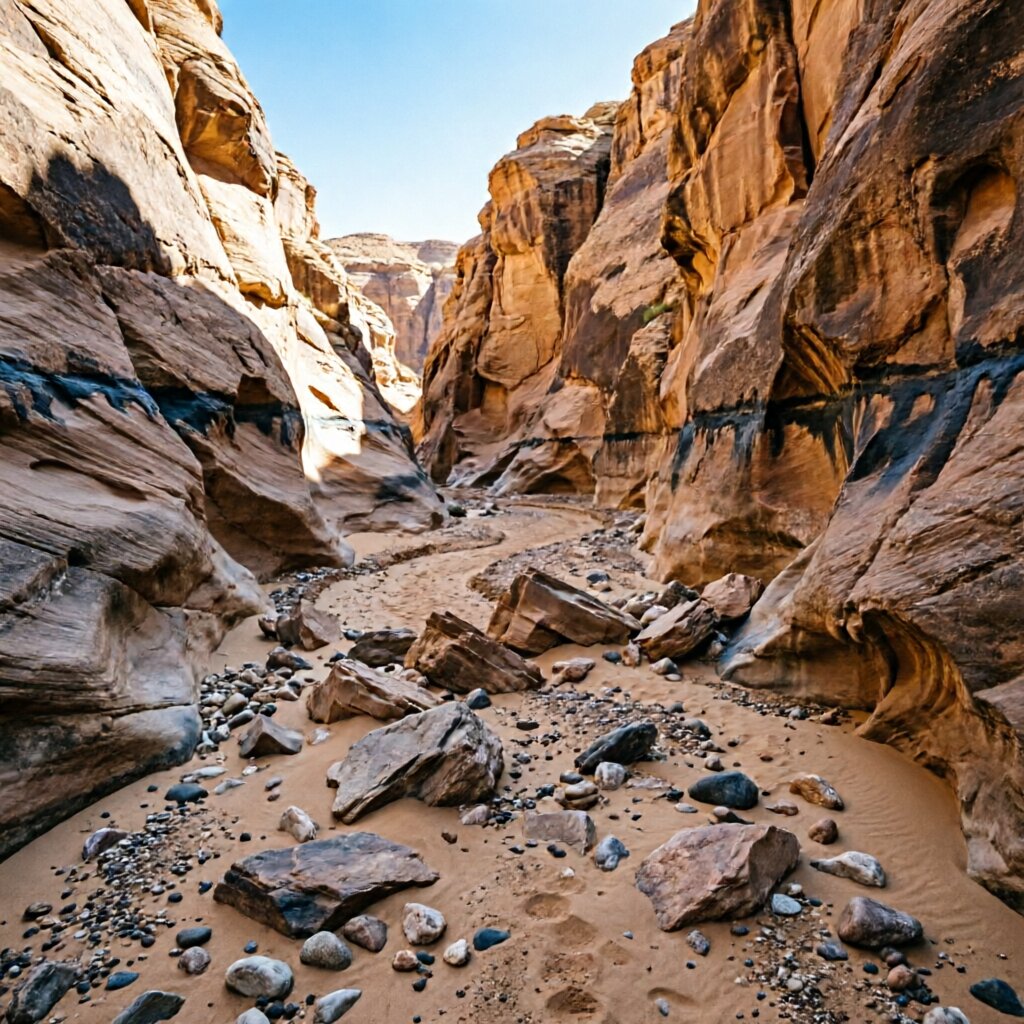
Flash floods are the single deadliest hazard in canyon camping. A dry wash can fill with six feet of water in under 15 minutes after a thunderstorm drops rain miles upstream. The water arrives as a wall of debris — mud, rocks, branches — moving at highway speeds.
Before entering any canyon: check the National Weather Service forecast for the entire watershed, not just your location. Rain 20 miles away can send a wall of water through your position.
Never camp in a dry wash bed. Identify high-ground escape routes before descending. If water rises, climb immediately.
For broader outdoor hazard awareness, our camping safety tips cover weather, wildlife, and terrain risks.
Temperature Management
Canyon temperatures swing more dramatically than almost any other camping environment. Summer canyon floors in the Southwest regularly exceed 110°F during the day and drop below 50°F at night. The key is layering: a moisture-wicking base, an insulating mid-layer, and a wind-blocking shell.
Hike early. Start before dawn to cover distance during the coolest hours. Rest in shade during midday heat.
Carry electrolyte supplements — plain water is not enough when sweating multiple liters per hour. Treat heat exhaustion immediately with shade, water, and rest.
For cold-weather canyon trips, a warm sleeping bag and insulated sleeping pad prevent dangerous nighttime heat loss.
Navigation and Communication
GPS signals are unreliable inside narrow canyons — satellite visibility is blocked by walls, which is why canyon camping requires backup navigation. Carry a physical topographic map and compass as primary navigation.
Mark your entry and exit points. In slot canyons, terrain looks identical in both directions, so pay close attention to landmarks.
Cell service is absent in most canyon interiors. A portable power station keeps devices charged for the drive out. Consider a satellite messenger for backcountry canyon trips where no rescue infrastructure exists.
Wildlife and Terrain
Rattlesnakes, scorpions, and spiders inhabit canyon floors and rock crevices. Check boots, bags, and bedding before each use. Never reach into cracks without looking first.
Canyon rock is unstable. Sandstone layers can crumble under body weight. Test handholds and footholds before committing.
Avoid walking on edges after rain — wet sandstone is slippery.
How to Choose a Canyon Camping Trip
Canyon Type vs. Experience Level
Match the canyon type to your group’s ability. Plateau canyons like Bryce suit beginners and families. Box canyons with trails work for intermediate hikers.
Slot canyons and backcountry gorge floors require navigation skills and desert survival knowledge.
Season and Climate
Summer in desert canyons means dangerous heat. Spring and fall offer the best temperature windows for canyon camping.
Winter canyon camping is possible at lower-elevation canyon sites but requires cold-weather gear. Many canyon roads close November through March.
Permit Requirements
Research permit rules before planning. National park campgrounds accept reservations through Recreation.gov, often booking months ahead.
Backcountry permits for Grand Canyon and Zion require advance lottery applications. State parks like Palo Duro use simpler systems.
Camping Style: Rim vs. Floor
Rim camping provides canyon views with developed amenities — the easiest and safest entry point. Canyon floor camping is more immersive but demands self-sufficiency in water and navigation.
River corridor camping combines hiking with water travel. Choose based on your group’s comfort level.
Canyon Camping Checklist
Safety Essentials:
- Weather forecast for entire watershed
- Physical topographic map and compass
- Headlamp with spare batteries
- First aid kit with snake bite supplies
- Satellite messenger for backcountry trips
Water and Hydration:
- 1 gallon per person per day minimum
- Water filter or purification tablets
- Hydration pack or water bottles
- Electrolyte supplements
Clothing and Footwear:
- Moisture-wicking base layers (no cotton)
- Convertible hiking pants
- Sturdy waterproof camping shoes
- Hiking socks with blister prevention
- Wide-brim hat and sunglasses
- Insulated jacket for nighttime cold
- Rain jacket for monsoon season
Gear:
- Trekking poles for descents
- Packable daypack for side hikes
- SPF 70+ sunscreen
- Insect repellent for riparian areas
- Camera for canyon photography
Shelter and Sleep:
- Tent suited for wind exposure on rims
- Warm sleeping bag rated 10-20°F below expected lows
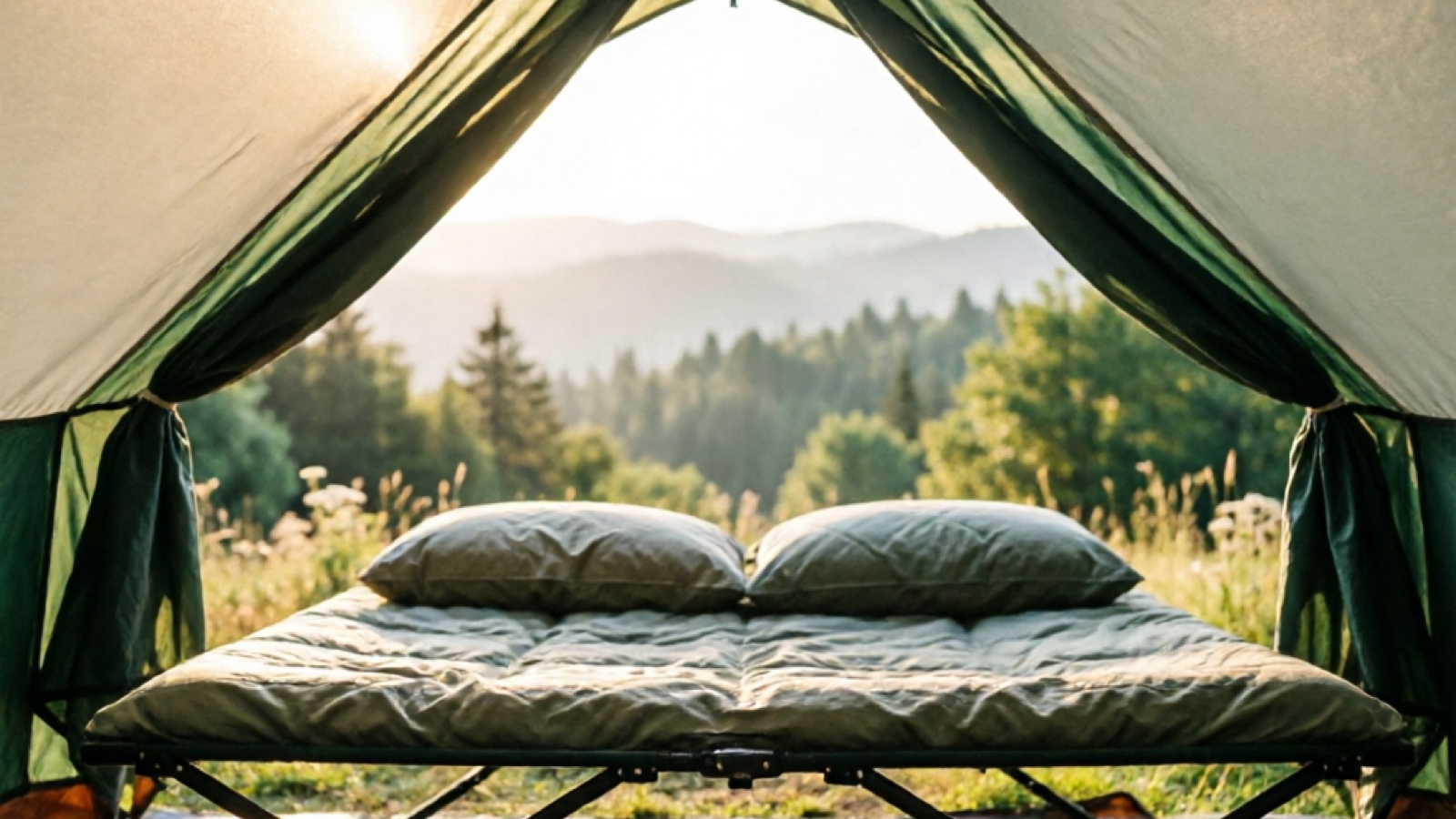
- Insulated camping cot
- Camping pillow for comfort
Cooking and Food:
- Camp stove (fire restrictions are common in canyon areas)
- Cookware and utensils
- High-calorie trail food
- Trash bags — pack out everything
Conclusion
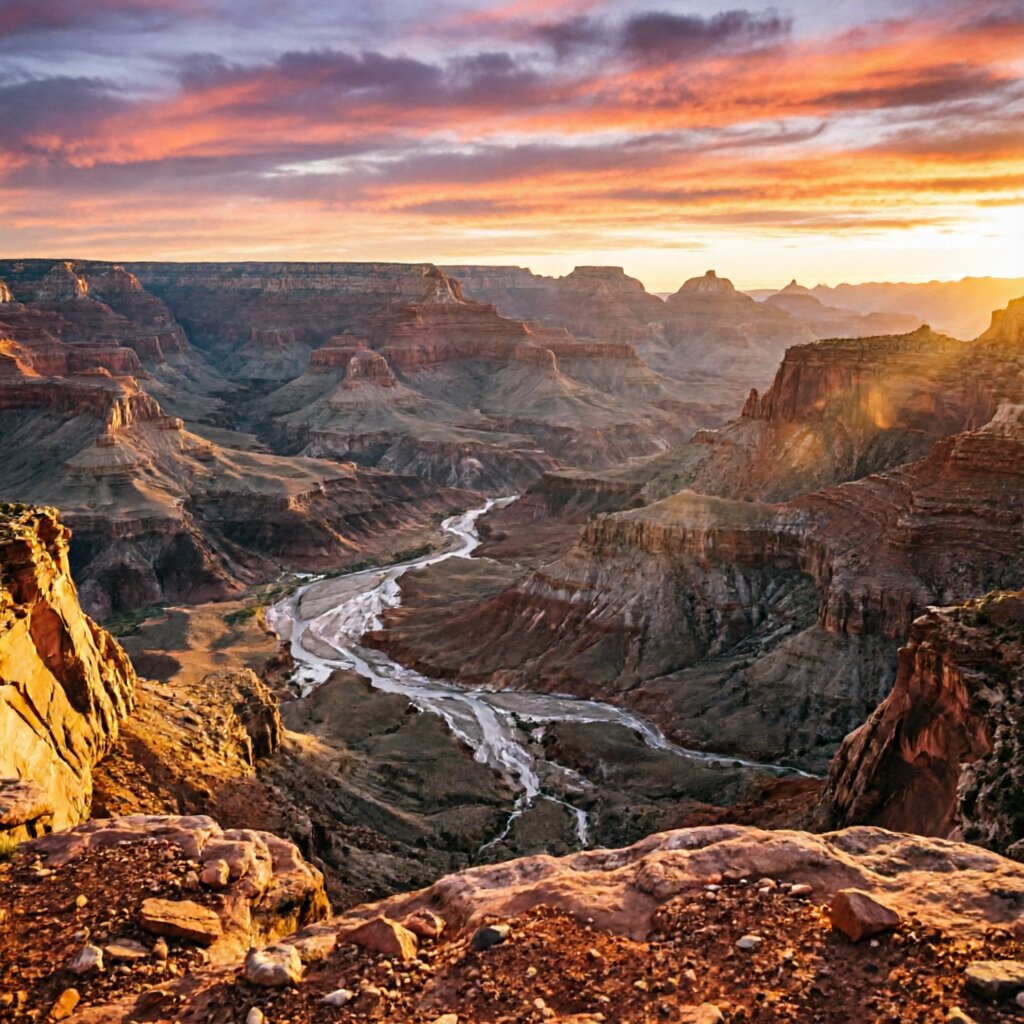
Canyon camping is one of the most rewarding outdoor adventures — it delivers an experience no other camping type can match. Sheer walls hundreds of feet high, light beams piercing through narrow slots, the sound of water echoing off sandstone — it is simultaneously humbling and exhilarating.
The key to successful canyon camping is preparation. Understand the canyon type, pack the right gear, check weather forecasts for the entire watershed, and match the trip difficulty to your group’s experience. Start with established rim campgrounds at Zion or Palo Duro, then progress to backcountry canyon floor camping as your skills grow.
Canyon camping rewards those who respect the environment. The same forces that carved these landscapes can be dangerous, but with proper planning and the right equipment, a canyon camping trip becomes one of the most memorable outdoor experiences of your life.
References
- National Park Service — “Zion National Park: The Narrows Safety” — nps.gov/zion
- National Park Service — “Grand Canyon Backcountry Permits” — nps.gov/grca
- American Canyoneering Association — “Canyoneering Safety Standards” — canyoneeringusa.org
- REI Co-op — “How to Hike a Slot Canyon Safely” — rei.com/learn
- 知乎 — “峡谷露营安全须知与装备清单” — zhihu.com
- 什么值得买 — “美国峡谷露营经验分享 Zion Grand Canyon” — smzdm.com
Frequently Asked Questions
What is canyon camping?
Canyon camping means setting up camp inside or near canyon formations — deep valleys carved by rivers, wind, or tectonic activity. It ranges from established campgrounds in canyon-rim national parks to backcountry sites on canyon floors. Canyon environments are distinct from forest or mountain camping: narrower temperature swings, flash flood risk, shade-dependent heat, and terrain that demands specific gear like headlamps, sturdy boots, and trekking poles.
What are the best canyon camping spots in the US?
Top picks include Zion National Park (Utah) for slot canyons and rim camping, Grand Canyon National Park (Arizona) for rim-to-river backpacking, Bryce Canyon National Park (Utah) for hoodoo formations, Antelope Canyon vicinity on Navajo Nation land, Palo Duro Canyon State Park (Texas) as the second-largest canyon in the US, and Canyon de Chelly (Arizona) for guided canyon floor camping.
Is canyon camping dangerous?
Canyon camping carries specific risks that other camping types do not. Flash floods are the primary danger — a dry canyon can fill with water in minutes after rain miles upstream. Temperature extremes are also serious: canyon floors can be 20-30°F hotter than rims in summer, and freezing at night year-round. Loose rock, narrow passages, and limited exit routes add to the hazards. Proper preparation and checking weather forecasts eliminates most risk.
What gear do I need for canyon camping?
Essential canyon camping gear includes a headlamp with red-light mode for slot canyons, sturdy waterproof hiking boots, trekking poles for steep descents, a hydration pack or water filter for dry environments, high-SPF sunscreen with rock reflection protection, a lightweight daypack for side hikes, and layered clothing for temperature swings. See our canyon camping packing list below.
Can beginners go canyon camping?
Beginners can absolutely canyon camp — at established campgrounds on canyon rims or in canyon-accessible state parks. Rim camping at Zion, Bryce, or Palo Duro offers canyon scenery with full campground amenities. Slot canyon exploration and backcountry canyon floor camping require experience with navigation, water management, and desert survival. Start with rim camping and work up to more challenging canyon environments.
What should I wear canyon camping?
Moisture-wicking base layers, convertible hiking pants, sturdy hiking boots with ankle support, and a wide-brim hat. In slot canyons, long sleeves protect against abrasion from sandstone walls. Layer a fleece or insulated jacket — canyon temperatures drop fast after sunset. Avoid cotton, which retains moisture and dries slowly.
Do I need a permit for canyon camping?
Most national park canyon campgrounds require reservations through Recreation.gov or the park website. Backcountry camping in canyons almost always requires permits — Grand Canyon backcountry permits are issued by lottery. State park canyons like Palo Duro operate on first-come first-served or reservation systems. Navajo Nation canyon access requires guided tour permits.
How do I find water in canyon camping?
Desert canyons may have no surface water for miles. Carry all water you need — a common rule is one gallon per person per day in arid environments. Where streams exist, use a water filter like LifeStraw to purify. Check water source reports before departure — seasonal springs and pothole water dry up in summer.