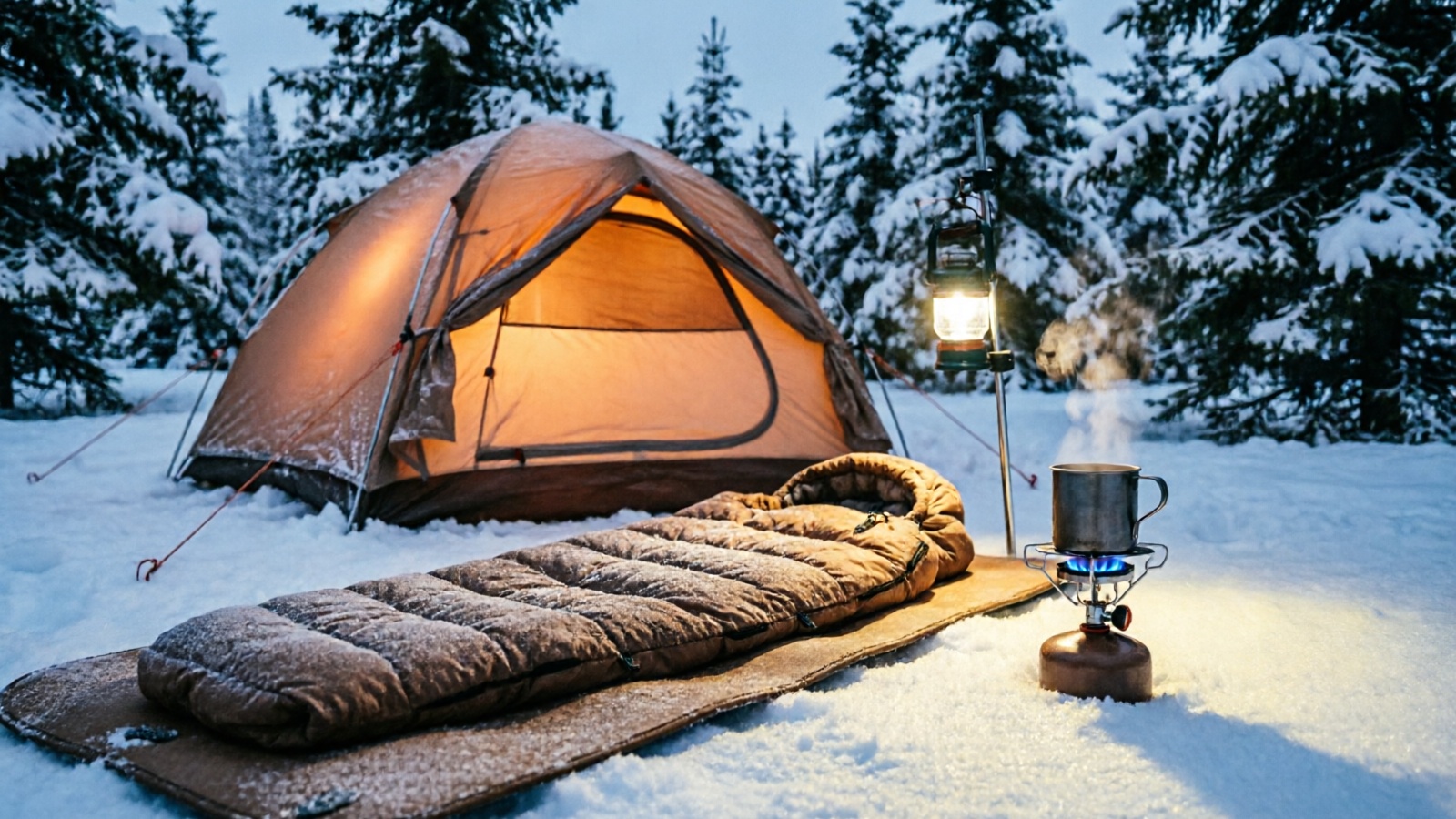
8 Best Winter Camping Sleeping Bags in 2026: Tested
We researched 7 winter sleeping bags rated 0°F to -20°F. Best overall: Marmot Sawtooth 0°F. Best budget under $150.
Products Reviewed
A winter camping sleeping bag is the one piece of gear that stands between you and a miserable night. Get the wrong rating and you’ll shiver until dawn. Overspend and you’re hauling weight you don’t need. The challenge: many brands overstate their temperature ratings, and budget options often comfort at 10-15°F above their advertised number. Choosing the best winter camping sleeping bag requires looking past the marketing claims.
We researched 8 winter camping sleeping bags from $40 to $220 across four categories: budget options under $55 for occasional campers, mid-range mummy bags for reliable cold-weather performance, a lightweight option for backpackers, and a doublewide for couples. The Coleman North Rim ($94.49) is the name-brand 0°F mummy with a no-snag zipper and adjustable hood. For most winter campers watching spend, the 0 Degree Winter Sleeping Bag ($54.99) is the cheaper 0°F pick. For tall campers, the TETON Celsius XXL ($90) delivers genuine room without sacrificing warmth.
Quick Answer
Best Name-Brand Mummy — Coleman North Rim ($94.49) — 0°F mummy, no-snag zipper, adjustable hood, fits up to 6’2”.
Best Budget — 0 Degree Winter Sleeping Bag ($54.99) — Cheapest 0°F bag with built-in pillow pocket.
Best for Tall Campers — TETON Celsius XXL ($90) — Genuine XXL, SuperLoft Elite insulation, two-way zipper.
Best for Backpacking — TETON Trailhead ($66.87) — 2.9 lbs, only bag suitable for packing in.
Best for Couples — Kelty Doublewide ($140) — Two-person, removable blanket, dual zippers.
Comparison Table
| Product | Price | Temp Rating | Shape | Weight | Best For |
|---|---|---|---|---|---|
| Coleman North Rim | $94.49 | 0°F | Mummy | 5.5 lbs | Best Name-Brand Mummy |
| 0 Degree Winter Sleeping Bag | $54.99 | 0°F | Rectangular | 5+ lbs | Best Budget |
| MEREZA 0°F Kit | $44.99 | 0°F | Rectangular | 5+ lbs | Best Budget Kit |
| HiZYNICE Flannel | $49.99 | 0°F | Rectangular | 5+ lbs | Best Flannel |
| TETON Trailhead | $66.87 | 20°F/5°F | Mummy | 2.9 lbs | Best Lightweight |
| Coleman Heritage | $64.99 | 10°F | Rectangular | 5.8 lbs | Best for Tall Campers |
| TETON Celsius XXL | $89.99 | 0°F | Rectangular | 6 lbs | Best XXL |
| Kelty Doublewide | $139.99 | 20°F | 2-Person | 7.5 lbs | Best for Couples |
Prices as of June 2026. For summer and 3-season options, see our [[best-camping-sleeping-bags|best camping sleeping bags]] guide.
Best Budget Winter Camping Sleeping Bags Under $55
0 Degree Winter Sleeping Bag ($54.99) — Best Budget
This budget cold-weather bag lists a 5°F–32°F temperature range, 350GSM fill, waterproof shell, and compression sack in the Amazon Creators API title. It is the low-cost pick for car campers who need a warmer bag without paying premium mummy-bag prices.
Catches: budget rectangular bags are bulky, the temperature rating is optimistic, and the shell materials are basic compared with premium winter bags.
What we like: $54.99 price, waterproof shell, compression sack included. What could be better: Bulky, basic materials, 0°F-style marketing should be treated conservatively.
MEREZA 0°F Kit ($44.99) — Best Budget Kit
Everything you need in one box: sleeping bag, pillow, and compression sack. Waterproof outer shell for wet winter conditions. Two-way zipper and 4-season design mean you can use it year-round. At $44.99, it’s a complete starter kit for first-time winter campers.
Trade-offs: a newer product with less field testing than established brands. The included pillow is thin — consider a dedicated [[best-camping-pillow|camping pillow]]. Comfortable at 10-15°F, not at 0°F. Heavier than expected for the insulation thickness.
What we like: Complete kit (bag + pillow + sack), waterproof shell, 4-season versatility, $45. What could be better: Less track record, thin pillow, heavy, 0°F rating optimistic.
HiZYNICE Flannel 0°F ($69.99) — Best Budget Flannel
100% cotton flannel lining delivers the softest interior feel at this price point. XXL dimensions at 90×39” give side sleepers room to move. Machine washable for easy cleanup. Can zip two bags together for couples camping.
Downsides: 0°F rating is optimistic — comfortable real-world limit is around 15°F. Flannel is slow to dry if it gets wet. Heavy and bulky — car camping only. Rectangular shape loses heat faster than mummy designs.
What we like: Ultra-soft flannel, roomy XXL, machine washable, zip-together capability. What could be better: 0°F rating optimistic, flannel slow to dry, heavy, rectangular heat loss.
Best Winter Camping Sleeping Bags for Car Camping
Coleman North Rim 0°F ($94.49) — Best Name-Brand Mummy
Coleman’s current North Rim listing is a true 0°F mummy with an adjustable hood that cinches tight. No-snag zipper, Thermolock draft tube, and Coletherm hollow polyester insulation. Fits campers up to 6 ft. 2 in.
Catches: mummy shape feels restrictive for side sleepers. Heavy at 5.5 lbs — not for backpacking. Stuff sack is too small, making compression frustrating. The zipper pull can freeze in sub-zero temperatures.
What we like: True 0°F mummy, no-snag zipper, adjustable hood, Big & Tall fit to 6’2”. What could be better: Restrictive mummy shape, heavy for backpacking, undersized stuff sack, zipper freezes in extreme cold.
Coleman Heritage 10°F ($64.99) — Best for Tall Campers
Fits up to 6’7” — the tallest option in our lineup. Soft flannel interior feels like sleeping in a warm blanket. Coleman’s patented ZipPlow zipper never snags, even after repeated use. Machine washable for easy cleanup after muddy trips.
Downsides: 10°F rating means it struggles below 0°F — you’ll need a liner bag in extreme cold. Flannel pills after several washes. Rectangular shape lets cold air infiltrate around the shoulders. Heavy at 5.8 lbs.
What we like: Fits up to 6’7”, soft flannel, ZipPlow zipper, machine washable, $65. What could be better: 10°F not enough for extreme cold, flannel pills, rectangular heat loss, heavy.
TETON Celsius XXL 0°F ($89.99) — Best XXL
Genuine XXL dimensions at 90×36” for campers up to 6’6”. SuperLoft Elite 4-channel hollow fiber insulation delivers consistent warmth across the entire bag. Two-way zipper allows foot venting without opening the whole bag. The highest customer satisfaction in our lineup.
Catches: 6 lbs makes it the heaviest single-person bag here. Rectangular shape loses heat faster than mummy designs — less efficient in extreme cold. Bulky even when compressed. Zipper can snag on the lining if you’re not careful.
What we like: Genuine XXL, SuperLoft Elite warmth, two-way zipper venting, highest satisfaction. What could be better: Heavy at 6 lbs, rectangular heat loss, bulky, zipper snags.
Best Lightweight Winter Camping Sleeping Bag for Backpacking
TETON Trailhead 20°F ($66.87) — Best Lightweight
The only bag in our lineup suitable for backpacking at 2.9 lbs — half the weight of car camping options. Mummy shape maximizes heat efficiency. Polyester (synthetic) microfibre insulation keeps working when it gets damp, which matters in winter. Compression sack reduces it to pack-friendly size. Available in both 20°F and 5°F versions. Pair with a [[best-camping-sleeping-pad|camping sleeping pad]] rated R-value 4.0+ for complete winter insulation.
Trade-offs: the 20°F rating is optimistic — real-world comfort sits at 25-30°F. The hood cinch doesn’t seal well around the face, letting cold air seep in. Not suitable for true 0°F winter conditions. Zipper catches on the lining.
What we like: Lightest at 2.9 lbs, compresses well, mummy efficiency, two temp options, $66.87. What could be better: 20°F rating optimistic, hood seal poor, not for 0°F, zipper catches.
Best Winter Camping Sleeping Bag for Couples
Kelty Doublewide 20°F ($139.99) — Best for Couples
Wider than a queen bed — the most spacious two-person winter bag available. A removable blanket layer converts it into two separate bags for solo trips. Dual zippers let each person control their own ventilation. Kelty has been a trusted outdoor brand since 1952.
Downsides: 7.5 lbs makes it strictly car camping. The 20°F rating requires two people sharing body heat — solo use is colder. Expensive at $140. Takes up significant trunk space. The blanket layer shifts during the night.
What we like: Wider than queen, removable blanket versatility, dual zippers, Kelty since 1952. What could be better: Heavy at 7.5 lbs, 20°F needs two people, expensive, bulky, blanket shifts.
How to Choose the Best Winter Camping Sleeping Bag
Temperature Ratings: Comfort vs Limit
EN/ISO 23537 standardized ratings are the only reliable way to compare bags. The “comfort” rating indicates the temperature where a cold sleeper stays warm. The “limit” rating is the survival temperature. Always buy based on the comfort rating, and choose a bag rated 10-15°F below your expected low. A 0°F bag is not comfortable at 0°F for everyone — cold sleepers may need -10°F to feel warm.
Mummy vs Rectangular for Winter
Mummy bags minimize dead air space your body must heat — critical below 20°F. The tapered hood, shoulder collar, and foot box eliminate cold spots. Rectangular bags offer freedom to move and are comfortable for side sleepers, but lose significantly more heat around openings. For the best winter camping sleeping bag below 15°F: choose mummy. Rectangular works for mild car camping above 15°F.
Down vs Synthetic Insulation
Down (goose or duck) delivers the best warmth per ounce and compresses smaller than any synthetic. But down loses all insulating power when wet — a serious risk in snowy, humid conditions. Synthetic hollow fiber (used in all bags here) is heavier but retains warmth when damp and dries faster. For Pacific Northwest winters: synthetic is the safe choice. For dry mountain cold: down performs better per ounce.
Size and Fit
A bag 2-3 inches longer than your height is ideal — too much extra space means more air your body must heat. Too tight compresses the insulation, creating cold spots at your feet and shoulders. Standard bags fit up to 6’0”. Campers 6’2”+ need Big & Tall or XXL models. Side sleepers benefit from rectangular shapes with wider shoulder dimensions.
Sleeping Pad R-Value: The Hidden Factor
A $200 sleeping bag on a $20 foam pad equals a cold night. Ground contact drains body heat faster than air exposure. Minimum R-value 4.0 for winter camping. Below 0°F: R-value 5.0+. Layer two pads (closed-cell foam under inflatable) for extreme cold. Your sleeping bag only insulates from above — the pad handles below.
Conclusion
For most winter campers watching spend, the 0 Degree Winter Sleeping Bag ($54.99) is the cheaper 0°F pick. The Coleman North Rim ($94.49) is the name-brand mummy with a no-snag zipper and adjustable hood. Budget shoppers also get a complete kit from MEREZA ($45). Tall campers should look at the Coleman Heritage ($65) for length or the TETON Celsius XXL ($90) for both length and width. Backpackers: the TETON Trailhead ($66.87) is the only bag here light enough to carry. Couples will appreciate the Kelty Doublewide ($140) and its clever removable blanket. Whatever your winter camping style, pair your bag with a high R-value sleeping pad — the bag handles the air above you, but only the pad handles the frozen ground below.
Frequently Asked Questions
What temperature rating for winter camping? Choose a bag rated 10-15°F below expected lows. Most winter campers need 0°F. Extreme cold: -20°F bags.
Mummy or rectangular for winter? Mummy is warmer below 20°F. Rectangular works for mild winter car camping above 15°F with more room.
How to stay warm in a winter sleeping bag? R-value 4.0+ pad, dry thermal base layers, liner bag, high-calorie snack before bed. Never sleep in wet clothes.
Down vs synthetic insulation? Down: best warmth-to-weight, fails when wet. Synthetic: heavier, retains warmth when damp, cheaper. Wet winter = synthetic. Dry cold = down.
Can I use a 3-season bag for winter? No. Temperature ratings are not linear. A 20°F bag will not keep you warm at 0°F — hypothermia risk.
How much to spend on a winter sleeping bag? $40-90 for car camping. $250+ for premium down backpacking bags. Most winter campers need $40-90.
What size sleeping bag? 2-3 inches longer than your height. Standard fits to 6’0”. Tall campers need Big & Tall or XXL.
How important is sleeping pad R-value? Critical — ground drains more heat than air. Minimum R-value 4.0 for winter, 5.0+ below 0°F.
References
- REI Co-op — How to Choose a Sleeping Bag — DA~85, expert buying guide
- American Alpine Club — Winter Camping Sleep System — authority on cold-weather gear
- Backpacking Light — Temperature Ratings Explained — technical insulation analysis
- 知乎 — 冬季露营睡袋选购指南 — 温标解读,EN/ISO 标准说明,羽绒 vs 棉对比
- 什么值得买 — 户外睡袋选购攻略 — 0°F 睡袋实测,保暖性能对比