Canoe Camping Guide: 7 Best Trips, Gear & Tips (2026)
Canoe camping guide — essential gear checklist, best US canoe camping trips, packing and portage tips, and trip planning for beginners.
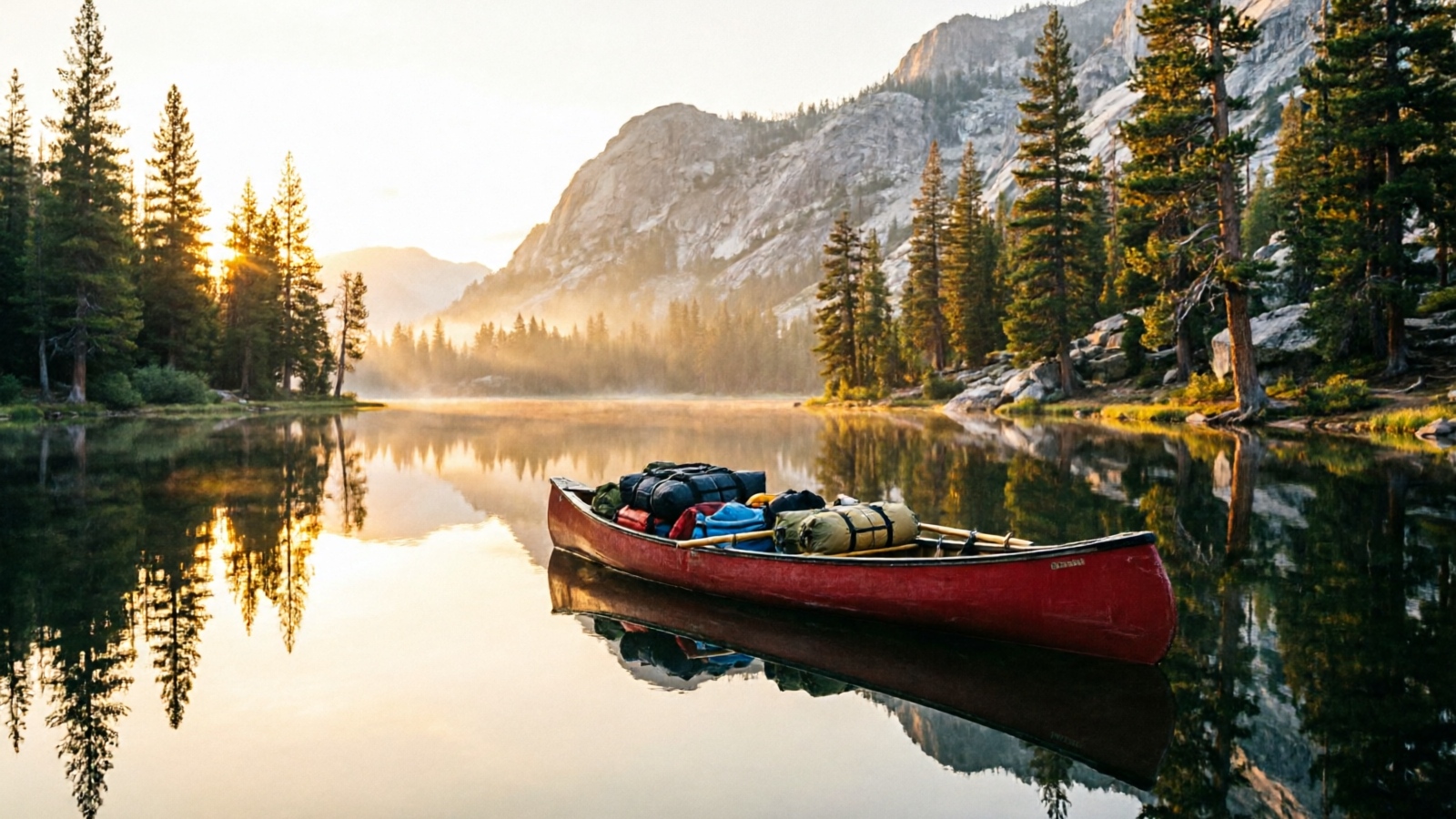
Canoe camping is the oldest form of wilderness travel in North America. You load your gear into a canoe, paddle across a lake, carry everything over a portage trail on your shoulders, paddle the next lake, and repeat until you reach a backcountry campsite with no roads, no buildings, and no other people. For camping along rivers by foot, see our river camping guide.
What Is Canoe Camping?
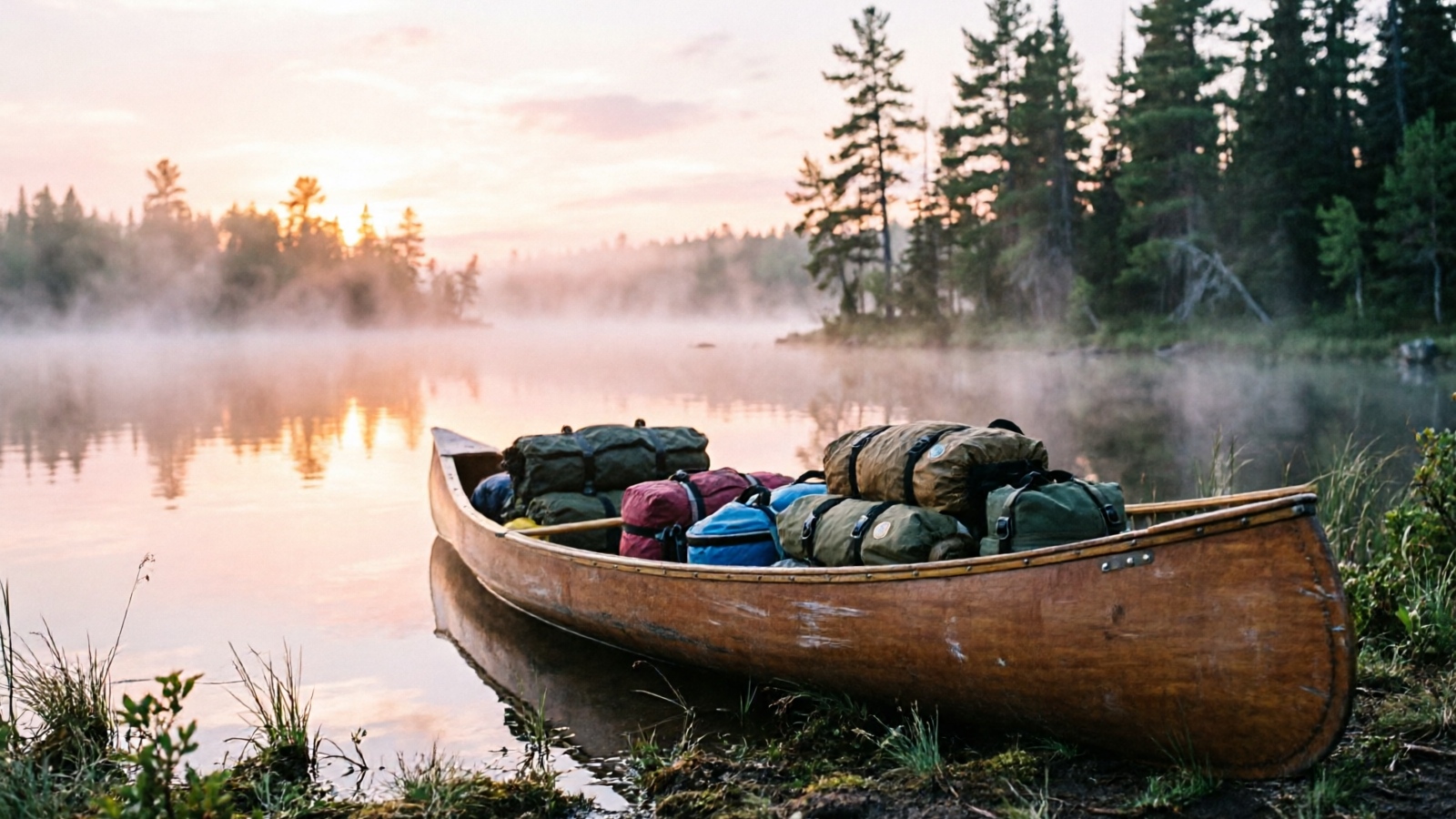
Canoe camping is the oldest form of wilderness travel in North America.
Canoe camping means loading camping gear into a canoe and paddling to a backcountry campsite accessible only by water. It is distinct from car camping, backcountry camping, and RV camping — and from national park camping in developed campgrounds. Canoe camping combines water travel with wilderness camping — the journey is as much the experience as the destination.
Three factors define canoe camping: water-based access (no roads to your campsite), portage-dependent (you carry the canoe and all gear overland between bodies of water), and weight-sensitive (every additional pound is carried on your shoulders).
Voyageurs traveled these same routes in the 1700s and 1800s, trading furs across thousands of miles of canoe routes. Today the same lakes and portage trails in the Boundary Waters and Quetico Park form the premier canoe camping network in the world.
Canoe camping suits outdoor enthusiasts who enjoy paddling and are comfortable with physical effort. It is more demanding than lake camping or forest camping, but the reward is solitude that few other camping formats provide.
Quick Tips
- Dry bags are non-negotiable. Portages get gear wet from sweat and rain. Waves splash. One wet sleeping bag ends a trip.
- Weight is the enemy. Every ounce is carried on portage trails. Choose the lightweight version of everything.
- Pack low and centered. Heavy items go on the bottom center of the canoe for stability. Light items at bow and stern. Tie everything down.
- Permits sell out fast. Boundary Waters summer permits book 3-6 months ahead. Reserve early.
- Mosquitoes are brutal June-July. Lakeside campsites are mosquito heaven. DEET spray plus a mosquito net saves your sanity.
- Filter your water. Backcountry lakes and rivers look clean but contain bacteria and parasites.
Quick Answer: Canoe Camping Essentials
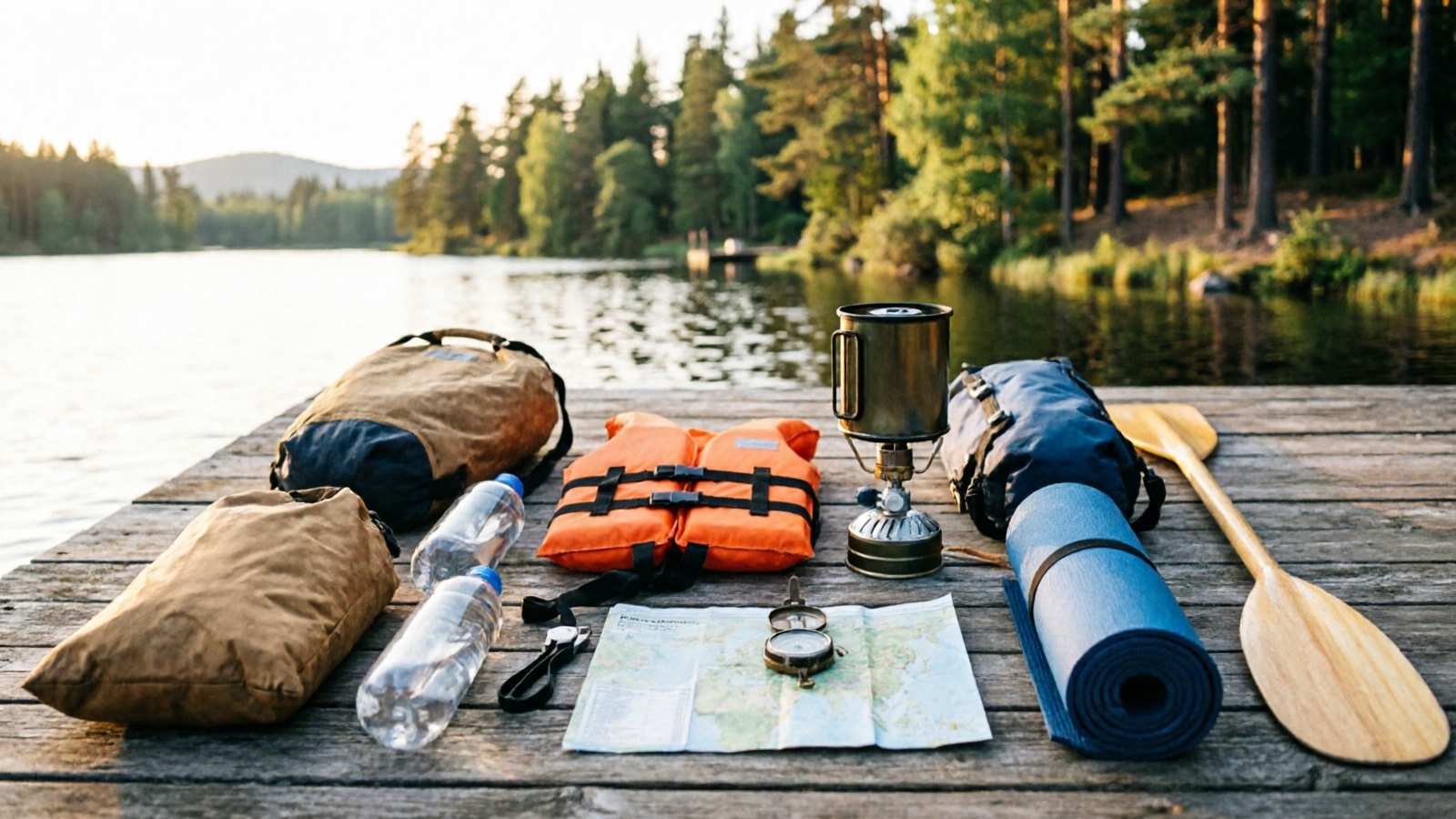
Three items solve the biggest problems every canoe camping trip faces: the Earth Pak Dry Bag (waterproof gear protection — the single most critical item), the LifeStraw Water Filter (safe drinking water from backcountry lakes), and the LHKNL Headlamp 2-Pack (hands-free light for dark campsites and portage trails).
Add the Amazon Basics Tarp for rain shelter, the Klymit Static V Sleeping Pad for ultralight sleep comfort, the Coleman Classic Cooler for food storage, and Cutter Skinsations for mosquito defense.
Comparison Table
| Product | Best For | Link |
|---|---|---|
| Earth Pak Waterproof Dry Bag | Keeping ALL gear dry through portages and waves | Check Price → |
| LifeStraw Personal Water Filter | Drinking safely from backcountry lakes and rivers | Check Price → |
| Amazon Basics Waterproof Camping Tarp | Rain shelter over campsite on open water trips | Check Price → |
| Klymit Static V Sleeping Pad | Ultralight pad that fits in a portage pack | Check Price → |
| Coleman Classic Insulated Cooler | Keeping food cold on multi-day trips | Check Price → |
| LHKNL LED Headlamp 2-Pack | Hands-free light for camp setup and portage trails | Check Price → |
| Cutter Skinsations Mosquito and Insect Repellent | Mosquito defense at lakeside campsites | Check Price → |
Best for Dry Gear Protection: Earth Pak Waterproof Dry Bag
Dry gear protection is the most critical purchase for any canoe camping trip.
Everything in your canoe will encounter water — paddle splash, rain, waves, dew, and the occasional capsize. The Earth Pak is the single most critical item for canoe camping. IPX6 rating, roll-top closure, and it floats if it goes overboard.
What we like: IPX6 waterproof, roll-top closure, floats in water, multiple sizes from 5L to 55L, shoulder strap included.
What could be better: seam leakage after extended use is the weak point — roll the top the full three folds and keep the seam tape above the waterline before you trust it overboard.
Use 20L bags for clothing and sleeping bags, 5L for electronics and first aid. See our best dry bags review for alternatives.
Best for Safe Drinking Water: LifeStraw Personal Water Filter
Safe drinking water is the top priority on any canoe camping trip.
Backcountry canoe campsites have no running water. You drink from the lakes and rivers you paddle. The LifeStraw removes 99.999% of bacteria and 99.9% of parasites, filtering up to 1,000 gallons at only 2 ounces.
What we like: Removes 99.999% bacteria and 99.9% parasites, removes microplastics, 1,000-gallon lifespan, ultralight at 2oz, no batteries needed.
What could be better: Single straw design cannot filter water for a group — one pack includes exactly one straw, so each group member needs their own.
For group filtration options, see our best camping water filters.
Best for Rain Shelter: Amazon Basics Waterproof Camping Tarp
A rain shelter is essential for canoe camping — weather changes fast on the water.
When storms arrive on open water — and they will — a tarp over your campsite is the difference between a miserable wet night and a comfortable one. The Amazon Basics tarp at 9.5 x 11.5ft provides rain shelter at minimal weight for portage.
What we like: 9.5x11.5ft coverage, polyethylene waterproof, corner grommets for rigging, lightweight, affordable.
What could be better: thin material rips easily — it’s a light-duty rain shelter, not a work tarp, so clear sharp branches before rigging. Single-season durability for heavy use.
For extended trips, see our best camping tarps for reinforced options.
Best for Lightweight Sleep: Klymit Static V Sleeping Pad
Lightweight sleep gear is crucial for canoe camping where every ounce matters on portages.
Portage trails demand ultralight gear. A standard foam pad weighs 2-4 pounds — that is 2-4 extra pounds on your back for every portage. The Klymit Static V weighs only 18.6 ounces, packs to 3x8 inches, and provides R-value 4.5 insulation for 3-season camping.
What we like: R-value 4.5, ultralight at 18.6oz, packs to 3x8 inches, V-chamber design prevents rolling, inflates in 10-15 breaths.
What could be better: valve reliability is the main complaint — press-test the valve at home before the first portage. Narrow 20-inch width is tight for larger campers.
Pair with a lightweight sleeping bag rated 30°F for summer trips. See our best camping sleeping pads for alternatives.
Best for Food Storage: Coleman Classic Insulated Cooler
Food storage on a canoe camping trip requires keeping perishables cold for days without ice resupply.
Multi-day canoe trips require food planning and cold storage. The Coleman Classic holds up to 28 cans with an insulated lid, leak-resistant drain, and recessed handles for portage loading.
What we like: 28-can capacity, insulated lid, leak-resistant drain, easy-clean interior, recessed handles.
What could be better: Ice retention is inconsistent — real-world performance in 70°F shade runs well short of the marketed figure. The lid can warp when left in the sun, creating an air gap that breaks the seal, so keep it shaded at camp.
For longer trips without ice resupply, use freeze-dried meals requiring no refrigeration. See our best camping coolers for rotomolded options.
Best for Night Lighting: LHKNL LED Headlamp 2-Pack
Canoe camping campsites are far from any light source — a reliable headlamp is mandatory.
Canoe campsites have zero artificial light. Camp setup, cooking, and bathroom runs all happen in darkness. The LHKNL provides USB-C rechargeability, white and red modes, IPX4 waterproofing, and adjustable beam.
What we like: 2-pack covers two people, USB-C charging, white and red light modes, IPX4 waterproof, adjustable beam.
What could be better: battery degradation after extended use — budget rechargeable cells fade after a season or two of regular trips.
For more options, see our best camping headlamps.
Best for Insect Defense: Cutter Skinsations Mosquito and Insect Repellent
Insect defense is essential for canoe camping — lakeshores breed mosquitoes. Cutter Skinsations Mosquito and Insect Repellent
Lakeside campsites are mosquito habitat from June through August. Mosquitoes emerge in clouds at dusk and are relentless until temperatures drop below 50°F. The Cutter Skinsations uses 7% DEET with aloe and vitamin E in a non-greasy pump spray.
What we like: 7% DEET formula, aloe and vitamin E soothe skin, non-greasy pump spray, light fresh scent, affordable.
What could be better: 7% DEET may not suffice in heavy mosquito zones — expect to reapply often and still get bitten when the bugs are bad. Enough buyers report damaged or previously-opened bottles on arrival that you should check the seal before your trip.
For severe bug areas, combine with a mosquito net.
Best Canoe Camping Destinations in the United States
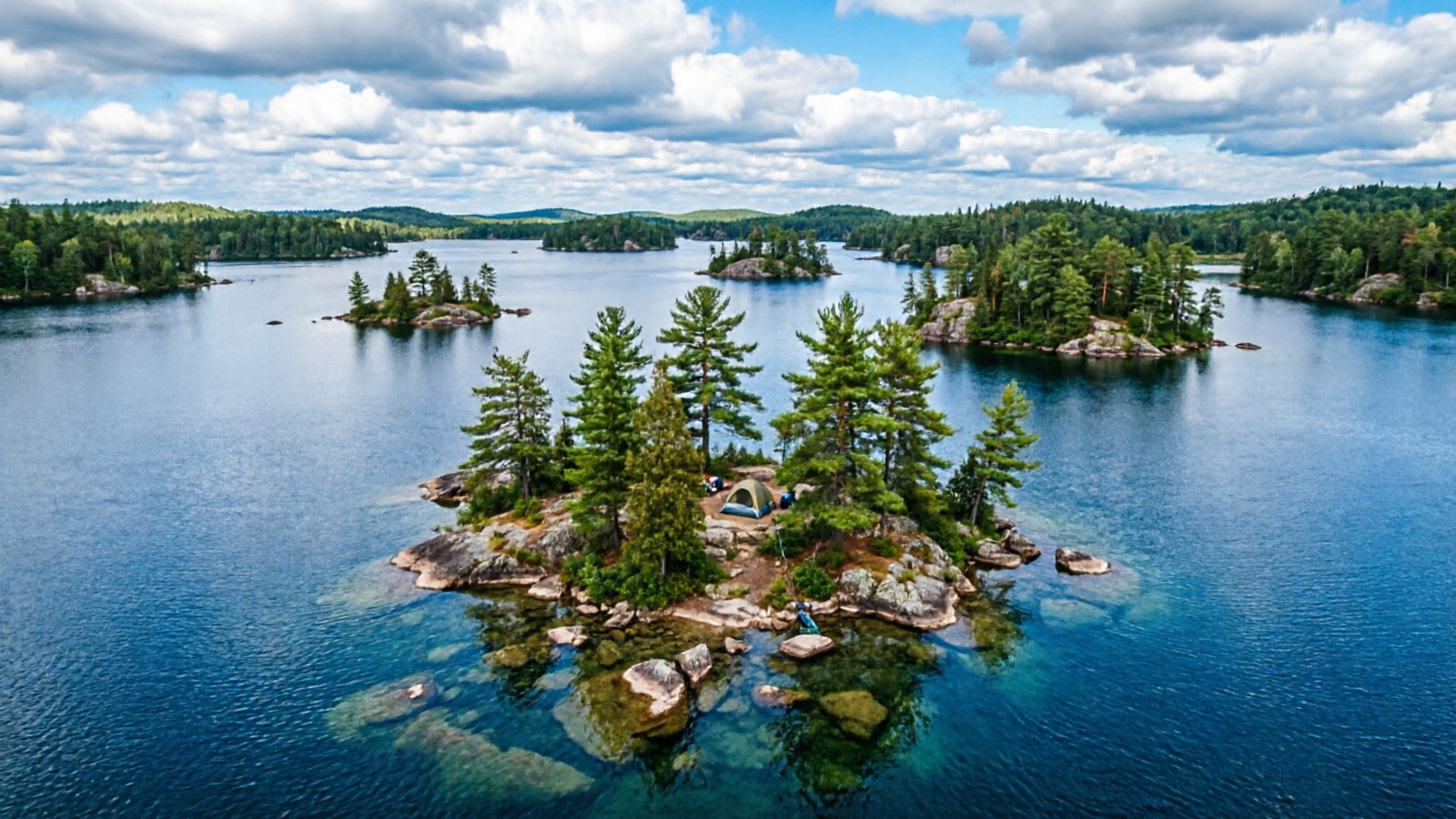
Boundary Waters Canoe Area Wilderness, Minnesota
The premier canoe camping destination in North America. Over 1 million acres of interconnected lakes and portage trails along the Minnesota-Ontario border. Over 1,200 miles of canoe routes with 2,000+ designated campsites.
Trip lengths range from overnight loops to multi-day expeditions. Permits required via recreation.gov — peak season sells out 3-6 months ahead.
Entry points are numbered (EP 1 through EP 80+). Research routes by entry point number when planning.
Quetico Provincial Park, Ontario, Canada
The Boundary Waters’ Canadian twin — 1.2 million acres with fewer visitors and stricter regulations. No motorized watercraft allowed. Fishing is exceptional.
Requires Ontario Park permit and Canadian fishing license if angling. Passport required for US citizens. Fewer entry points mean even more solitude than the BWCA.
Allagash Wilderness Waterway, Maine
92-mile corridor of lakes and river in northern Maine with class I-II rapids. Regulated campsites with fire rings and pit privies. Trips typically take 5-7 days.
Less crowded than the Boundary Waters but more logistically complex — requires a shuttle or two-vehicle setup. Fall foliage season is spectacular. Maine Waterways permit required.
Sylvania Wilderness, Michigan
36 pristine lakes in the Upper Peninsula connected by short portage trails. A hidden gem — less crowded than the Boundary Waters with equally clear lakes and excellent fishing.
Motorized boats are prohibited. Permits are self-issuing at the entry point with no advance reservation needed. Good first canoe camping destination because portages are short and routes are forgiving.
Buffalo National River, Arkansas
153-mile free-flowing river in the Arkansas Ozarks — one of the last undammed rivers in the lower 48. Canoe camping along gravel bars and designated riverside campsites.
No portages since it is a one-way river trip, making it simpler for beginners. Spring and fall offer the best water levels.
Free camping at designated sites. See our river camping guide for river-specific tips.
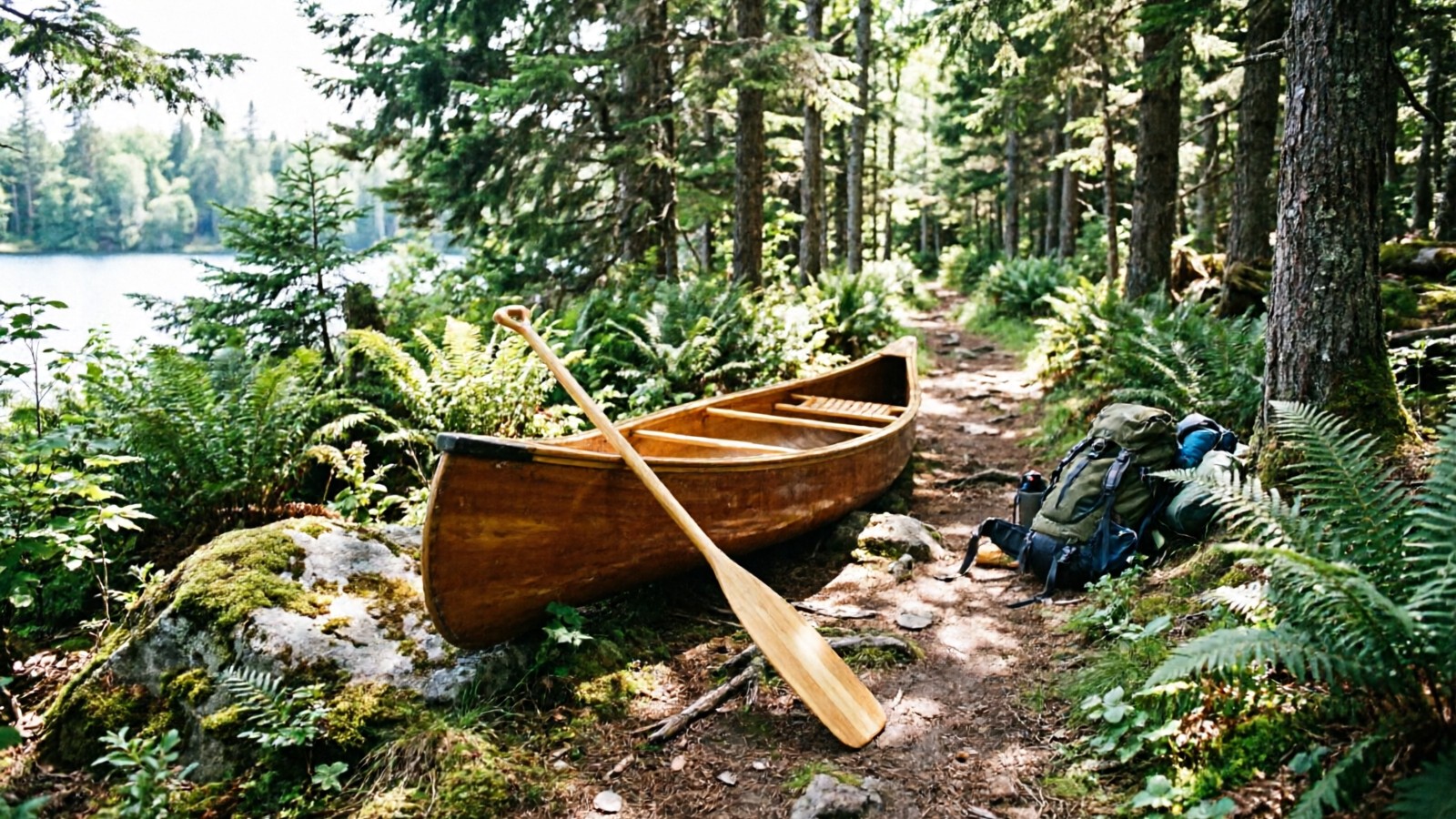
How to Plan Your First Canoe Trip
Choose Your Destination and Route
For your first trip, pick a destination with short portages and established campsites. Sylvania Wilderness (MI) or Buffalo National River (AR) are forgiving first choices.
Boundary Waters is world-class but start with a short 2-3 day loop. Study route maps — each lake connection has a portage with a measured length in rods.
Reserve Permits
Book permits as early as possible. Boundary Waters permits open in late January for the following summer — popular entry points sell out within hours.
Quetico permits open in January. Allagash and Buffalo National River have simpler systems but still require advance planning. Check the managing agency’s website for specific dates.
Plan Your Menu
Pack lightweight, calorie-dense food. Freeze-dried meals are the canoe camping standard — just add hot water. Supplement with trail mix, jerky, peanut butter, and instant oatmeal.
Pre-measure everything into ziplock bags. Estimate 2,500-3,000 calories per person per day — canoe camping burns serious energy.
Pack and Waterproof Everything
Every item goes into a dry bag. Organize by system: one bag for sleeping, one for kitchen (stove, cookware, food), one for personal gear.
Minimize the number of bags — fewer bags means fewer portage trips. Test your dry bag seals before departure.
Check Gear and Weather
Verify your canoe is seaworthy and PFDs fit properly. Check the weather forecast the morning of departure — do not paddle big lakes in high wind.
File a float plan with someone at home: your route, entry point, return date, and vehicle location. Cell service is zero in most canoe camping areas.
Canoe Camping Safety
Water Safety
Always wear a PFD while on the water — required by law in most areas. Never paddle alone on big water. Check wind and weather forecasts before crossings.
Northern lakes like the Boundary Waters stay 50-60°F even in summer. Cold water shock can disable swimmers in minutes. See our camping safety tips for comprehensive guidance.
Portage Injuries
Ankle sprains, shoulder strain, and falls on rocky trails are common. Wear proper footwear and use trekking poles for stability.
Do not overload packs — 40-55 pounds per pack is the target. Take breaks on long portages. Lift the canoe with your legs, not your back.
Wildlife Encounters
Bears are present in most canoe camping areas — hang food or use bear canisters. Moose are extremely dangerous on trails — never approach. Ticks are active April through July — full-body checks daily.
Weather on Open Water
Storms on open water arrive fast with little warning. Head to shore immediately if wind picks up or skies darken.
Lightning is especially dangerous on open water. For winter conditions, see our winter camping guide.
How to Pack a Canoe
Weight Distribution
Heavy items like coolers and water jugs go on the bottom center of the canoe for stability. Medium items on either side of center. Light items like sleeping bags in dry bags go at the bow and stern.
Waterproof Everything
Dry bags everywhere — no exceptions. Even items you think are waterproofed will get splashed. Organize gear by system in separate dry bags so you can find things quickly.
Tie It All Down
If you capsize, loose gear sinks or floats away. Use rope or straps to secure every bag to the canoe. A standard 16-foot canoe carries 800-1,000 pounds safely, but keep weight low for stability.
Accessible Essentials
Rain gear, water, snacks, and your headlamp stay within arm’s reach while paddling. Burying critical items under other gear means digging through everything when weather changes fast.
Canoe Camping Packing Checklist
Essentials
- Canoe + paddles + PFD (required by law)
- Dry bags (20L sleeping system, 10L electronics, 5L first aid)
- Tent + stakes (stored in large dry bag)
- Sleeping bag + sleeping pad
- Water filter or purification tablets
- Headlamp + spare batteries
- Camping stove + fuel
- Cookware (pot, utensils)
- Food (pre-measured per meal)
- Cooler with ice (perishables)
- Insect repellent (DEET-based)
- Sunscreen
- Rain jacket + rain pants
- First aid kit
- Map + compass
- Fire starter (waterproof case)
- Trash bags (pack out everything)
Recommended
- Camping tarp + paracord
- Trekking poles for portage stability
- Camp shoes for campsite comfort
- Mosquito net for severe bug areas
- Rope for food hang (bear country)
- Camping knife or multi-tool
- Water shoes for wading
- Binoculars for wildlife
- Satellite messenger (no cell service)
Conclusion: Why Canoe Camping Is Worth It
Canoe camping is the most physically demanding format on Camplabx, but also the most rewarding.
Canoe camping is the most physically demanding format on Camplabx, but also the most rewarding. You earn every campsite through paddling and portaging.
Start your canoe camping journey with Sylvania Wilderness or Buffalo National River for forgiving first trips. Invest in quality dry bags, a water filter, and a lightweight sleeping pad.
Frequently Asked Questions
What is canoe camping? Traveling by canoe to backcountry campsites accessible only by water, carrying all gear on portage trails between lakes. Canoes carry 60-80 pounds of gear versus 30-40 in kayaks, making multi-day trips practical.
What gear do I need? Seven essentials: dry bag, water filter, camping tarp, lightweight sleeping pad, cooler, headlamp, and DEET insect repellent. See our camping packing list for the full checklist.
Best canoe camping trips? Boundary Waters MN (1M+ acres), Quetico ON (less-crowded Canadian twin), Allagash ME (92-mile river corridor), Sylvania MI (short portages, beginner-friendly), Buffalo National River AR (no-portage river camping).
How do you pack a canoe? Heavy items low and centered. Dry bags everywhere. Everything tied down. Essentials within arm’s reach. A 16-foot canoe carries 800-1,000 pounds total.
What is a portage? Carrying canoe and gear overland between water bodies. Canoe goes on shoulders using the yoke. Typical Boundary Waters trip has 4-12 portages per day. Aim for 40-55 pounds per pack.
Do I need permits? Yes for most destinations. Boundary Waters via recreation.gov (sells out months ahead), Quetico via Ontario Parks, Allagash via Maine BPL. Check managing agency websites.
How heavy should my pack be? 40-55 pounds per pack. Two packs per person on long portages. Use lightweight gear and freeze-dried meals. One trip per person on short portages, two on long ones.
Is canoe camping safe? Primary risks: drowning (wear PFD), hypothermia (cold northern lakes), portage injuries (ankle sprains), and wildlife. Monitor weather and file a float plan.
References
- USDA Forest Service — “Boundary Waters Canoe Area Wilderness” — fs.usda.gov/recarea/bwca
- Canoeing.com — “Canoe Camping Gear Guide” — canoeing.com/camping
- Paddling.com — “How to Pack a Canoe for Camping” — paddling.com/guides
- Maine Bureau of Parks and Lands — “Allagash Wilderness Waterway” — maine.gov
- 知乎 — “独木舟露营装备清单与路线推荐” — zhihu.com
- 什么值得买 — “美国独木舟露营经验分享” — smzdm.com
- 小红书 — “Canoe Camping 新手攻略” — xiaohongshu.com