How to Clean a Tent: Nylon, Canvas & Polyester Care Guide
Learn how to clean a tent — wash nylon and canvas, remove mold and mildew, clean poles and stakes, and store properly between trips.
Dirt, sap, mold, and campfire smoke build up on your tent trip after trip. Most campers stuff their tent back in its bag and forget about it until the next trip. By then, the damage is done — weakened waterproof coatings, mold spots that spread, and zippers that stick.
Learning how to clean a tent properly takes 30-60 minutes and extends the life of your gear by years. It also prevents the most common cause of tent failure: moisture trapped in dirt that eats through waterproof coatings.
This guide covers how to clean every part of your tent — nylon, canvas, polyester, poles, and stakes — and how to deal with mold, mildew, and stubborn stains.
Why Cleaning Your Tent Matters
A dirty tent doesn’t just look bad — it performs worse. Here is what happens when you skip regular cleaning:
- Waterproof coating breaks down. Dirt particles trap moisture against the fabric, which degrades the polyurethane (PU) coating on the inside of your rainfly and floor. Once the PU coating delaminates, your tent leaks.
- Mold spreads fast. Even a small mold spot can spread across the entire tent in a few weeks if the tent is stored damp. Mold stains are permanent on nylon and very difficult to remove from canvas.
- Zippers fail. Sand and grit in zipper tracks cause the coils to separate. A stuck zipper is the most common field repair campers face, and it is almost always preventable with a quick brush after each trip.
- Fabric weakens. UV damage accelerates when dirt blocks the fabric from breathing properly. A clean tent actually lasts longer in sunlight.
If you notice your current tent is leaking despite no visible tears, the problem is almost always poor maintenance rather than a manufacturing defect.
What You Need to Clean a Tent
Gather these supplies before you start. Most are household items — you don’t need specialized gear for routine cleaning.
For routine cleaning:
- Mild dish soap (Dawn works well) or dedicated tent cleaner
- Large tub, bucket, or access to a bathtub
- Soft-bristle brush or sponge (no abrasive pads)
- Clean microfiber cloths
- Garden hose with a gentle spray nozzle
For mold and mildew removal:
- White vinegar (1 gallon)
- Lemon juice (1 cup)
- Non-iodized salt (1 cup)
- Spray bottle
For waterproofing after cleaning:
- Nikwax Tent & Gear SolarWash or Gear Aid Tent Cleaner
- Nikwax Tent & Gear Proof for DWR reapplication
Keep these items on your car camping checklist for end-of-trip cleanup.
How to Clean a Nylon or Polyester Tent
Most modern tents are made from nylon or polyester with a PU coating. Both materials require the same gentle cleaning approach.
Step 1: Set up the tent. It is easier to clean a tent when it is fully pitched. This lets you reach all surfaces and identify problem areas.
Step 2: Shake off loose dirt. Before applying any water, invert the tent and shake out debris. Brush off dried mud with a soft brush. This prevents mud from turning into a bigger mess when wet.
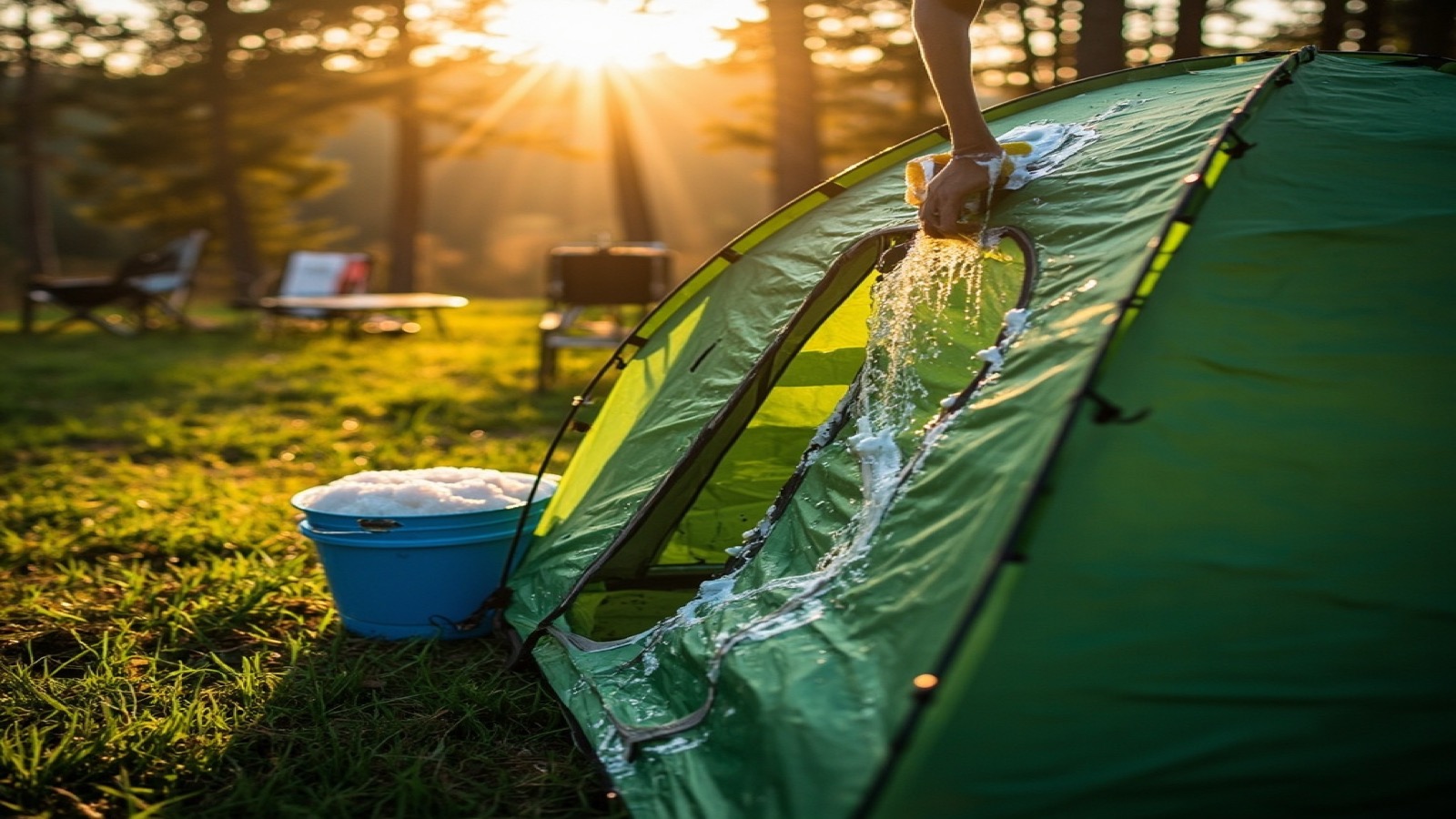
Step 3: Spot-clean stains. Mix a few drops of mild soap with warm water. Dip a sponge or cloth and gently scrub stained areas — cooking oil splatters near the kitchen area, sap from nearby trees, and sunscreen marks on the door flap are the most common.
Step 4: Wash the entire tent. Fill a large tub with cold water and add a small amount of mild soap. Submerge the tent and gently agitate it by hand. Let it soak for 10-15 minutes. Do not twist or wring the fabric — this stretches nylon and damages the waterproof coating.
Step 5: Rinse thoroughly. Drain the soapy water and refill with clean cold water. Rinse the tent until no suds remain. Soap residue attracts dirt and degrades waterproofing.
Step 6: Air dry completely. Set the tent back up outside in a shaded area or hang it over a clothesline. Direct sunlight is fine for short periods but extended UV exposure weakens nylon. Make sure the tent is 100% dry before storing — even slightly damp fabric grows mold within 48 hours.
For a quick between-trips clean, skip steps 4-5 and just spot-clean and wipe down the interior with a damp cloth. Full washes are needed at the end of each season or after particularly muddy trips.
How to Clean a Canvas Tent
Canvas tents require a different approach. Canvas is a cotton or cotton-polyester blend that is heavier, more durable, and more prone to mold than synthetic fabrics.
Step 1: Brush off loose debris. Use a stiff-bristle brush — canvas can handle more aggressive cleaning than nylon. Remove all loose dirt, leaves, and debris from both inside and outside.
Step 2: Hose it down. Set the tent up and hose off the entire exterior with plain water. Use a moderate spray — canvas can handle more pressure than nylon, but avoid a pressure washer which can force water through seams.
Step 3: Wash with soap. Use cold water and a mild soap. Canvas absorbs more water than nylon, so work in sections. Scrub with a stiff brush using circular motions. Pay extra attention to the ground contact area and any areas with visible stains.
Step 4: Treat for mold prevention. After cleaning, spray the entire tent with a 50/50 mix of white vinegar and water. Vinegar kills mold spores and prevents regrowth. Let it air dry without rinsing — the vinegar smell dissipates as the tent dries.
Step 5: Re-season the canvas. Canvas tents often come with a waterproof treatment from the factory that needs periodic refreshing. After cleaning and drying, apply a canvas-specific waterproofing product like Dry Guy Waterproofing Spray. Follow the product instructions — most require a second coat after the first one dries.
Never put a canvas tent in a washing machine. The agitation tears the fabric at stress points and destroys the waterproof coating.
How to Remove Mold and Mildew from a Tent
Mold is the number one killer of tents. If you see dark spots or smell a musty odor, act fast — mold spreads quickly and the stains become permanent.
For nylon and polyester tents:
- Mix 1 cup of lemon juice, 1 cup of non-iodized salt, and 1 gallon of hot water.
- Use a sponge to apply the solution directly to mold spots.
- Let it sit for 15-20 minutes. The acid in the lemon juice kills mold spores, and the salt prevents them from returning.
- Scrub gently with a soft brush.
- Rinse with cold water and air dry.
For canvas tents:
- Mix 1 part white vinegar to 1 part water in a spray bottle.
- Spray the affected area generously.
- Let it sit for 30 minutes.
- Scrub with a stiff brush.
- Rinse and let dry completely.
Important: After removing mold, check if the waterproof coating is still intact in that area. Spray the cleaned spot with water — if the fabric absorbs water instead of beading, the PU coating is gone. Reapply a DWR spray to restore water resistance. For detailed instructions on restoring waterproofing, see our guide on how to waterproof a tent.
How to Clean Tent Poles, Stakes, and Zippers
The fabric is only half the job. Poles, stakes, and zippers need regular maintenance too.
Tent poles: Wipe poles with a damp cloth after each trip. Remove sand and grit from the shock cord channels with a small brush. Check for bent sections — a bent pole creates stress points that crack on the next setup. If your poles have corrosion, clean with a small amount of WD-40 on a cloth, then wipe dry.
Stakes: Remove mud and dirt with a brush. Dry stakes before storing to prevent rust. Replace any stakes that are bent or cracked — a broken stake at 2am in a rainstorm is not the time to discover you only brought six.
Zippers: Brush zipper tracks with a soft toothbrush to remove sand and grit. Lubricate sticky zippers with Gear Aid Zipper Lubricant Wax or a graphite pencil. Never use petroleum jelly or oil-based lubricants — these attract dirt and make zippers worse over time.
These small maintenance steps take under 5 minutes but prevent most field failures. Add them to your camping hacks routine for faster camp setup.
Drying and Storing Your Tent
How you store your tent matters as much as how you clean it. Most tent damage happens in storage, not in the field.
Drying:
- Never pack a wet tent. If you must break camp in the rain, set the tent up at home as soon as possible and let it dry.
- Air dry in a shaded, well-ventilated area. A garage or covered porch works well.
- Make sure every pocket, seam, and corner is dry. Check the rainfly corners and floor seams — these trap the most moisture.
Storing:
- Store the tent loose in a large mesh bag or cotton sack — not in its original stuff sack. Compression damages the fabric and the waterproof coating over time.
- Keep it in a cool, dry place away from direct sunlight. A closet or basement shelf works. Avoid hot garages or car trunks.
- Remove the stakes and poles before storing. They can poke holes in the fabric during transport.
- Store the rainfly and body separately if space allows. This reduces stress on zippers and seams.
Common Mistakes When Cleaning a Tent
Avoid these mistakes that campers make over and over again:
| Mistake | Why It’s Bad | What to Do Instead |
|---|---|---|
| Using a top-loading washer | Agitator tears fabric and seams | Use a front-loader or hand wash |
| Using bleach | Destroys PU coating and discolors fabric | Use vinegar or lemon juice for disinfecting |
| Wringing out the tent | Stretches nylon and weakens waterproofing | Gently press water out or air dry |
| Storing wet | Mold grows within 48 hours | Always dry 100% before packing |
| Using the original stuff sack for storage | Compression damages fabric | Store loose in a breathable bag |
| Skipping zipper cleaning | Grit causes coils to separate | Brush tracks after every trip |
| Drying in direct sun all day | UV degrades nylon and polyester | Dry in shade or indirect sunlight |
The biggest mistake is not cleaning your tent at all. A 30-minute wash after each trip prevents 90% of tent failures. See our camping packing list for a complete maintenance kit you can keep in your car.
When to Replace Your Tent Instead of Cleaning It
Cleaning extends tent life, but some damage is beyond repair:
- Delaminated PU coating covering large areas. Small spots can be patched, but if the entire floor or rainfly is flaking, the tent is done.
- Fabric that tears easily. UV damage makes nylon brittle. If the fabric tears with minimal force, it is time for a replacement.
- Permanently set mold stains. Black mold stains that don’t respond to lemon juice or vinegar treatments are permanent. They won’t affect performance, but the spores can cause allergic reactions.
- Broken poles that can’t be straightened. One bent section is fixable, but multiple cracked joints mean the pole set needs replacement.
A well-maintained tent lasts 5-10 years with regular use. If your tent shows multiple signs from the list above, start shopping for a replacement before your next trip.
Frequently Asked Questions
Can I put my tent in the washing machine?
Most nylon and polyester tents CAN go in a front-loading washing machine on a gentle cycle with cold water. Use a mild detergent — never bleach or fabric softener. Remove the tent from the machine immediately and air dry it. Never use a top-loading agitator machine, which can tear the fabric and damage sealed seams. Canvas tents should never go in a washing machine — hand wash only.
How do you get the smell out of a tent?
Set the tent up outside in direct sunlight and leave it for 2-3 hours. UV light kills most odor-causing bacteria. For persistent smells, spray the interior with a 50/50 mix of white vinegar and water, let it sit for 15 minutes, then wipe clean and air dry. Avoid scented sprays — they mask the smell temporarily but attract bugs and animals on your next trip.
What is the best thing to clean a tent with?
For routine cleaning, use a mild dish soap like Dawn or a dedicated tent cleaner like [Gear Aid Tent Cleaner](https://www.amazon.com/dp/B077SYTN3F?tag=camplabx-20&linkCode=ll2&language=en_US&ref_=as_li_ss_tl). For mold and mildew, use a mix of 1 cup lemon juice, 1 cup salt, and 1 gallon of hot water — the acid kills mold spores and the salt prevents regrowth. Avoid bleach, which weakens waterproof coatings and discolors fabric.
How often should you clean your tent?
Clean your tent after every trip that involves visible dirt, mud, sap, sand, or food spills. At minimum, do a full cleaning at the end of each camping season. Spot-clean high-traffic areas (floor, door flap) more frequently — dirty fabric degrades faster and holds moisture that promotes mold growth.
Can you use bleach on a tent?
No. Bleach damages the polyurethane (PU) waterproof coating on tent floors and rainflies, causes nylon and polyester to yellow and weaken, and can corrode metal zippers and pole connectors. If you need to kill mold or bacteria, use white vinegar, lemon juice, or a dedicated enzyme-based tent cleaner instead.