Cave Camping Guide: 7 Best Gear, Safety & Spots (2026)
Plan your cave camping trip — essential gear for darkness and moisture, safety tips, best US cave camping spots, and a complete packing checklist.
For adventurous campers, cave camping drops you into total darkness, constant 50-55°F temperatures, dripping moisture, and silence so complete that you can hear your own heartbeat.
A failed headlamp underground is not an inconvenience — it is an emergency. This cave camping guide covers the seven essential gear items, best US destinations, and non-negotiable safety protocols. For campers who want a cave camping experience that backcountry camping cannot provide, sleeping underground is unmatched.
What Is Cave Camping?
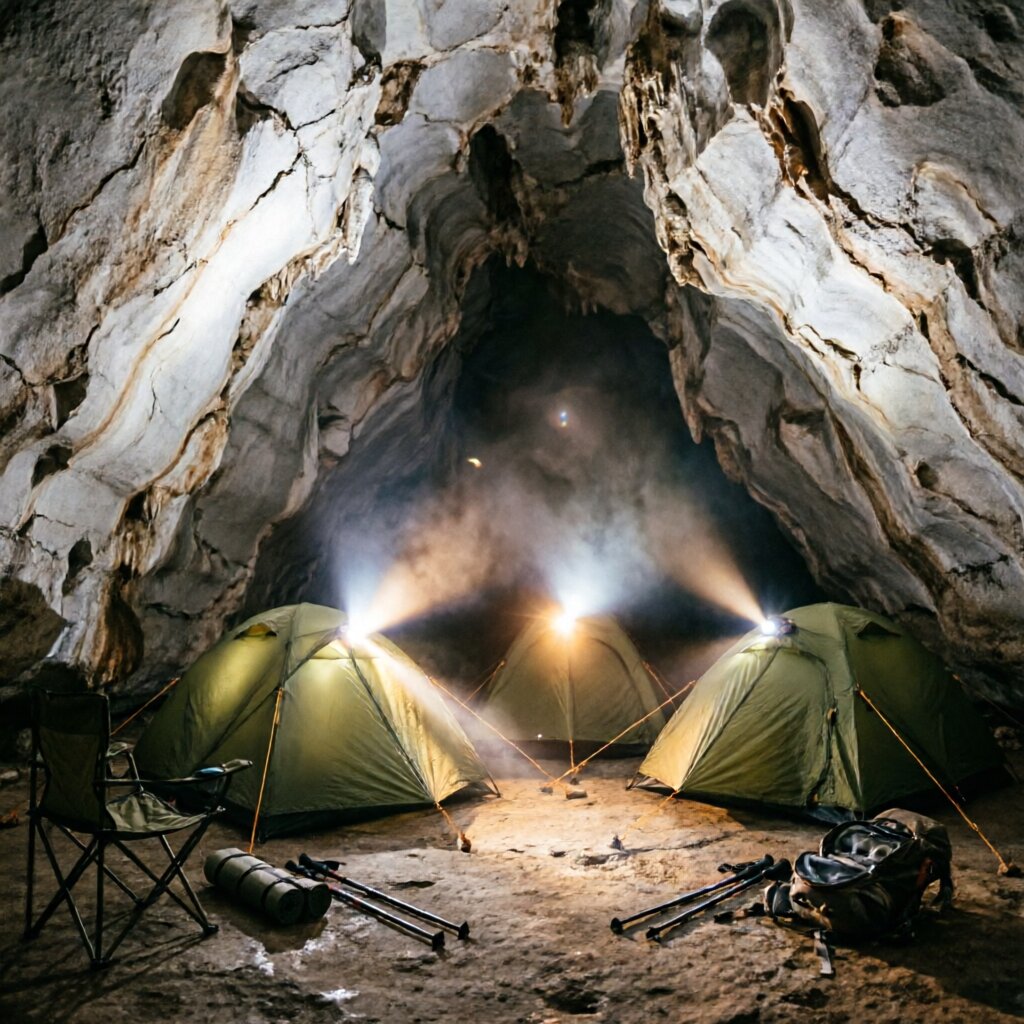
Cave camping is not for everyone — but for those who try it, cave camping becomes addictive.
Cave camping means spending a night inside or immediately adjacent to a cave. The activity exists on a spectrum from accessible to extreme:
Show Cave Overnight Programs are the entry point — guided overnight experiences with installed lighting, handrails, and walkways.
Cave-Adjacent Camping puts you in developed campgrounds at cave entrances. Mammoth Cave, Carlsbad Caverns, and Wind Cave all have campgrounds within walking distance.
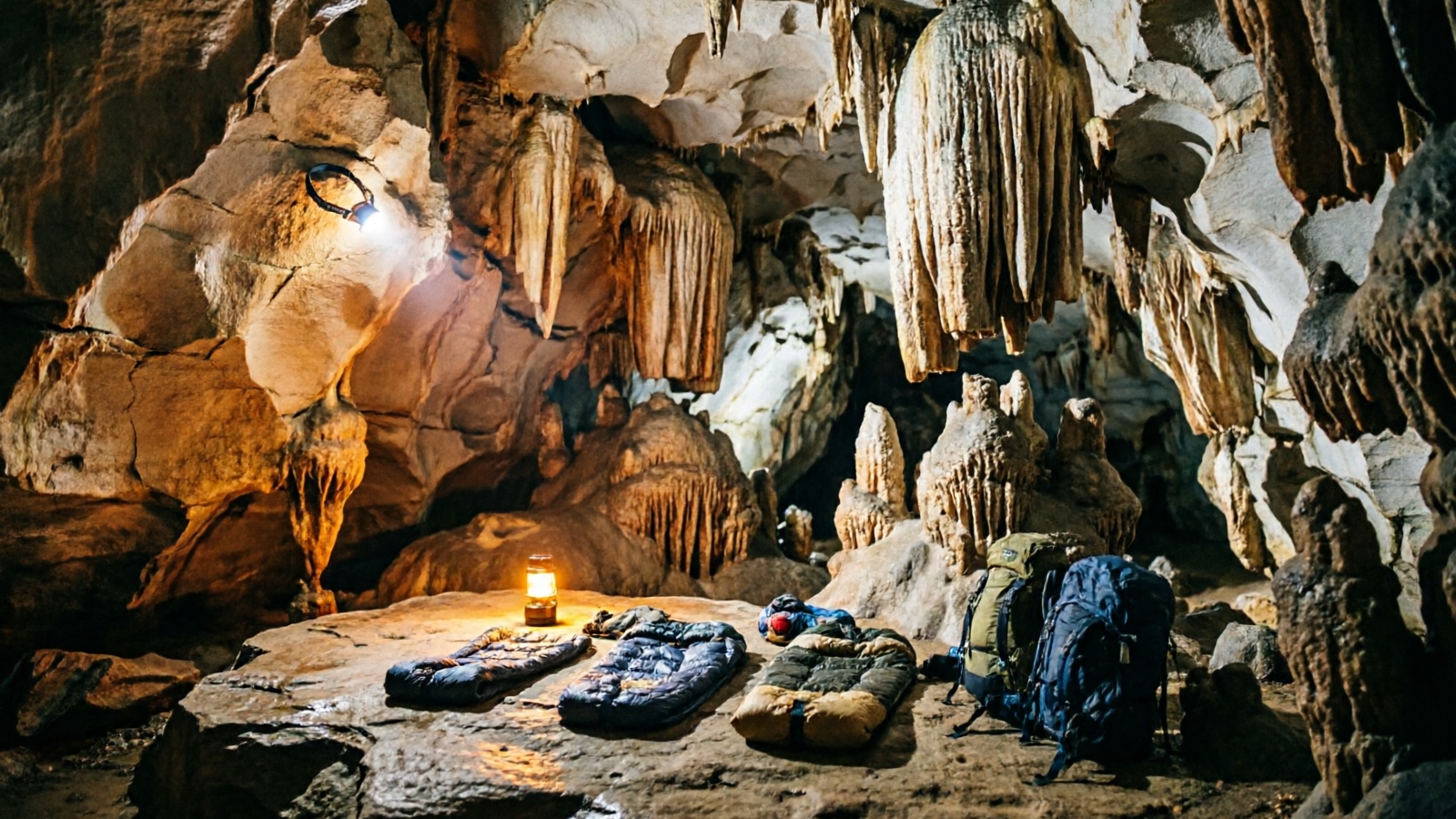
Wild Cave Camping is the real cave camping experience — you hike into unlit, unmarked passages carrying all your gear and camp on cave floors underground.
Types of Caves
Limestone caves are the most common type in the eastern US. Lava tube caves are common in the west — Lava Beds National Monument has over 700. Sea caves carry tidal flooding risk. Ice caves are too dangerous for overnight stays.
Quick Answer: Cave Camping Essentials
If you buy nothing else, get three items: the LHKNL Headlamp 2-Pack, the Earth Pak Dry Bag, and the Coleman North Rim 0°F Sleeping Bag. These three items solve the biggest problems of cave camping: darkness, moisture, and cold.
Essential Cave Camping Gear
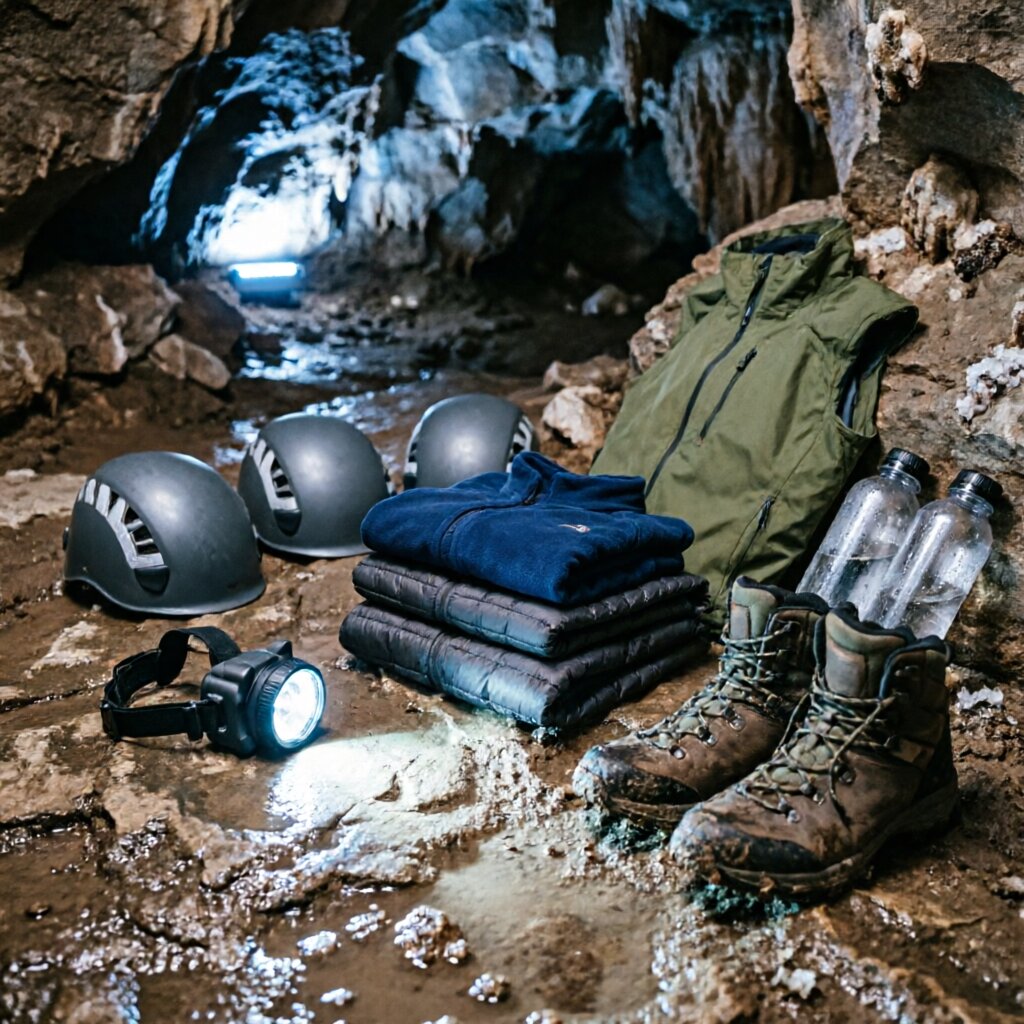
Every cave camping trip demands gear that works in total darkness, constant moisture, and cold ground.
Cave camping gear must function in three conditions standard gear never faces: total darkness, constant moisture, and cold ground.
At a Glance
| Product | Best For | Link |
|---|---|---|
| LHKNL LED Headlamp 2-Pack | Hands-free light in total darkness | Check Price → |
| Earth Pak Waterproof Dry Bag | Protecting gear from cave moisture | Check Price → |
| Coleman North Rim 0°F Sleeping Bag | Staying warm in 50-55°F caves | Check Price → |
| LifeStraw Personal Water Filter | Filtering cave drip water | Check Price → |
| Columbia Newton Ridge Hiking Boot | Navigating wet, rocky entrances | Check Price → |
| WATERFLY 20L Packable Daypack | Carrying gear to remote caves | Check Price → |
| Mini First Aid 150-Piece Kit | Safety gear when help is far | Check Price → |
Best for Total Darkness: LHKNL LED Headlamp 2-Pack
The single most important piece of gear for cave camping. No ambient light penetrates more than a few feet past any cave entrance.
Your headlamp is your only way to see walls, floors, and gear. The LHKNL provides USB-C rechargeability, white and red light modes, IPX4 waterproofing, and an adjustable beam angle.
“Still works after years of use,” one long-term reviewer confirmed.
What we like: 2-pack covers two people, USB-C charging, white and red modes, IPX4 waterproof, adjustable beam angle.
What could be better: Battery degradation after extended use is the main complaint. “These work great at first, but will not recharge after several months,” a frustrated user reported. “They randomly turn themselves off even on a full charge,” another wrote. The headband stretches out over time. Each person still needs a third independent light source beyond this 2-pack.
For more lighting options, see our best camping headlamps.
Best for Moisture Protection: Earth Pak Waterproof Dry Bag
Caves drip from ceilings, sweat from walls, and channel underground streams. Everything you cannot afford to get wet goes in this bag — electronics, matches, first aid supplies, spare clothes. The Earth Pak uses a roll-top closure with no zippers to fail and an IPX6 rating that survives submersion.
“Worked great for my river rafting trip,” one reviewer confirmed.
What we like: IPX6 waterproof rating, reliable roll-top closure, floats if dropped, multiple sizes, lightweight ripstop material.
What could be better: Seam leakage after extended use is reported. “Bag leaked and trashed everything inside within 5 months,” one user warned. “The small pouch had a split on the side — glad I noticed before going in the water,” another reported. Thinner material on smaller sizes may not hold up to repeated submersion.
For dry storage alternatives, see our best dry bags review.
Best for Cave Temperatures: Coleman North Rim 0°F Sleeping Bag
Caves stay 50-55°F year-round, and ground moisture makes it feel colder. A standard summer sleeping bag will leave you shivering.
The Coleman North Rim provides a 0°F rating with a mummy hood design that traps heat around your head.
“Keeps you warm and comfortable in below freezing conditions,” a reviewer noted.
What we like: 0°F temperature rating, mummy hood design, affordable for cold-rated performance, includes stuff sack.
What could be better: Bulky and does not pack small — a real issue when carrying gear into caves. “First use, zipper doesn’t stay together — splits apart right off,” one user reported. Another called it a “claustrophobic nightmare.” A third warned: “This is at most a 45°F bag. You will freeze.” Sizing is tight for larger users.
For lighter alternatives, see our best sleeping bags and always pair with a sleeping pad.
Best for Safe Drinking Water: LifeStraw Personal Water Filter
Cave drip water and underground streams are not safe to drink untreated. The LifeStraw removes bacteria and parasites, filtering up to 1,000 gallons at only 2 ounces. No batteries, no chemicals, no moving parts — it works by suction alone.
“Great for times when you are not sure about water quality. I no longer need to carry water bottles,” a reviewer wrote.
What we like: Removes 99.999% of bacteria and 99.9% of parasites, 1,000-gallon filter life, ultralight at 2oz, no batteries required.
What could be better: Packaging is misleading — one pack means one straw only. “A scam — I put them to the test and the ppm didn’t change,” a dissatisfied user claimed. Does not filter dissolved chemicals or heavy metals. Requires sustained suction effort that can be tiring. For group trips, consider a gravity filter system instead.
See our best camping water filters for group options.
Best for Wet Rock: Columbia Newton Ridge Hiking Boot
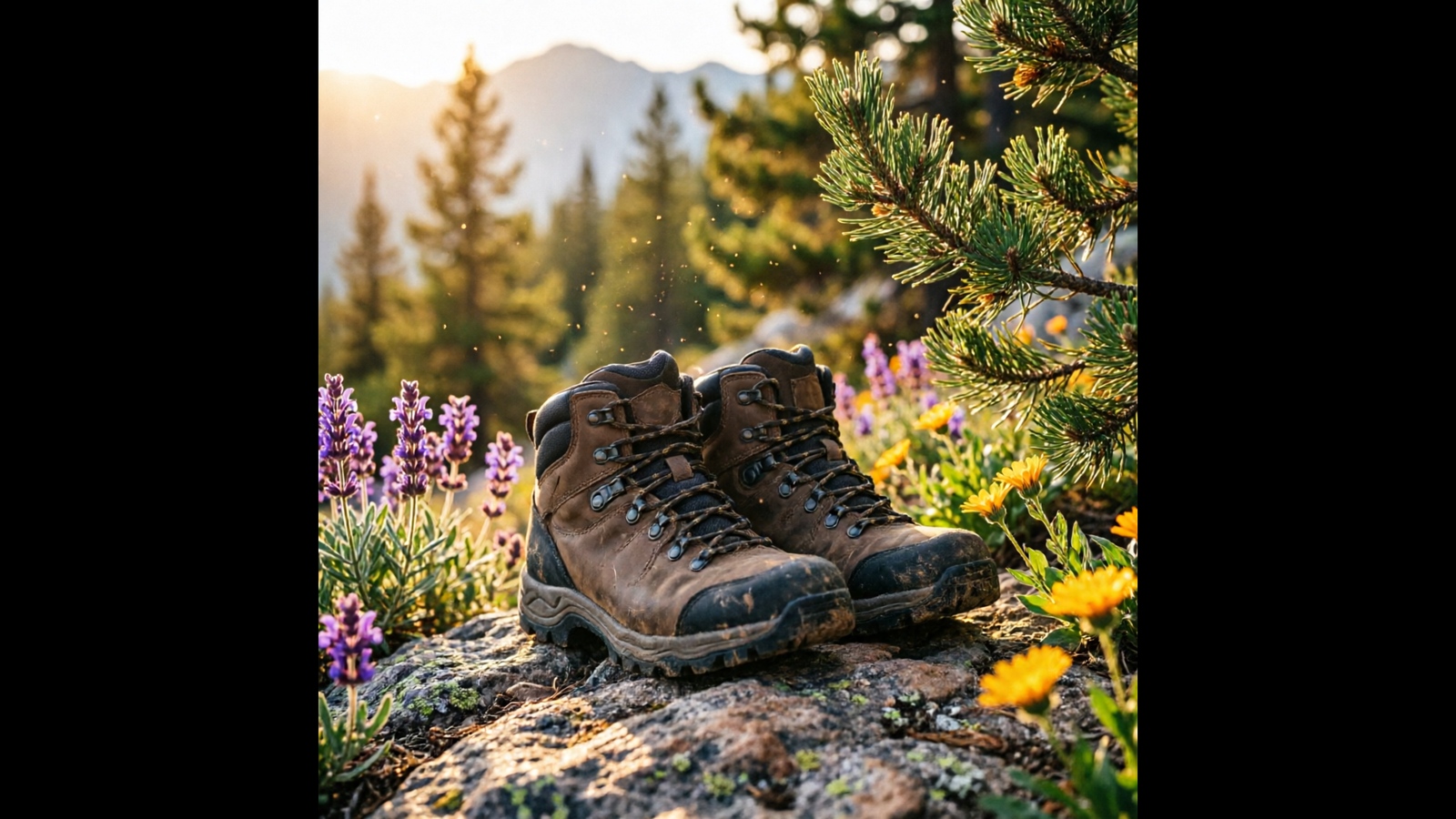
Cave approaches and entrances are wet, rocky, and often steep. Standard sneakers slip on wet limestone. The Columbia Newton Ridge provides ankle support and Omni-Grip traction designed for wet surfaces, with a waterproof suede and mesh upper.
“Really comfortable and provides excellent ankle support,” one reviewer confirmed.
What we like: Ankle support for uneven terrain, Omni-Grip traction on wet surfaces, waterproof construction, wide sizes available.
What could be better: Waterproof claims are inconsistent after months of use. “Three months of wearing and they are not waterproof — my feet get wet towards the toes,” one user reported. “After one day walking on streets, the material began to fray,” another wrote. Sizing runs large — order a half size down.
For more footwear options, see our best hiking boots.
Best for Gear Transport: WATERFLY 20L Packable Daypack
Carrying gear to remote cave entrances requires a pack that does not add bulk. The WATERFLY weighs only half a pound and folds into a fist-size pocket when not in use. It expands to 20 liters for the approach hike, with water bottle pockets and multiple compartments.
“Durable and lightweight — we used it on a weeklong European trip to carry waters, jackets, and other essentials,” a reviewer noted.
What we like: Ultralight at 0.5lb, folds into a pocket, 20L capacity, water bottle pockets, affordable.
What could be better: No chest strap — a significant omission for a pack used on uneven terrain. “The top handle ripped out the first time I used it,” one user reported. Another wrote: “Used once and top center strap broke.” Durability is the clear weak point.
For full-size alternatives, see our best camping backpacks.
Best for Underground Safety: Mini First Aid 150-Piece Kit
In a cave, a minor scrape becomes a significant concern because help may be hours away. This kit includes bandages, gauze, scissors, tweezers, and an emergency blanket in a compact hard case.
“A great buy — compact with all the necessary basic items,” one reviewer wrote.
What we like: 150-piece kit, compact hard case, emergency blanket included, affordable price point.
What could be better: The case is labeled waterproof but is not. “Product is labeled as waterproof but somehow the kit was soaked on arrival,” a user warned. “Why is there no antibiotic ointment included?” another asked. The kit is smaller than expected based on the description, and some items like dental floss seem unnecessary.
Best Cave Camping Spots in the United States
Mammoth Cave National Park, Kentucky
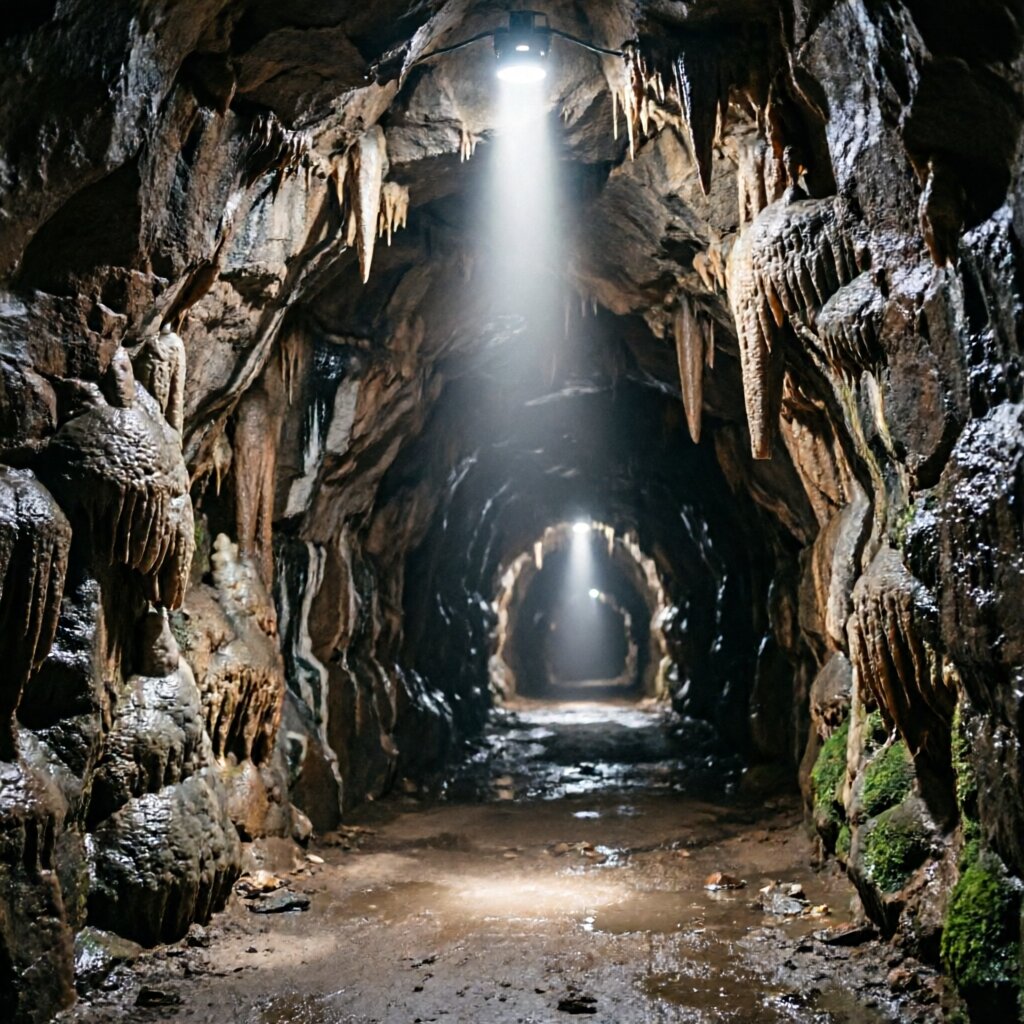
The premier cave camping destination in the eastern US.
The world’s longest known cave system with over 400 miles of mapped passages. Guided tours range from easy walkways to strenuous wild cave tours requiring crawling and climbing.
Advance reservations are essential for cave tours.
Carlsbad Caverns National Park, New Mexico
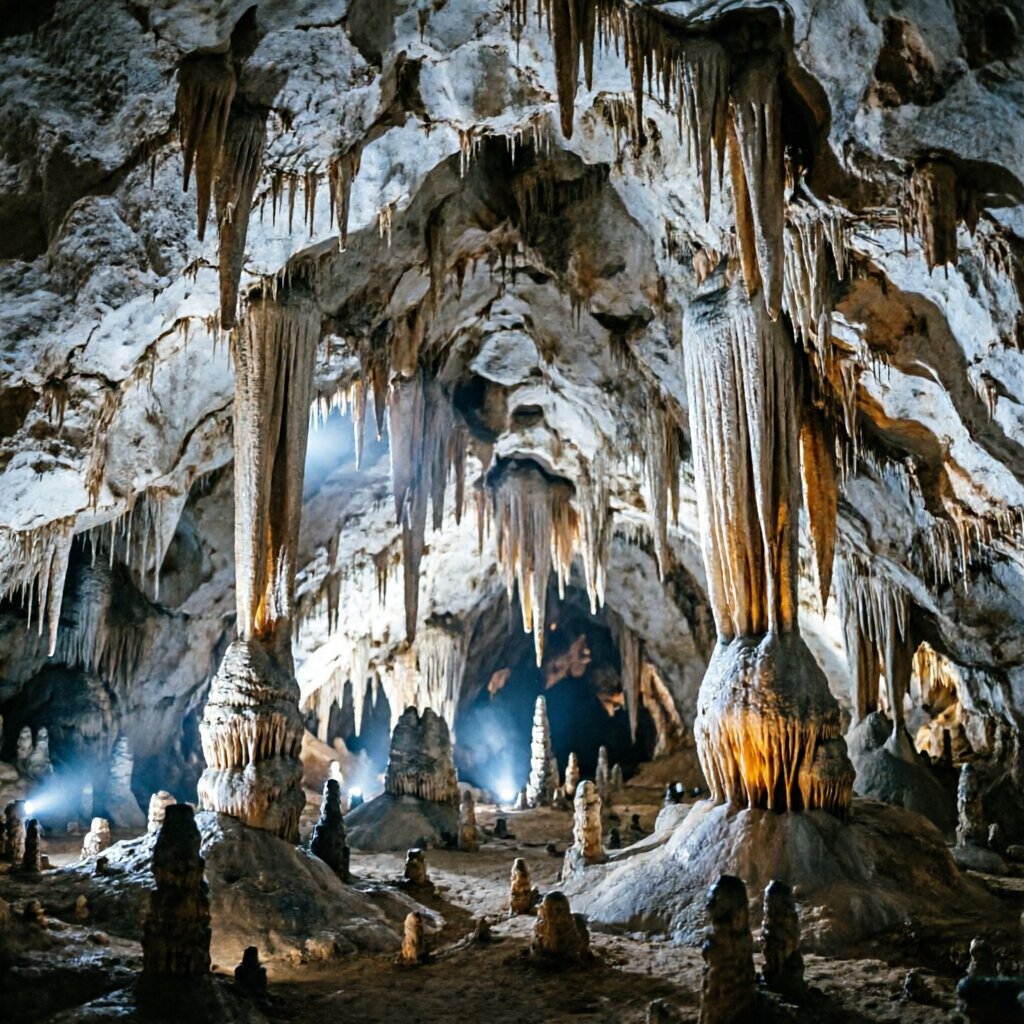
A must-visit for any cave camping bucket list.
Spectacular limestone caverns featuring the Big Room — one of the largest cave chambers in North America. Guided tours cover both developed and wild sections.
Backcountry camping is available in the Guadalupe Mountains above. Summer temperatures above ground can exceed 100°F.
Lava Beds National Monument, California
The best cave camping destination on the West Coast.
Over 700 lava tube caves ranging from walk-throughs to tight squeezes requiring belly crawling. Unlike limestone caves, lava tubes are often dry and dusty.
No installed cave lighting — you bring your own. The on-site campground and highest density of explorable caves in any single US location make this a caver’s paradise.
Wind Cave National Park, South Dakota
One of the world’s longest caves, known for boxwork formations found almost nowhere else. Guided tours cover developed passages.
Surface camping with elk and bison roaming the grounds. Less crowded than Mammoth Cave or Carlsbad Caverns.
Jewel Cave National Monument, South Dakota
Third-longest cave in the world with over 200 miles of mapped passages. Guided wild cave tours available for experienced cavers. Less visited than Wind Cave despite being 30 miles away.
⚠️ Cave Camping Safety Tips
Safety is the foundation of every cave camping trip.
The Three-Light Rule
Every person enters a cave with at least three independent light sources. This is the fundamental rule of caving, not a suggestion.
Primary: a headlamp Backup: a second headlamp or handheld flashlight. Emergency: glow sticks or chemical lights.
Hypothermia Prevention
Moisture increases heat loss, making cave temperatures feel colder than the thermometer reads. Wear synthetic or wool base layers — cotton absorbs water and loses all insulation value.
Monitor companions for shivering, confusion, and slurred speech.
Navigation and Getting Lost
Cave passages branch, loop, and dead-end in disorienting ways. Carry a physical map and compass — no cell service underground.
Mark your path with removable markers if cave management allows it. If lost, stay in place and conserve light. See our camping safety tips for general outdoor hazard planning.
Cave-Specific Hazards
Flash flooding: Surface storms can fill passages rapidly. Check weather for the entire region before entering.
Rockfall: Do not touch ceiling formations. Avoid standing below loose rock.
Bad air: Dead-end passages accumulate CO2. If you feel drowsy, leave immediately.
Wildlife: Bats and salamanders are common. Leave them alone and watch where you step.
How to Choose the Best Cave Camping Gear
Lighting Is Always First for Cave Camping
You can survive cold, wet, and scraped. You cannot navigate, find gear, or signal for help in total darkness.
Invest in the best headlamp you can afford, then add two backups. Battery life matters more than peak brightness.
Moisture Protection Is Critical for Cave Camping
Standard backpacks are not waterproof enough for caves. Choose roll-top closure over zipper designs — zippers fail in wet conditions.
Test every waterproof container before your trip. Layer a waterproof tarp under your tent for cave-adjacent campsites.
Over-Insulate for Cold Caves
Cave ground conducts body heat away rapidly. A sleeping pad is as important as your sleeping bag.
Pair a 0°F bag with a pad rated R-value 3 or higher for comfortable cave floor sleeping.
Footwear for Wet Cave Rock
Cave floors are wet limestone or rough lava rock. Standard sneakers slip on both surfaces.
Look for ankle support for uneven terrain and waterproof construction. Break boots in before a cave trip — blisters underground are a serious problem.
Compact and Durable Gear for Tight Passages
Caves involve crawling, squeezing, and climbing through tight passages. Bulky gear gets left at the entrance.
Everything must survive being dropped on rock. Choose foldable packs and soft-sided containers over rigid cases. See our camping packing list for supplementary items.
Conclusion: Is Cave Camping Right for You?
Cave camping is the most technically demanding outdoor experience on Camplabx on Camplabx. Total darkness, constant moisture, cold temperatures, and the reality that help cannot reach you quickly make it unsuitable for casual campers. For those who venture underground, cave camping offers absolute silence, ancient formations, and the primal experience of sleeping inside the earth.
Start with guided cave tours at Mammoth Cave or Lava Beds for your first cave camping experience. Build caving skills gradually.
The headlamp, dry bag, and sleeping bag are non-negotiable. Everything else is insurance against an environment that does not forgive mistakes.
Frequently Asked Questions
What is cave camping? Spending a night inside or near a cave — from developed programs to wild caving on underground floors. Caves stay 50-55°F year-round with constant moisture and darkness.
What gear do I need? Seven essentials: headlamp, dry bag, cold-rated sleeping bag, water filter, hiking boots, backpack, and first aid kit. Every item must function in wet, cold, and dark conditions.
Is cave camping dangerous? Yes — total darkness, hypothermia, getting lost, rockfall, flash flooding, and CO2 accumulation are real hazards. Never enter a wild cave alone. Carry three light sources per person.
Best sleeping bag for caves? Use a bag rated at least 20-30°F below the 50-55°F cave temperature. The Coleman North Rim 0°F mummy bag provides the warmth margin needed. Always pair with a sleeping pad.
Can beginners go? Start with guided show cave tours, then progress to guided overnight programs. Wild caving requires specific experience with navigation in darkness. See our beginner guide for foundational outdoor skills.
Best cave camping spots? Mammoth Cave KY, Carlsbad Caverns NM, Lava Beds CA, Wind Cave SD, and Jewel Cave SD. See our national park camping guide for trip planning details.
Why three light sources? If your only light fails underground, you cannot see or walk. The LHKNL 2-Pack covers primary lighting — each person still needs a third backup.
How to stay warm? Synthetic or wool layers — never cotton. 0°F sleeping bag, sleeping pad for ground insulation, high-calorie snack before bed.
References
- National Park Service — “Cave Safety Guidelines” — nps.gov/subjects/caves
- American Caving Association — “Safe Caving Practices” — amercaves.org
- REI Co-op — “Introduction to Caving” — rei.com/learn
- Leave No Trace — “Cave Ethics and Conservation” — lnt.org
- 知乎 — “洞穴探险装备清单与安全须知” — zhihu.com
- 什么值得买 — “探洞露营全攻略” — smzdm.com
Frequently Asked Questions
What is cave camping?
Cave camping means spending a night inside or immediately outside a cave. It ranges from developed show cave overnight programs to wild caving where you hike into unlit passages and camp on cave floors. Cave temperatures stay constant 50-55°F year-round. Total darkness, moisture, and confined spaces make it more extreme than standard backcountry camping.
What gear do I need for cave camping?
Seven essentials: a headlamp for total darkness, a dry bag for moisture protection, a cold-rated sleeping bag for 50-55°F temperatures, a water filter for cave drip water, hiking boots for wet rock, a lightweight backpack for gear transport, and a first aid kit because help is far away.
Is cave camping dangerous?
Yes. Primary hazards include total darkness if lights fail, hypothermia from constant cold and moisture, getting lost in branching passages, rockfall, flash flooding from surface storms, and CO2 accumulation in dead-end passages. Never enter a wild cave alone. Always carry three independent light sources per person.
What is the best sleeping bag for cave camping?
Caves stay 50-55°F year-round. Use a sleeping bag rated at least 20-30°F below cave temperature. A 0°F mummy bag provides the warmth margin needed for cold ground and moisture. Always pair with a sleeping pad — cave floors conduct body heat away rapidly.
Can beginners go cave camping?
Start with developed show cave tours at Mammoth Cave or Carlsbad Caverns, then try cave-adjacent campgrounds. Wild cave camping requires caving experience, rope skills, and comfort with total darkness. Progress from guided tours to guided overnight trips before attempting independent cave camping.
What are the best cave camping spots in the US?
Mammoth Cave National Park in Kentucky has the world's longest cave system with 400+ miles of passages. Carlsbad Caverns in New Mexico features spectacular limestone chambers. Lava Beds in California offers 700+ lava tube caves. Wind Cave and Jewel Cave in South Dakota round out the top five.
Why do I need three light sources?
If your only light fails underground, you cannot see, walk, or signal for help. The golden rule of caving is three independent light sources per person — primary headlamp, backup flashlight, and emergency glow sticks or chemical lights.
How do I stay warm in a cave?
Wear synthetic or wool base layers — never cotton, which stays wet and loses insulation. Use a sleeping bag rated well below cave temperature. A sleeping pad between you and the ground is essential. Eat a high-calorie snack before bed to fuel body heat production.