8 Best Camping Radios for Weather & Emergency in 2026
We researched 8 camping radios from $10–$80: hand-crank emergency models, NOAA alerts, and a Bluetooth hybrid for music and safety at camp.
Products Reviewed
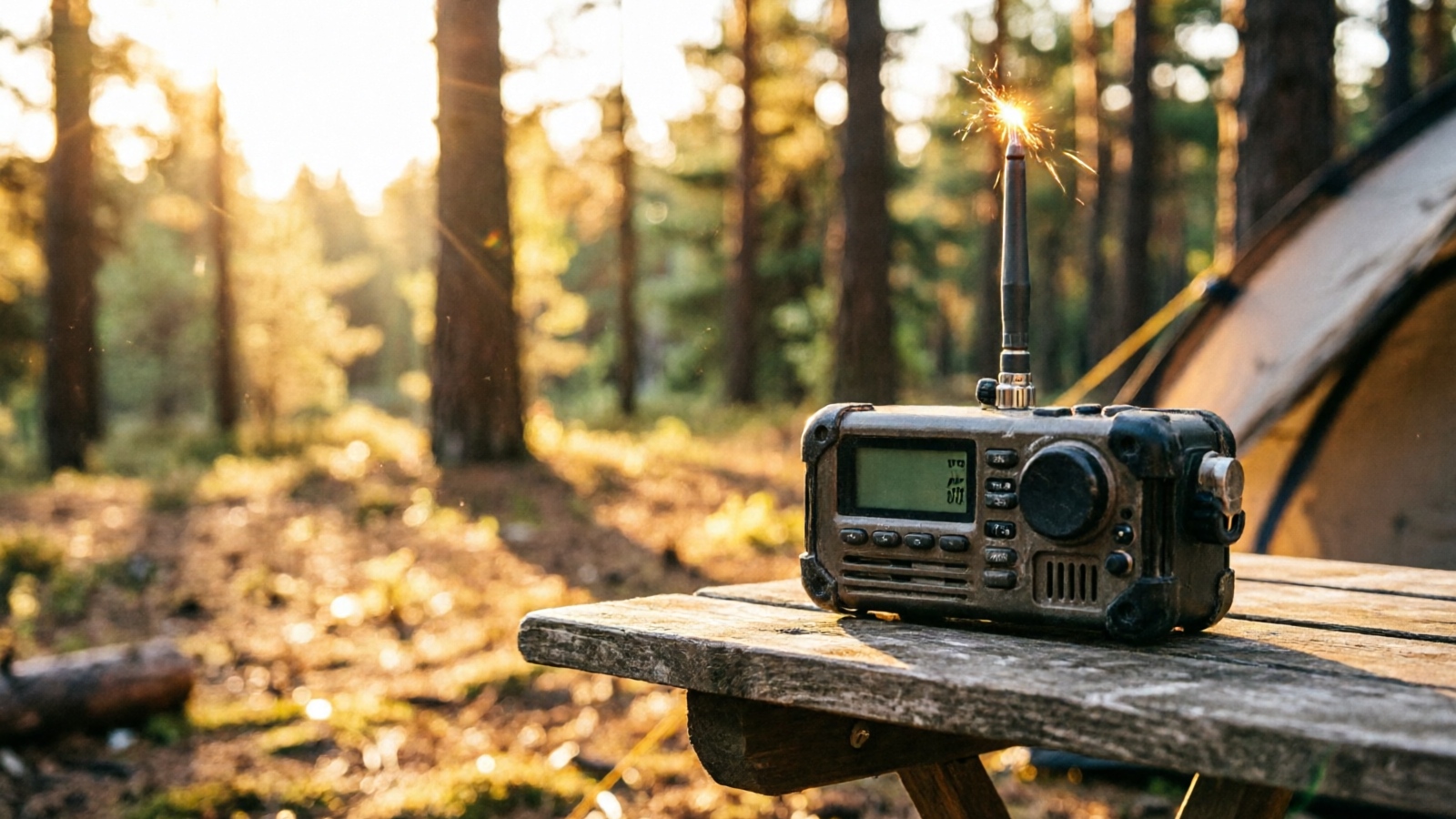
A camping radio isn’t about entertainment — it’s about knowing when a thunderstorm is rolling toward your campsite at 2 AM. The right radio wakes you for a tornado warning, charges your dead phone, and lights your way to the bathroom in the dark.
We researched 8 products from $10 to $80: from a basic AM/FM radio to a professional-grade emergency unit trusted by FEMA. The Midland ER310 ($80) earned our top pick — recommended by Wirecutter, Outdoor Life, and Ready.gov with county-specific NOAA alerts. The FosPower A1 ($27) is the best-seller with massive community validation. The Eton Odyssey ($70) is the only radio that doubles as both emergency radio and Bluetooth speaker.
Quick Answer
Best Overall — Midland ER310 ($80) — Wirecutter + Outdoor Life + Ready.gov recommended. The best camping radio for serious weather preparedness. NOAA SAME county-specific alerts, 2600mAh battery, USB-C, solar, crank, 6× AA backup.
Best Seller — FosPower A1 ($27) — Amazon Best Seller camping radio. NOAA alert, 2000mAh phone charger, 4-way charging.
Best Budget NOAA — RunningSnail ($17) — The cheapest camping radio with NOAA alerts, hand crank, solar, and phone charging.
Comparison Table
| Product | Price | Bands | Battery | Charging | NOAA | Rating | Best For |
|---|---|---|---|---|---|---|---|
| PRUNUS J-166 | $9.99 | AM/FM | 2×AA | AA only | ❌ | 4.4★ | Cheapest AM/FM |
| RunningSnail | $16.92 | AM/FM/NOAA | 2000mAh | USB/Solar/Crank/AAA | ✅ | 4.5★ | Best Budget NOAA |
| Esky | $15.59 | AM/FM/NOAA | 2000mAh | USB/Solar/Crank/AAA | ✅ | 4.6★ | Best Budget Features |
| FosPower A1 | $27.46 | AM/FM/NOAA | 2000mAh | USB/Solar/Crank/AAA | ✅ | 4.6★ | Best Seller |
| Raynic | $39.99 | AM/FM/SW/NOAA | 5000mAh | USB-C/Solar/Crank/AAA | ✅ | 4.5★ | Largest Battery |
| Kaito KA500 | $49.99 | AM/FM/SW/NOAA | Rechargeable | Wall/USB/Solar/Crank/AA | ✅ | 4.5★ | Most Power Options |
| Eton Odyssey | $69.88 | AM/FM/SW/NOAA | Rechargeable | USB-C/Solar/Crank/Battery | ✅ | 4.2★ | Bluetooth + Emergency |
| Midland ER310 | $79.99 | AM/FM/NOAA | 2600mAh | USB/Solar/Crank/6×AA | ✅ | 4.6★ | Best Overall |
Prices from Amazon as of May 2026. Pair any USB-equipped radio with a solar charger for multi-day off-grid charging. Use a camping headlamp for nighttime tasks.
Budget Camping Radios: Under $30
PRUNUS J-166 ($9.99) — Cheapest AM/FM Radio
Under $10 for a functional AM/FM radio. The back clip attaches to belt, backpack strap, or tent loop. Telescoping antenna delivers strong reception in remote areas. At 4.2 oz, the lightest radio in our lineup, and reception punches above the price.
This is a simple radio — no NOAA, no crank, no solar, no phone charging. Volume is low in noisy outdoor environments. Battery compartment door feels flimsy. Antenna must be extended for reception.
What we like: $9.99 cheapest, 4.2 oz lightest, back clip, telescoping antenna, tuning light. What could be better: No NOAA/crank/solar/USB, AA only, low volume, flimsy door. Who It’s For: Ultralight hikers and casual campers wanting the cheapest camping radio for music and local stations without emergency features.
RunningSnail ($16.92) — Best Budget NOAA Radio
The cheapest way to get NOAA alerts, hand crank charging, and phone backup. 4-way power (USB, solar, crank, AAA) means you’re never without options. 2000mAh battery charges phones in a pinch. LED flashlight and SOS siren included — everything stated in the spec sheet, at the lowest price here.
Trade-offs: small speaker limits volume for groups. Solar panel is slow. Crank generates minimal power. Micro-USB, not USB-C. NOAA reception can be spotty in remote areas.
What we like: $16.92 cheapest NOAA, 2000mAh charger, 4-way power, LED + SOS, crank works. What could be better: Low volume, slow solar, minimal crank, micro-USB, spotty remote NOAA. Who It’s For: Budget campers wanting a NOAA camping radio and emergency charging at the lowest price. Clip it to your camping chair and keep it within reach.
Esky ($15.59) — Best Budget Features
Highest-rated budget emergency radio — and the cheapest with a reading lamp and built-in compass. Three LED modes (flashlight, reading, SOS) cover every campsite lighting need. 4-way charging with 2000mAh battery, and the whole unit fits in a palm — pocketable emergency coverage at a budget price.
Catches: build quality feels cheap. Solar charging is slow. Volume limited for outdoor groups. Compass accuracy is questionable. No Bluetooth or USB audio.
What we like: $15.59, highest budget rating, reading lamp, compass, 3 LED modes, NOAA. What could be better: Cheap build, slow solar, low volume, unreliable compass, no Bluetooth. Who It’s For: Campers wanting the most features per dollar in a camping radio — reading lamp, compass, and NOAA under $16.
FosPower A1 ($27.46) — Best Seller Emergency Radio
Amazon’s Best Seller in emergency radios — the largest review base for reliability confidence. Thousands of real-world emergency verifications through hurricanes, tornadoes, and power outages. 2000mAh phone charger, SOS alarm, and NOAA auto-scan finds the strongest weather station automatically.
Downsides: some units develop reliability issues after months. Speaker quality is mediocre. Solar panel is slow. Crank requires 10+ minutes for minimal charge.
What we like: Amazon Best Seller, 2000mAh phone charger, SOS alarm, NOAA auto-scan, 4-way power. What could be better: Some reliability issues, mediocre speaker, slow solar, slow crank. Who It’s For: Campers wanting the most proven camping radio with the largest community validation for emergencies.
Mid-Range Camping Radios: $40-70
Raynic ($39.99) — Largest Battery
The 5000mAh battery is the largest in our lineup — charges a phone 1-2 times during multi-day power outages. USB-C input for modern devices. Shortwave band adds international stations. Dual USB output charges two devices simultaneously. Headphone jack for private listening. The 5000mAh figure translates to roughly two full phone charges — plan outage budgeting around that.
Trade-offs: larger and heavier than budget options. Shortwave reception is finicky. Solar panel is decorative. USB-C is input only — output ports are USB-A. Instructions unclear.
What we like: 5000mAh largest battery, USB-C input, shortwave, dual USB output, headphone jack. What could be better: Heavy, finicky SW, decorative solar, USB-C input only, unclear instructions. Who It’s For: Campers wanting maximum battery capacity in a mid-range camping radio with USB-C. Keep it on your camping table or in your camping cooler for easy access.
Kaito KA500 ($49.99) — Most Power Options
Five-way charging is unmatched: wall adapter, USB, solar, crank, and AA batteries. The wall adapter is included — pre-charge at home before your trip. Old-school analog dial with shortwave gives precise tuning control. Kaito is a specialized emergency radio brand since 2005. Reading lamp + flashlight + SOS beacon covers all lighting needs.
Catches: analog tuning takes practice — no digital presets. Build quality feels dated. No USB-C. Shortwave reception varies by location.
What we like: 5-way power, wall adapter included, analog dial + shortwave, Kaito brand since 2005. What could be better: Analog tuning, dated build, no USB-C, variable SW reception, slow solar. Who It’s For: Campers wanting a camping radio with maximum charging flexibility and analog tuning for all-band listening.
Eton Odyssey ($69.88) — Bluetooth + Emergency Radio
The ONLY emergency radio with Bluetooth — stream podcasts or music from your phone while retaining full NOAA capability. Eton is the most recognized emergency radio brand worldwide (founded 1999). RDS displays station name and song info. USB-C charging. All-band coverage: AM/FM/Shortwave/NOAA. Bluetooth is the differentiator against rivals like the Kaito KA500.
The lowest rating in our lineup. Bluetooth drains battery faster. At $70, similar features without Bluetooth cost less. Newer Eton models have declining build quality.
What we like: ONLY Bluetooth emergency radio, Eton brand, RDS display, USB-C, all-band, SOS beacon. What could be better: Lowest rating, Bluetooth drains battery, $70, declining QC. Who It’s For: Tech-savvy campers wanting one device that works as both a camping radio and a portable Bluetooth audio source.
Premium Camping Radio: $80
Midland ER310 ($79.99) — Best Overall
The emergency radio that FEMA responders and Ready.gov recommend. NOAA Weather Scan + Alert with SAME technology delivers county-specific warnings — no false alarms from storms 200 miles away. 2600mAh battery with USB-C output. Ultrasonic dog whistle is a unique SOS feature for search-and-rescue K-9 units. Three-way charging plus 6× AA battery backup. SOS beacon flashlight. Wirecutter, Outdoor Life, and Ready.gov all recommend Midland.
Catches: no shortwave band. At $80, the most expensive. Heavier — designed for car camping and emergency kits. SAME setup can confuse non-technical users.
What we like: FEMA/Ready.gov trusted, SAME county alerts, 2600mAh, USB-C output, dog whistle SOS, Wirecutter + OL recommended. What could be better: No SW, $80 expensive, heavy, SAME confusing, no Bluetooth. Who It’s For: Campers who want the most trusted professional-grade camping radio for serious weather preparedness.
How to Choose the Right Camping Radio
Emergency vs. Entertainment
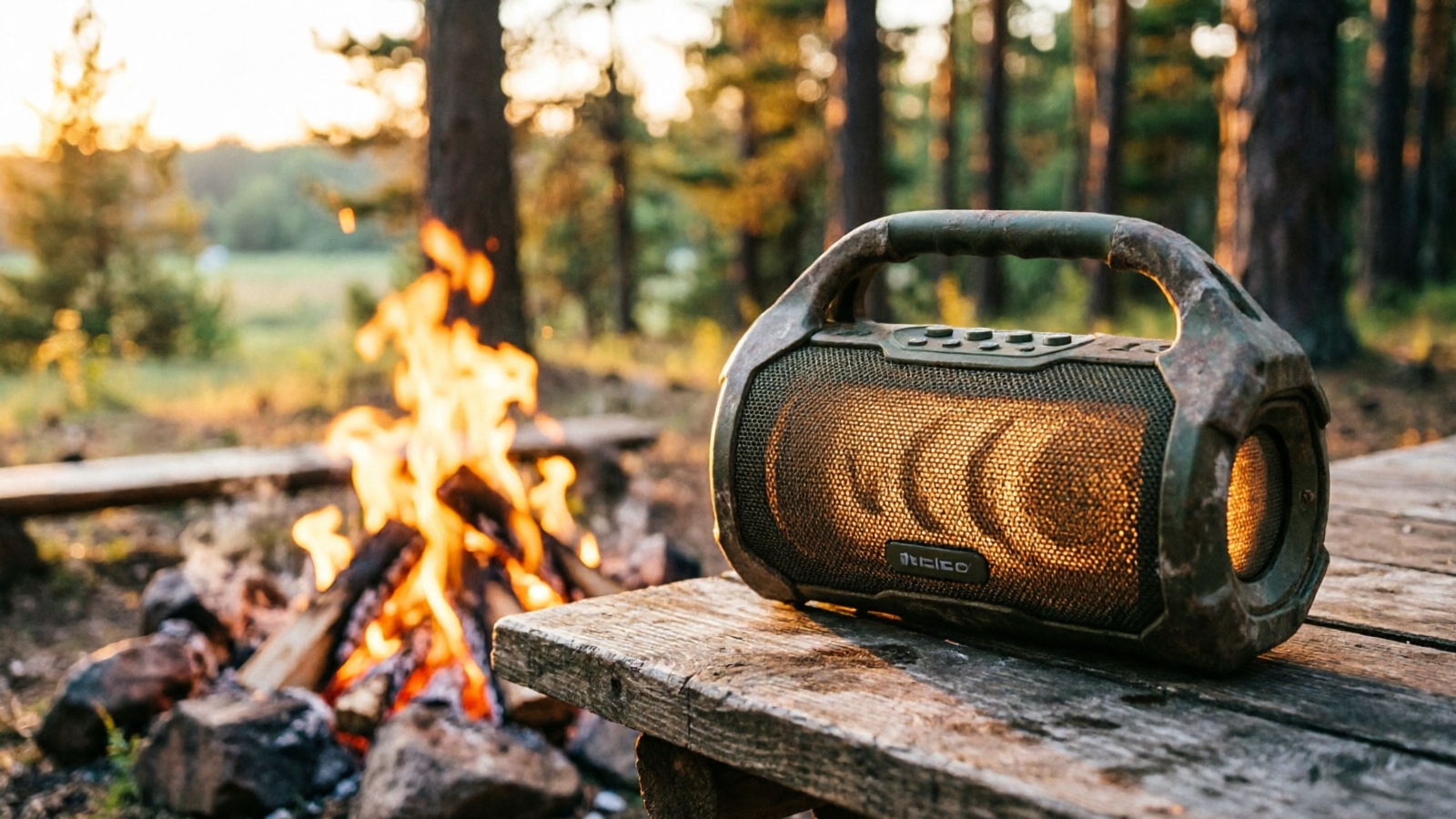
For 80% of searchers, “best camping radio” means emergency weather radio. If you camp in severe weather areas: an NOAA-equipped camping radio is safety equipment. If you want music: a camping speaker delivers better sound. The Eton Odyssey is the only hybrid. Budget combo: RunningSnail ($17) for weather + a budget speaker ($36) for music.
NOAA Weather Alert: Essential for Serious Camping
NOAA Weather Radio broadcasts continuous weather info and triggers automatic severe weather alarms. Seven of eight radios here include NOAA. The Midland ER310’s SAME technology filters to your exact county. Budget radios receive NOAA but alert for the broader region. If you camp in tornado or hurricane country: essential. Fair-weather west coast: nice-to-have.
Power Sources: More Options = More Reliability
Every emergency radio should have 3+ charging methods. The Kaito KA500 leads with 5-way power. The Midland offers 4-way. Budget radios provide 3-4 way. The PRUNUS has only AA batteries — no backup. Solar is slow on all radios — use USB as primary, solar as trickle-charge, crank as last resort. For multi-day trips, add a camping lantern to your emergency kit for hands-free campsite light.
Battery Capacity: How Long Will It Last?
Budget radios (RunningSnail, Esky, FosPower) have 2000mAh — enough for 8-12 hours of radio and one partial phone charge. The Raynic leads with 5000mAh. The Midland has 2600mAh with USB-C output. For weekend camping: 2000mAh is adequate. For multi-day off-grid: the Raynic with a portable power station is the best combo.
Bands: AM/FM vs. Shortwave
All eight radios receive AM and FM. Seven include NOAA. Three add shortwave: Raynic, Kaito KA500, Eton Odyssey. For most campers: AM/FM + NOAA is sufficient. Shortwave is niche for international listeners. The Midland skips shortwave in favor of SAME technology and build quality — a better trade-off for emergency-focused campers.
References
- Wirecutter (NYT) — Best Emergency Weather Radios 2026 — AIO-cited, recommends Midland
- Field & Stream — Best Weather Radios, Tested — AIO-cited outdoor authority
- GearJunkie — Best Emergency Radios 2026 — AIO-cited outdoor authority
- 知乎 — 户外应急收音机推荐 — 露营手摇收音机选购,NOAA频段覆盖指南
- 什么值得买 — 应急收音机实测 — 户外手摇充电收音机使用体验和品牌对比
Frequently Asked Questions
What is the best camping radio for emergency weather alerts?
The Midland ER310 ($80) is the most trusted — recommended by Wirecutter, Outdoor Life, and Ready.gov. NOAA Weather Scan + Alert with SAME technology for county-specific warnings, 2600mAh battery, 3-way charging. For budget: FosPower A1 ($27) delivers NOAA alerts with solar/crank/USB. RunningSnail ($17) adds NOAA at the cheapest price point. Pair with a portable power station for multi-day off-grid preparedness.
Do I need a hand crank radio for camping?
Yes for severe weather areas — thunderstorms, tornadoes, hurricanes. Hand crank ensures NOAA alerts and phone charging when batteries die and sun isn't shining. Crank is backup, not primary — expect 10-15 minutes for minimal phone charge. For fair-weather casual camping: a basic AM/FM radio covers music without emergency features.
What is NOAA weather alert and do I need it?
NOAA Weather Radio broadcasts continuous weather info and triggers automatic alarms for severe warnings. If you camp in tornado alley, Gulf Coast, or mountains: essential. SAME technology (Midland ER310) filters alerts to your specific county. Seven of eight radios here include NOAA — the PRUNUS J-166 is AM/FM only.
Can a camping radio charge my phone?
Six of eight radios charge phones via USB. The Raynic has the largest battery at 5000mAh — enough to charge a phone 1-2 times. The Midland ER310 has 2600mAh with USB-C output. Budget radios (FosPower, RunningSnail, Esky) have 2000mAh. Only the PRUNUS J-166 lacks phone charging.
Camping radio vs. Bluetooth speaker?
Radios receive NOAA alerts and AM/FM — critical for emergencies. Speakers play your music with better sound. The Eton Odyssey is the only hybrid with both. For entertainment: a camping speaker is better. For severe weather areas: an emergency radio is safety equipment. Budget combo: RunningSnail ($17) for weather + a budget speaker ($36) for music.
AM, FM, shortwave, and NOAA — what's the difference?
AM: talk/news, long range, lower quality. FM: music, clearer, shorter range. NOAA: continuous weather + emergency alerts. Shortwave: international stations and ham radio. All eight radios receive AM/FM. Seven include NOAA. Three add shortwave: Raynic, Kaito KA500, and Eton Odyssey.
Are cheap camping radios reliable in emergencies?
Yes — FosPower and RunningSnail are proven through real hurricanes and power outages. Budget radios receive the same NOAA alerts with smaller batteries (2000mAh vs. 2600mAh on Midland). Trade-offs: plastic build, slow solar panels, minimal crank output. For extreme weather risk: invest in the Midland ER310.
How do I power a camping radio off-grid?
Pre-charge via USB before your trip, top up with solar during the day, keep crank as last-resort backup. Kaito KA500 has 5-way power including wall adapter. Midland accepts USB, solar, crank, and 6× AA batteries. The PRUNUS J-166 uses 2× AA batteries only.