Camping Cooler Buying Guide: Skip Over $150
8 camping coolers for 2026 — budget hard coolers, wheeled options, soft collapsible bags, and backpack coolers for every trip.
A camping cooler is one of those pieces of gear you don’t think about until you’re eating warm sandwiches on day two because the ice melted by breakfast.
Best Camping Coolers at a Glance
Here is the whole field at once.
| Product | Type | Quarts | Ice retention | Price | Best For |
|---|---|---|---|---|---|
| Coleman Classic | Budget hard | fifty-two qt | Three to five days (Amazon claim) | $54.99 | Weekend car campers |
| Coleman Xtreme Rolling | Budget wheeled | fifty qt | Five days at ninety degrees (Amazon claim) | $74.99 | Moving coolers across camp |
| VEVOR Lightweight | Large lightweight hard | seventy-four qt | Eight hours at sixty-eight degrees, forty-eight at thirty-two | $149.90 | Week-long family trips |
| Lifetime | Bear-resistant | sixty-five qt | Eight days (Amazon claim) | $206.06 | Backcountry in bear country |
| RTIC Ultra-Light | Premium lightweight | thirty-two qt | Not listed | $159.00 | Frequent campers |
| Igloo Trailmate | Premium wheeled | fifty-two qt | Not listed | $159.99 | Beach, RV, festivals |
| Maelstrom Soft | Budget soft | twenty-two L (thirty cans) | Twenty-four hours (Amazon claim) | $26.92 | Day trips, picnics |
| MIYCOO Backpack | Backpack | forty cans | Not listed | $26.99 | Hiking, hands-free carry |
Quart capacity and ice-retention figures are read off each product’s own Amazon listing, checked 2026-09-30. “Not listed” means that listing publishes no day figure at all, so we don’t guess one. Prices are Amazon list prices on the same date.
The good news is that you don’t need to spend three hundred dollars on a rotomolded cooler to keep food cold for a weekend trip. The trick is matching the cooler type and size to your camping style — a soft collapsible bag is perfect for day hikes but useless for a week-long base camp.
This guide covers eight coolers across five categories: budget hard coolers, wheeled options, lightweight performance models, bear-resistant chests, and soft coolers. All product data comes from Amazon listings.
What This Guide Doesn’t Cover
Two adjacent topics have their own pages. Plug-in electric coolers need a mains or battery supply, which changes the buying question entirely — those models live in the best electric camping cooler guide. Packing technique is separate: see how to pack a cooler for camping. Everything below is a passive ice cooler.
Best Budget Classic: Coleman Classic Series
Price: $54.99. Best for: weekend car campers on a budget.
The Coleman Classic is the cooler most shoppers land on first, and the reason is straightforward. It is cheap, it works, and it comes in four sizes.
Amazon sells this family in fifty-two, seventy, one hundred twenty, and one hundred fifty-quart sizes. The ASIN linked here is the fifty-two-quart. The leak-resistant lid seal keeps melted water inside. The Amazon feature bullet states the insulated lid and body maintain ice for up to three days at ninety degrees. The listing title for the same product claims “up to five days” instead. Both numbers come from the same product page and they don’t agree, so plan on the shorter one. The fifty-two-quart version holds up to eighty cans. It is not rotomolded and will not beat premium coolers on ice retention, but at fifty-five dollars it costs a fraction of the price.
Weekend car campers, tailgaters, and anyone who wants a functional cooler without overthinking it. The fifty-two-quart size is right for two-to-three day trips with two people. If you camp three-to-four times a year and don’t need week-long ice retention, this is all the cooler you need.
Best Budget Rolling: Coleman Xtreme Rolling Cooler
Price: $74.99. Best for: campers who haul coolers across the campsite.
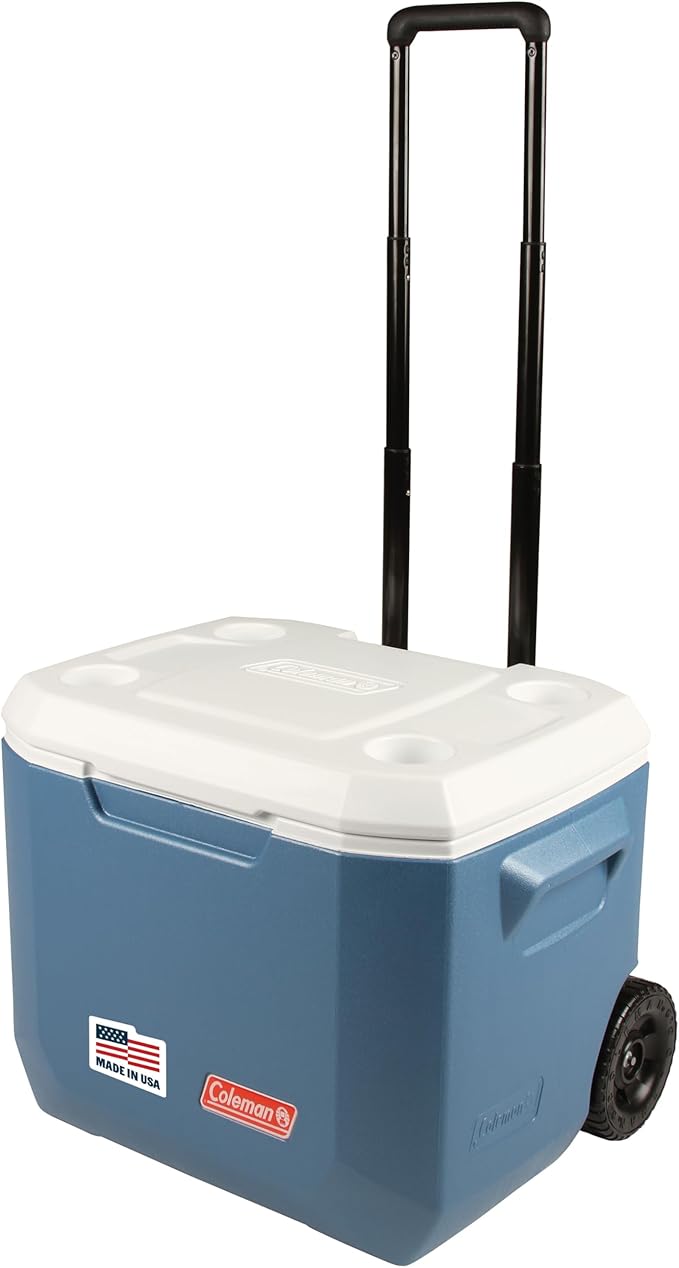
The Coleman Xtreme series has been a staple for years, and this wheeled 50qt version solves the oldest problem with loaded coolers: they’re heavy.
The Xtreme uses extra-walled insulation — Amazon’s own claim is up to five days of ice at ninety degrees. The wheels are small but handle pavement, gravel, and packed dirt well. The telescoping handle tucks away when not in use. It’s a fifty-quart box and holds up to eighty-four cans, with a built-in drain so you can empty meltwater without lifting the whole cooler.
Anyone who lugs a cooler more than fifty feet from the car. Beach campers, anyone with a walk-in site, or folks who just don’t want to carry forty pounds of cooler. At seventy-five dollars, it’s one of the best value camping coolers you can buy.
Best Lightweight Hard Cooler: VEVOR Lightweight
Price: $149.90. Best for: car campers wanting hard cooler capacity without the rotomolded weight.
Rotomolded coolers are tough but heavy. VEVOR’s own listing claims this one is thirty percent lighter than a rotomolded cooler of the same capacity. It lists the empty weight at roughly twenty-five pounds — not the eighteen pounds this guide used to claim.
The Amazon listing does not claim six-day ice retention. It claims up to forty-eight hours of ice at thirty-two degrees or below, and eight hours at sixty-eight degrees or above, off an insulation layer just under two inches thick. The seventy-four-quart size holds up to one hundred twenty cans. It has bottom wheels and a side handle, so “lightweight” and “wheeled” are both accurate descriptions — “ultra-light” is not.
Car campers who want hard cooler capacity without spending two hundred fifty dollars or more on a rotomolded cool. It’s the sweet spot between budget Coleman coolers and premium RTIC offerings. Great for families who camp regularly but don’t need backcountry toughness.
Best Bear-Resistant: Lifetime High Performance Cooler
Price: $206.06. Best for: backcountry campers in bear country.
If you camp in areas that require bear-resistant food storage, you need an IGBC-certified cooler. The Lifetime sixty-five quart is the cheapest IGBC-certified cooler here. The two wheeled options beside it cost about fifty dollars less and are not legal substitutes in bear country.
IGBC bear-resistant certified. Amazon’s listing claims it withstands a bear for up to an hour when locked, and the brand publishes up to eight days of ice retention. Built-in drain spout, molded-in rope handles, two bottle openers, two lock holes, and serviceable feet. It weighs about twenty-five pounds empty — heavy, but that’s the nature of bear-resistant design.
Campers in grizzly or black bear territory who need IGBC-certified storage without paying the premium for a Yeti or comparable brand. Also works as a super-duty general cooler when you need maximum ice retention for a week-long base camp trip.
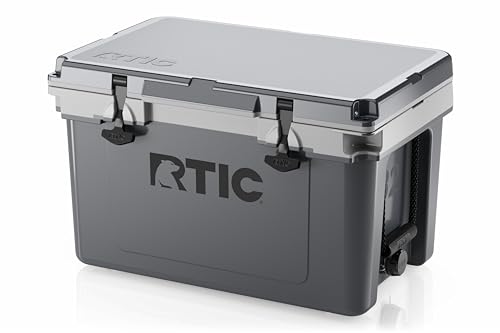
Best Premium Lightweight: RTIC Ultra-Light
Price: $159.00. Best for: frequent campers who want premium build without heavy weight.
RTIC is the main alternative to Yeti — similar build quality at a lower price. The Ultra-Light weighs a little under fifteen pounds empty while still offering rotomolded-level durability.
At that weight, this is one of the lightest hard coolers in its class. Holds up to forty-eight cans plus up to thirty pounds of ice — enough for two people over a long weekend. Amazon’s listing states two and a half inches of closed-cell foam insulation and a beam distance of eighteen meters from the base, but it publishes no ice-retention day figure, so we don’t quote one. The Grey colorway is a clean alternative to RTIC’s louder camo and tan patterns.
Frequent campers who use their cooler every other weekend and want something that lasts years. The thirty-two-quart size is ideal for couples or solo campers. It fits behind a car seat or in a small trunk, which makes it versatile for camping and daily use.
Best Premium Wheeled: Igloo Trailmate
Price: $159.99. Best for: beach campers, RV users, and festival goers.
Igloo has been making coolers since the nineteen-fifties, and the Trailmate is their modern take on a wheeled cooler that can handle rough terrain.
The Trailmate features soft-ride wheels a bit over six inches across that roll over sand, gravel, and grass without bogging down. This ASIN is the fifty-two-quart model, which holds eighty cans and weighs about twenty pounds empty. The telescoping handle locks at multiple angles so you can pull it behind you at a comfortable height. Amazon describes extra-thick foam walls an inch and a half deep and an insulated lid for “extended ice retention” but publishes no day figure, so we quote none.
Beach campers rolling a cooler across two hundred yards of sand. RV users who move sites regularly. Festival goers who want a cooler that can handle walk-in camping. The wheels are the key differentiator — small-wheel rolling coolers bog down in sand, the Trailmate’s tires don’t.
Best Budget Soft Cooler: Maelstrom Collapsible Soft Cooler
Price: $26.92. Best for: day trips, picnics, and light packing.
Soft coolers are the opposite of hard coolers: light, packable, and cheap. The Maelstrom thirty-can collapsible bag is the best budget option for day-trippers.
Collapses flat when empty — takes up virtually no space. The welded PEVA liner keeps melted ice contained. Holds thirty cans of twelve-ounce drinks, about twenty-two liters. Amazon’s listing claims cold storage for up to twenty-four hours across five insulation layers. Three carry options: a shoulder strap, a top handle, and two side handles. It folds flat when you are done.
Day hikers, beachgoers, and picnic crowds who need cold food for a single day. It’s also the perfect extra cooler for overflow drinks at a group campsite. At twenty-seven dollars, it costs less than a good camping meal.
Best Backpack Cooler: MIYCOO Cooler Backpack
Price: $26.99. Best for: hikers, beachgoers, and anyone going hands-free.
A backpack cooler lets you carry cold food and drinks while keeping your hands free for other gear. The MIYCOO forty-can pack is the best value here.
Two leak-proof compartments hold forty cans of twelve-ounce drinks. The bottom takes drinks and fruit, the top pocket holds utensils and snacks. Amazon’s listing publishes no litre figure and no ice-retention hours, so we don’t quote either. The padded back panel and adjustable shoulder straps make it comfortable for short hikes, and the extendable zip pocket keeps your phone away from the cold compartment. Weighs under two pounds empty.
Anyone who wants their hands free — hiking to a beach spot, carrying a kid and a cooler simultaneously, or biking to a campsite. The forty-can size is right for two people for a full day. It also doubles as a regular daypack for non-camping use.
The Hundred-Fifty-Dollar Line, Honestly
The title promises a hundred-fifty-dollar threshold, so here is where it actually falls. Four picks land under it and four land over it. Nothing cheap is bear-resistant, and nothing premium is soft-sided. This line is not a quality ranking. The bear-resistant chest is the only certified option here.
How to Choose the Right Camping Cooler
Hard Cooler vs Soft Cooler vs Backpack Cooler
Three families cover almost every purchase. Here is how they differ.
Hard coolers run from two to eight days on ice and weigh about fifteen to twenty-five pounds empty. They are the right call for car camping, base camps, and anywhere bear-resistant storage is required. The six hard coolers here run from fifty-five to just over two hundred dollars.
Soft coolers manage about twenty-four hours. Day trips, beaches, and picnics are their natural home. The soft cooler here is twenty-seven dollars, and its listing publishes no empty weight.
Backpack coolers sit between the two, though the one here publishes no runtime figure at all. It weighs under two pounds empty. The backpack cooler here is twenty-seven dollars.
For product comparisons and user reviews on every cooler here, see best camping coolers. For food storage beyond the cooler, see our food storage guide.
Reading Ice Retention Claims Without Getting Fooled
Manufacturers rarely publish how they measure ice retention, which makes the numbers hard to compare. A “five-day” claim and a “three-day” claim from two brands are not measuring the same thing. Treating them as directly comparable is the most common way buyers end up disappointed.
Four variables move the number, and all four are under your control:
- Starting temperature. A cooler loaded with already-cold food and ice holds far longer than the same cooler loaded with room-temperature food. Pre-chilling is the single biggest variable.
- Ambient temperature. A claim measured at a mild coastal temperature will not reproduce in direct desert sun. There is no standard ambient temperature across the industry, so cross-brand comparisons stay unreliable.
- Ice load. Half a cooler of ice and a full cooler of ice are not the same purchase. Retention scales with ice volume, so an under-filled cooler fails faster than the box claims.
- Opening frequency. Every lid lift lets warm air in. A cooler opened twenty times a day will not hit its rated days, regardless of insulation thickness.
The practical takeaway: treat published ice retention as a ceiling, not a guarantee. If your trip depends on food staying frozen past day two, pre-chill, load to the top with block ice, and keep the cooler in shade. The dispersed camping guide covers the shade and rodent-proofing side.
Pre-Chill Tactics
Four free habits extend retention.
Chill the cooler before the trip. Fill it with ice and water the night before. A cold cooler does not spend its first six hours pulling down its own walls. Skip it and you burn a quarter of your ice budget before anyone opens it.
Use block ice over cubes. Blocks melt slower because they have less surface area. Most grocery and gas stations sell block ice, or freeze your own in advance. Cubes cool drinks fast; blocks hold temperature overnight.
Fill the top third with empty space. Air is a poor conductor, but a big void means more warm air to chill first. Pack ice and contents to the top, leaving only lid space empty.
Keep it out of sun and off bare ground. Direct sun measurably raises internal temperature. Set it on a folding table or a tailgate, not on hot dirt, and use a reflective cover if you have one.
Sizing: How Many Quarts Do You Actually Need?
Quart capacity marketing rewards the biggest number, so the practical question is what you are actually storing. Work backwards from the trip instead of picking a number from a product page. This table is the shortcut.
| Trip | People | Planning assumption | Cooler size that fits |
|---|---|---|---|
| Day trip, no overnight cold storage | Two to four | Drinks only, no frozen food | Twenty to thirty qt soft or backpack |
| Two nights, drinks plus perishables | Two to three | Roughly two meals per person per day | Fifty to sixty-five qt hard |
| Three to five nights, full food storage | Four to six | Roughly three meals per person per day, plus drinks | Sixty-five to seventy-five qt hard |
| Base camp, seven nights or more | Six or more | Bulk food, two coolers often beats one large one | Sixty-five qt plus a second cooler |
The arithmetic behind the middle row is worth showing. A standard camping meal is roughly a dozen ounces of packaged food. Three meals a day for two people over two days is about three pounds of food. That occupies less than half a fifty-quart cooler once you allow for air gaps. Water is what fills the rest, and it is the reason bigger coolers earn their weight on longer trips.
One practical note on the last row. A single seventy-five-quart cooler loaded for eight people becomes the heaviest object at camp and the first thing anyone volunteers to leave behind. Two smaller coolers are easier to move and survive the trip better. The camping cooler comparison lists weight figures for every pick.
Caring for a Cooler
Coolers fail from neglect, not age.
Dry the gasket. The lid seal dies first. Wipe it after every trip and let it dry before closing. A seal left folded shut while damp stops sealing. The cooler then holds ice like a cardboard box.
Store it open or unlatched. Latching an empty cooler traps moisture against the seal. Leaving the lid cracked for a day costs nothing and prevents this.
Check for rodent damage before storing it. Mice chew foam insulation for nesting, usually in a garage where you will not notice. Check the lid foam and liner for holes before storing a cooler for the season.
Wash with warm water and a mild soap. Skip the dishwasher and skip the bleach. High heat warps the lid and can degrade the gasket, and most cooler bodies are not built for prolonged hot-water exposure.
If the cooler is going into bear country, run the full checklist in the dispersed camping guide instead — food storage rules there are stricter than anything in this guide.
Frequently Asked Questions
Hard cooler vs soft cooler — which is better for camping?
Hard coolers keep ice longer, are bear-resistant (some models), and work as a seat or table. Soft coolers are lighter, pack flat when empty, and cost less. For car camping, hard coolers win. For day hikes, beach trips, or packing light, soft coolers are better.
Are wheeled coolers worth it?
Yes, if you're moving the cooler more than 50 feet from your car — beach, walk-in sites, RV parks. Wheeled coolers are heavier and slightly less insulated, but the convenience of rolling vs carrying a 50+ lb loaded cooler makes them worth it. Look for all-terrain wheels if you take them on sand or gravel.
What does bear-resistant mean for a cooler?
Bear-resistant coolers pass IGBC (Interagency Grizzly Bear Committee) testing — bears can't open them or break through the lid. They're required in some backcountry areas. They're heavier and pricier but give peace of mind. The Lifetime 65qt is IGBC-certified. Regular coolers are not bear-proof.