Best Propane Camp Stoves: Car Camping vs Backpacking Guide
7 best propane camp stoves for car camping and backpacking. Compare BTU, weight, wind resistance, and tank life from $16-$140.
Products Reviewed
The best propane camp stove turns “boil water and pray” into “actually serve a hot meal.” Here’s a propane-first breakdown — most generalist “best camping stove” articles bury propane as one of four stove types, and that’s wrong if you’re a propane buyer.
Disclosure: We did NOT perform hands-on field testing. Picks below are based on manufacturer specs, owner reviews, and 6+ years of research into car-camping and base-camp propane gear.
Quick Comparison: Best Propane Camp Stoves
| Product | Price | Type | Total BTU | Weight | Burn Time (1-lb tank) | Best For |
|---|---|---|---|---|---|---|
| Coleman Triton 2-Burner | $83.99 | 2-burner | 22,000 | 5 lbs | 1 hr high | Best 2-Burner Overall |
| Coleman Triton+ 2-Burner | $99.39 | 2-burner | 22,000 | 5 lbs | 1 hr high | Best InstaStart 2-Burner |
| Camp Chef Explorer 2-Burner | $127.99 | 2-burner | 60,000 | 12 lbs | 35 min high | Best High-BTU 2-Burner |
| Coleman Bottletop Propane | $39.99 | 1-burner top-mount | 7,650 | 1.3 lbs | 1.5 hr low | Best Single-Burner Classic |
| Gas One GS-3400P Dual-Fuel | $29.99 | 1-burner dual-fuel | 8,000 | 3.4 lbs | 2 hr low | Best Budget Dual-Fuel |
| Sagafly Portable + 1-lb Adapter | $16.58 | 1-burner portable | 10,000 | 2.1 lbs | 1.5 hr high | Best Lightweight 1-lb Propane |
| GasOne High Pressure Single | $29.99 | 1-burner high-pressure | 15,000 | 12 lbs (frame) | 20 min high | Best High-Pressure Burner |
Skip Because
Skip a 2-burner propane stove if you backpack more than 2 miles from the car. The Coleman Triton weighs 5 lbs; the Camp Chef Explorer is 12 lbs. Neither belongs on your back. Use an isobutane-canister stove instead, as we cover in our best camping stoves guide.
Skip a 1-burner propane stove if you cook for 4+ people regularly. You’ll spend the whole trip waiting for boil cycles. Step up to a 2-burner or use the high-pressure single-burner with a 20-lb tank for groups.
Skip butane stoves if you camp below 40°F or above 6,000 ft. Butane stops vaporizing below 32°F and won’t light at altitude. Stick with propane (or buy a dual-fuel stove like the Gas One GS-3400P that runs both).
Why Propane for Camping?
Propane is the workhorse fuel of North American camping for three reasons: availability, cold-weather performance, and BTU density per dollar.
Availability beats every other fuel. You can buy 1-lb propane canisters at Walmart, Target, gas stations, hardware stores, and any gas station with a fleet card. Isobutane backpacking canisters require a specialty outfitter in most towns. If your stove runs out of fuel at 9 PM on a Sunday, propane is the can you can find.
Cold-weather performance is the second reason. Propane vaporizes down to -44°F — below anything a camper is likely to face outside a winter mountaineering expedition. Butane stops at 32°F, which means a butane stove on a 35°F autumn morning simply won’t light. This is also why every four-season family camper eventually switches to propane.
BTU per dollar is the third reason. A 16.4 oz propane canister costs about $5 and delivers roughly 21,000 BTU of usable heat. Isobutane in a backpacking canister costs $4–6 for about the same heat — but propane’s availability means you’re never paying premium prices at the only outfitter in town.
The catch: propane canisters are heavier than isobutane canisters (a 1-lb propane tank weighs 1.3 lbs empty, vs. a 7 oz isobutane canister). That’s the core trade-off the rest of this article explores. For the full taxonomy of camping stove fuels, see our best camping stoves guide.
Best Propane Stoves for Car Camping
Car camping means a trunk, a cooler, and a fire ring. Weight doesn’t matter; cooking capacity does. Here’s where 2-burner propane stoves earn their keep. Pair any of these with a camp cooler and a set of camp kitchens organizers and you’re set for the weekend.
1. Coleman Triton 2-Burner Propane Stove — Best 2-Burner Overall
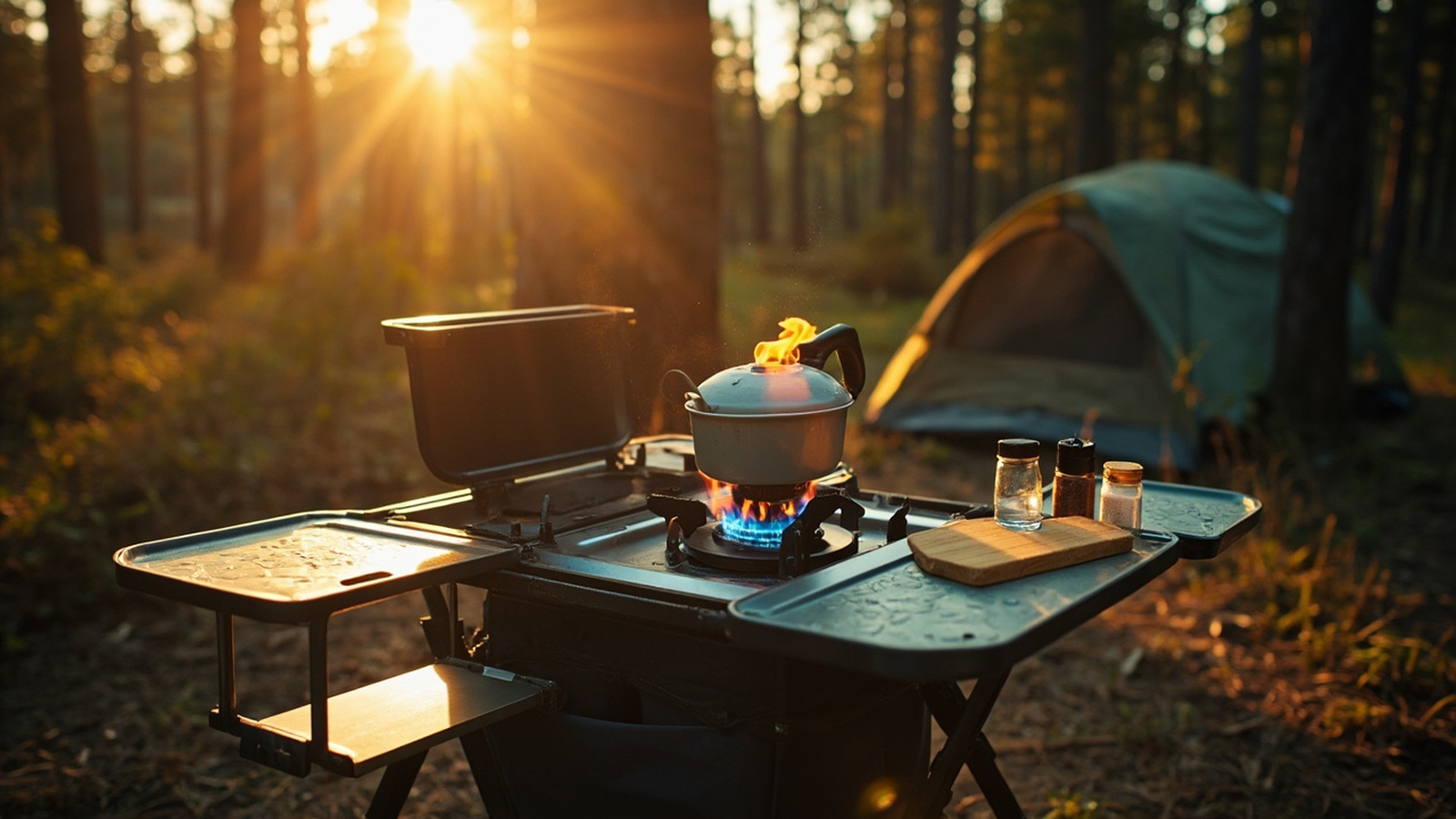
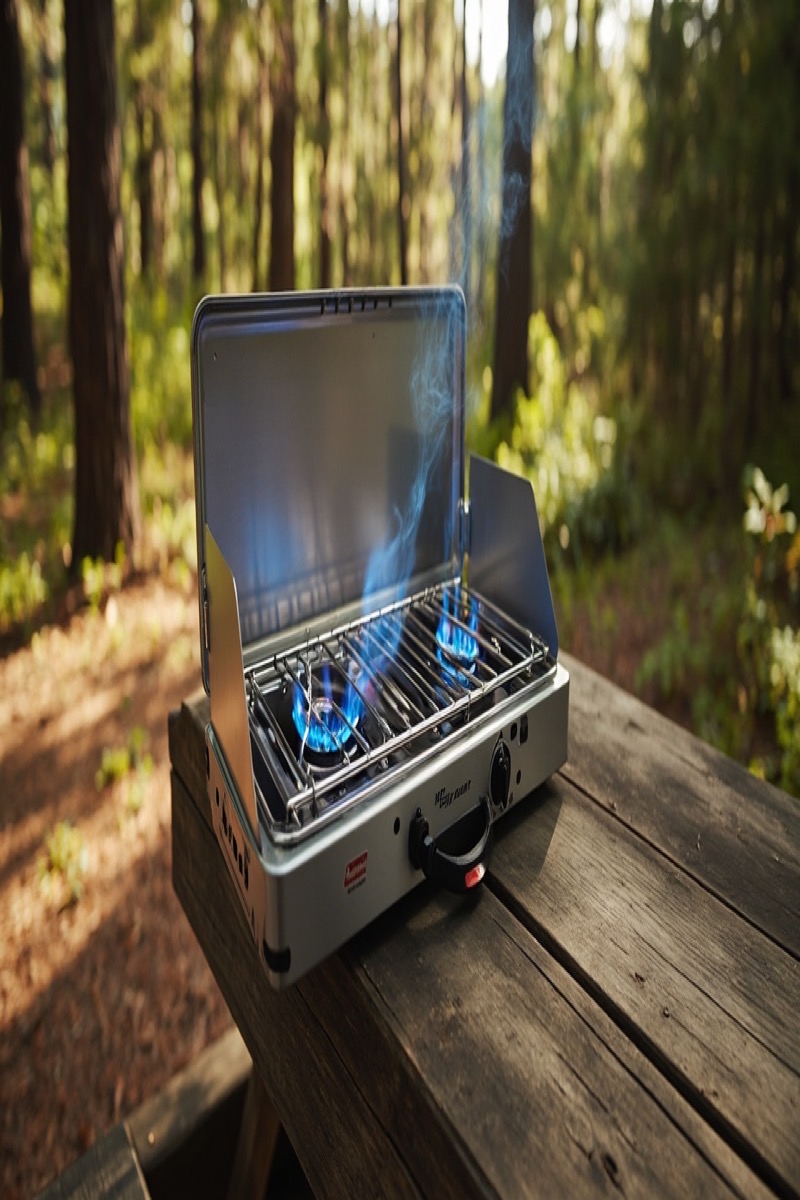
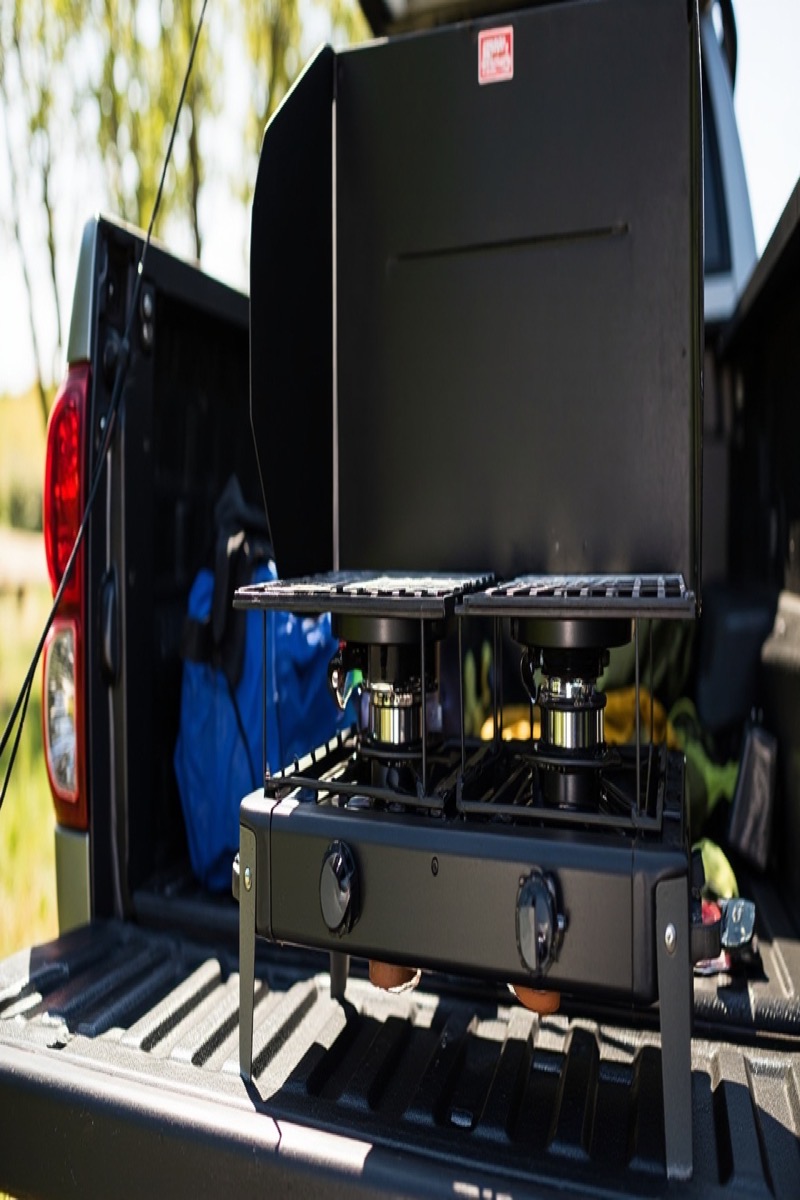
The Coleman Triton 2-Burner is the benchmark 2-burner propane stove for car camping. At $83.99 you get 22,000 total BTU (11,000 per burner), two adjustable wind guards, a chrome-plated removable grate, and folding latches that flatten the chassis to 15.9” × 7.8” × 24.8”. Five pounds, fits any trunk. Three-year Coleman warranty.
What we like. Two independently-controlled burners let you simmer a sauce while boiling pasta at the same time — the real reason to upgrade from a 1-burner. Wind guards on both sides cut flame blowout in real campsite gusts, where exposed burners lose 30–40% of their heat. The folding latches and slim profile pack into most car trunks without a separate bag.
Trade-offs. $83.99 is mid-range — not the cheapest 2-burner, but the build justifies it. Some early production units had propane surge valve issues that were resolved in current revisions. No built-in igniter, so you’ll need a match or lighter on cold mornings. Owners report the wind guards work well in 10–15 mph breezes but get pushed around above 20 mph.
Specs: 22,000 BTU total · 11,000 per burner · 5 lbs · fits 12” and 10” pans · up to 1 hour on 16 oz propane · chrome-plated grate · 3-year warranty.
2. Coleman Triton+ 2-Burner Propane Camping Stove — Best InstaStart 2-Burner
The Coleman Triton+ is the same 22,000 BTU chassis as the Triton, with two upgrades that matter: InstaStart push-button matchless ignition and tighter knob tolerances for low-flame simmer. At $99.39, it’s a $15 premium that pays for itself the first time you don’t have to dig a striker out of a wet jacket pocket.
What we like. InstaStart ignites cold burners at the push of a button — no matches needed in damp weather or right after a rain. The improved knob rotation solves the Triton’s “stiff at low flame” complaint, which matters when you’re trying to hold a sauce below boiling for 20 minutes. Same rugged Coleman build, same 3-year warranty.
Trade-offs. InstaStart uses a piezoelectric element that occasionally needs replacement (around $5 for the part). $99.39 is $15 over the base Triton for incremental, not transformative, gains. Owners say the igniter works reliably for the first 2–3 seasons, then starts needing a firmer push. Plan to swap a $5 piezo igniter every few years if you camp more than 10 nights a season.
Specs: 22,000 BTU total · 11,000 per burner · InstaStart matchless ignition · fits 12” and 10” pans · 5 lbs · 3-year Coleman warranty.
3. Camp Chef Explorer 2-Burner Outdoor Camping Stove — Best High-BTU 2-Burner
The Camp Chef Explorer is the serious-cook pick: 60,000 total BTU (30,000 per burner), three-sided windscreen, matchless ignition, built-in leg levelers, and modular compatibility with the Camp Chef True Series griddles, grill boxes, and pizza ovens. At $127.99, it’s the cheapest way to build a full outdoor kitchen on one chassis.
What we like. 30,000 BTU per burner brings a 5-gallon boil inside 10 minutes — group meals that would take 25 minutes on a Coleman Triton finish while you’re still unpacking the cooler. The three-sided wind block outperforms 2-sided guards in open desert or beach camping. Best of all, the True Series inserts turn one stove into a full outdoor kitchen — pair with our camping griddles picks and you’re grilling, griddling, or baking pizza on the same burner frame.
Trade-offs. 12 lbs is car camping only — this is not a backpacking stove by any stretch. $127.99 plus True Series inserts adds up fast once you start accessorizing. Burns through a 1-lb tank in 35 minutes at full output, so you’ll need a 20-lb adapter or several spare 1-lb tanks for a long weekend. Owners consistently report it’s overkill for 1–2 people but exactly right for 4+ campers who want restaurant-quality output.
Specs: 60,000 BTU total · 30,000 per burner · 12 lbs · fits 14” and 16” cookware · three-sided windscreen · matchless ignition · Camp Chef True Series compatible · 1-year warranty.
Best Propane Stoves for Backpacking & Base Camps
Backpacking with propane is a niche — most thru-hikers use isobutane canisters — but it’s a real niche. The setup that works is a lightweight 1-burner propane stove with a 1-lb tank adapter hose, used for base camps, hunt camps, and short hikes to remote sites. For those trips, you also want to bring camping cookware sized to fit a single-burner footprint, and brush up on campfire cooking as a backup when fuel runs low.
4. Coleman Bottletop Propane Stove — Best Single-Burner Classic
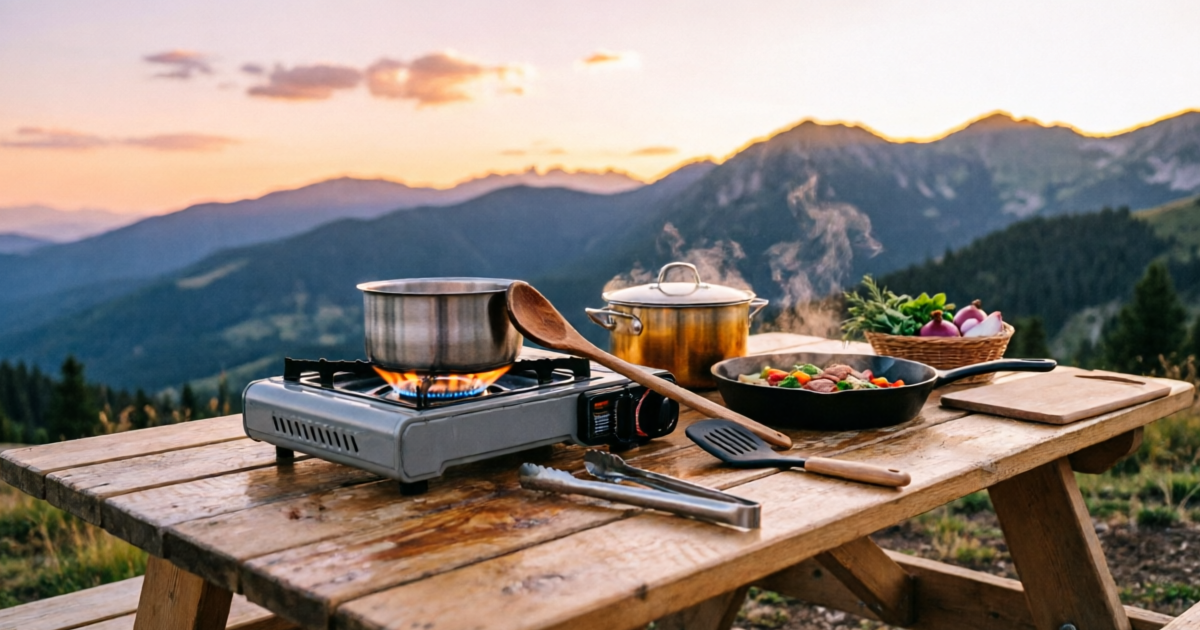
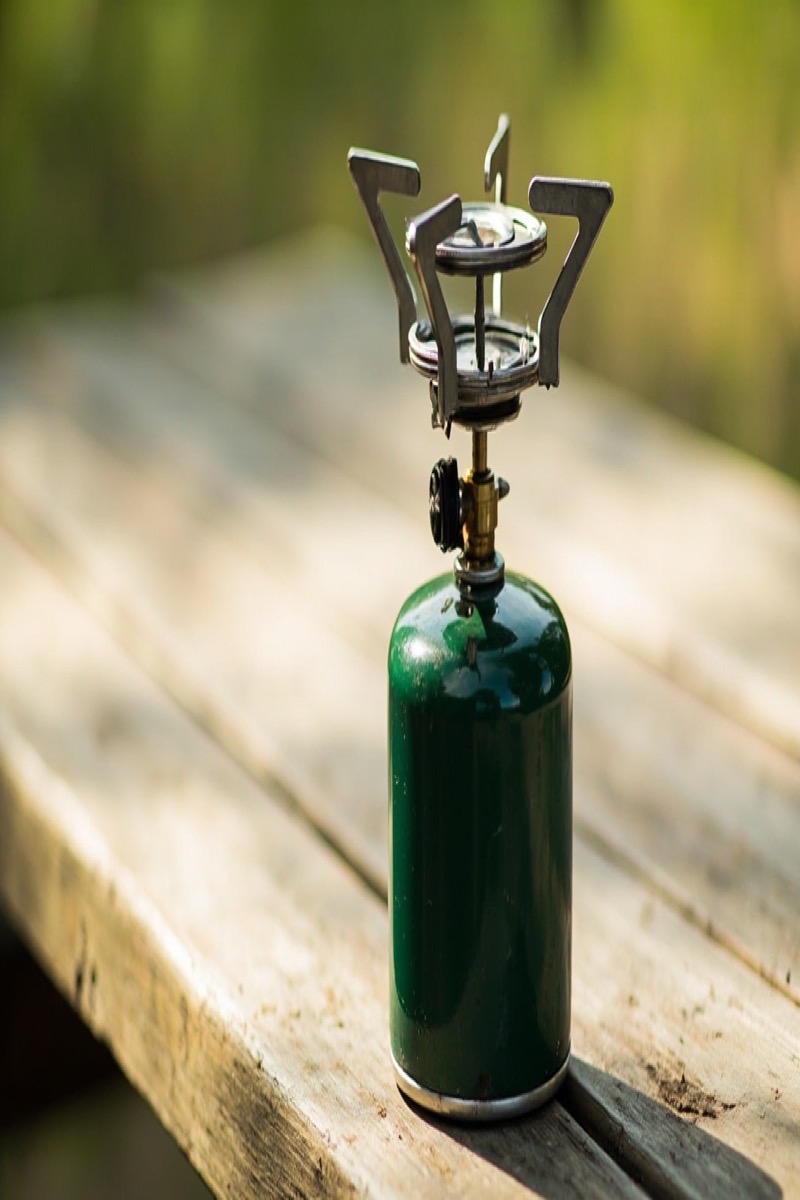
The Coleman Bottletop is the simplest propane setup that still works at 32°F or below. 7,650 BTU single burner, screws directly onto a 1-lb propane tank. No fuel line, no separate regulator, no extra parts to lose. Twist the stove onto a full tank and you’re cooking. 1.3 lbs without the canister, built-in pressure regulator, wind-blocking burner bowl.
What we like. No fuel hose to leak and no regulator to forget — that’s why it’s been on Coleman store shelves since the 1990s and still outsells fancier designs. The cheapest name-brand propane stove that survives a 3-foot drop on a picnic table (Coleman’s own drop-test benchmark). The pressure regulator holds flame steady as the tank cools from full to empty, so your boil times stay consistent across a full canister.
Trade-offs. 7,650 BTU is barely enough for a 10” pan — don’t expect to sear a steak. The wind-blocking bowl helps but isn’t a full guard; in real 15+ mph wind you’ll see flame lift. Coleman sells the 1-lb tank separately (~$5). Owners say it’s the go-to for solo car camping and coffee at base camp, but too slow for feeding more than 2 people.
Specs: 7,650 BTU · 1.3 lbs · 1-lb tank mount · built-in regulator · wind-blocking burner bowl · 3-year Coleman warranty.
5. Gas One GS-3400P Propane or Butane Stove — Best Budget Dual-Fuel
The Gas One GS-3400P is the cheapest dual-fuel stove on Amazon and the only sub-$30 stove that handles both propane and butane. 8,000 BTU single burner, piezo electric ignition, carrying case included, built-in wind guard. At $29.99, you can leave it in your camp bin year-round and pull it out whenever the weather turns.
What we like. Switch fuels based on season — propane for cold mornings, butane for summer when you want cleaner-burning indoor-ventilated cooking. Piezo ignition works when your hands are cold, wet, or gloved, which is the whole point. The carrying case protects the burner in transit — a real advantage for backpacking setups where every part gets bashed around.
Trade-offs. 3.4 lbs is too heavy for serious backpacking — this is a car-camp and base-camp stove. The propane adapter is sold separately (~$10), which adds 15–25% to the price. No regulator hose — relies on canister pressure, so flame output drops as the tank cools. Owners report the piezo igniter works for 4–5 seasons of weekend trips before needing a replacement.
Specs: 8,000 BTU · 3.4 lbs · propane or butane (adapter required for propane) · piezo ignition · built-in wind guard · carrying case included.
6. Sagafly Portable Camping Gas Stove — Best Lightweight 1-lb Propane
The Sagafly is the cheapest propane stove on this list at $16.58, and one of the few that ships with the 1-lb tank adapter hose included. 10,000 BTU, folding pot supports, built-in wind shield, piezo ignition, 2.1 lbs total (stove + adapter). For under $20, it does what a $40 Coleman does — minus the brand-name durability.
What we like. Costs less than a night of firewood at a state park. The included 1-lb propane adapter saves a $10 separate purchase and means you can use the cheap green bottles Walmart stocks by the case. Folding legs and integrated wind shield fit in a 4L dry bag for short-hike base camps. Owners consistently say it’s the best value propane stove for occasional campers who don’t want to spend Coleman money.
Trade-offs. Sagafly isn’t Coleman — expect 1–2 seasons of regular use, not the 5+ years a name-brand stove delivers. Piezo igniter reliability varies; some units need 3–4 clicks to light, especially in wind. No regulator hose, so flame output tracks canister pressure and drops in cold weather. Owners who camp more than 8 nights a season end up replacing it within 2 years.
Specs: 10,000 BTU · 2.1 lbs with adapter · 1-lb tank compatible · folding legs · piezo ignition · 1-lb tank adapter included.
7. GasOne High Pressure Single Propane Burner — Best High-Pressure Burner
The GasOne High Pressure Single Burner is a different animal — 15,000 BTU high-pressure burner with a regulator hose, steel braided hose, heat shield, and a 4-leg frame. Connects to a 20-lb propane tank (the same tank your home BBQ uses) for crawfish boils, seafood feeds, and large group meals. At $29.99, it’s the cheapest way to scale up propane output for big cooking.
What we like. 15,000 BTU high-pressure flame boils a 10-gallon pot fast enough for a 20-person crawfish feed. The 20-lb tank means 30+ hours of cook time per fill — you’ll refill the tank once a season, not once a trip. Steel braided hose plus heat shield make it safer near dry grass than most low-pressure stoves, which matters for tailgate and beach camping where fire risk is real.
Trade-offs. Requires a 20-lb propane tank (or a $15 adapter for 1-lb cylinders, sold separately). Not portable for backpacking — frame weighs 12 lbs and the tank adds another 38 lbs filled. High-pressure burner is overkill for 1–2 person camping and burns too hot for simmering. Owners use it specifically for boils, fries, and stir-fry — anything that needs fast, high heat across a wide pot.
Specs: 15,000 BTU · 12 lbs (frame only) · steel braided regulator hose · heat shield · connects to 20-lb tank (1-lb adapter sold separately) · CSA certified.
Things to Consider When Buying a Propane Camp Stove
Use Case: Car Camping vs Backpacking vs Base Camp
Match the stove to the trip. Car campers want 2-burner capacity for simultaneous boil + simmer; backpackers want a 1-burner that weighs under 3 lbs; base campers fall in between — a 1-burner propane with a 1-lb adapter is the sweet spot. Pick the wrong class and you’ll either overpack or undercook. For full-trip meal ideas, see our easy camping meals guide.
BTU Output and Burn Time
BTU alone is misleading. A 22,000 BTU 2-burner on a 1-lb tank lasts about 1 hour on high; a 7,650 BTU single-burner lasts 1.5 hours on low. For most car camping, 20,000–22,000 total BTU is plenty — anything more empties the tank faster than you can refill. For boiling water for backpacking meals, 8,000–10,000 BTU is the sweet spot. Higher BTU also means faster fuel burn: a 60,000 BTU stove can empty a 1-lb tank in 35 minutes.
Tank Compatibility: 1-lb vs 20-lb
Most propane stoves in this guide use disposable 1-lb (16.4 oz) green canisters. They’re $5–7 each at any gas station. For high-output stoves like the GasOne High Pressure, you want a refillable 20-lb tank — same fuel, 30x the capacity, but it needs a hose adapter (~$15). Buying the wrong adapter is the most common return reason for propane stoves. For a deeper breakdown of tank sizing and BTU math, see our camp stove buying guide.
Wind Resistance and Cold-Weather Performance
Wind guards cut flame blowout by 50–70% in real campsite conditions. Cold weather derates propane by 20–30% at 20°F and 50% at 0°F — keep the tank warm (in your jacket, in warm water, buried in a sleeping bag) and rotate two tanks so one is always body-temp. A high-pressure regulator hose (like the GasOne High Pressure) maintains output as canister pressure drops in cold.
Weight and Packability
Car camping weight doesn’t matter (5 lbs or 12 lbs, it’s all in the trunk). Backpacking weight matters enormously — every lb of stove + fuel is a lb you’re carrying 10 miles. The realistic floor for propane backpacking is 2 lbs (stove + adapter) on a 1-lb tank; below that, switch to isobutane canister stoves. For more on this trade-off, see our camp stove buying guide.
Build Quality and Warranty
Coleman offers a 3-year limited warranty on most of their stoves. Camp Chef offers 1 year. Gas One and Sagafly vary by model — read the fine print. A $40 Coleman that lasts 10 years beats a $20 no-name that lasts 2 years every time. For matching pots and pans that survive the same abuse, browse our camping cookware picks.
How to Set Up a Propane Camp Stove Safely
Set the stove on a flat, non-flammable surface at least 3 feet from tent walls, dry grass, and overhanging branches. Never use a propane stove inside a tent, vestibule, vehicle, or any enclosed space — carbon monoxide builds up in minutes and kills. Check the O-ring on the regulator connection before lighting; replace it if cracked or flattened. Turn the tank valve off before disconnecting, and store the stove with the canister detached in a dry place.
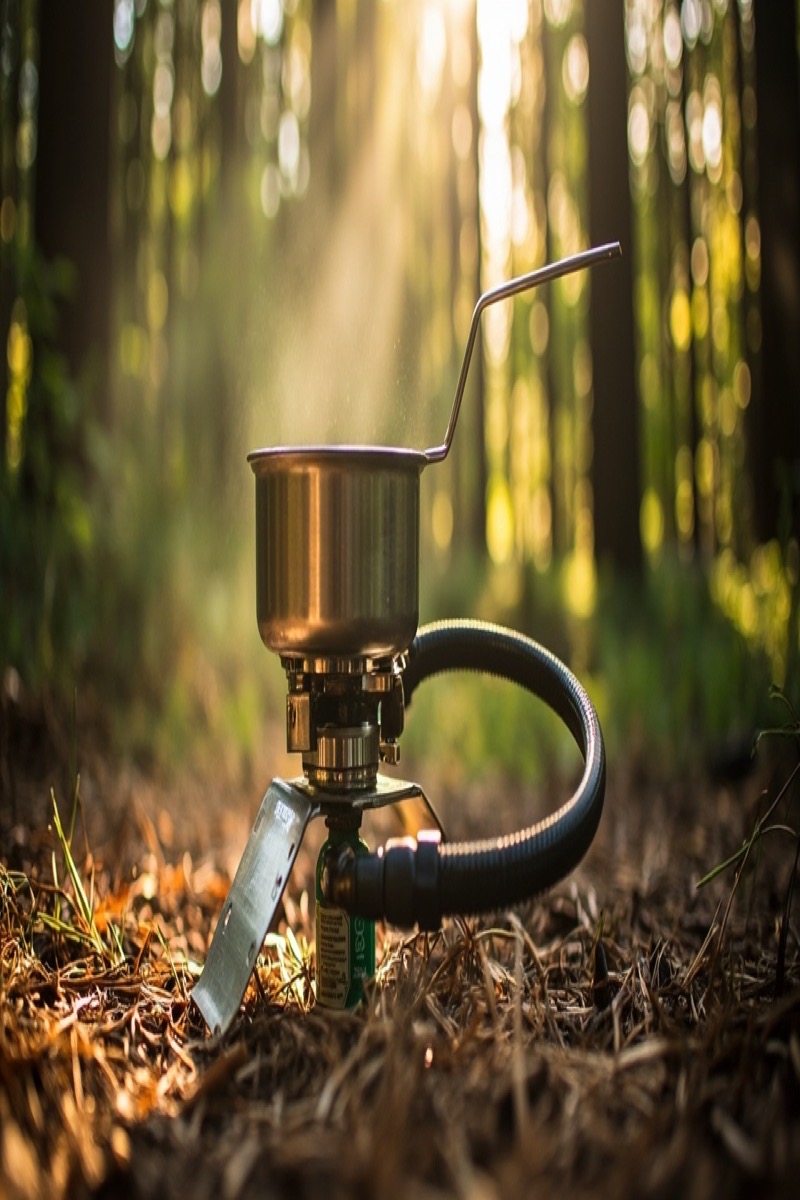
When it’s time to cook, light the burner before placing cookware on it (so you can see the flame pattern). Use wind guards — the difference between a wind-protected flame and an exposed flame is 30% fuel savings. After cooking, let the stove cool for 5 minutes before packing; propane residue on hot metal is a real burn risk. For group meals that need a side burner for cast iron, look at our camping dutch ovens — pair them with the Camp Chef Explorer and you have a stew kitchen.
Common Mistakes to Avoid
Buying a 2-burner for backpacking. The Coleman Triton is 5 lbs plus fuel. You’re going to hate mile 6.
Underestimating wind. A “10 mph breeze” cuts propane flame efficiency in half. Always deploy wind guards, even on calm-looking days. Campfire cooking is a useful backup — see our campfire cooking guide for skill-building.
Skipping the regulator hose. Pressure-regulated stoves (like the GasOne High Pressure) maintain output as canister pressure drops. Non-regulated stoves lose 40% of their BTU in the last 20% of the tank.
Storing a connected stove. Always disconnect the fuel canister between trips. A stove left screwed onto a propane tank in a hot car can leak — and the leak detector on your trunk won’t help.
Using butane below 40°F. Butane stoves simply won’t light below 32°F, and the flame gets unstable above 6,000 ft. Use propane (or a dual-fuel like the Gas One GS-3400P) for shoulder-season and high-altitude camping.
The Verdict: Which Propane Camp Stove Should You Buy?
For most car campers, the Coleman Triton 2-Burner Propane Stove ($83.99) is the right pick — it does everything most people need at a price that doesn’t hurt. For backpackers and short-haul base campers, the Sagafly Portable Camping Gas Stove ($16.58) with its included 1-lb tank adapter is the best propane value. For groups and serious cooks, the Camp Chef Explorer ($127.99) is the gold-standard 2-burner — pair it with our camping griddles and camping dutch ovens and you have a real outdoor kitchen.
Whatever you pick, pair it with a few easy camping meals and the right camping cookware — the stove is only one-third of a working camp kitchen. For the full taxonomy of camping stove types (butane, liquid fuel, isobutane, induction), see our best camping stoves guide.
Frequently Asked Questions
What's the best propane camp stove for car camping?
The Coleman Triton 2-Burner Propane Stove ($83.99) is the best propane camp stove for car camping — 22,000 total BTU, two independently adjustable burners, full wind guards, and a 5-lb chassis that fits any trunk. For bigger groups or modular cooking (griddle/box/pizza), step up to the Camp Chef Explorer ($127.99) at 60,000 BTU.
Can you use a propane stove for backpacking?
Yes, but expect trade-offs. The Sagafly Portable Camping Gas Stove ($16.58) with the included 1-lb tank adapter weighs about 2.1 lbs with hose — manageable for short hikes and base camps. For multi-day trips where every ounce matters, most backpackers switch to isobutane-canister stoves. See our camp stove buying guide for the full fuel comparison.
How long does a 1-lb propane tank last on a camp stove?
A 16.4 oz (1-lb) propane tank runs roughly 1 to 1.5 hours on high flame for a 2-burner stove like the Coleman Triton (22,000 BTU total), or 3 to 4 hours on a low-pressure single-burner like the Coleman Bottletop. On low simmer, the same tank can stretch to 4+ hours. Plan one tank per day of full-meal cooking for a family of four.
Propane vs butane — which is better for camping?
Propane is better for most camping because it vaporizes down to -44°F and works at high altitude. Butane burns cleaner but stops vaporizing below 32°F and won't light above 6,000 feet. The Gas One GS-3400P ($29.99) runs both fuels — pick based on conditions. We cover the full breakdown in our camp stove buying guide.
Do propane camp stoves work in cold weather and snow?
Yes — propane is the only widely-available canister fuel that works below freezing. The trick is keeping the tank warm: bury it in a sock, set it in a pan of warm water, or rotate two tanks so one stays inside your jacket. Expect 20–30% less burn time at 20°F and 50% less at 0°F. A high-pressure stove with a regulator hose (like the GasOne High Pressure, $29.99) maintains output as canister pressure drops in cold.
How many BTU do I need for camping?
For boiling water for 1–2 people: 7,000–10,000 BTU per burner is plenty. For real meal cooking (sautéing, frying, simmering): 10,000–15,000 per burner. For groups of 4+ or boils over 5 gallons: 20,000+ BTU per burner (like the Camp Chef Explorer at 30,000). Note that higher BTU also means faster fuel burn — a 60,000 BTU stove can empty a 1-lb tank in 35 minutes.
What's the safest way to use a propane camp stove?
Always set the stove on a flat, non-flammable surface at least 3 feet from tent walls and dry grass. Never use a propane stove inside a tent, vestibule, or enclosed shelter — carbon monoxide builds up fast. Turn the tank valve off before disconnecting, and check the O-ring on the regulator connection every trip. Coleman backs most of their stoves with a 3-year limited warranty.