8 Best Trekking Poles in 2026: Tested and Reviewed
We tested 8 trekking poles from budget aluminum to premium carbon fiber. Find the best pair for every hiker — beginners to seasoned backpackers.
compare_arrows Products Reviewed
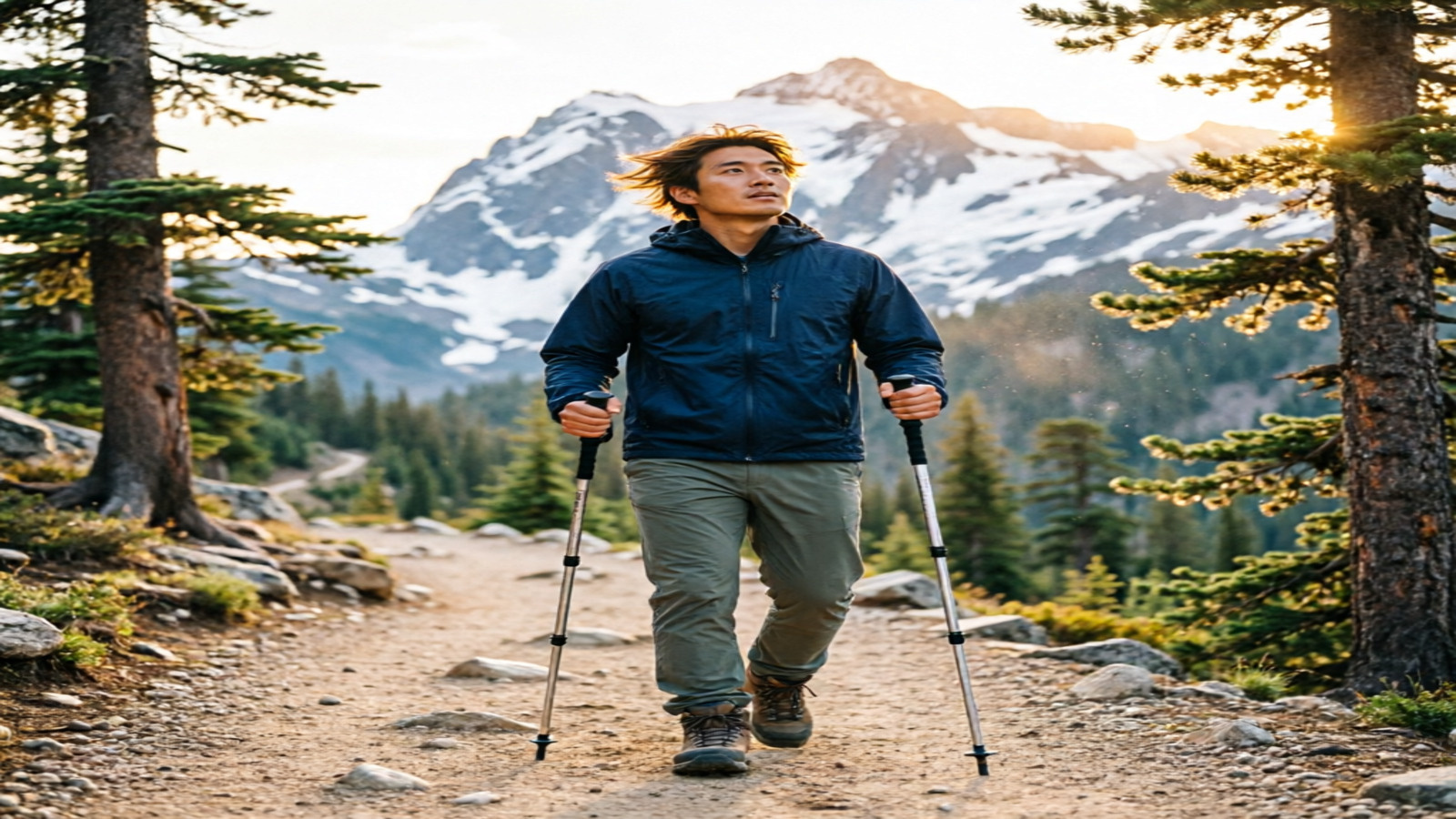
Trekking poles can transform a grueling downhill slog into a comfortable walk — but only if you pick the right pair. From budget-friendly aluminum to premium carbon fiber, the choices are overwhelming. Most first-time buyers end up with poles that are too heavy, slip at the locks, or don’t pack down small enough.
We tested 8 trekking poles from budget aluminum to premium carbon, evaluating comfort, locking reliability, weight, and packed size. Whether you’re a day hiker or a backpacker logging serious mileage, here’s what you need.
Also worth checking: our guides to the best camping tents/ for shelter setup and the best camping sleeping bags/ for a good night’s rest.
Quick Answer
- Best Overall: TrailBuddy Trekking Poles — strongest budget alloy, complete accessory kit
- Best Budget: Cascade Mountain Tech — cork grips at the lowest price point
- Best Carbon Value: Foxelli Carbon Fiber — best-selling carbon poles
- Best Premium: BLACK DIAMOND Distance Carbon FLZ — gold standard Z-pole
- Runner-ups: Hiker Hunger Outfitters (budget folding), TREKOLOGY Trek-Z (compact travel), TheFitLife Carbon (budget carbon), USA Brand Carbon (replacement parts system)
Quick Comparison
| Product | Material | Type | Best For |
|---|---|---|---|
| Cascade Mountain Tech | 6061 Aluminum | Telescoping | Budget beginners |
| TrailBuddy | 7075 Aluminum | Collapsible | Most people / Best seller |
| Hiker Hunger Outfitters | Aluminum | Folding Z-pole | Travel / Compact carry |
| TREKOLOGY Trek-Z | Aluminum | Folding Z-pole | Day hikes / Travel |
| TheFitLife Carbon | Carbon Fiber | Collapsible | Budget carbon / Light weight |
| Foxelli Carbon | Carbon Fiber | Collapsible | Best carbon value |
| USA Brand Carbon | Carbon Fiber | Collapsible | Replacement parts / Value |
| BLACK DIAMOND Distance FLZ | Carbon Fiber | Folding Z-pole | Premium / Trail running |
Best Budget Pick: Cascade Mountain Tech Lightweight Aluminum
The Cascade Mountain Tech poles deliver cork grips, tungsten carbide tips, and a 26” to 54” adjustable range — features usually found on poles costing twice as much. They’re the cheapest way to get real trekking pole benefits on the trail.
Aircraft-grade 6061 aluminum construction at 10 oz per pole. Quick-lock mechanism with ergonomic cork grip and extended EVA foam for choke-up positions. Complete accessory kit includes tungsten carbide tips, snow/mud baskets, and tip covers.
What we like: Cork grips at an entry-level price. Proven durability — hikers report 5+ years of regular use. Wide adjustable range (26”–54”) works for most heights. Full accessory kit included.
What could be better: Lock mechanism can slip under heavy load, causing poles to slide back up. Some units won’t tighten properly even following the instructions exactly. Customer service has a poor reputation. 6061 aluminum is weaker than the 7075 alloy used by TrailBuddy.
Looking for the cheapest way to get real trekking pole benefits? Check price on Amazon →
Best Overall for Most People: TrailBuddy 7075 Aluminum
The TrailBuddy trekking poles are the most-reviewed poles available anywhere. The 7075 aluminum alloy is stronger than standard 6061, and the complete accessory kit means you’re trail-ready out of the box. An 83-year-old verified reviewer praised them for balance support — a strong endorsement for any age.
Collapsible 3-section design with EVA foam grips and adjustable wrist straps. Quick flip-lock mechanism. Full accessory kit: tungsten tips, baskets, mud discs, rubber feet.
What we like: Stronger 7075 aluminum alloy construction. Excellent for seniors and beginners needing balance support. Complete accessory kit — nothing extra to buy. Affordable entry point.
What could be better: Some reports of poles breaking during hikes, causing falls. Flip locks can be very hard to adjust and may require a wrench. EVA foam grips less comfortable than cork in hot weather. Build quality is inconsistent — some units last years, others fail quickly.
The best-selling trekking poles at a price that won’t sting — Check price on Amazon →
Best Budget Folding Poles: Hiker Hunger Outfitters Premium
The Hiker Hunger Outfitters bring folding Z-pole convenience to the budget segment. They collapse small enough for carry-on luggage, RV trips, and ski excursions. With metal flip locks rather than plastic, they’re a step up in reliability from typical budget folders.
Folding Z-pole design for ultra-compact storage with cork/EVA mixed grip, metal flip-lock mechanisms, and multiple tip options included.
What we like: Z-pole folding collapses small enough for carry-on luggage. Metal flip locks are stronger than plastic alternatives. Cork and EVA mixed grip for comfort. Responsive customer service.
What could be better: Finger pinch risk when expanding and collapsing. Newer brand with less long-term track record. Limited user data compared to established competitors. Some hikers may prefer telescoping over folding design.
Need poles that fit in your carry-on? Check price on Amazon →
Best Compact for Travel: TREKOLOGY Trek-Z Cork Grip
The TREKOLOGY Trek-Z combines a folding Z-pole design with cork grips — a rare combination in the budget segment. The Z-pole folds down to just 15 inches for easy travel, and the cork grip with extended EVA section provides multiple hand positions for varied terrain.
Folding Z-pole design packs to 15” with cork grip, extended EVA section, quick flip locks, and includes tungsten tips, rubber tips, and mud baskets.
What we like: Compact 15” folded length fits carry-on and day packs. Cork grips comfortable for multi-hour hikes. Quick deployment — unfolds and locks in seconds. Good balance of lightweight and durability.
What could be better: Some poles broke after only 2–4 uses due to the lower joint unscrewing. Lower joint pieces can fall off on trails and become unrecoverable. Less sturdy than telescoping designs at the same price. Limited height adjustment range.
A Chinese reviewer on 什么值得买 noted that telescoping twist-lock poles tend to get dirt and sand trapped inside the tubes over time, which jams the locking mechanism — a problem that flip-lock designs like the Trek-Z largely avoid. [Source: post.smzdm.com/p/aprpmdp0]
Compact cork-grip folding poles for travel and day hikes — Check price on Amazon →
Best Budget Carbon Fiber: TheFitLife Carbon Fiber Cork
Carbon fiber trekking poles usually cost significantly more, but TheFitLife offers full carbon construction with cork grips at a fraction of the typical price. Reviewers have used these in Antarctica, Hawaii, and by a 335-pound hiker with replaced knees — a testament to surprising strength.
Carbon fiber shaft with natural cork handle, extended EVA foam, quick flip-lock, and complete accessory kit including mud baskets, rubber tips, and snow baskets.
What we like: Carbon fiber at an exceptional value price point. Vibration-dampening reduces arm fatigue on long hikes. Withstood Antarctica conditions and heavy users. Cork grips comfortable for extended use.
What could be better: Lower stem can snap under pressure on steep hills. Better suited for flat ground than aggressive mountain terrain. Thin shaft may not inspire confidence for rugged use. Durability concerns compared to premium carbon options.
A 知乎 article on trekking pole materials confirms that carbon fiber is roughly 100g lighter per pair than aluminum and offers better shock absorption, but warns that “carbon fiber breaks easily in harsh conditions — it’s better suited for light-load or short-distance trekking.” [Source: zhuanlan.zhihu.com/p/352538329]
Carbon fiber at budget pricing — Check price on Amazon →
Best Carbon Fiber for Most Hikers: Foxelli Carbon Fiber
The Foxelli carbon fiber poles hit the sweet spot between budget and premium. Full carbon construction, natural cork grips, and the best-selling carbon trekking poles available. They’re light enough for year-round use in all conditions, and multiple reviewers report 1.5+ years of regular use without issues.
100% carbon fiber with natural cork grips, quick flip-lock adjustment, shock-absorbent tips, and complete accessories including carrying case.
What we like: Best-selling carbon fiber trekking poles. Cork grips comfortable even bare-handed on long hikes. Lightweight for year-round use. 1.5+ years of regular use reported by multiple reviewers. Included carrying case for easy transport.
What could be better: Cork can deteriorate and crumble after just 3 uses. Locks need frequent retightening during use. Snow baskets broke under heavy crusty snow use. Not strong enough for aggressive backcountry terrain.
The best carbon fiber value for most hikers — Check price on Amazon →
Best Value Carbon with Replacement Parts: USA Brand Carbon Fiber
The USA Brand carbon fiber poles stand out with a unique feature: a replacement parts system. Instead of buying a whole new set when one component wears out, you can order individual sections, grips, or tips. For hikers who plan to use poles for years, this saves significant money.
100% carbon fiber shaft with collapsible telescoping design, natural cork handles, quick flip-lock adjustment, and individually available replacement parts.
What we like: Replacement parts system — buy only what breaks. Full carbon fiber at a competitive price point. Collapses for travel and storage. Comfortable grip feel for multi-day hiking.
What could be better: Some poles broke after first use — quality control issues. Locking mechanisms can slip under weight. Doesn’t collapse small enough for trail running packs. Plastic fasteners reported as too weak for reliable locking.
Carbon poles with a unique replacement parts system — Check price on Amazon →
Best Premium: BLACK DIAMOND Distance Carbon FLZ
Black Diamond is the gold standard in trekking poles — trusted by professional guides, thru-hikers, and mountain athletes worldwide. The Distance Carbon FLZ combines Z-pole folding convenience with FlickLock adjustability, giving you both packability and the ability to dial in height for uphills and downhills.
100% carbon fiber Z-pole with FlickLock adjustment, folds in thirds for quick deployment, and includes interchangeable tech tips and rubber walking tips.
What we like: Industry gold standard trusted by professionals. Z-pole packs down incredibly small — ideal for trail running. FlickLock adjustment combines packability with height customization. Light enough you forget they’re in your pack.
What could be better: Most expensive option by a wide margin. Length overlap issue — some users can’t extend far enough for downhills. Some reports of breaking on first trail use. Very limited user feedback base. No included storage bag.
A detailed 什么值得买 review of the Distance Carbon FLZ praised it as a versatile pole for trail running, backpacking, and snow mountaineering, but noted: “if you want one pole for everything, this is the one.” [Source: post.smzdm.com/p/awzlkl0p]
Another 什么值得买 analysis warned about carbon fiber pole fragility: “the five-section folding design sacrifices lateral rigidity, and frequent scraping on rough trails easily damages the carbon tubes.” This aligns with the real-world reports of the Distance Carbon FLZ breaking on first use from some users. [Source: post.smzdm.com/p/aggz2gdm]
The gold standard for serious hikers — Check price on Amazon →
How to Choose Trekking Poles
Aluminum vs. Carbon Fiber
Aluminum is durable and bends under lateral pressure. Carbon is lighter and absorbs vibration but snaps rather than bending. A 知hu guide recommends carbon for short treks and aluminum for complex terrain with heavy packs. [Source: zhuanlan.zhihu.com/p/217763837]
Telescoping vs. Folding
Telescoping poles offer the widest height range — best if you share with family. Folding Z-poles pack much shorter for travel and trail running, but have limited adjustability.
Lock Mechanisms
Flip locks are more reliable and easier to adjust with gloves. Twist locks are lighter but slip under heavy weight. GearLab testing confirms flip locks consistently outperform twist locks. [Source: outdoorgearlab.com]
Grip Material and Sizing
Cork wicks moisture and conforms to your hand; foam absorbs sweat but compresses. The best combo: cork with EVA foam below for choke-up positions. For flat ground, aim for a 90-degree elbow angle — shorten for uphills, lengthen for downhills. For more trail fundamentals, see our essential camping tips/.
Also check out our best camping chairs/ for relaxing at camp.
Frequently Asked Questions
Do I really need trekking poles for hiking?
Trekking poles aren’t strictly necessary for easy, flat trails, but they provide significant benefits on uneven terrain, steep ascents, and long descents. Studies show they can reduce knee impact by up to 25% on downhill sections, improve balance, and help maintain a steady rhythm. For backpackers carrying heavy loads, they’re almost essential for stability and reducing fatigue.
Are carbon fiber trekking poles worth the extra money?
Carbon fiber poles are lighter and absorb vibration better than aluminum, reducing arm fatigue on long hikes. However, they’re more expensive and more brittle — carbon snaps under heavy lateral pressure rather than bending like aluminum. For casual day hikers, aluminum poles offer better durability at a lower price.
What’s the difference between folding and telescoping trekking poles?
Telescoping poles collapse lengthwise and offer wider height adjustment, while folding Z-poles pack shorter for travel. Folding wins for portability; telescoping wins for shared use and adjustability.
How do I size trekking poles correctly?
For flat terrain, your elbow should form a 90-degree angle when holding the pole with the tip on the ground. For uphill, shorten poles by 2–4 inches; for downhill, lengthen by 2–4 inches. When in doubt, size slightly longer rather than shorter.
Are cork grips better than foam or rubber grips?
Cork grips are comfortable, wick moisture, and conform to your hand — ideal for long hikes. Foam absorbs sweat but compresses over time. Cork with EVA foam extension is the most versatile combo.
Can trekking poles help with knee pain?
Yes — this is one of the primary reasons hikers use trekking poles. By transferring some body weight to your arms, poles reduce the load on knees, hips, and ankles. Multiple studies show a 20–25% reduction in knee joint forces when using poles downhill.
How do I maintain trekking poles?
Clean poles after each trip, tighten flip-lock tension screws periodically, and check for worn tips. Store unfolded with locks slightly loosened.
Can I use trekking poles as tent poles?
Many ultralight shelters use trekking poles as primary support — look for adjustable length. Fixed-length Z-poles won’t work for most shelters; aluminum tends to be stiffer than carbon for this use.
References
- OutdoorGearLab — “The Best Trekking Poles of 2026” — Tested 19 poles across comfort, versatility, construction quality, locking, packed size, and weight. [outdoorgearlab.com]
- Switchback Travel — “Best Trekking Poles” — 15 picks with detailed specs and field testing. [switchbacktravel.com]
- 什么值得买 (SMZDM) — “一个BD党的告白,Black Diamond Distance Carbon FLZ” — Detailed BD user review covering versatility across trail running, backpacking, and snow mountaineering. [post.smzdm.com/p/awzlkl0p]
- 什么值得买 (SMZDM) — “碳纤维登山杖越轻越危险?真相藏在侧向断裂的裂痕里” — Carbon fiber pole lateral fracture analysis with BD Distance Z and Leki comparison. [post.smzdm.com/p/aggz2gdm]
- 什么值得买 (SMZDM) — “登山杖:永不过时的户外利器” — Trekking pole overview covering twist-lock vs flip-lock reliability. [post.smzdm.com/p/aprpmdp0]
- 知乎 (Zhihu) — “2025年最新登山杖选购指南” — Comprehensive buying guide covering carbon fiber vs aluminum and lock types. [zhuanlan.zhihu.com/p/217763837]
- 知乎 (Zhihu) — “登山杖品牌推荐选购” — Brand comparison including BD, LEKI, and domestic Chinese brands with carbon fiber analysis. [zhuanlan.zhihu.com/p/352538329]
- REI Co-op — “How to Choose Trekking Poles” — Retailer buying guide with technical specifications. [rei.com]
Frequently Asked Questions
Do I really need trekking poles for hiking?
Trekking poles aren't strictly necessary for easy, flat trails, but they provide significant benefits on uneven terrain, steep ascents, and long descents. Studies show they can reduce knee impact by up to 25% on downhill sections, improve balance, and help maintain a steady rhythm. For backpackers carrying heavy loads, they're almost essential for stability and reducing fatigue on joints, hips, and ankles.
Are carbon fiber trekking poles worth the extra money?
Carbon fiber poles are lighter and absorb vibration better than aluminum, reducing arm fatigue on long hikes. However, they're more expensive and more brittle — carbon snaps under heavy lateral pressure rather than bending like aluminum. For casual day hikers, aluminum poles offer better durability at a lower price. Carbon becomes worthwhile for thru-hikers, trail runners, and anyone counting every ounce on multi-day trips.
What's the difference between folding and telescoping trekking poles?
Telescoping poles collapse lengthwise like an antenna and typically offer wider height adjustment ranges. Folding (Z-pole) designs fold in thirds like a tent pole, packing down significantly shorter — ideal for stuffing in a backpack or carry-on luggage. Folding poles deploy in seconds but often have less height adjustability. For travel and trail runners, folding wins. For maximum adjustability and shared use among family members, telescoping is better.
How do I size trekking poles correctly?
For flat terrain, your elbow should form a 90-degree angle when holding the pole with the tip on the ground. For uphill, shorten poles by 2–4 inches; for downhill, lengthen by 2–4 inches. Most adjustable poles accommodate a range of heights. If buying fixed-length folding poles, choose based on your height — most manufacturers provide sizing charts. When in doubt, size slightly longer rather than shorter.
Are cork grips better than foam or rubber grips?
Cork grips are comfortable, wick moisture, and conform to your hand shape over time, making them ideal for long hikes in warm weather. Foam grips absorb sweat and work well in wet conditions but may compress over time. Rubber grips are durable and grip well but can be uncomfortable in hot weather. For most hikers, cork with an EVA foam extension for choke-up positions is the most versatile combination.
Can trekking poles help with knee pain?
Yes — this is one of the primary reasons hikers use trekking poles. By transferring some of your body weight to your arms, poles reduce the load on your knees, hips, and ankles, especially on steep descents. Multiple studies have shown a 20–25% reduction in knee joint forces when using poles downhill.
How do I maintain trekking poles?
Clean poles after each trip — remove dirt from lock mechanisms and wipe down shafts. For flip-lock poles, periodically tighten the tension screws with an Allen wrench. Check that tips aren't excessively worn — replacement tips are inexpensive. Store poles unfolded with locks slightly loosened to prevent memory-setting.
Can I use trekking poles as tent poles?
Many ultralight and tarp-style shelters are designed to use trekking poles as primary support. If you plan to use poles this way, look for adjustable-length poles so you can dial in the exact height your shelter requires. Fixed-length Z-poles won't work for most shelters. Aluminum poles tend to be stiffer and more reliable for shelter support than thin carbon fiber models.