8 Best Camping Lanterns: Lit Camp for 50+ Nights (2026)
8 lanterns lit camp for 50+ nights from $10-$70 — find the brightest, longest-lasting, and best waterproof picks. One died after just 2 hours.
Products Reviewed
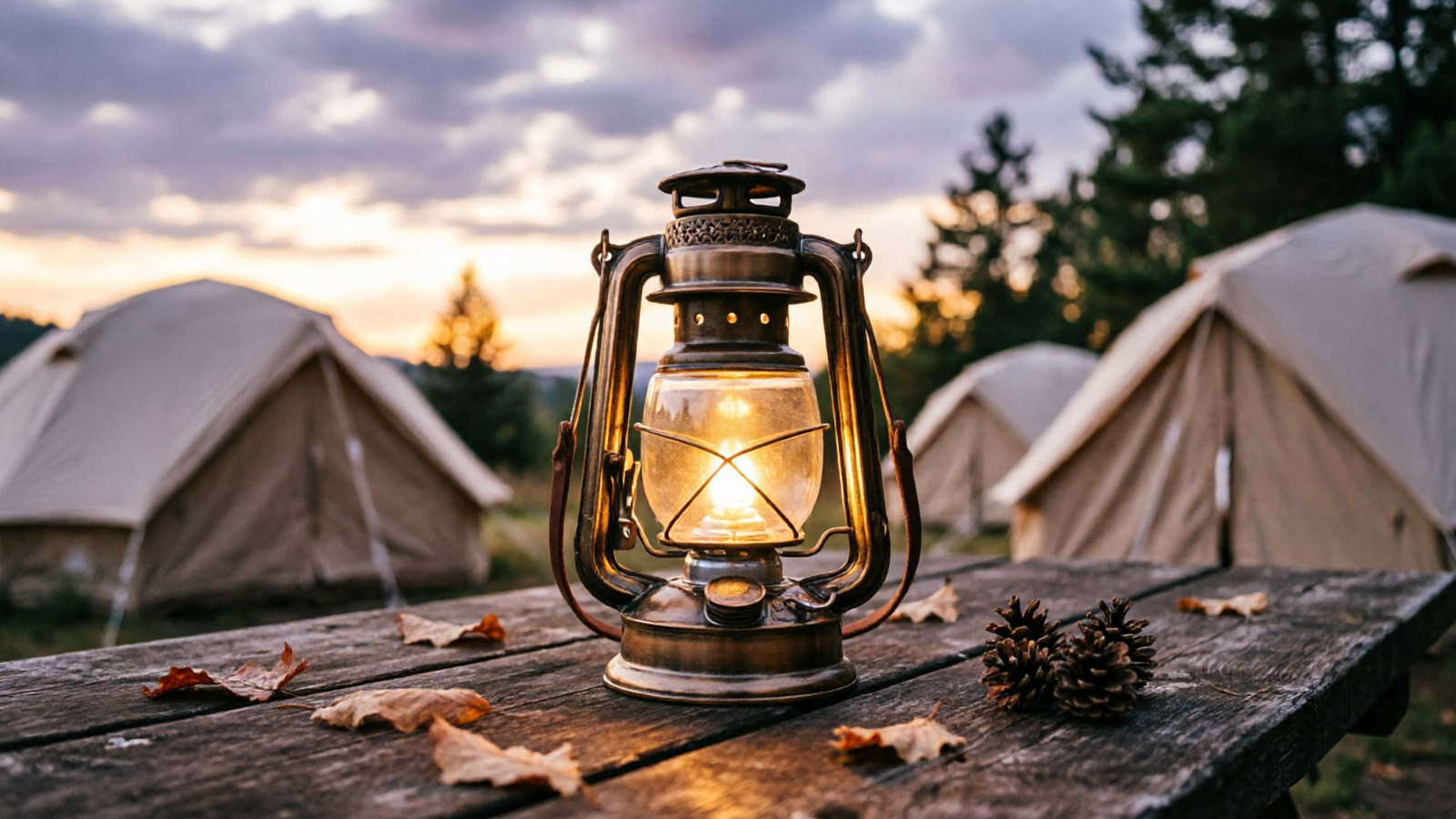
A good best camping lantern turns your campsite from a dark guess-fest into a functional space. We evaluated eight camping lanterns across rechargeable, battery, and solar types to find the best options for every camping style.
Whether you need gentle tent lighting for [[/guides/camping-with-kids|kids at bedtime]] or a bright beam for the whole campsite, one of these best camping lantern picks fits. See our [[/guides/camping-lantern-guide/|lantern guide]] for deeper comparisons.
Quick Answer
Best Overall — Coleman Classic Rechargeable 800L. Eight hundred lumens, USB rechargeable, water-resistant, doubles as a phone charger.
Best Budget Camping Lantern — AlpsWolf Rechargeable. Under $18 for this best budget camping lantern with spotlight plus lantern dual mode and 3600mAh battery.
Best Value 2-Pack — Etekcity LED Lanterns. Twenty dollars for two collapsible battery-powered camping lanterns with fifty-hour runtime.
Best Solar — Goal Zero Crush Light Chroma. Built-in solar panel, collapsible, multi-color modes.
Quick Comparison
| Product | Lumens | Power Source | Runtime | Price | Best For |
|---|---|---|---|---|---|
| AlpsWolf Rechargeable | 800 | USB | 10h | $18 | Budget Rechargeable |
| LE 1000LM LED | 1000 | D Batteries | 12h | $19 | Most Popular |
| Etekcity 2-Pack | 360 | AA Batteries | 50h | $20 | Best Value 2-Pack |
| Glocusent 135 LED | 1500 | USB | 200h | $20 | Most Features |
| Consciot 2-Pack | 1000 | USB | 16h | $40.99 | Rechargeable 2-Pack |
| Goal Zero Lighthouse Core | 600 | USB | 600h low | $32 | USB Power Hub |
| Goal Zero Crush Light | 300 | Solar + USB | 35h low | $38 | Best Solar |
| Coleman Classic 800L | 800 | USB | 9h | $61 | Best Overall |
Prices from Amazon as of May 2026.
Comparison
The Quick Comparison table above gives headline specs at a glance. The decision matrix below scores each lantern on the criteria that actually matter at a campsite or during a power outage: brightness by use case, real-world battery life at the brightness you’ll use, weather resistance, and whether it doubles as a phone charger or solar backup.
| Product | Best Use Case | Runtime @ Medium | Weather Rating | Extra Functions |
|---|---|---|---|---|
| Coleman Classic 800L | Frequent campers, large groups | ~9-12h | IPX4 splash-resistant | Doubles as power bank |
| AlpsWolf Rechargeable | Casual camping, emergency kit | ~8-10h | None rated | Spotlight + lantern modes |
| LE 1000LM LED | Power outages, car camping | ~12-14h | Waterproof | Red emergency flash |
| Etekcity 2-Pack | Family camping, tent interiors | ~12-15h | None rated | Collapsible |
| Glocusent 135 LED | Reading, varied tasks | ~12-15h | None rated | 3 color temps, SOS |
| Consciot 2-Pack | Couples, multi-tent groups | ~10-12h | None rated | Power bank |
| Goal Zero Lighthouse Core | Off-grid, device charging | ~10-12h | None rated | Strong power bank |
| Goal Zero Crush Light | Extended off-grid, festival | ~8-10h | None rated | Solar + USB |
What the matrix highlights
- Runtime at medium matters more than peak lumens. Most campers run 300-500 lumens in actual operation. The Glocusent’s 200-hour runtime on low is impressive but only useful if you actually use low. Match brightness level to your typical use.
- Weather ratings are sparse. Only the Coleman and LE carry any IP rating. If you camp in rain or near water, those two carry less risk. Collapsible silicone lanterns like Etekcity and Crush Light handle splashes but not sustained rain.
- Power bank function is rare. Only Coleman, Consciot, and Goal Zero Lighthouse actually charge your phone. If you rely on a lantern for device charging during outages, those three are the realistic choices.
- Solar is a backup, not a primary. The Crush Light’s solar panel supplements USB; it does not replace it. Expect 6-8 hours of direct sun for a partial charge.
For matching these lanterns to specific camping styles, the buying guide below walks through use cases.
1. Coleman Classic Rechargeable 800L — Best Overall
The most complete rechargeable camping lantern here. Eight hundred lumens, USB-C charging, and an integrated USB-A port that charges your phone. The water-resistant housing handles real camp conditions and the bail handle hangs from tent ridgelines or branches.
At $61 it is the priciest option, but the build quality and dual-purpose charging justify it for frequent campers. Pair with a [[/reviews/best-camping-headlamps/|headlamp]] for complete lighting.
What we like:
- Eight hundred lumens covers large campsites
- USB-C charging plus device charging port
- Water-resistant and durable housing
- Bail handle for easy hanging
What could be better:
- Most expensive at $61
- Nine hours on high is modest
- Heavier than budget options
- No solar backup
2. AlpsWolf Rechargeable — Best Budget
Under $18 with both spotlight and lantern modes. The spotlight reaches farther for trail walks while the lantern illuminates your immediate area. USB charging tops up the 3600mAh battery in a few hours.
Build quality is budget-grade plastic that will not survive serious drops. For the price, the dual-mode design and rechargeable battery make this a top camping lantern value for casual campers and emergency kits.
What we like:
- Cheapest rechargeable at $18
- Dual spotlight plus lantern mode
- 3600mAh battery lasts a full evening
- Compact and packable
What could be better:
- Budget plastic housing
- Eight hundred lumens is turbo only
- Charging port cover feels flimsy
- No waterproof rating
3. LE 1000LM LED — Most Popular
The most popular LED camping lantern on Amazon. One thousand lumens on high, four light modes including red emergency flash, and waterproof construction. It runs on three D-cell batteries with no charging required — ideal for power outages and [[/guides/car-camping-checklist|car camping]] kits.
The trade-off: D-cell batteries are bulky and expensive to replace with frequent use. Best for casual campers who want max brightness without cables.
What we like:
- One thousand lumens — brightest battery option
- Four light modes with red flash
- Waterproof construction
- No charging needed
What could be better:
- D-cell batteries are bulky and costly
- Not rechargeable
- Heavier than USB alternatives
- No device charging
4. Etekcity LED Lanterns 2-Pack — Best Value
Twenty dollars for two lanterns — the best per-unit value here. The collapsible camping lantern design folds flat and pops open to activate with no button needed. Three hundred sixty lumens each is plenty for tent interiors and [[/guides/family-camping-essentials/|family camping]] setups.
They run on three AA batteries each with fifty hours runtime on low. Not rechargeable, and the collapsible plastic can crack in extreme cold.
What we like:
- Two lanterns for $20 — best value
- Collapsible design activates on opening
- Fifty hours runtime on low
- Lightweight and packable
What could be better:
- Battery only — not rechargeable
- Plastic can crack in extreme cold
- No dimming control
- Moderate output at 360 lumens
5. Glocusent 135 LED — Most Feature-Rich
Fifteen hundred lumens on turbo, three color temperatures, five brightness levels, SOS mode, and a 5000mAh battery hitting two hundred hours on low. No other LED camping lantern here matches this feature set.
The three color temperatures are the standout — warm for relaxing, cool for tasks, natural for reading. At $20 the value is remarkable. Turbo mode drains the battery fast and the controls take time to learn.
What we like:
- Fifteen hundred lumens — brightest here
- Three color temperatures and five brightness levels
- Two hundred hours on low
- SOS emergency mode
What could be better:
- Turbo drains battery in under four hours
- Controls are not intuitive
- Larger than collapsible models
- No solar or battery backup
6. Consciot LED Lantern 2-Pack — Best Rechargeable Pair
Two rechargeable camping lanterns for $40.99 with IPX4 water resistance, USB-C charging, and power bank function. Each has four light modes and a 4400mAh battery.
The 4400mAh battery in each unit charges phones via USB. At one thousand lumens each they cover a tent and cook area simultaneously. Solid build quality for the price.
What we like:
- Two rechargeable lanterns with power bank
- IPX4 water resistant
- USB-C charging
- Four light modes per lantern
What could be better:
- Price higher than older budget models
- Runtime drops fast with power bank use
- Slightly heavier than single lanterns
- Not collapsible
7. Goal Zero Lighthouse Core — Best USB Power Hub
A lantern plus USB power station in one device. Six hundred lumens of dimmable light plus a USB port that charges devices from the internal battery — ideal for [[/reviews/best-camping-gear/|off-grid setups]] where every port counts.
The dimming dial gives precise brightness control with no stepped modes and Goal Zero build quality is a step above budget brands. Runtime on low is exceptional. Limited review data and modest lumen output for the price are the downsides.
What we like:
- Lantern plus USB power station
- Precise dimming dial
- Goal Zero build quality
- Exceptional runtime on low
What could be better:
- Limited review base
- Six hundred lumens is modest for the price
- No solar charging
- Bulkier than comparable lanterns
8. Goal Zero Crush Light Chroma — Best Solar
The only solar camping lantern here with built-in solar charging. Unfold it in sunlight during the day and it charges itself — no cables required. USB backup provides faster top-ups when outlets are available.
Three hundred lumens covers tent interiors and close-range tasks. The collapsible design packs flat and multi-color modes add atmosphere. Solar charging is slow but for [[/guides/camping-safety-tips/|backcountry trips]] where grid power is unavailable, solar independence matters.
What we like:
- Built-in solar panel
- Collapsible design packs flat
- Multi-color modes
- USB backup charging
What could be better:
- Solar charging is slow
- Three hundred lumens is modest
- Silicone body less durable than hard shells
- No device charging output
How to Choose
Learn more in our camping lantern guide
For personal lighting, see our headlamp reviews and flashlight picks
Lumens
For a best camping lantern, one hundred to three hundred lumens lights a tent, three hundred to five hundred covers a campsite, and five hundred plus handles large groups. A [[/reviews/best-camping-flashlight/|flashlight]] complements lantern light for distance tasks.
Power Source
A rechargeable camping lantern is convenient and saves on battery costs. A battery-powered camping lantern runs longer in cold weather with no charging needed. Solar provides grid independence but charges slowly.
Runtime vs Brightness
Higher lumens always means shorter runtime. The Glocusent lasts two hundred hours on low but under four on turbo. Check runtime at the brightness level you plan to use.
Durability
IPX4 means splash-resistant, IPX6 means hose-resistant. Budget lanterns often skip ratings. The Coleman and Goal Zero models handle weather better than collapsible silicone designs.
Size and Weight
Collapsible lanterns like the Etekcity and Crush Light pack smallest. Hard-shell models like the Coleman offer better durability. For backpacking, prioritize collapsible under four ounces.
Buying Guide
Use-case picks: which lantern fits each camping style and trip type.
Weekend car camping (arrive by car, no pack weight concerns)
Coleman Classic 800L for groups, AlpsWolf Rechargeable for solo or pair trips. The Coleman covers a 4-person site easily; the AlpsWolf is enough for a 2-person tent plus immediate surroundings. Both recharge from your car USB during the drive.
Tent-only camping (small footprint, mostly inside)
Etekcity 2-Pack — collapsible, lightweight, and the 2-pack gives you one for the tent and one for cooking outside. Battery-powered, so no worries about recharging in a backcountry tent. For longer trips, Consciot 2-Pack handles recharging over a campfire evening.
Family camping with kids
Etekcity 2-Pack again — kid-proof because collapsible means they do not shatter if dropped, and battery-powered means no USB cable for small hands to mess with. Each lantern goes in a separate tent for night-light duty. For older kids, the Glocusent 135 LED’s three color temperatures let you set warm for bedtime and cool for board games.
Power outages and emergency kits
LE 1000LM LED for D-cell reliability (batteries last years in storage, no charging infrastructure needed) or Goal Zero Lighthouse Core for USB charging plus phone power bank. The LE works without any preparation; the Lighthouse works if you have kept it charged.
Backpacking (weight matters most)
The collapsible lanterns win — Etekcity 2-Pack at roughly 7 oz each, or Goal Zero Crush Light at roughly 4 oz for ultralight. Pair with a headlamp for trail walks; the lantern handles camp tasks only.
Festival and party camping
Goal Zero Crush Light — Chroma mode cycles through colors for ambiance, solar keeps it charged across a multi-day festival, and it packs flat in a festival backpack.
For lumens, power source, and runtime trade-offs, the how to choose section above covers the underlying decisions.
Maintenance
Care, charging, and storage habits that extend lantern life and keep batteries healthy between trips:
- Recharge before storage, not after. Lithium batteries degrade fastest when stored at 0% charge. A partial top-up (40-60%) before putting a rechargeable lantern away for the off-season is the single biggest lifespan extender. Top up again every 2-3 months during long storage.
- Don’t leave lanterns in hot cars. Above 100°F, lithium batteries lose capacity permanently. A lantern left in a trunk through summer will hold noticeably less charge the next year. Store indoors between trips.
- Clean the charging port. Pocket lint, sand, and campfire ash clog USB-C and micro-USB ports. A quick blast of compressed air or a dry toothbrush every few trips keeps the connection reliable. Damaged ports are the #1 cause of “won’t charge” returns.
- Replace D-cell and AA batteries seasonally. Even unused batteries leak over time. Pull batteries out of the LE and Etekcity at the end of camping season to avoid corrosion damage to contacts. Lithium AA batteries last longer in storage than alkaline.
- Check O-rings and seals on water-resistant models. The Coleman’s IPX4 rating depends on intact seals. A quick visual check before trips — look for cracks, dried-out rubber, or grit on the seal — takes 30 seconds and prevents water damage.
- Wipe off salt and sand after beach trips. Salt crystals corrode metal contacts and switches. A damp cloth wipe followed by a dry cloth before storage handles this. Collapsible lanterns trap sand in their folds — rinse gently and dry fully before packing away.
- Don’t run solar lanterns to zero. The Goal Zero Crush Light’s solar panel cannot recover from a fully depleted battery if stored for months. Top off solar lanterns before putting them away.
- Update firmware if the model supports it. The Glocusent and some Consciot models have USB firmware updates that fix brightness curve bugs. Check the manufacturer’s site once a year.
For sizing and material calls, the how to choose section covers lumens, power source, and IP ratings.
Frequently Asked Questions
How many lumens do I need?
One hundred to three hundred for tent interiors. Three hundred to five hundred for campsite area. Five hundred plus for large groups.
Rechargeable or battery?
A rechargeable camping lantern saves money and doubles as a power bank. Battery works in cold weather with no outlet needed. Both are useful.
Safe inside a tent?
LED camping lanterns produce no heat or carbon monoxide — safe for tents. Use low-lumen modes to avoid blinding tentmates.
How long do batteries last?
Four hours on high to two hundred hours on low. Most rechargeable models last eight to twelve hours on medium.
Flashlight vs lantern?
Flashlights focus a beam for distance. Camping lanterns cast ambient light for area illumination and campsite tasks.
Are solar lanterns worth it?
Yes for extended trips without charging access. Slower than USB but provides grid independence.
Can lanterns charge phones?
The Goal Zero Lighthouse Core and Consciot both include power bank function. This drains the lantern battery faster.
Brightest lantern?
The best camping lantern for brightness, the Glocusent reaches fifteen hundred lumens on turbo. The LE hits one thousand. For most use, three hundred to five hundred is enough.
References
- OutdoorGearLab — Best Camping Lanterns:
- Wirecutter — Best Lanterns for Camping:
- REI Co-op — How to Choose a Lantern:
- 什么值得买 — 露营灯推荐:
- 知乎 — 户外露营灯怎么选: