Group Camping Guide: Plan, Pack, and Camp Together
Plan the perfect group camping trip with site selection, meal planning, activity ideas, and gear checklists for 6-20 people.
Group camping multiplies the fun — and the logistics. More people means shared costs, built-in entertainment, and extra hands for setting up camp. It also means coordinating schedules, dividing gear, and feeding a small army without turning the trip into a stressful project.
This guide covers everything you need to plan, pack, and pull off a group camping trip that everyone will want to repeat.
Why Group Camping Is Worth the Effort
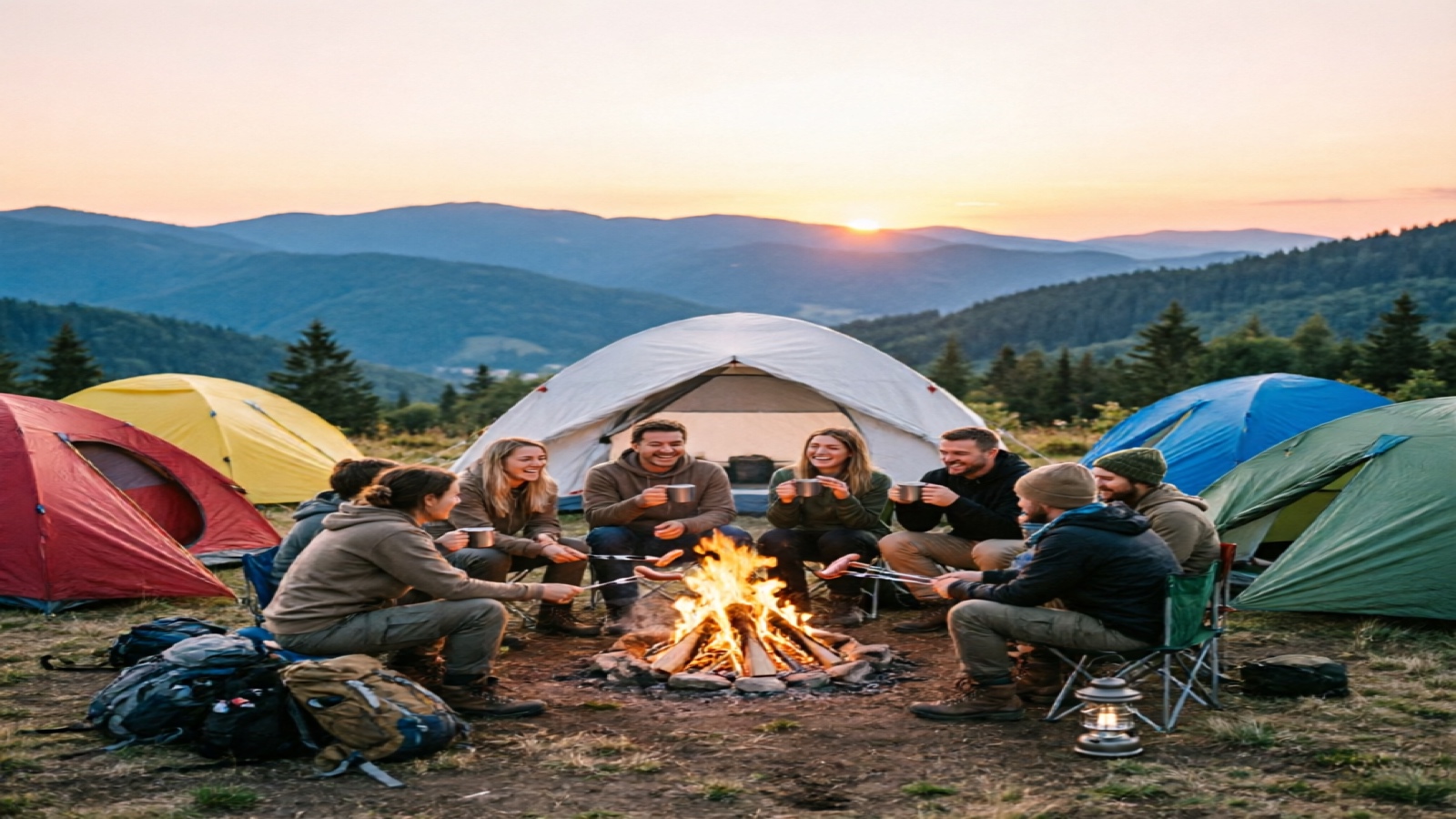
Splitting campsite fees among six or eight people drops the per-person cost to roughly the price of a coffee. A $35 group site divided by 10 campers comes out to $3.50 per night. Beyond the savings, group camping gives you a built-in social scene — evening campfires feel like a private party, kids have friends to run around with, and there is always someone to help with the tent poles when the wind picks up.
Group camping also works for different occasions: a weekend with college friends, a family reunion at a state park, a scout troop weekend, or even a low-key camping birthday party. The planning principles are the same regardless of group size or reason.
The trick is to treat the group trip like a potluck — everyone contributes something, and no single person carries the full load. When the planning is shared, the trip feels like a vacation instead of a second job.
Choosing the Right Campsite for a Group
Not all campsites handle large groups well. Look for designated group campsites when you have seven or more people. These sites typically offer a larger cleared area, bigger fire rings, multiple picnic tables, and enough parking for several vehicles.
What to Look For
- Flat terrain with enough space for multiple tents and a central gathering area
- Proximity to bathrooms — walkable but not so close that noise is an issue
- Fire pit capacity — group sites should have a larger ring or multiple fire spots
- Water access — either a spigot on-site or a creek within walking distance
Booking Tips
Reservable group sites at popular state and national parks fill up months in advance. Book early — Recreation.gov opens reservations six months out for most federal campgrounds. For a quieter experience, look into national park camping options that include group loops with more privacy.
First-come, first-served group sites exist but carry risk. If you go that route, arrive early on a weekday and have a backup plan.
Check whether the campground has noise restrictions, generator hours, or pet policies that might affect your group. Some group sites sit farther from main campground loops, which gives you more freedom but also means a longer walk to the nearest bathroom. Weigh convenience against privacy when choosing.
Group Camping Tents and Shelter
Shelter strategy depends on group size and preferences. For groups of 6 to 8, a single large cabin tent works. For 10 or more, split into two or three smaller tents around a shared canopy.
The Big Tent Approach
An 8-person tent like the OLIXIS 8 Person Camping Tent gives you 78.7 inches of headroom and tool-free setup at a reasonable price. For faster pitching, the FanttikOutdoor Zeta C8 Pro sets up in about 60 seconds — useful when half the group is still unloading cars.
If bugs are a concern, the PORTAL 8 Person Tent with Screen Porch adds a screened-in area where people can sit without slathering on repellent.
Multiple Tents Strategy
For groups larger than eight, a single tent becomes impractical. Instead, set up two or three 4-to-6-person tents in a semicircle around a central canopy. This gives people privacy for sleeping while keeping the group connected for socializing.
Label each tent with a name or number using a piece of tape on the rainfly — it sounds unnecessary until three identical blue tents are pitched next to each other at dusk.
Shared Shade and Gathering Space
A canopy is essential for daytime comfort. The Oneofics 10x10 Pop-up Canopy ($70.99) sets up in minutes and gives the group a central spot to eat, play cards, and escape the sun. Position it between the tents to create a natural courtyard. For help choosing the right shelter, see our best camping tent comparison.
Bring a large tarp and some paracord as a backup shelter. If rain shows up, a tarp rigged between two trees keeps the cooking area dry and the group from retreating to their tents.
Planning Group Meals
Feeding a crowd in the woods does not require a catering team. The key is assigning responsibility and keeping recipes simple.
Three Meal Strategies
Assigned meals. Each person or household takes responsibility for one full meal — breakfast, lunch, or dinner. This distributes the cost and effort evenly.
Potluck style. Everyone brings a dish or ingredient and meals come together on the spot. Works well for casual groups.
Communal cooking. One or two enthusiastic cooks handle the main dishes while others contribute sides, snacks, and drinks.
Easy Group Meal Ideas
- Foil packet dinners — each person assembles their own with protein, veggies, and seasoning
- One-pot pasta — boil noodles, add sauce and vegetables, feed 10 people from a single pot
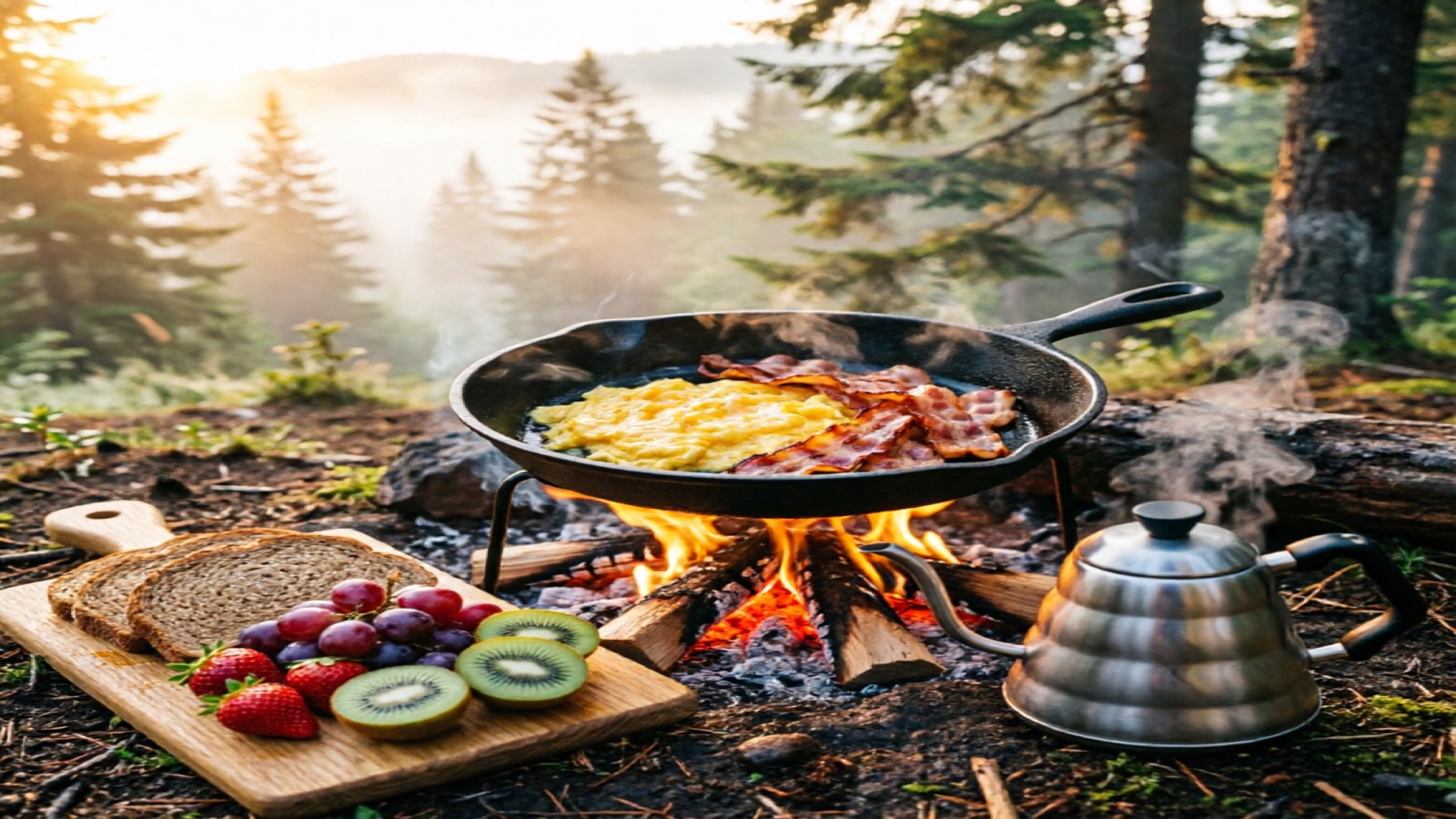
- Breakfast burritos — scramble eggs on a griddle, set out tortillas and toppings, let everyone build their own
- Chili or stew — cook a large batch over the campfire or stove
Snacks and Drinks
Set up a snack station that stays accessible all day. Trail mix, jerky, fruit, and crackers in a sealed container near the canopy means people graze without opening the cooler. For drinks, a separate small cooler with water, soda, and beer reduces traffic on the main food cooler and helps it hold ice longer.
Assign someone as the designated ice runner. In warm weather, a 100-quart cooler needs a bag of ice every day or two. Knowing who is making the ice run prevents the “I thought you were getting it” loop.
Keeping Food Cold
A large cooler like the Coleman 100-Quart Rolling Cooler keeps ice for up to five days and rolls to your campsite instead of requiring a team carry. Pre-chill all items for 24 hours before loading, drain water daily, and keep the cooler in the shade.
For more recipe ideas, see our easy camping meals guide.
Group Camping Checklist
Packing for a group means dividing shared gear from personal items. One person should own the checklist and confirm who is bringing what before departure.
Shared Gear (Assign to Specific People)
- Large tent or multiple tents
- Canopy or tarp
- Camp stove and fuel — the Coleman Triton 2-Burner Stove delivers 22,000 BTUs, enough for a large skillet and a pot simultaneously
- Cookware set — the THTYBROS 17-piece kit ($39.99) includes pots, pans, plates, and utensils for a small group
- Large cooler with ice
- Water containers (5-gallon minimum for a group)
- Firewood and fire starter
- Lanterns and headlamps
- First aid kit — a 150-piece kit ($9.99) covers cuts, burns, and basic injuries for the whole group
Personal Items (Everyone Brings Their Own)
- Sleeping bag and pad
- Headlamp
- Water bottle
- Personal medications
- Rain jacket
- Toiletries
For a complete packing reference, see our camping packing list.
Activities and Entertainment
A good group camping trip balances structured activities with free time. Not everyone wants to hike five miles, and not everyone wants to sit at camp all day.
Daytime Activities
- Hiking — split into groups by difficulty level so beginners and experienced hikers both enjoy it
- Fishing — check if the campground lake or nearby stream is stocked
- Swimming — if the site has water access, bring floats and water shoes
- Scavenger hunt — great for groups with kids; create a list of items to find around camp
Evening Activities
- Campfire cooking competition — everyone makes their best foil packet or dessert, then the group votes on a winner
- Card and board games — easy to pack, scales to any group size, and works under a canopy with a lantern
- Stargazing — download a star map app and identify constellations; away from city lights, even beginners can spot the Milky Way
- Group storytelling — pass a flashlight around and take turns adding to a story
- Night hike — stick to marked trails with headlamps, and bring enough lights for the whole group
For more ideas, check our camping games guide.
The best group camping activities are the ones that require zero planning — a spontaneous football toss, an impromptu guitar session, or a long conversation around the fire that runs past midnight. Leave room in the schedule for those moments.
Safety and Leave No Trace for Groups
Larger groups have a bigger impact on the environment and on other campers. Follow these protocols to keep everyone safe and respectful.
Group Safety
- Buddy system — no one hikes or wanders off alone, especially kids
- Emergency plan — share the nearest hospital address and a designated meeting point
- First aid — keep the group first aid kit in a known, accessible location
- Communication — cell service is spotty at many campgrounds; consider walkie-talkies for groups
Managing Kids in a Group
If children are part of the group, establish boundaries early. Show kids exactly where they can and cannot go — mark the perimeter with brightly colored ribbon or cones. Pair each child with a buddy and make sure at least two adults are awake and supervising at all times, especially near water or fire.
Pack a separate kids activity bag with coloring books, bubbles, magnifying glasses, and glow sticks for the evening. Bored kids find trouble; occupied kids make the trip enjoyable for everyone.
Leave No Trace at Scale
- Pack out all trash — large groups generate more waste than you think
- Use established fire rings and keep fires at a manageable size
- Stay on trails — 15 pairs of boots do more damage than two
- Keep noise reasonable after quiet hours
For more safety tips, see our camping safety tips guide.
Tips for a Smooth Group Trip
Money Handling
Track shared expenses in a group spreadsheet or payment app. Split campsite fees, communal food, and firewood evenly among adults. Set a per-person food budget before the trip so the person buying groceries knows the limit.
Setting Expectations
Send a group message a week before the trip covering departure time, meeting location, what to bring, and what is already covered. People who know the plan in advance show up prepared instead of surprised.
When Things Go Wrong
Rain happens. Someone cancels last minute. The camp stove runs out of fuel. Build flexibility into the schedule and keep extra supplies on hand. A positive attitude from the organizers sets the tone for the whole group.
Making It a Tradition
Take a group photo at the same spot every year. Start a shared album where everyone uploads their pictures. Small traditions turn a one-time trip into something people look forward to annually.
After the trip, send a quick survey asking what worked and what to change next time. Which meals were hits? Was the campsite the right size? Did anyone wish they had brought something different? Five minutes of feedback saves hours of guessing next year.
The best group camping trips are the ones where everyone pitches in without being asked. When the group dynamic clicks, you spend less time managing logistics and more time enjoying the reason you came — being outside with people you like.
Group camping is at its best when it feels easy. Plan enough that nothing falls through the cracks, but not so much that the trip feels scripted. Get the campsite, the food, and the shelter sorted, then let the weekend unfold on its own.
Frequently Asked Questions
How many people count as a group campsite?
Most campgrounds define a group campsite as 7 or more people. Some state parks set the minimum at 10. Group sites usually accommodate 10 to 50 people and come with larger fire rings, multiple picnic tables, and more parking.
How do you split costs for group camping?
The simplest method is to divide total costs — campsite fees, shared food, firewood, and communal gear — by the number of adults. Use a shared spreadsheet or a payment app to track who paid for what. Agree on the budget before the trip to avoid awkward conversations later.
What is the best tent for group camping?
An 8-person cabin tent like the OLIXIS or FanttikOutdoor Zeta C8 Pro gives most groups enough headroom and floor space for sleeping and gear storage. For groups larger than 8, set up two or three smaller tents around a shared canopy. See our [best camping tent](/reviews/best-camping-tents/) reviews for more options across all sizes.
How do you plan meals for 10 or more campers?
Assign one meal per person or household — breakfast, lunch, dinner, or snacks. Keep recipes simple: foil packet dinners, one-pot pasta, and breakfast burritos scale easily. Bring a large cooler like the Coleman 100-Quart and pre-chill everything for at least 24 hours before loading it.
Can you camp in a large group at national parks?
Yes, most national parks have designated group campsites that hold 10 to 40 people. These sites require advance reservations, often 6 months ahead. Check the park website for group site availability and rules about campfire size, noise, and vehicle limits.
What activities work best for large camping groups?
Activities that scale well include hiking, scavenger hunts, campfire cooking competitions, card and board games, fishing, and stargazing. Split into smaller groups for hikes with different difficulty levels so everyone can participate at their own pace.