Dispersed Camping for Beginners: Camp Free on Public Land
Dispersed camping lets you camp free on BLM and National Forest land. This beginner guide covers permits, gear, water, fire rules, and safety.
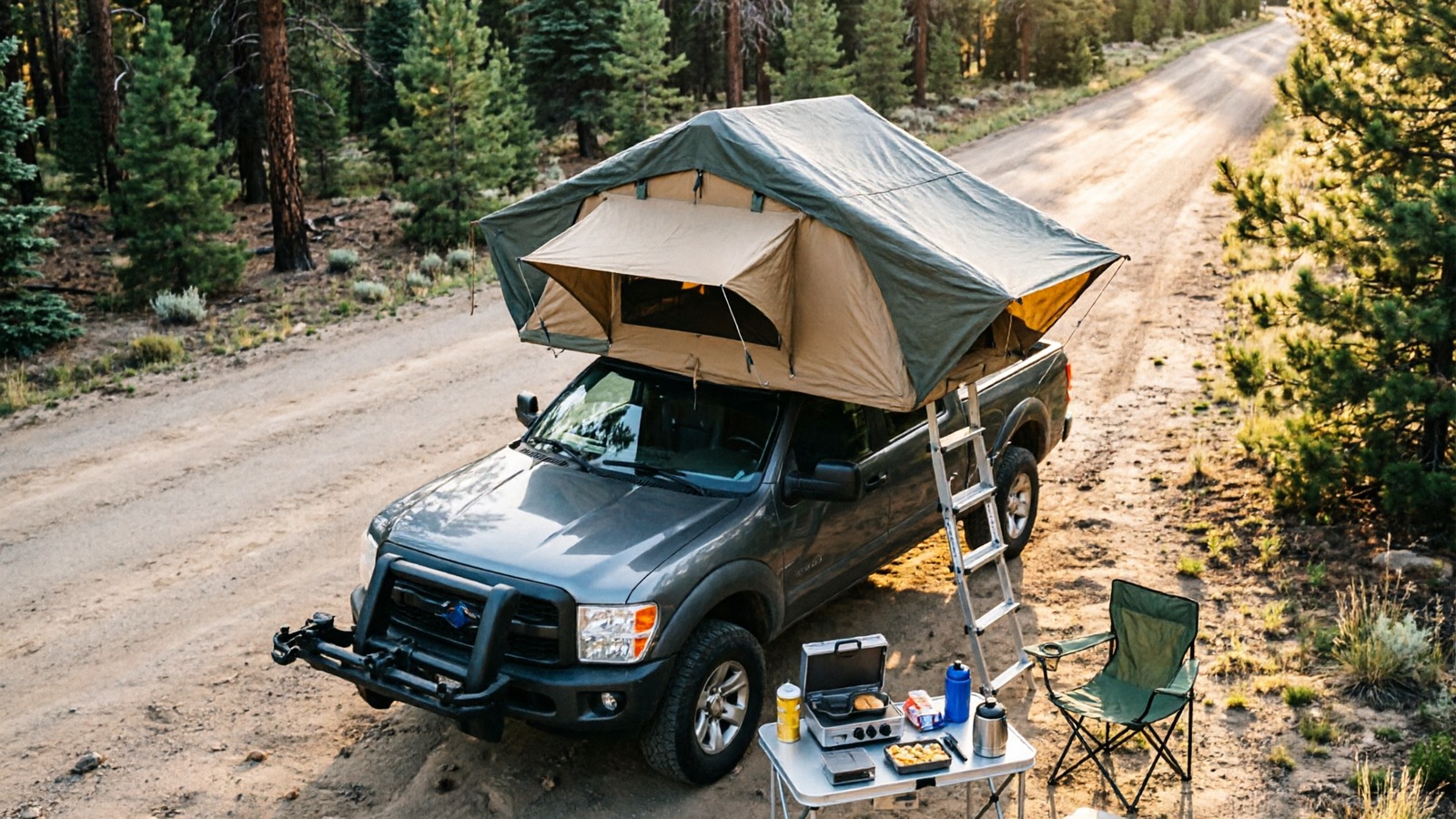
Dispersed camping means setting up camp anywhere on public land — no reservations, no fees, no assigned sites, and no neighbors. Over 245 million acres of BLM land and 193 million acres of National Forest are open to dispersed camping across the U.S. [BLM.gov, USFS.gov]. Wake up to silence, cook under a sky full of stars, and explore places most campers never see.
The problem for beginners: where do you actually go? Is it legal? What about bathrooms, water, and safety? This guide covers finding legal campsites, navigating permits, packing the right gear, managing water and waste, handling campfires, and staying safe — based on official BLM and USFS guidelines.
If you’re completely new to camping in general, start with our camping guide for beginners for foundational skills. Otherwise, read on.
What Is Dispersed Camping?
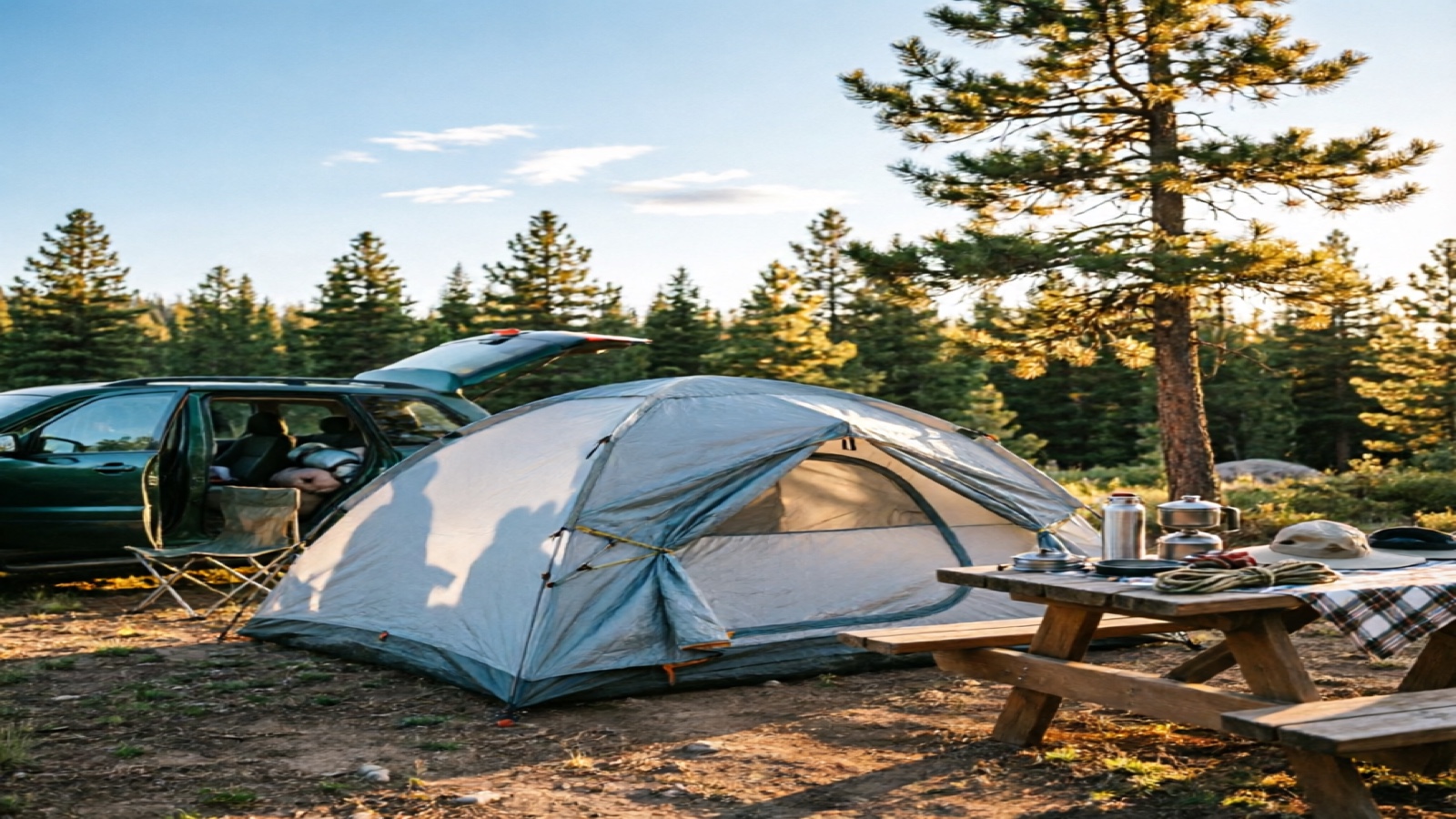
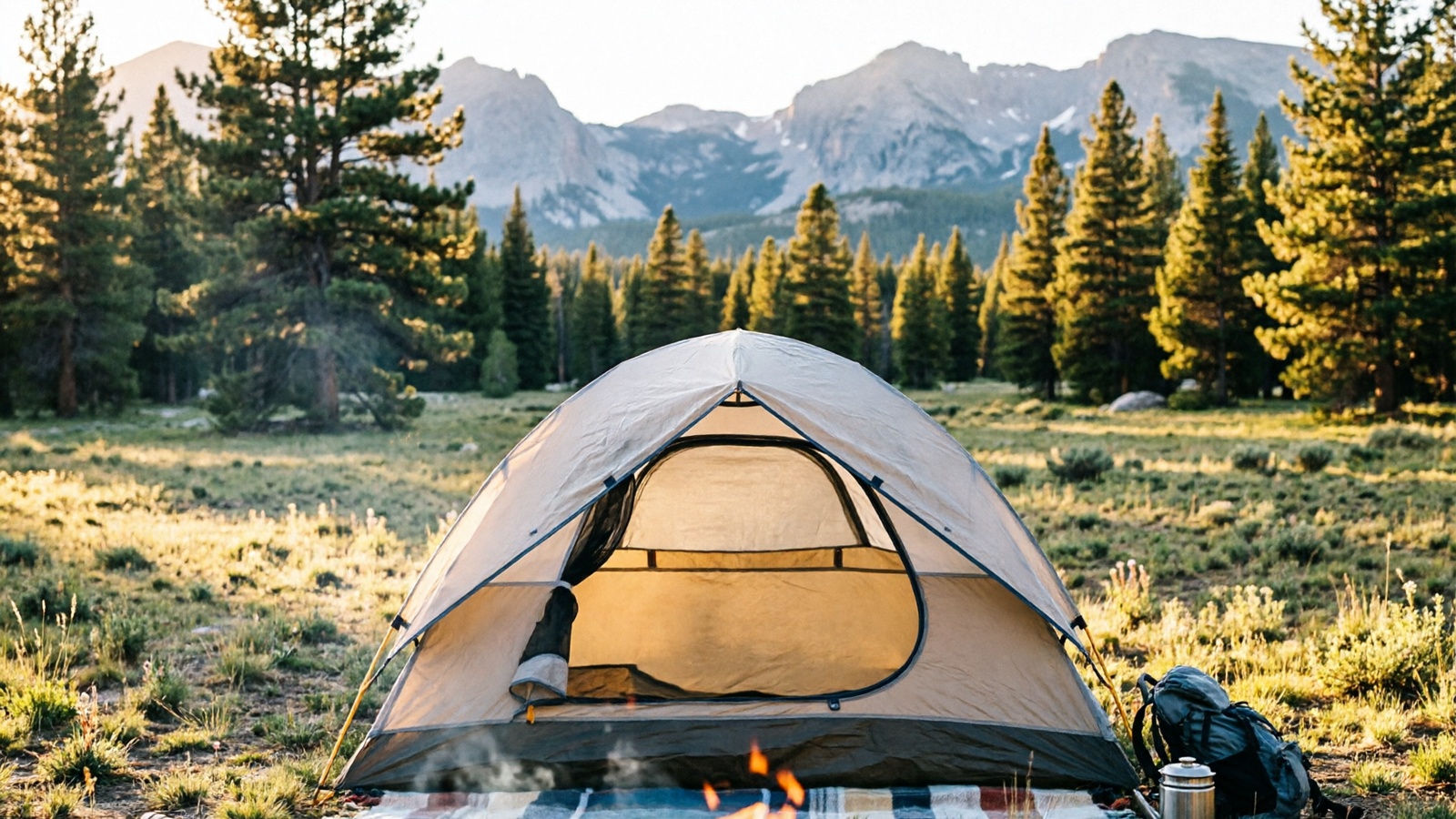
Dispersed camping is camping outside of developed campgrounds on public land. There are no facilities, no fees, no reservations, and no assigned sites. You find a spot, set up, and camp — typically for free.
It’s primarily available on BLM land (245+ million acres, mostly western states) and National Forests (193 million acres across 154 forests).
No amenities exist at dispersed sites: no toilets, no water, no trash cans, no fire rings (unless a previous camper left one). You bring everything and pack everything out.
Dispersed camping is the most common type of camping in the western U.S. — Arizona, Utah, Colorado, New Mexico, Nevada, California, Oregon, Washington, Idaho, Montana, and Wyoming all have extensive access. It’s not allowed in National Parks (except designated backcountry sites with permits), State Parks, or on private property.
Here’s how it compares to other camping types:
| Type | Cost | Amenities | Reservations | Where |
|---|---|---|---|---|
| Developed Campground | $15–$35/night | Bathrooms, water, fire rings, tables | Often required | State/National parks, USFS campgrounds |
| Dispersed Camping | Free | None | Never | BLM land, National Forests |
| Boondocking | Free | None | Never | Anywhere without hookups (public land, parking lots) |
| Backcountry Camping | Free or permit fee | None | Often required | National Parks, Wilderness areas |
The distinction between dispersed camping and boondocking trips people up. All dispersed camping is boondocking, but not all boondocking is dispersed camping — a Walmart parking lot overnight is boondocking, not dispersed camping.
Where Can You Disperse Camp?
Finding a legal dispersed campsite takes more effort than booking a campground, but the process is straightforward once you know the steps.
Step 1: Identify public land near your destination. Use the BLM public land map and the USFS Recreation Map to find BLM land and National Forests in the area you want to camp. Most National Forests west of the Mississippi have dispersed camping opportunities.
Step 2: Check the Motor Vehicle Use Map (MVUM). For National Forests, the MVUM is essential — it shows which roads are legally open to vehicles. You can only disperse camp within 300 feet of a designated open road in most National Forests. MVUMs are available free from each ranger district office and online.
Step 3: Verify restrictions. Call the local ranger district or BLM field office. Ask about fire restrictions, road closures, seasonal closures, and stay limits.
Step 4: Scout on satellite view. Use Google Earth to find pull-offs, clearings, and flat areas along forest service roads. Dark spots (possible fire rings) indicate established sites.
Step 5: Drive the road before committing. Arrive during daylight. Forest service roads range from paved to rough 4WD tracks. Check clearance and turnaround options before pulling off.
Dispersed camping is not allowed in National Parks (without a backcountry permit), State Parks, private property, within 200 feet of water sources, or in active timber harvest areas and on closed roads.
Dispersed Camping Permits and Rules
The rules are simpler than most beginners expect, but the details matter.
Permits: Most BLM and National Forest dispersed camping doesn’t require a permit. Exceptions include high-use areas near trailheads, certain ranger districts requiring free self-issued permits at trailhead kiosks, and any area posted with signage. If unsure, call the ranger station.
The 14-day rule is the most important regulation. The standard limit on both BLM and National Forest land is 14 days within a 30-day period, then you must move at least 25 miles away. Some popular areas enforce shorter 5–7 day limits posted on signs. Rangers enforce this, especially in high-use areas.
Fire restrictions follow a three-stage system and change frequently based on conditions:
| Stage | Campfires | Camp Stoves | Chainsaws |
|---|---|---|---|
| None | Allowed | Allowed | Allowed |
| Stage 1 | Only in designated fire rings | Allowed | Allowed before 1pm |
| Stage 2 | Prohibited | Allowed | Prohibited |
| Stage 3 | Prohibited | Prohibited | Prohibited |
Check restrictions before every trip — they can change overnight with dry conditions or lightning. During summer and fall in the western U.S., Stage 1 or Stage 2 restrictions are common.
Food storage: No bear boxes exist in dispersed areas. In bear country, use a bear canister, hang food in a bear bag, or store it in a locked vehicle. Never keep food, toiletries, or anything scented in your tent.
Group size is typically limited to 12 or fewer people. Dogs are allowed but must be under control — leash requirements vary by area.
For comprehensive safety practices, see our camping safety tips.
Dispersed Camping Gear Checklist
Dispersed camping demands more self-sufficiency than campground camping. You bring everything — shelter, water, food, hygiene, and emergency supplies. No picnic tables, no water spigots, no trash service.
| Category | Item | Why It Matters |
|---|---|---|
| Shelter | Tent with rain fly | No shelter except what you bring |
| Shelter | Tarp + paracord | Extra weather protection, cooking shelter |
| Sleep | Sleeping bag (rated for expected temps) | No climate control — over-prepare |
| Sleep | Sleeping pad (R-value 3.0+) | Ground insulation critical without a platform |
| Water | Water containers (5+ gallons total) | No water source at most dispersed sites |
| Water | Water filter or purification tablets | For treating stream or lake water |
| Food | Cooler + ice or dry food | No stores nearby |
| Food | Bear canister or bear bag | Required in bear country |
| Cooking | Camp stove + fuel | Campfires may be restricted |
| Cooking | Cookware, utensils, plates | Self-contained kitchen |
| Hygiene | Portable toilet or wag bags | No bathrooms — pack out all waste |
| Hygiene | Hand sanitizer, biodegradable soap | Human waste management |
| Navigation | Downloaded offline maps | No cell service in most dispersed areas |
| Navigation | Paper maps as backup | Electronics fail |
| Safety | First aid kit | Nearest hospital may be hours away |
| Safety | Headlamp + extra batteries | No electric light |
| Fire | Fire starter, waterproof matches | If fires are allowed |
| Comfort | Camp chairs, table | No picnic tables provided |
| Trash | Trash bags | Pack out everything |
For a complete packing reference, see our car camping checklist. For sleeping bag selection, our sleeping bag guide covers temperature ratings, insulation types, and fit. For tent selection, our tent guide breaks down capacity, season rating, and setup.
A few items worth investing in for dispersed camping specifically:
- Water filter: The Sawyer Squeeze weighs 3 ounces, filters to 0.1 microns, and works as squeeze or gravity filter. The Katadyn BeFree has faster flow and a collapsible bottle.
- Water containers: A Reliance Aqua-Tainer (7-gallon) is the standard basecamp supply.
- Bear canister: The BearVault BV500 is transparent, holds ~6 days of food for one person, and is SIBBG-approved. The Garcia Bear Resistant Container is heavier but nearly indestructible.
- Camp stove: The MSR PocketRocket 2 (2.6 oz) boils water fast — essential when fires aren’t allowed. For groups, a Coleman Classic two-burner works better.
How to Find and Choose a Campsite
Finding a good dispersed campsite is part skill, part patience. Here’s a systematic approach:
Step 1: Drive slowly on forest service roads. Look for pull-offs wide enough for your vehicle, flat ground, and signs of previous use — fire rings, cleared areas, tire tracks. Established sites are better than creating new ones.
Step 2: Check ground conditions. Avoid low spots (water collects), dry creek beds (flash flood risk), and dead trees overhead (“widowmakers”). Look for level, well-drained ground with a natural windbreak.
Step 3: Assess sun and wind. In summer, partial shade keeps your tent cool. In winter, south-facing open spots get maximum sun. Avoid camping at the bottom of valleys — cold air pools there, sometimes 10–15°F colder than nearby higher ground.
Step 4: Check distance from water. Camp at least 200 feet from streams and lakes (check local rules). Close enough to access water for filtering, far enough to protect the source.
Step 5: Use existing impact. Camp on established sites with existing fire rings. Concentrating use on already-impacted sites minimizes environmental damage.
Step 6: Evaluate vehicle access. Can you get in and out? Is there room to turn around? Don’t pull off into soft ground if rain is possible.
Step 7: Set up before dark. Always arrive with enough daylight to evaluate the site, pitch your tent, and gather firewood.
Useful tools for finding spots: Campendium (crowd-sourced free site reviews), iOverlander (GPS-tagged community spots), onX Maps (shows public land boundaries and road types), and Google Earth for satellite scouting before arrival.
Water: Finding, Treating, and Storing
Water is the biggest logistical challenge in dispersed camping. No spigots, no pumps — what you bring is what you have until you find a natural source.
Bring your own first. At minimum, carry 1 gallon per person per day for drinking, plus extra for cooking and cleaning. For two people on a three-day trip, that’s at least 6 gallons for drinking alone. A Reliance Aqua-Tainer holds 7 gallons and is the most common basecamp water container among dispersed campers.
Finding water sources: Streams, rivers, and lakes are common in mountainous and forested areas. In arid BLM land (Nevada, Utah, Arizona), water sources may be seasonal or nonexistent. Use USGS Topo maps or Gaia GPS to locate water before you arrive.
Water treatment methods for backcountry use:
- Pump filter (Sawyer Squeeze, Katadyn BeFree) — removes bacteria and protozoa, not viruses. Effective for most North American surface water.
- Gravity filter — filters larger volumes hands-free, good for group basecamp setups.
- UV purifier (SteriPEN) — kills all pathogens including viruses, but requires charged batteries and clear water.
- Chemical treatment (Aquatabs, iodine tablets) — lightweight backup, 30-minute wait, leaves a taste.
- Boiling — rolling boil for 1 minute (3 minutes above 6,500 feet) kills everything. Reliable but fuel-intensive.
Never drink untreated water — Giardia, Cryptosporidium, and E. coli from wildlife are present in most North American surface water.
For water storage, use dedicated containers. Collapsible 2–5 gallon containers save space on the drive home. Keep a 1L bottle accessible for day hikes and filtering sessions.
Campfire Rules and Regulations
Campfire management in dispersed areas requires more attention than at developed campgrounds — no fire grates, no posted rules at every site, and often no cell service to check restrictions.
Fire safety checklist:
- Check current fire restrictions before every trip — call the ranger district or check their website
- Use existing fire rings when available — don’t create new ones
- If no fire ring exists, use a fire pan or build a mound fire on mineral soil, not organic ground
- Clear a 10-foot diameter area around the fire — remove all leaves, grass, pine needles, and debris
- Keep fires small — you don’t need a bonfire for cooking and warmth
- Never leave a fire unattended, even for a few minutes
- Extinguish completely before leaving: drown with water, stir ashes, drown again, feel for heat with the back of your hand
- Pack out all trash — burn only small clean paper, nothing plastic, foil, glass, or food
- Keep a shovel and water bucket within reach at all times
Fire restriction levels escalate as conditions dry out. Stage 1 is common in mid-summer across the western U.S. Stage 2 and Stage 3 are typically triggered by prolonged drought, high temperatures, and active wildfires in the region. Always bring a camp stove as a cooking backup — even when fires are currently allowed, restrictions can change overnight.
For detailed campfire techniques, see how to build a campfire.
Bathroom and Waste Management
There are no bathrooms at dispersed campsites. You are responsible for all waste — human waste, dishwater, and trash.
Solid human waste: Dig a cathole 6–8 inches deep, at least 200 feet from water, trails, and camp. Cover when done. In popular areas, many land managers now require wag bags — pack out solid waste. Cleanwaste Go Anywhere WAG bags (~$2/use) are the standard option.
Toilet paper: Pack it out in a sealed zip-lock bag. Don’t bury it — animals dig it up, and it decomposes slowly in arid or cold environments.
Urinate on rocks or non-vegetated ground at least 200 feet from water. Animals are attracted to the salt in urine and will dig up fragile vegetation to get to it.
Trash: Pack out everything — food scraps, microtrash (wrapper fragments, twist ties), and hygiene products. Leave the site cleaner than you found it.
Greywater (dishwater): Strain food particles with a mesh strainer and pack out the solids. Scatter the water broadly over a wide area at least 200 feet from water sources. Use biodegradable soap sparingly — it still requires soil contact to break down and is not effective in water.
Portable toilets make extended stays more comfortable. The Thetford Porta Potti (~$130) is the most widely used option with a freshwater tank, waste tank, and flush mechanism. For a budget approach, a DIY bucket toilet with a snap-on seat and wag bags works fine.
Wildlife Safety
Most wildlife encounters in dispersed camping areas are avoidable with proper food storage. The animals aren’t the problem — improperly stored food is.
Bear country: Most western National Forests and BLM land in the Rockies, Cascades, and Sierra Nevada have black bear populations. Grizzly bears are found in parts of Wyoming, Montana, Idaho, and Washington. Food storage is non-negotiable:
- Bear canister (required in some areas): The BearVault BV500 is the most popular option — transparent, holds ~6 days of food for one person, and is approved by the Sierra Interagency Black Bear Group.
- Bear hang: Counterbalance method between two branches, 10+ feet off ground and 4+ feet from the trunk. Effective but requires suitable trees and practice.
- Locked vehicle: Works for black bears in most areas. Not reliable for grizzlies, which are stronger and more determined.
Never store food, toiletries, sunscreen, insect repellent, or anything scented in your tent. Cook and eat at least 200 feet from your sleeping area.
Other wildlife to be aware of:
- Mountain lions: Rare but present in most western ranges. Avoid hiking alone at dawn and dusk. Keep children close.
- Rattlesnakes: Common in desert BLM land. Check boots, sleeping bags, and rock crevices before reaching in.
- Elk and moose: More dangerous than bears in encounters. Moose charge without warning — give them at least 100 feet, more during fall rut.
- Ticks: Common in forested dispersed areas. Check for ticks daily. Lyme disease, Rocky Mountain spotted fever, and anaplasmosis are all present in dispersed camping regions.
For camping with children in areas with wildlife, see our family camping essentials.
Leave No Trace Principles for Dispersed Camping
Leave No Trace isn’t just a slogan for dispersed camping — it’s the reason access stays open. When dispersed sites get trashed, the Forest Service or BLM closes the road. It happens every year.
1. Plan ahead and prepare. Check regulations, weather, and road conditions. Bring a map. Tell someone at home exactly where you’re going and when you’ll be back.
2. Travel and camp on durable surfaces. Use established sites and existing fire rings. Don’t create new ones, tent platforms, or social trails. Camp on rock, gravel, dry grasses, or snow — not on fragile vegetation or cryptobiotic soil crusts (dark biological soil crust in desert regions that takes decades to recover from a footprint).
3. Dispose of waste properly. Pack out all trash, leftover food, and litter. Deposit human waste in catholes or wag bags. Strain dishwater and scatter 200+ feet from water.
4. Leave what you find. Don’t build structures, rock furniture, or windbreaks. Don’t pick flowers, move rocks, stack cairns, or disturb natural features.
5. Minimize campfire impacts. Use existing fire rings, keep fires small, burn all wood to white ash, and scatter cold ashes. Consider a camp stove — faster, cleaner, and not subject to restrictions.
6. Respect wildlife. Observe from a distance. Never feed animals — it habituates them and creates dangerous behavior. Secure food and trash. Control pets.
7. Be considerate of other visitors. Many dispersed campers choose it specifically for quiet and solitude. Keep noise down, yield on trails, and camp out of sight of roads and other campsites when possible.
Dispersed Camping Tips and Common Mistakes
These are the mistakes that show up in every ranger station conversation and trip report:
Most common beginner mistakes:
- Arriving after dark — you can’t evaluate the site, might get stuck on a bad road, and will damage the ground driving around looking for a spot
- Not bringing enough water — there is no water source at most dispersed sites. No exceptions
- Assuming fires are always allowed — restrictions change frequently and are enforced. Check before every trip
- Camping too close to water — damages riparian areas, pollutes water sources, and is usually illegal within 200 feet
- Not checking road conditions — forest service roads can be impassable when wet, even for 4WD. A rainstorm 50 miles away can make your road a mud pit
- Leaving trash — this is the #1 reason dispersed camping areas get closed to public access
- Ignoring the 14-day limit — rangers enforce this, especially in popular areas near trailheads and scenic corridors
- Not telling anyone where you’re going — no cell service means no way to call for help
Practical tips that make dispersed camping easier:
- Download offline maps before losing cell service — Google Maps offline areas, Gaia GPS, or onX Maps all work without reception
- Bring a portable power bank or solar charger — no electricity at dispersed sites. The Goal Zero Nomad and BigBlue solar panels are widely used
- Carry a shovel — useful for catholes, fire management, leveling tent platforms, and digging out stuck vehicles
- Bring extra stove fuel — 30–50% more than you’d use in summer, at high elevation
- Arrive with a full tank of gas — the nearest station may be 50+ miles away
- Use a tarp as a cooking shelter — makes cooking possible in rain and wind
- Check for ticks daily — tick-borne diseases (Lyme, Rocky Mountain spotted fever, anaplasmosis) are common in forested dispersed areas
FAQ
Is dispersed camping legal?
Yes, on most BLM and National Forest land. Check local rules before you go — some areas require permits, have seasonal closures, or limit stays to 14 days.
Do you need a permit for dispersed camping?
Not in most areas. Some high-use zones near trailheads or popular recreation sites require free self-issued permits, usually available at trailhead kiosks.
Can you have a campfire while dispersed camping?
Yes, unless there’s an active fire restriction. Check with the local ranger district before every trip — restrictions change frequently, especially in summer and fall.
How do you find dispersed camping spots?
Use MVUM maps for National Forest roads, apps like Campendium and iOverlander, and Google Earth for satellite scouting. Arrive during daylight and look for existing fire rings and flat clearings.
Is dispersed camping safe?
Generally safe with proper preparation. The main considerations are food storage in bear country, offline maps since there’s no cell service, a first aid kit, and telling someone your plans.
How long can you stay at a dispersed campsite?
14 days within a 30-day period on BLM and National Forest land, then you must move at least 25 miles away. Some popular areas have shorter 5–7 day limits posted on signs.
What is the difference between dispersed camping and boondocking?
Dispersed camping is specifically on public land (National Forests, BLM) outside developed campgrounds. Boondocking is any camping without hookups, which includes parking lots, rest areas, and private property.
Dispersed camping offers freedom, solitude, and zero cost — but it demands self-reliance. Start simple: pick a National Forest near you, bring more water than you think you need, pack a camp stove in case fires are restricted, and follow Leave No Trace principles. The learning curve is short. After one or two trips, dispersed camping becomes second nature — and you’ll wonder why you ever paid for a campsite.
Bookmark this guide, check the fire restrictions for your area, and head out. If you found it helpful, share it with someone who’s never camped outside a campground.
Frequently Asked Questions
Is dispersed camping legal?
Yes — dispersed camping is legal on most Bureau of Land Management (BLM) land and in most National Forests. It's a permitted use of public land managed by the federal government. However, rules vary by location: some areas require permits, some have seasonal restrictions, and some popular zones limit stays to 14 days. Always check the local ranger district or BLM field office before you go.
Do you need a permit for dispersed camping?
In most National Forests and BLM areas, no permit is required for dispersed camping. Exceptions include high-use areas (like near trailheads or popular recreation sites), some National Forest ranger districts, and any area posted with signage requiring a permit. Some regions offer free self-issued permits at trailhead kiosks. When in doubt, call the local ranger station — they'll tell you exactly what's needed for that specific area.
Can you have a campfire while dispersed camping?
Campfire rules depend on current conditions and location. Most National Forests and BLM lands allow campfires unless there's an active fire restriction or ban (common in summer and fall). Check the local ranger district website or call ahead — fire restrictions change frequently. When fires are allowed, use existing fire rings when possible, keep fires small, never leave them unattended, and extinguish completely before leaving. Carry a fire pan or bring a camp stove as a backup.
How do you find dispersed camping spots?
The best tools are the USFS Motor Vehicle Use Map (MVUM) for National Forest roads, the BLM website and recreation.gov for BLM land, and apps like Campendium, iOverlander, and onX Maps. Google Earth satellite view helps you scout potential pull-offs and clearings. Drive forest service roads slowly and look for existing fire rings, flat clearings, and signs of previous camping. Arrive before dark — finding a spot at night is difficult and damages the environment.
Is dispersed camping safe?
Dispersed camping is generally safe, but it requires more preparation than developed campgrounds. Key risks: wildlife encounters (proper food storage eliminates most issues), no cell service (download offline maps and tell someone your plans), remote locations (carry a first aid kit and emergency supplies), and weather exposure (no shelter except what you bring). The biggest safety advantage: most dispersed areas have very few other people. Use common sense — don't camp in dry creek beds, avoid isolated spots if you're uncomfortable, and always have an exit plan.
How long can you stay at a dispersed campsite?
The standard limit on both BLM and National Forest land is 14 days within a 30-day period. After 14 days, you must move at least 25 miles away before camping again. Some popular areas have shorter limits (5-7 days) posted on signs. Rangers do enforce these limits, especially in high-use areas. The 14-day rule exists to prevent long-term occupation and reduce environmental damage.
What is the difference between dispersed camping and boondocking?
The terms are often used interchangeably, but there's a subtle difference. Dispersed camping refers specifically to camping on public land (National Forests, BLM) outside developed campgrounds. Boondocking is a broader term for any camping without hookups — it can include Walmart parking lots, rest areas, and private land. All dispersed camping is boondocking, but not all boondocking is dispersed camping.