Desert Camping Guide: Essential Tips for a Safe Trip
Plan the perfect desert camping trip with our complete guide covering gear, safety, hydration, and the best desert destinations in the US.
Why Desert Camping Should Be on Your Bucket List
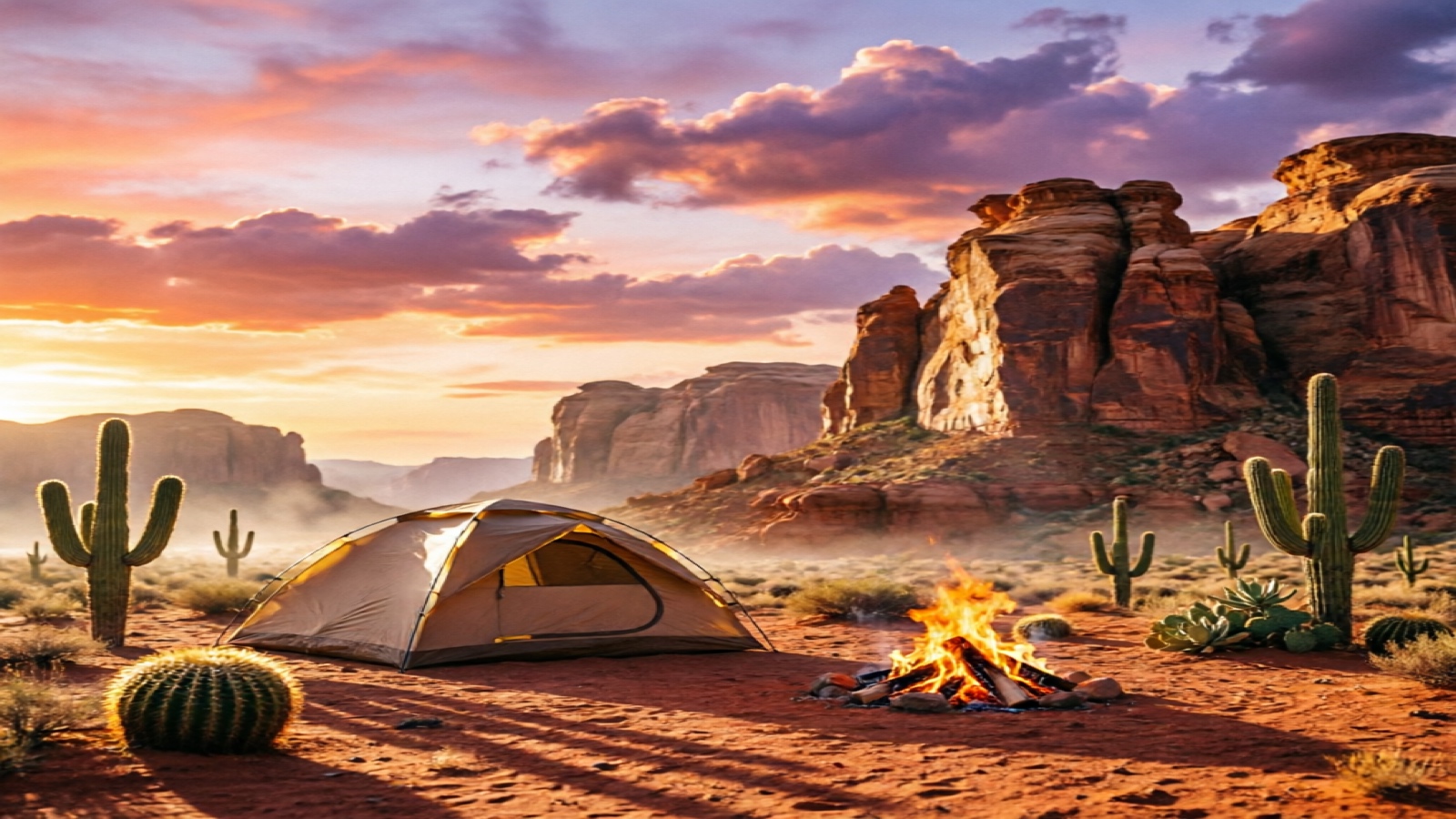
Desert camping delivers landscapes you simply cannot find anywhere else. Towering red rock formations, endless sand dunes, and volcanic cinder cones create a backdrop that feels otherworldly. The stark beauty of places like Joshua Tree or Arches National Park sticks with you long after you pack up.
Then there is the night sky. Far from city lights, the desert offers some of the darkest skies in the lower 48 states. On a clear night in the Mojave or Big Bend, you can see the Milky Way stretched across the horizon with your naked eye. It is the kind of stargazing that makes you understand why observatories are built in deserts.
Solitude is another draw. While campgrounds in forested national parks fill up months in advance, many desert spots remain uncrowded even during peak season. You can often find a dispersed campsite on BLM land where your nearest neighbor is miles away. For desert camping enthusiasts who value quiet and space, the desert delivers.
Finally, desert camping destinations are accessible year-round if you time it right. The same area that is brutally hot in July becomes a comfortable winter escape in January. This flexibility means you can scratch the camping itch when mountain campgrounds are buried in snow. Check out our guide to camping in winter for more cold-weather alternatives.
Best Time for Desert Camping by Region
Timing is everything with desert camping. Go at the wrong time and you will be miserable — or worse, in danger. The good news is that every desert region has a sweet spot.
Southwest low deserts (Mojave, Sonoran, Chihuahuan) are best from October through April. Daytime highs sit in the 60–80°F range, and nights are cool but not freezing. This corridor covers most of southern California, Arizona, New Mexico, and western Texas. March and April bring wildflower blooms that carpet the desert floor in color, especially after a wet winter.
High desert areas like the Great Basin and Colorado Plateau sit at higher elevations (4,000–7,000 feet). These regions are pleasant from May through June and again in September through October. Summer monsoons can bring afternoon thunderstorms, so morning hikes are safest. Winter nights dip well below freezing at these elevations.
Avoid the low desert from June through September unless you are experienced with hot weather camping or camping in the heat. Daytime temperatures routinely exceed 110°F (43°C), and shade is scarce. Monsoon season (July–August) adds flash flood risk to the heat. If you must camp in summer, stick to high-elevation sites above 6,000 feet.
Top Desert Camping Destinations in the US
The American Southwest holds some of the best desert camping on the planet. Here are the spots worth planning a trip around.
Joshua Tree National Park, California offers two distinct desert ecosystems — the Mojave and the Colorado — in one park. Jumbo Rocks and Hidden Valley campgrounds put you among the park’s namesake trees and massive boulders. Spring and fall are ideal. Reservations are essential from October through May.
Mojave National Preserve, California sees a fraction of Joshua Tree’s crowds but delivers equally dramatic scenery. Mid Hills and Hole-in-the-Wall campgrounds sit at higher elevation, making them comfortable even in warmer months. The preserve also allows dispersed camping along most dirt roads.
Big Bend National Park, Texas is one of the least visited national parks, which means plenty of space. The Chisos Basin campground sits in a mountain island surrounded by Chihuahuan Desert, giving you cooler temperatures at 5,400 feet. The Rio Grande campgrounds offer a true river-in-the-desert experience.
Arches and Canyonlands, Utah provide access to some of the most photographed landscapes in the country. Devils Garden Campground inside Arches is the only developed campground and fills fast. Backcountry camping in Canyonlands offers true solitude among the red rock.
White Sands National Park, New Mexico lets you camp on gleaming white gypsum dunes. The park has only backcountry campsites — no developed campground — so you need to hike in with all your water. The surreal landscape makes the effort worthwhile.
Saguaro National Park, Arizona surrounds Tucson with giant saguaro cactus forests. Backcountry camping is permitted with a permit, and nearby BLM land offers free dispersed options. Spring wildflower season here is spectacular.
For free camping, BLM dispersed sites around these parks are hard to beat. The BLM land south of Joshua Tree, around Quartzsite, Arizona, and across the Arizona Strip all offer legal, free camping with no permits required in most cases.
Essential Desert Camping Gear Checklist
Desert camping demands gear that standard camping lists do not always cover. Our full camping packing list covers the basics, but here are the desert-specific essentials.
Sun protection is non-negotiable. Pack a reflective sunshade or tarp, a wide-brimmed hat with a chin strap, UPF-rated long-sleeve shirt and pants, and UV-blocking sunglasses. Sunscreen alone is not enough — you need physical barriers between you and the sun.
Water storage and delivery matters. Bring at minimum 5 gallons (19 liters) per person for a two-day trip. Use rigid jerry cans for bulk storage and a hydration bladder for hiking. A quality cooler keeps drinking water cold and perishable food safe.
Shelter needs differ from forest camping. Sand stakes (longer and wider than standard stakes) hold your tent in loose soil. A shade canopy or tarp rigged above your tent can drop the interior temperature by 15–20°F. A reflective emergency blanket draped over your tent reflects solar radiation.
Sleep gear must handle extremes. Deserts can swing 40°F between day and night. A sleeping pad with an R-value of 3 or higher insulates you from cold ground — see our sleeping pad reviews for top picks. Bring a sleeping bag rated 20°F lower than the expected low.
Safety items specific to the desert:
- Headlamp with red light mode (preserves night vision, attracts fewer bugs)
- First aid kit with tweezers for cactus spines and a snake bite protocol card
- Navigation tools (GPS or map and compass — cell service is unreliable)
- Signal mirror and whistle for emergencies
- Extra vehicle key hidden on your rig
How to Set Up Camp in the Desert
Campsite selection in the desert can mean the difference between a comfortable trip and a dangerous one. Follow these rules every time.
Never camp in a wash, arroyo, or low-lying area. Even if the sky is clear overhead, a thunderstorm miles away can send a wall of water rushing through a dry wash. Flash floods kill people every year in the Southwest. Set up on high ground with a clear escape route.
Find natural shade when possible. A large rock outcropping, a mesquite tree, or an overhang provides shade during the hottest part of the day. If natural shade is not available, create your own with a tarp rigged on trekking poles or your vehicle. Angle the tarp to block the afternoon sun from the southwest.
Orient your tent door away from prevailing winds. Desert winds carry fine dust that gets into everything. If your tent faces away from the wind, you will track in less sand. Stake down your rainfly even in clear weather — desert winds can gust from 0 to 40 mph in minutes.
Build a windbreak if the site is exposed. Parking your vehicle upwind of your tent creates an effective barrier. You can also stack rocks or use a low tarp wall. Even a 3-foot windbreak makes a noticeable difference in comfort and keeps your stove flame steady for cooking.
Follow Leave No Trace principles carefully. Desert ecosystems recover from damage far more slowly than forests. Cryptobiotic soil crusts — those dark, lumpy patches on the ground — take decades to grow and can be destroyed by a single footstep. Walk on rock, sand, or established trails whenever possible.
Staying Hydrated and Cool
Hydration is the single most important factor in desert camping safety. Getting it wrong can escalate from uncomfortable to life-threatening in hours.
Calculate your water needs before you leave. The baseline is 1 gallon (4 liters) per person per day for drinking. Add another half gallon for cooking and basic hygiene. If temperatures will exceed 90°F (32°C) or you plan strenuous hiking, bump that to 1.5 gallons per person per day. Always carry a 2-gallon emergency reserve in your vehicle that you do not touch unless something goes wrong.
Do not wait until you are thirsty to drink. By the time thirst kicks in, you are already behind on fluids. Set a timer and drink 8 ounces every 20–30 minutes during active periods. Sip constantly rather than chugging large amounts infrequently.
Replace electrolytes, not just water. Sweating in dry heat evaporates so quickly you may not notice how much fluid you are losing. Pack electrolyte powder, tablets, or sports drinks. A pinch of salt in your water bottle works in a pinch. Low sodium causes the same symptoms as dehydration — headache, nausea, confusion — but drinking more water without electrolytes makes it worse.
Know the signs of heat illness. Heat exhaustion shows up as heavy sweating, weakness, nausea, and cool, clammy skin. Get to shade, drink water with electrolytes, and wet your skin to cool down. Heatstroke — hot, dry skin, confusion, loss of consciousness — is a medical emergency. Call 911 and cool the person immediately.
Schedule activities around the heat. Hike and do camp chores in the early morning (dawn to 10am) and evening (after 5pm). From 11am to 3pm, rest in the shade. This is not laziness — it is strategy. People who push through peak heat while camping in the heat are the ones who end up in trouble.
Use simple cooling tricks. A wet bandana around your neck cools blood flowing to your brain. A spray bottle with water provides instant relief. Soaking your hat and shirt during a hike is effective and dries quickly in the dry air.
Desert Wildlife and Safety
On any desert camping trip, animals are not waiting to attack you, but you need to understand what lives around you and how to avoid problems. Our full camping safety tips guide covers general precautions, but desert-specific awareness is critical.
Rattlesnakes are the most significant wildlife risk. Several species live across American deserts, including the Western Diamondback, Mojave, and Sidewinder. They are most active at dawn, dusk, and after dark during warm months. Stay on trails, watch where you step, and never reach into rock crevices or under bushes without looking first. If you hear a rattle, freeze, locate the snake, and back away slowly.
Scorpions and spiders hide in boots and gear. The bark scorpion, found in the Sonoran Desert, is the most venomous scorpion in the US. Shake out your shoes, clothing, and sleeping bag before use. Keep your tent zipped at all times, even during the day. Store packs inside the tent or hung from a branch — not on the ground outside.
Other hazards deserve attention too. Javelinas in the Southwest can be aggressive if cornered, especially near food. Coyotes generally avoid people but will raid unsecured food at night. Store all food in hard-sided containers or your vehicle. Never feed any desert animal — it habituates them to humans and creates dangerous encounters.
Flash floods are the deadliest desert hazard. A clear sky above you does not mean you are safe. Thunderstorms 20 miles away can send water rushing through dry channels with little warning. If you hear a roaring sound or see water rising, move to high ground immediately. Do not try to drive through running water.
What to Wear Desert Camping
Clothing is your first line of defense against sun, heat, wind, and cold. The desert punishes poor clothing choices quickly.
Cover up, do not strip down. It sounds counterintuitive, but long sleeves and pants protect you from UV radiation and actually keep you cooler by shielding skin from direct sun. Choose loose-fitting garments in light colors — white, tan, or pale blue. Tight clothing traps heat against your skin.
Choose the right fabrics. Moisture-wicking synthetics (nylon, polyester) or lightweight merino wool work best. Cotton kills in the desert — it absorbs sweat but dries slowly, which is great for evaporative cooling while you wear it but miserable if the temperature drops. A damp cotton shirt at sundown turns into a cold, clammy layer fast.
Protect your head, eyes, and feet. A wide-brimmed hat with at least a 3-inch brim shades your face, ears, and neck. UV-rated sunglasses (look for 100% UVA/UVB protection or UV400 rating) prevent eye damage — sand and rock reflect intense sunlight upward. Closed-toe hiking shoes or boots with good tread handle rocky, uneven terrain better than sandals, and they protect against cactus spines and snake fangs.
Always pack a warm layer. This is the mistake first-time desert campers make most often. Because the daytime is so hot, they assume the night will be warm too. But deserts at elevation can drop below freezing even in spring and fall. Pack a fleece or puffy jacket, a beanie, and warm socks for every desert trip regardless of the forecast. Learn more about seasonal prep from our guide to camping in the rain — layering strategy applies across conditions.
Cooking and Food Storage in the Desert
Cooking during a desert camping trip presents unique challenges: extreme heat spoils food fast, wind blows out stoves, and animals are persistent.
Prioritize non-perishable food. Canned goods, dried fruit, jerky, nuts, tortillas, peanut butter, and instant meals do not require refrigeration. These should make up the bulk of your food supply. Reserve cooler space for a few perishable treats rather than relying on cold storage for everything.
Manage your cooler aggressively. Pre-chill your cooler with ice the night before loading it. Freeze water bottles to use as ice packs — they provide cold and become drinking water as they melt. Open the cooler as infrequently as possible, and keep it in the shade. In temperatures above 90°F, block ice lasts longer than cubed ice.
Cook during cooler hours. Running a stove in the middle of the day adds heat you do not want. Cook breakfast before the sun hits camp and dinner after sunset. One-pot meals minimize cleanup and stove time. A windscreen for your stove is essential — desert gusts will blow out a bare flame repeatedly.
Store food securely. Even in the desert, animals will find your food. Raccoons, coyotes, ringtail cats, and rodents are common campsite raiders. Use hard-sided food containers or store everything in your locked vehicle. Never keep food or scented items (toothpaste, sunscreen) in your tent.
Common Desert Camping Mistakes to Avoid
Most desert camping problems trace back to a handful of preventable mistakes that trip up even experienced campers. Learn from others rather than making them yourself.
Not bringing enough water. This is the number one error in hot weather camping. People read “1 gallon per person per day” and think that sounds like a lot. It is not. Between drinking, cooking, and basic hygiene, you will go through it faster than you expect. When in doubt, bring more.
Camping in a wash. The ground is flat, the sand is soft, and it looks like a perfect tent pad. But that wash exists because water flows through it. Even a shallow-looking channel can carry enough water to sweep away a tent — and the people inside it. Always camp on higher ground.
Underestimating nighttime cold. A 95°F day can drop to 40°F at night, especially above 4,000 feet. Campers who bring only a thin blanket or a summer sleeping bag end up shivering all night. Check the overnight low, not just the daytime high, when packing.
Ignoring flash flood forecasts. Monsoon season runs roughly from July through mid-September in the Southwest. During this window, check the National Weather Service forecast for your specific area every morning. A 20% chance of rain is enough to reconsider a slot canyon hike or a wash campsite.
Leaving your itinerary with no one. Cell service does not exist across most of the desert. If something goes wrong — vehicle breakdown, injury, getting lost — nobody is coming if nobody knows where you are. Text or email your trip plan to a reliable contact before you lose signal. Include your route, expected camp location, and when you plan to return.
Forgetting sun protection. UV index in the desert regularly hits “extreme” levels (11+). A sunburn in the first hours of your trip makes the remaining days miserable and increases dehydration risk. Apply sunscreen before you think you need it, reapply every two hours, and wear physical barriers (hat, sleeves, sunglasses).
Frequently Asked Questions
What is the best time of year for desert camping?
The best time for desert camping is October through April when temperatures are moderate. Spring (March–May) offers wildflower blooms, while fall (October–November) has ideal hiking weather. Avoid June through September when daytime temperatures regularly exceed 100°F.
How much water should I bring for desert camping?
Plan for at least 1 gallon (4 liters) of water per person per day for drinking alone. Add another half gallon for cooking and cleaning. In extreme heat, increase to 1.5 gallons per person per day. Always carry extra water in your vehicle as an emergency reserve.
Can you camp for free in the desert?
Yes, much of the American desert is public land managed by the BLM (Bureau of Land Management) where dispersed camping is free. Popular free camping areas include BLM land around Joshua Tree, Mojave National Preserve, and Arizona Strip. Stay on established roads and follow Leave No Trace principles.
What should I wear for desert camping?
Wear loose-fitting, light-colored, long-sleeved shirts and pants to protect from sun and heat. Choose moisture-wicking fabrics like nylon or polyester. Bring a wide-brimmed hat, UV-protection sunglasses, and closed-toe hiking shoes. Pack a warm layer for cold desert nights, even in summer.
How do I stay cool while camping in the desert?
Set up camp in natural shade, use a reflective sunshade or tarp, and keep your tent ventilated. Drink water consistently rather than waiting until thirsty. Use a portable fan or misting bottle. Plan activities for early morning and evening, resting during peak heat (11am–3pm).
Are there dangerous animals in the desert I should worry about?
Deserts are home to rattlesnakes, scorpions, and venomous spiders. Shake out shoes and clothing before putting them on, keep your tent zipped, and use a headlamp at night. Most desert animals are nocturnal and avoid humans. Watch where you step and reach.
Final Thoughts
Desert camping rewards preparation more than any other type of camping. The stakes are higher — water is scarce, temperatures swing wildly, and help is far away. Whether you are trying hot weather camping for the first time or you are a seasoned desert camper, the basics remain the same. But for campers who plan carefully, the payoff is immense: silence you can hear, stars you can almost touch, and landscapes that reshape how you see the world.
Start with established campgrounds in places like Joshua Tree or Arches to get a feel for the desert environment. Once you are comfortable, venture into BLM dispersed camping for the real deal — raw, unfiltered desert with nothing between you and the horizon. Pack more water than you think you need, tell someone where you are going, and respect the landscape. The desert does not forgive carelessness, but it takes care of those who come prepared.
Frequently Asked Questions
What is the best time of year for desert camping?
The best time for desert camping is October through April when temperatures are moderate. Spring (March-May) offers wildflower blooms, while fall (October-November) has ideal hiking weather. Avoid June through September when daytime temperatures regularly exceed 100°F.
How much water should I bring for desert camping?
Plan for at least 1 gallon (4 liters) of water per person per day for drinking alone. Add another half gallon for cooking and cleaning. In extreme heat, increase to 1.5 gallons per person per day. Always carry extra water in your vehicle as an emergency reserve.
Can you camp for free in the desert?
Yes, much of the American desert is public land managed by the BLM (Bureau of Land Management) where dispersed camping is free. Popular free camping areas include BLM land around Joshua Tree, Mojave National Preserve, and Arizona Strip. Stay on established roads and follow Leave No Trace principles.
What should I wear for desert camping?
Wear loose-fitting, light-colored, long-sleeved shirts and pants to protect from sun and heat. Choose moisture-wicking fabrics like nylon or polyester. Bring a wide-brimmed hat, UV-protection sunglasses, and closed-toe hiking shoes. Pack a warm layer for cold desert nights, even in summer.
How do I stay cool while camping in the desert?
Set up camp in natural shade, use a reflective sunshade or tarp, and keep your tent ventilated. Drink water consistently rather than waiting until thirsty. Use a portable fan or misting bottle. Plan activities for early morning and evening, resting during peak heat (11am-3pm).
Are there dangerous animals in the desert I should worry about?
Deserts are home to rattlesnakes, scorpions, and venomous spiders. Shake out shoes and clothing before putting them on, keep your tent zipped, and use a headlamp at night. Most desert animals are nocturnal and avoid humans. Watch where you step and reach.