Camping with a Baby: A Complete Guide for New Parents
Practical tips and gear checklists for camping with a baby, including safety advice, sleep solutions, and packing essentials for your first trip.
Camping with a baby sounds intimidating. The packing list feels endless, the safety concerns stack up, and the idea of sleeping in a tent with an infant seems borderline reckless to anyone who has not tried it.
But here is the truth: thousands of parents go camping with a baby every year, and most come home wondering why they waited so long. Fresh air helps babies sleep better than you might expect. The change of scenery is invigorating for sleep-deprived parents. And the photos you will take are worth every extra diaper you packed.
If you are planning to go camping with a baby, this guide covers everything you need to know, from deciding when your baby is ready to packing the right gear to handling the unexpected.
When Is Your Baby Ready for Camping?
There is no single “right age” for a baby’s first camping trip, but most pediatricians suggest waiting until your baby is at least three months old. By this point, they have typically had their first round of vaccinations and their immune system is more developed.
A few things to consider before booking a campsite:
- Vaccination status: Babies under two months have limited immune protection. Waiting until after the first round of shots provides a meaningful safety cushion.
- Head and neck control: Babies who can hold their head up (usually around three to four months) are easier to manage in a carrier and around the campsite.
- Sleep patterns: If your baby has somewhat predictable sleep patterns, planning around naps becomes feasible. Newborns with erratic schedules make everything harder.
- Weather extremes: Avoid camping in very hot or very cold conditions with a young baby. Spring and fall offer the most forgiving temperatures.
Talk to your pediatrician before your first baby camping trip. They know your baby’s health history and can flag any concerns specific to your situation.
Choosing the Right Campsite
Not all campsites are equal when you have a baby in tow. When camping with a baby, the right site can make the trip enjoyable; the wrong one can turn it into an ordeal.
Proximity to civilization matters. For your first trip, pick a campground within 30 minutes of a town with a pharmacy and basic medical facilities. This is not the time for deep backcountry camping.
Look for campsites with:
- Cell reception: Essential for navigation, emergency calls, and peace of mind
- Running water: Hauling water for formula washing and general hygiene is a logistical headache you do not need
- Flush toilets: Changing diapers in a pit toilet situation is possible but unpleasant
- Shade trees: Natural shade keeps your tent and baby cooler during the day
- Level ground: A flat tent pad makes portable crib setup much easier
Campgrounds are safer than dispersed camping for your first baby trip. The infrastructure — bathrooms, water, nearby families — creates a support network that dispersed sites simply cannot match.
Start with a one-night trip close to home. If things go sideways, you can pack up and drive back without it feeling like a failed vacation. For more camping fundamentals, check out our camping guide for beginners.
Essential Baby Camping Gear
You do not need to buy out the baby section, but the right gear makes all the difference. Here is what experienced parents recommend for camping with a baby.
Sleep gear is your top priority:
- A Pamo Babe Compact Pack and Play gives your baby a familiar, enclosed sleep space. It folds flat and sets up inside most family tents.
- For warmer weather, the ISELECTOR Portable Baby Bassinet includes a mosquito net and sunshade canopy — two problems solved in one product.
- A proper baby sleeping bag like the Kelty Space Cadet (rated for 30-40°F) or the Morrison Outdoors Little Mo (40°F, designed for 6-18 months) keeps your baby warm without loose blankets, which are a suffocation risk.
Feeding gear worth packing:
- The Bright Starts Pop ‘N Sit Portable Booster works as a floor seat, feeding chair, and booster in one. It folds flat and weighs under three pounds.
- A portable cooler for breast milk or prepared formula
- Extra bottles and a collapsible wash basin for cleaning
Safety and comfort items:
- A Baby Delight Go with Me Venture Chair provides shaded, contained seating at the campsite. The sun canopy is particularly useful during peak UV hours.
- Baby-safe insect repellent (look for products with picaridin or oil of lemon eucalyptus, not DEET)
- A well-stocked baby first-aid kit (more on this below)
For a complete packing reference, see our camping packing list and our family camping essentials guide.
Keeping Your Baby Safe at the Campsite
Safety is the area where preparation matters most for any trip with a baby. The outdoors introduces risks that simply do not exist in your living room.
Temperature regulation is the biggest concern. Babies cannot regulate their body temperature as effectively as adults. In hot weather, watch for signs of overheating: flushed skin, rapid breathing, lethargy. In cold weather, check your baby’s temperature by feeling the back of their neck — hands and feet run cool naturally and are not reliable indicators.
Sun protection needs daily attention:
- Apply baby-safe sunscreen (SPF 30+) every two hours and after any water exposure
- Use a wide-brimmed sun hat that covers the ears and back of the neck
- Set up a shade structure at your campsite — a tarp rigged between trees or a canopy tent works well
- Avoid direct sun exposure between 10 AM and 2 PM
For bug protection, use a mosquito net over the portable crib and apply baby-safe repellent to clothing rather than directly on skin when possible. The ISELECTOR bassinet mentioned earlier has an integrated net that handles this automatically.
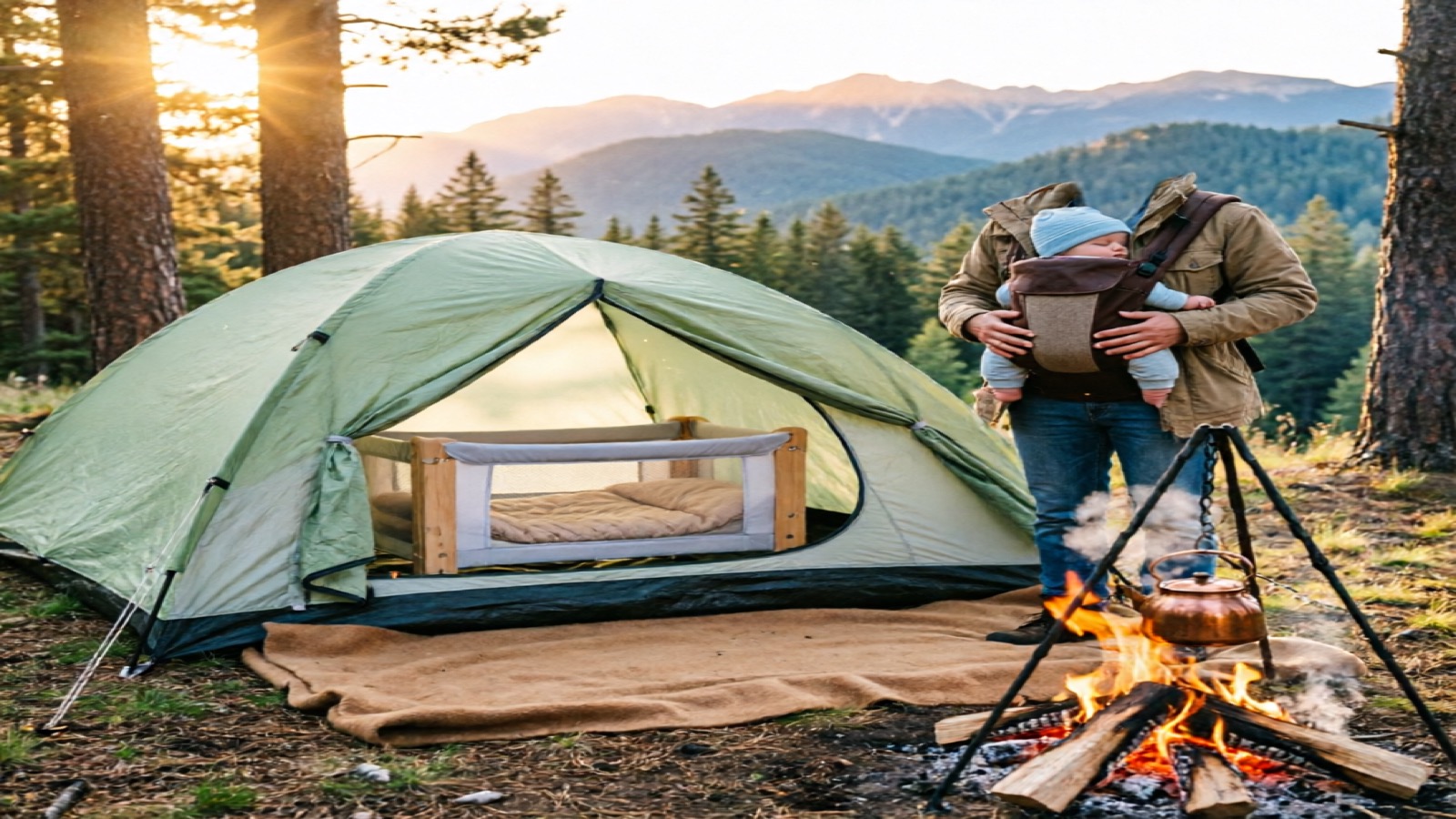
Campfire safety is non-negotiable. Keep your baby at least ten feet from any fire. Use a portable playpen as a physical barrier. Watch the wind direction to keep smoke away from your baby. Never leave a baby unattended near a campfire, even for a moment.
Baby Sleep Solutions for Camping
Sleep is what parents worry about most when planning to go camping with a baby. The good news: many babies actually sleep better outdoors. The fresh air, natural light exposure, and consistent daytime activity can improve nighttime sleep.
Setting up a sleep environment that mimics home helps:
- Use the same portable crib or bassinet you use at home for naps
- Bring a familiar blanket or lovey (for babies over 12 months — nothing loose in the crib for younger babies)
- A portable white noise machine (or a phone app) masks unfamiliar campground sounds
Temperature management overnight is critical. In a tent, temperatures can swing 20-30 degrees between bedtime and dawn. Dress your baby in layers you can add or remove without fully waking them. A baby sleeping bag designed for camping is safer and more effective than piling on blankets.
For babies who co-sleep, a tent large enough for a queen air mattress plus the portable crib gives everyone space. For babies who sleep independently, position the crib away from the tent walls where condensation forms on cold nights.
Nap schedules can shift. Do not stress about sticking to exact times. A baby carrier makes on-the-go naps easy — many babies sleep happily while you hike or sit by the campfire.
Feeding Your Baby at the Campsite
Feeding logistics depend on your baby’s age and whether they are exclusively breastfed, formula-fed, or eating solids.
Breastfeeding is logistically the simplest option outdoors. No bottles to wash, no formula to mix, no cooler needed for milk. Bring a nursing cover for comfort and privacy, and focus on staying well-hydrated. Pack extra water bottles and high-protein snacks for yourself.
Formula feeding requires more planning:
- Pre-measure formula powder into individual containers for each feeding
- Use bottled or purified water for mixing — campground water quality varies
- A portable bottle warmer (or simply holding the bottle under your shirt for body heat) works for warming
- Pack a collapsible wash basin and biodegradable soap for bottle cleaning
Solid foods for older babies can be straightforward. Pack pouches of baby food, soft finger foods like bananas and avocados, and puffs for snacking. A small cooler with ice packs keeps perishables safe for a day or two. The Bright Starts booster seat gives your baby a clean, elevated place to eat at the campsite.
Pack at least 50% more food than you think you need. Babies are unpredictable, and running out of formula or snacks mid-trip is stressful.
Diapering and Hygiene Outdoors
Diaper logistics are less glamorous but entirely manageable with the right setup.
Pack a portable changing pad that wipes clean. Set up a dedicated changing station inside your tent or under your canopy. Bring at least one diaper for every two hours you plan to be at the campsite, plus 50% extra. A weekend trip with a six-month-old might require 30-40 diapers.
For dirty diapers, use odor-lock disposal bags and pack them out. Do not bury diapers — they take years to decompose and attract wildlife. Many campgrounds have trash dumpsters near the restrooms.
Baby wipe baths work well for daily cleaning. For a more thorough wash, fill a small basin with warm water from the campground spigot and use baby-safe soap. A solar shower bag can warm water during the day for evening bath time.
Hand sanitizer is essential for caregivers after every diaper change, especially when running water is not immediately accessible.
When Your Baby Gets Sick While Camping
This is the scenario no one wants to think about, but every parent should plan for.
Build a baby-specific first-aid kit before the trip:
- Digital thermometer
- Infant acetaminophen (check with your pediatrician for dosing)
- Diaper rash cream
- Hydrocortisone cream for bug bites
- Baby-safe sunscreen
- Tweezers for splinters
- Bandages and antiseptic wipes
- Saline drops for stuffy noses
Know the signs that mean it is time to go home:
- Fever above 100.4°F (38°C) in a baby under three months
- Excessive crying that cannot be soothed
- Lethargy or unusual sleepiness
- Signs of dehydration (no wet diapers for 6+ hours, sunken fontanelle)
- Vomiting or diarrhea that persists
Before the trip, identify the nearest urgent care or hospital to your campsite. Save the address and phone number in your phone. Having a plan reduces panic if something goes wrong.
For our complete camping safety tips, we cover first-aid and emergency preparedness in more detail. If you need a portable power station for running a bottle warmer or white noise machine, see our best portable power stations review.
The Complete Baby Camping Packing Checklist
Organize your packing into categories to avoid forgetting essentials:
Clothing (pack 2 outfits per day):
- Onesies in light and medium weights
- Sleep sacks for warm and cool weather
- Sun hat and warm hat
- Socks and booties
- Light jacket or fleece
- Rain suit or poncho for unexpected weather
Sleep gear:
- Portable crib or bassinet
- Baby sleeping bag rated for expected temperatures
- White noise machine or phone app
- Familiar blanket or lovey (12+ months)
Feeding supplies:
- Bottles, nipples, and formula (if applicable)
- Breast pump and storage bags (if applicable)
- Baby food pouches and finger foods
- Portable cooler with ice packs
- Collapsible wash basin
- Bottle brush and soap
Diapering:
- Diapers (1 per 2 hours + 50% extra)
- Wipes (2 packs minimum)
- Changing pad
- Diaper disposal bags
- Diaper rash cream
Safety and health:
- Baby first-aid kit
- Baby-safe sunscreen and insect repellent
- Thermometer
- Baby carrier for hiking
- Playpen or enclosed seat for campsite containment
Entertainment:
- 3-4 favorite small toys
- Board books
- Teething toys
Tips from Parents Who Have Done It
Parents who regularly go camping with a baby offer consistent advice:
Start small. A one-night trip to a nearby campground teaches you more about camping with a baby than any guide. You learn what gear you actually used, what you forgot, and how your baby responds to the outdoors.
Pack more than you think you need. Extra clothes, extra diapers, extra food. The weight penalty in your car is minimal, but the peace of mind is enormous.
Keep your routine as close to normal as possible. Same bedtime ritual, same nap cues, same feeding schedule. Familiarity helps babies adapt to a new environment.
Lower your expectations. Something will go wrong. A diaper blowout at midnight, a surprise rainstorm, a baby who refuses to sleep. Expect imperfection and roll with it.
Take photos. The messy moments become funny stories. The sweet moments become keepsakes. Years from now, you will not remember the sleepless night, but you will have a picture of your baby sitting in the dirt for the first time, staring at trees like they are the most amazing thing in the world. Because to them, they are.
Frequently Asked Questions
Can you take a newborn camping?
Most pediatricians recommend waiting until your baby is at least a few months old and has had their first round of vaccinations. Always consult your pediatrician before planning a camping trip with a newborn.
What temperature is safe for babies while camping?
The ideal sleeping temperature for babies is between 65-72°F (18-22°C). In colder weather, use layered clothing and a baby sleeping bag rated for the temperature. In hot weather, ensure shade and hydration.
How do I keep my baby warm at night while camping?
Use layered clothing (onesie + sleep sack + blanket), a well-insulated baby sleeping bag, and consider a portable crib with a thermal mattress pad. Always check your baby's temperature by feeling the back of their neck.
What should I pack for a camping trip with my baby?
Pack diapers and wipes (50% more than you think you need), baby-safe sunscreen, a portable crib or bassinet, baby food and bottles, extra clothes, a first-aid kit with baby supplies, and a baby carrier for hiking.
Is it safe to use a campfire with a baby?
Keep your baby at least 10 feet from any campfire. Use a playpen or carrier to keep them contained. Be mindful of smoke direction and never leave a baby unattended near a fire.
How do I bathe my baby while camping?
Use baby wipes for quick cleanups. For a more thorough bath, fill a small basin with warm water and use baby-safe soap. Solar showers can provide warm water if the weather is sunny.
Can I breastfeed while camping?
Absolutely. Bring a nursing cover for privacy and comfort. Stay well-hydrated and pack extra snacks. A portable nursing pillow can make outdoor feeding more comfortable.