
35+ Camping Hacks That Actually Work (2026)
35+ tested camping hacks organized by category — tent setup, cooking, warmth, kids, packing, and rain. Practical tips that actually hold up...
Most Camping Hack Lists Are Useless — Here’s One That Isn’t
You’ve seen the articles. “101 camping hacks!” with tips like “bring a flashlight” and “pack sunscreen.” That’s not a hack — that’s basic common sense. The best camping hacks are the ones you learn the hard way: setting up a tent in the dark because you forgot a headlamp, eating cold beans because your stove died, or waking up in a puddle because you skipped the tarp.
This list is different. Every hack here was either learned from real trips or comes from campers who tested them repeatedly. They’re organized by category — tent setup, cooking, warmth, packing, kids, rain, fire, and hygiene — so you can skip to what matters for your trip. Whether you’re a first-timer looking for a complete beginner’s guide or a seasoned camper adding new tricks, these camping hacks actually hold up outdoors.
Tent and Shelter Hacks
Your tent is home base. These tent camping hacks keep it dry, comfortable, and easy to manage — even in rough conditions.
| Hack | What You Need | Difficulty |
|---|---|---|
| Pool noodles on pole ends | 2-3 pool noodles, knife | Easy |
| Double tarp barrier | 2 tarps | Easy |
| Foam floor tiles | Interlocking foam tiles | Easy |
| DIY vestibule | Tarp + bungee cords | Medium |
| Silicone spray on seams | Silicone spray | Easy |
| Glow stakes or reflective cord | Glow stakes or paracord | Easy |
Pool noodles on tent poles. Cut pool noodles to length and slide them over the exposed ends of your tent poles. They cushion sharp points that can snag your tent fabric and make pole handling easier in cold weather when metal is uncomfortable to grip.
Double tarp barrier. Place one tarp under your tent and another inside on the floor. The outer tarp blocks ground moisture. The inner tarp catches anything that gets tracked in. Together they’re far more effective than a single tarp underneath — and cheap enough to do every trip.
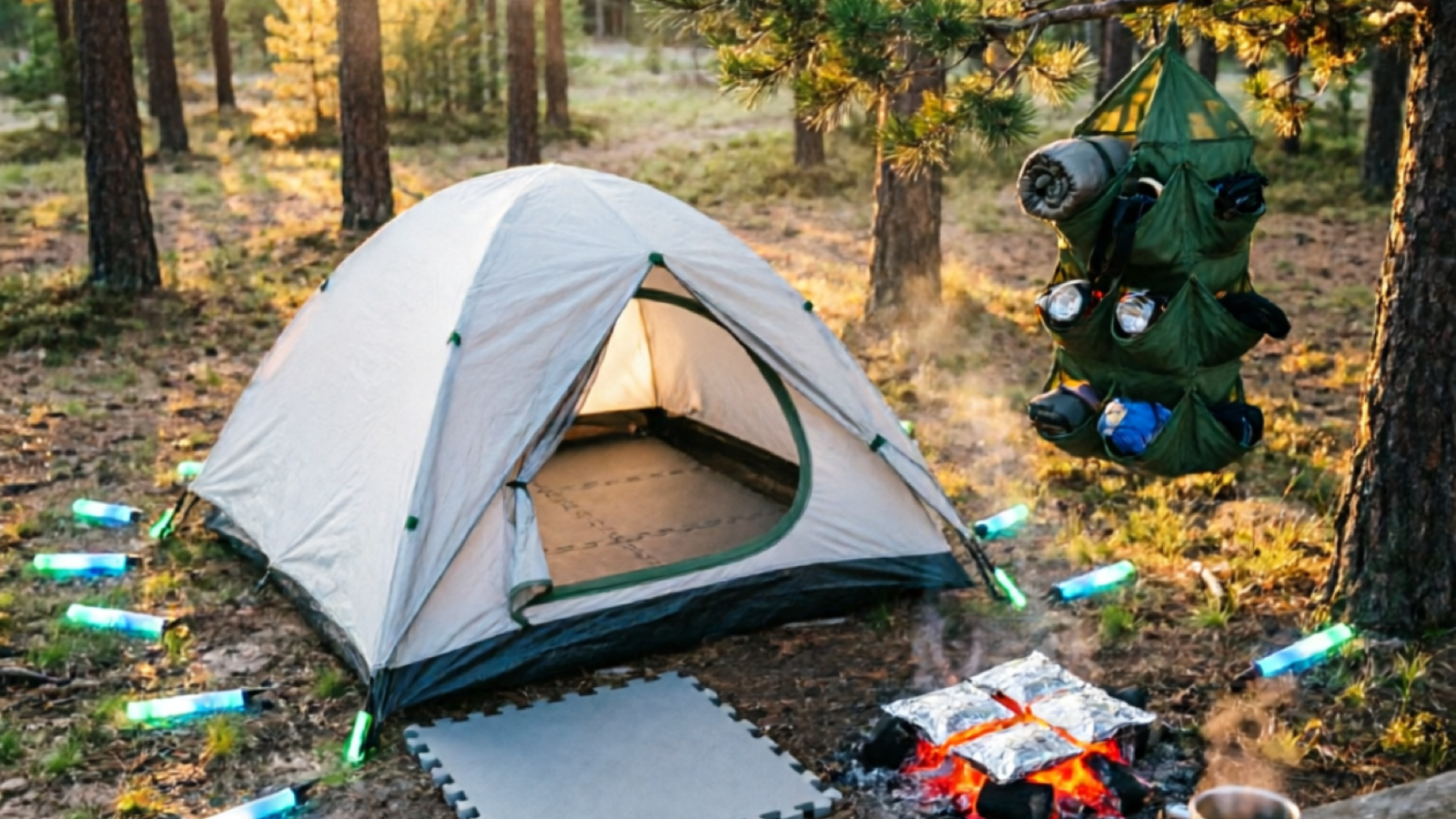
Foam floor tiles. Those interlocking foam tiles from the hardware store make excellent tent flooring. They insulate against cold ground, add cushioning for sleeping, and create a clean surface to walk on. Cut them to fit your tent shape at home before the trip.
DIY vestibule. String a tarp between two trees using bungee cords at an angle away from your tent door. This creates a covered entryway where you can stash muddy boots, wet jackets, and gear without bringing dirt inside. It takes five minutes to set up and saves hours of tent cleaning.
Silicone spray on seams. Hit your tent seams with silicone spray before every season. It refreshes the waterproofing on factory seams that degrade over time. Pay attention to the floor seams and rainfly attachment points — those take the most abuse. For a deeper approach to waterproofing your tent, see our guide on how to waterproof a tent.
Glow-in-the-dark tent stakes. Replace standard stakes with glow ones, or wrap reflective cord around the top of each stake. You’ll stop tripping over guy lines at 2 AM, and breaking camp in the dark gets easier when you can see every anchor point.
Cooking and Food Hacks
Camp cooking doesn’t need to be elaborate to be good. These camping hacks food tips cut prep time, reduce cleanup, and make meals you actually look forward to.
-
Pre-crack eggs into a bottle. Crack a dozen eggs into a water bottle or Nalgene before you leave home. Add a pinch of salt, shake, and you have ready-to-pour scrambled eggs for the whole trip. No eggshells to pack out, no breakage risk.
-
Freeze meals in freezer bags. Make chili, stew, or pasta sauce at home, portion into freezer bags, and freeze solid. They act as ice packs in your cooler on day one and become dinner by day two or three. Lay them flat to freeze — they stack better and thaw faster.
-
Pancake batter in a squeeze bottle. Mix dry ingredients at home, add water at camp, shake, and squeeze directly onto a griddle. No bowls, no ladle, no mess. An empty ketchup bottle works perfectly.
-
Foil packet meals. Prep ingredients at home, wrap in heavy-duty aluminum foil, and cook directly on coals. Chicken and vegetables with seasoning, breakfast burritos, even desserts like banana boats with chocolate. Fifteen minutes on coals, flip once, done.
-
Spice kit in a pill organizer. Fill a weekly pill organizer with salt, pepper, garlic powder, chili flakes, cinnamon, and any other spices you use. Each compartment holds enough for several meals, and the whole thing weighs nothing and takes zero space.
-
Bacon on a stick. Wrap bacon strips around a forked stick and hold over the fire. The fat drips off, the bacon gets crispy, and you have no pan to wash. Use thick-cut for best results — thin slices fall apart.
-
French press mug. A single-serve French press mug lets you brew coffee in the same vessel you drink from. Add grounds, pour hot water, wait four minutes, press. For more coffee methods, check our guide on how to make coffee while camping.
A compact set like the Esie Houzie Kitchen Gadgets covers peeling, grating, and opening bottles without packing a full kitchen drawer. Five tools in almost no space — perfect for camp cooking.
Quick tip: Hit the dollar store before your trip. Aluminum pans, wooden spoons, foil, zip-lock bags, and paper plates cost a buck each and eliminate cleanup entirely. These dollar tree camping hacks stretch your budget without sacrificing functionality.
For full meal ideas beyond quick hacks, our easy camping meals guide has breakfast, lunch, and dinner options sorted by cooking method.
Staying Warm and Comfortable
Cold nights separate good trips from miserable ones. These camping hacks for comfort focus on retaining heat and sleeping well — without packing a propane heater.
Mylar blanket under your sleeping pad. A reflective emergency blanket costs two dollars and reflects up to 90% of your body heat back toward you. Lay it shiny-side-up between your sleeping pad and sleeping bag. The difference is noticeable within minutes, especially on cold ground.
Hot water bottle trick. Fill a Nalgene or tough water bottle with boiling water before bed, wrap it in a sock or shirt, and place it in your sleeping bag near your core or feet. It stays warm for 4-6 hours and takes the edge off freezing nights.
Layer correctly. The order matters more than the thickness. Base layer (moisture-wicking synthetic or merino), insulation layer (fleece or down mid-layer), shell layer (windproof and water-resistant outer). Trapping air between layers is what keeps you warm — a single thick jacket is less effective than three thinner layers.
Hand warmers in your boots. Drop chemical hand warmers into your boots at bedtime. Cold feet keep you awake more than anything else, and warm boots to step into in the morning changes the entire start of your day.
Quick tip: Don’t seal your tent completely shut. Trapped moisture from your breath condenses on cold tent walls and makes everything damp — which makes you colder. Leave a small vent gap. The slight draft is far better than waking up in a humid tent with wet gear.
Packing and Space-Saving Hacks
Packing for camping is a puzzle. These space saving camping hacks fit more gear into less space without leaving essentials behind.
| Item | Normal Packing | Hacked Packing | Space Saved |
|---|---|---|---|
| Clothes | Folded flat | Rolled tight | ~40% |
| Sleeping bag | Stuff sack | Vacuum bag | ~50% |
| Toiletries | Full bottles | Contact lens cases | ~80% |
| Food | Original packaging | Labeled zip-lock bags | ~60% |
| Shoes | Loose in bag | Socks stuffed inside | ~30% |
Roll, don’t fold. Rolling clothes compresses them tighter and prevents wrinkles. Military rolls (fold sleeves in, roll from bottom) are the most compact. A UST Multi-Tool Carabiner clips to your pack and gives you a knife, bottle opener, and screwdriver without adding weight.
For a full list of what to bring, our car camping checklist covers essentials and nice-to-haves.
Contact lens cases for toiletries. Each well holds 3-4 days of face wash, sunscreen, or toothpaste. Enough for a weekend trip, fits in your pocket, and eliminates four full-size bottles from your pack.
Vacuum bags for bulk. Sleeping bags, puffy jackets, and extra blankets compress to a third of their size in a vacuum bag. No pump needed — sit on it and seal. The bags are reusable for dozens of trips.
Zip-lock everything. Transfer dry food from bulky boxes and bags into labeled zip-lock bags. Rice, pasta, trail mix, oatmeal — they pack flatter, you can see what’s inside, and they’re waterproof. Write cooking instructions directly on the bag with a marker.
Camping Hacks for Families and Kids
Camping with kids requires a different playbook. These camping hacks for family trips and camping hacks for kids reduce meltdowns, keep children engaged, and make the experience enjoyable for parents too.
- Headlamps instead of flashlights. Kids drop flashlights. Headlamps stay on, keep hands free for eating and playing, and make every kid feel like a real explorer. Get each child their own with fresh batteries.
- Glow stick boundary markers. Hand out glow sticks at dusk and use them to mark the campsite boundary. Kids can see exactly where they’re allowed to go, and the glow is visible from inside the tent if someone wanders.
- Hanging shoe organizer as a station. Hang a fabric shoe organizer from a tree branch or clothesline. Fill pockets with snacks, sunscreen, bug spray, utensils, and small toys. Everything visible, nothing on the ground, and kids can grab what they need without asking.
- Pre-packed activity bags. Put together individual bags for each kid: magnifying glass, small notebook, colored pencils, a few cards, a snack. They grab their bag when they’re bored and you get 30 minutes of peace.
- Mesh laundry bag as a hamper. Hang a mesh laundry bag from a tree branch. Wet swimsuits, muddy socks, dirty clothes — all go in the bag instead of a pile on the tent floor. Mesh lets everything breathe and dry.
For more detailed planning, our guides on camping with kids and family camping essentials cover everything from age-appropriate activities to packing lists by trip length.
Rain and Weather Hacks
Rain catches every camper off guard eventually. These camping in the rain hacks keep you dry and functional when the weather turns.
Waterproof fire starters. Stuff dryer lint into egg carton cups, pour melted wax over each one, and cut into individual cups. Each one burns for 10-plus minutes even in wet conditions. Make a batch at home in 20 minutes — they last for months.
Trash bag poncho. Cut a head hole and two arm holes in a heavy-duty trash bag. It’s not stylish, but it works as an emergency poncho when rain hits and you didn’t pack one. Keep two in your day pack always.
Toilet paper in a coffee can. Stuff a roll of toilet paper inside an empty coffee can with a plastic lid. Punch a small hole in the lid and pull the paper through. Waterproof, crush-proof, and the can doubles as a seat in a pinch.
Silicone spray on boots. Hit your hiking boots and camp shoes with silicone spray before the trip. Water beads off instead of soaking through. Reapply every few trips for best results.
Tarp the cooking area first. When rain starts, set up a tarp over your cooking area before anything else. You can cook, eat, and stay dry even in steady rain. Use the DIY vestibule technique from the tent hacks section — bungee cords and paracord, angled to shed water.
For comprehensive wet-weather preparation, our camping in the rain guide covers tarp setups, gear choices, and thunderstorm safety in detail.
Clever Campfire Hacks
A good campfire makes the trip. These hacks make it easier to build, more efficient to burn, and better for cooking.
Upside-down fire. Place the largest logs at the bottom, medium sticks on top, kindling above that, and tinder at the very top. Light from the top. As the fire burns down, each layer ignites the one below. This arrangement burns longer, produces less smoke, and requires almost no tending. It’s the opposite of how most people build fires, which is exactly why it works better.
Bank coals for cooking. Push coals to one side of the fire ring to create a hot zone and a cooler zone. This gives you two temperatures to work with — sear on the hot side, cook through on the cooler side. Restaurant chefs call this a two-zone fire. It works just as well at camp.
Wet newspaper under foil. Wrap potatoes or root vegetables in damp newspaper before wrapping in foil. The newspaper holds moisture against the skin and creates steam, producing softer, more evenly cooked results than foil alone. It sounds backwards, but wet paper protects against scorching.
Charcoal chimney from a large can. Punch holes around the bottom of a large metal can (coffee can or similar), place crumpled newspaper underneath, fill with charcoal on top. Light the paper. In 15 minutes you have perfectly lit coals without lighter fluid. A GIRIAITUS 16-in-1 Multitool gives you pliers, saw, and screwdrivers in one tool that fits in a pocket — handy for fire prep and a dozen other camp tasks.
For cutting branches and gathering kindling, a Sucrain Pocket Chainsaw cuts through wood faster than a folding saw and packs to the size of a fist. Eleven teeth on a 24-inch chain with paracord handles — no axe needed.
Hygiene and Clean-Up Shortcuts
Hygiene at camp isn’t glamorous but it keeps you healthy and comfortable. These shortcuts minimize effort and maximize cleanliness.
Bandana camp shower. Wet a bandana with water and a drop of biodegradable soap, wring it out, and wipe down. It’s not a real shower, but it removes sweat, sunscreen, and grime well enough to feel human. Works for face, arms, neck, and feet.
Baby wipes for everything. Face, hands, dishes, cookware, toilet seat, picnic table — baby wipes handle it all. Buy the unscented kind in a travel pack. They’re the single most useful hygiene item at camp and the number one thing experienced campers always pack extra of.
Hand sanitizer placement. Clip a small hand sanitizer bottle to your cooler or food bag. The rule is simple: sanitize before you touch any food. It’s obvious, but it’s also the most commonly skipped step at camp, and the one most likely to prevent stomach issues.
Mesh drying bag. Use a mesh laundry bag or stuff sack to hang wet items on a clothesline between trees. Swimwear, dish towels, rain jackets — everything dries faster with airflow, and nothing gets forgotten on the ground.
Baking soda deodorizer. Sprinkle baking soda inside your boots, sleeping bag stuff sack, and cooler at the end of each day. It absorbs odors without adding fragrance. A small shaker bottle lasts an entire season.
Camping Rules Worth Knowing
Beyond hacks, a few simple rules make every trip smoother. These aren’t tips — they’re frameworks that experienced campers follow.
The 3-3-3 rule. Drive no more than 300 miles (or 3 hours) on day one. Arrive at your campsite by 3 PM so you can set up in daylight with energy to spare. Stay at least 3 nights to justify the drive and setup effort. This rule prevents the two most common camping mistakes: arriving exhausted in the dark, and leaving before you’ve had time to relax.
The 2-2-2 rule (shorter trips). For weekend trips: drive no more than 200 miles, arrive by 2 PM, stay at least 2 nights. Same principles, compressed timeline. Works well for families who can’t take long weekends.
Leave No Trace in 30 seconds. Pack out everything you brought in. Don’t bury trash — animals dig it up. Stay on established trails and campsites. Don’t transport firewood between regions (invasive species spread this way). If you brought it, take it home. If you found it there, leave it.
Frequently Asked Questions
What is the 3-3-3 rule for camping?
Drive no more than 300 miles (or 3 hours) on the first day, arrive at your campsite by 3 PM to set up in daylight, and stay at least 3 nights if you can. The rule prevents the classic mistake of arriving exhausted in the dark with a tent to pitch.
What is the most forgotten item when camping?
A trash bag. Nearly every camper forgets one. Pack 2 to 3 heavy-duty bags — they handle wet clothes, food waste, and keep your tent floor clean as a makeshift doormat.
What are some easy camping hacks for beginners?
Start with these five: pre-crack eggs into a bottle for scrambled eggs, use a shoe organizer for utensil storage, wrap matches in wax paper for waterproof fire starters, freeze water bottles to use as ice packs that become drinking water, and lay down a tarp inside your tent for extra moisture protection.
How can I keep my tent warm without a heater?
Layer a reflective emergency blanket (mylar) under your sleeping pad — it bounces body heat back up. Hot water bottles in your sleeping bag work too. Close tent vents partially to trap warmth, but leave enough gap for condensation to escape.
What camping hacks work for families with kids?
Give each kid a headlamp instead of a flashlight (hands-free), set up a snack station in a hanging shoe organizer, bring glow sticks for nighttime boundary marking, pre-pack individual activity bags, and use a mesh laundry bag as a dirty-clothes hamper that hangs from a tree.
How do I save space when packing for camping?
Roll clothes instead of folding, pack toiletries in contact lens cases, use vacuum bags for sleeping bags and jackets, stuff socks inside shoes, and store dry food in labeled zip-lock bags instead of bulky packaging.
Start With Five, Add More Each Trip
You don’t need all 35 of these camping hacks on your first trip. Pick the five that fit your situation — the tarp barrier for shelter, pre-cracked eggs for breakfast, mylar blanket for warmth, baby wipes for hygiene, and trash bags for cleanup. Those five alone eliminate most common camping complaints.
Add two or three new camping hacks each trip. Within a few outings you’ll have a personal toolkit of tricks that makes camping smoother, warmer, drier, and more fun. A pre-assembled XKASE 19-in-1 Survival Kit covers emergency basics — fire starter, compass, whistle, knife, and more — in a compact case worth keeping in your pack on every trip.
The best camping hacks are the ones you actually use — not the ones that sound clever on a list but fall apart the moment you try them at camp.
Frequently Asked Questions
What is the 3-3-3 rule for camping?
Drive no more than 300 miles (or 3 hours) on the first day, arrive at your campsite by 3 PM to set up in daylight, and stay at least 3 nights if you can. The rule prevents the classic mistake of arriving exhausted in the dark with a tent to pitch.
What is the most forgotten item when camping?
A trash bag. Nearly every camper forgets one. Pack 2 to 3 heavy-duty bags — they handle wet clothes, food waste, and keep your tent floor clean as a makeshift doormat.
What are some easy camping hacks for beginners?
Start with these five: pre-crack eggs into a bottle for scrambled eggs, use a shoe organizer for utensil storage, wrap matches in wax paper for waterproof fire starters, freeze water bottles to use as ice packs that become drinking water, and lay down a tarp inside your tent for extra moisture protection.
How can I keep my tent warm without a heater?
Layer a reflective emergency blanket (mylar) under your sleeping pad — it bounces body heat back up. Hot water bottles in your sleeping bag work too. Close tent vents partially to trap warmth, but leave enough gap for condensation to escape.
What camping hacks work for families with kids?
Give each kid a headlamp instead of a flashlight (hands-free), set up a snack station in a hanging shoe organizer, bring glow sticks for nighttime boundary marking, pre-pack individual activity bags, and use a mesh laundry bag as a dirty-clothes hamper that hangs from a tree.
How do I save space when packing for camping?
Roll clothes instead of folding, pack toiletries in contact lens cases, use vacuum bags for sleeping bags and jackets, stuff socks inside shoes, and store dry food in labeled zip-lock bags instead of bulky packaging.